AI RPG That Tracks Inventory and Quest Lore: Persistent Worlds
2026-09-17
An AI RPG that tracks inventory and quest lore used to mean a second job: updating sheets, rewriting wikis, and hoping nobody forgot the cursed amulet. In September 2026, Jenova runs persistent campaigns that remember what you carry, which rumors you heard, and which promises still bind the world.
- Persistent memory that keeps items, quests, NPCs, and lore intact between sessions
- Ready-to-play mystery, strategy, horror, and romance campaigns
- Custom RPG agents you can instruct to run inventories, encumbrance, and living quest logs
- Full play on web, iOS, and Android with the same remembered campaign
To understand why this matters, look at what breaks when a role-playing game cannot remember. Combat becomes guesswork, plot threads die overnight, and the world feels like a disposable chat with a sword.
Quick Answer: What Is an AI RPG That Tracks Inventory and Quest Lore?
An AI RPG that tracks inventory and quest lore is a persistent role-playing campaign that remembers your items, objectives, NPCs, and story so you can continue play without rebuilding notes. The ledger lives inside the campaign, not in a separate spreadsheet.
Key capabilities:
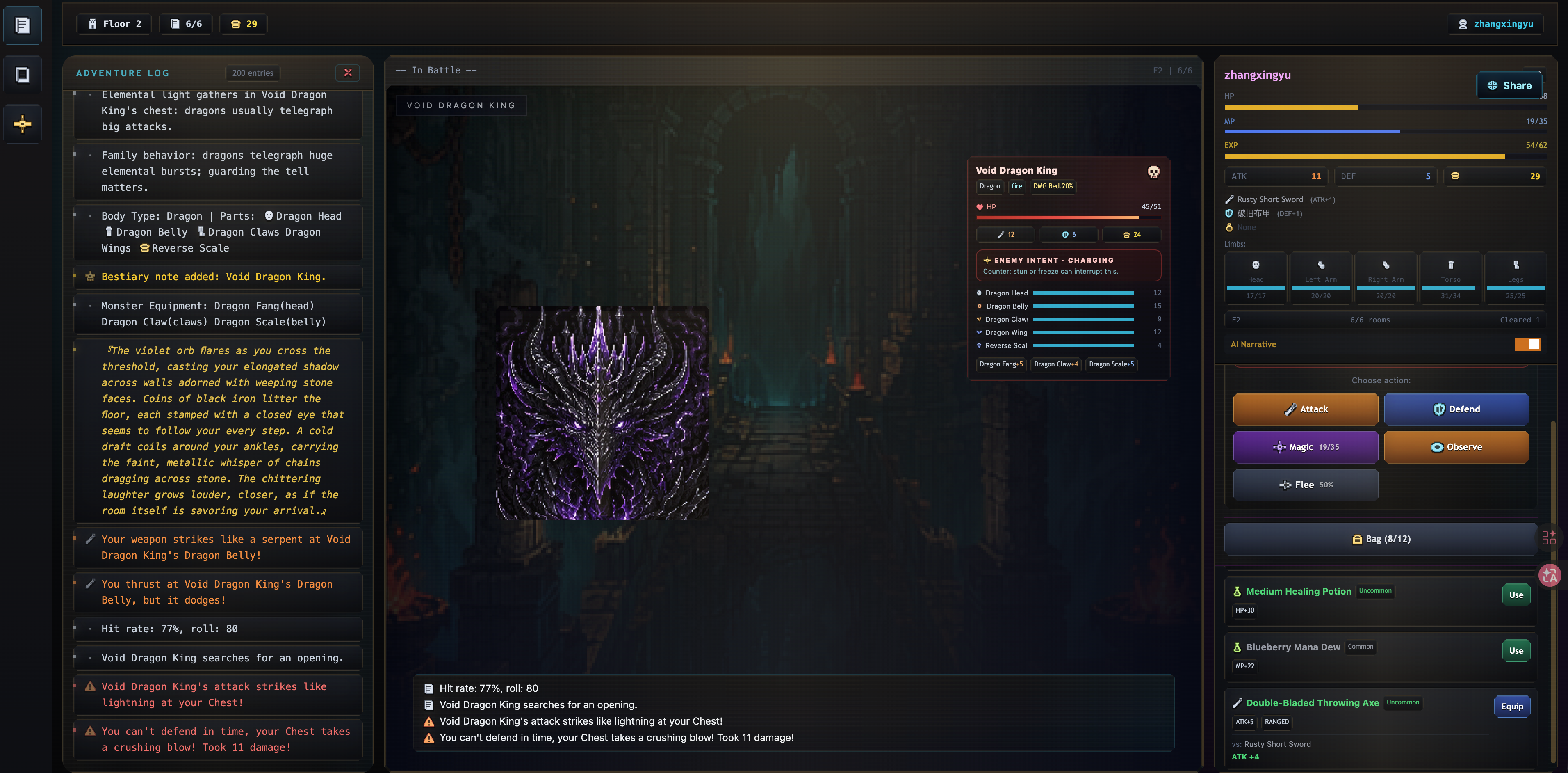
- Adventure logs, bestiary notes, and quest flags that survive logout — as in a mystery run of The Mansion
- Item lists with quantities, weight, value, and quest-item status
- NPCs who recall favors, insults, and unfinished bargains
- Custom campaign agents that treat inventory and lore as rules, not flavor text
Why Inventory and Quest Lore Fall Apart in Most RPGs
Players still want long campaigns. The global games market is projected to reach US$577.91 billion in 2026, and studios are pouring AI into production: around 20% of new Steam games disclosed AI use by mid-2025, double the share from a year earlier. Audiences are not recoiling from AI story either. BCG’s survey found only 7% of adult gamers viewed AI-generated storylines and quests negatively, and just 5% reacted negatively to AI NPCs and dialogue.
But accessing a campaign that actually keeps your gear and plot is frustratingly difficult:
- Inventory tracking is paperwork, so quantities, weight, and used consumables drift
- Quest objectives scatter across chat history, Discord pins, and half-updated character sheets
- Lore amnesia resets NPCs, factions, and dungeon knowledge between sessions
- Generic chatbots improvise a new backpack every time you return
- Worlds that should persist get treated as disposable sessions instead of living states
Inventory tracking turns play into accounting
Tabletop and text RPGs fail at the same point: people will write down treasure once, then stop tracking what they used, dropped, or left in town. The Angry GM’s analysis of inventory tracking is blunt — players do not fail at inventory because they are lazy about loot; they fail because tracking is math and paperwork with mostly punitive payoffs (encumbrance, missing potions, “you don’t have that”). During play, nobody wants to halt a boss fight to edit a spreadsheet.
That is why a serious AI RPG cannot treat “you have a sword” as enough. It has to know which sword, how many healing draughts remain, whether the dragon fang is in the pack or the vault, and whether the quest idol is still cursed.
Quest logs die the moment the session ends
New Game Masters ask the same question veterans still wrestle with: how do you help players keep track of objectives when the story forks? Side quests pile up. Faction standings change. A rumor in act one becomes the only way through the gate in act four.
If the AI dungeon master cannot retrieve that thread, players re-explain the plot every night. Immersion dies. The campaign becomes a series of disconnected scenes instead of a single story.
Lore is a persistence problem, not a writing problem
A persistent world keeps game elements in place even after players start and finish sessions. That is the difference between a campaign and a prompt. Commercial persistent games solve this with external world-state storage so idle worlds can be restored when players rejoin. Most consumer AI chat does not. It generates a vivid tavern, then forgets the innkeeper’s name.
Players building AI-driven RPGs already ask for the opposite:
. Without memory, “quest lore” is just prose. With memory, it is a world.Generic chatbots fake a backpack
A general-purpose model can roleplay a merchant. It cannot be trusted to remember that you spent the last medium healing potion on the Void Dragon King’s chest hit, or that the reverse-scale note in the bestiary is the reason you should not stand in front of the next breath attack. When the model hallucinates items back into your pack, challenge collapses. When it deletes them, the story cheats you.
This is exactly what Jenova was built for.
The Jenova Solution
Jenova treats an AI RPG as a long-running campaign with state, not a one-shot scene. Unlimited chat history and persistent cross-session memory mean the same agent can recall your inventory, quest flags, NPC relationships, and dungeon notes weeks later. You can play a prebuilt world or create a custom campaign agent with instructions, a preferred model, and a private knowledge base of maps, item tables, and lore bibles.
| Traditional approach | Jenova |
|---|---|
| Character sheet plus a wiki you forget to update | Campaign memory that retains items, quests, and NPC debts |
| Session notes lost between Discord and paper | Unlimited history you can query mid-fight |
| Generic chatbot that reinvents your backpack | Custom agent instructions for weight, slots, and quest-item rules |
| World state that evaporates at logout | Persistent play across web, iOS, and Android |
| One model account, one style of GM | Multi-model access so you can switch GM tone without losing the save |
Mystery and horror campaigns that keep every clue
The Asylum drops you into a shuttered institution where every ward hides a secret. That only works if the bloodstain in Ward C, the missing patient file, and the key you palmed from the orderly stay in the record. The same persistence powers a mansion crawl: locked rooms, recovered documents, and the reason you woke with no memory cannot reset when you close the tab.
Strategy worlds that remember armies, treaties, and stores
Civilization is a living grand-strategy RPG: you choose an era, rule a nation, and watch rivals pursue their own ambitions. Grain stores, spy networks, and broken alliances are inventory and quest lore at state scale. College Life does the same for social campaigns — friendships, debts, and unfinished conversations persist so the campus does not reboot every Monday.
Design the inventory system you actually want
If you need slot-based packs, weight limits, vendor value columns, or quest items that cannot be sold, Game Designer Assistant helps you specify the rules, then you attach those rules to a custom campaign agent. The platform’s memory does the bookkeeping that players historically abandon because the tools punish them for trying.
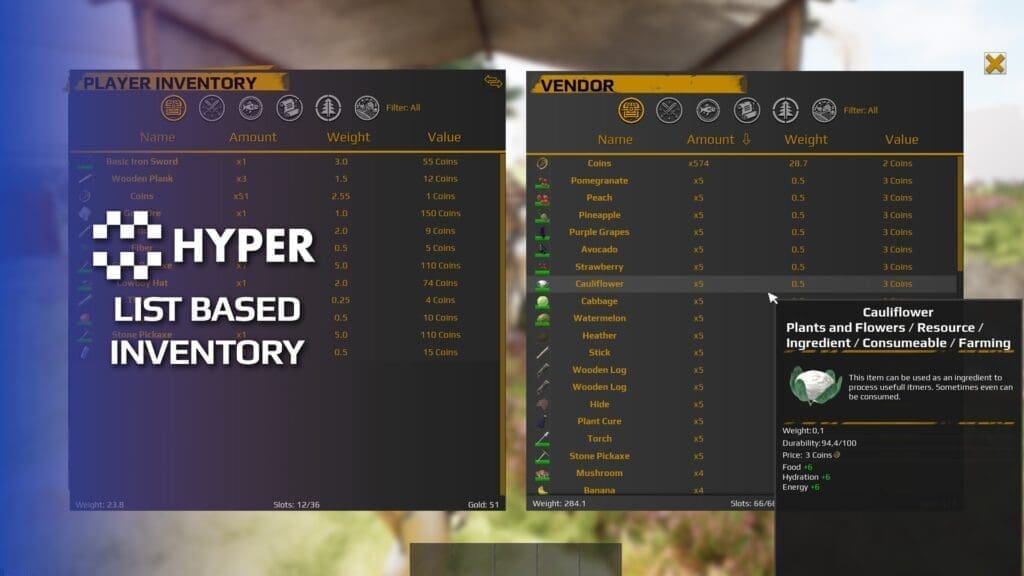
That list view is the fantasy a lot of players are chasing: name, amount, weight, value, and a tooltip that says whether the cauliflower is food, a crafting ingredient, or junk. Translate it to swords, dragon fangs, and quest idols, and you have a campaign you can audit.
Specialized AI Agents for Inventory-Aware Campaigns
Ready-made worlds cover different campaign textures. Use them as-is, or steal their structure when you brief a custom dungeon master.
The Mansion
The Mansion is a memory-first mystery: you wake in a house you do not remember, and every room can kill you or explain you. Ask it to track keys, documents, weapons, and which wings you have already searched.
- Persistent clue inventory instead of a fading chat scroll
- Room-by-room lore that does not contradict last session
- Escape routes that depend on items you actually found
Vesper Court
Vesper Court is a dark-romance court RPG where every night changes the political map. Blood debts, invitations, and forbidden bargains are quest lore. If the court forgets who you fed, the intrigue is fake.
- Relationship flags that behave like quest states
- Night-to-night continuity without recapping the plot
- Inventory of tokens, letters, and ritual objects that matter later
Game Designer Assistant
Game Designer Assistant is the systems partner for players who want a real inventory economy, not “you seem to have stuff.” It can draft encumbrance tables, quest-log schemas, bestiary templates, and GM procedures you then paste into a custom agent.
- Inventory schemas: weight, slots, worn vs packed, quest-bound flags
- Quest log design: success, failure, time pressure, faction standing
- Documentation you can drop into a private knowledge base
Name Generator
Name Generator keeps the lore readable. Named swords, inns, and rival houses are easier to track than “the green gem” and “that guy from the docks.”
- Item and relic names that match culture and tone
- NPC and faction naming that stays consistent in the log
- Fast naming when a merchant stall or dungeon wing appears mid-session
Machiavelli Mentor
Machiavelli Mentor is the advisor you want sitting behind a political campaign. Use it when your AI RPG’s quest lore is less “kill ten rats” and more “who benefits if the duke dies.”
- Power maps and incentive tracking as living quest state
- Negotiation tactics grounded in what NPCs already promised
- Multi-move plots that require the campaign to remember insults
Try Jenova free — no credit card required.
How It Works
Step 1: Choose a world or build a campaign agent
Open Jenova and start a prebuilt game, or create a custom agent whose instructions define the rules of your RPG. State that it must maintain an inventory ledger and a quest log, and that it may never add or remove items without a diegetic reason.
"You are my dungeon master. Track inventory with name, quantity, weight, and quest-bound flags. Keep a quest log with giver, objective, status, and last clue. Never invent items I did not find."
Step 2: Load tables, maps, and house rules
Attach a knowledge base if you have item lists, city maps, or a bestiary. Game Designer Assistant can generate those files first. This is how a list-based inventory — amount, weight, value — becomes enforceable instead of decorative.
"Here is my item table and encumbrance by strength. If I exceed 40 pounds, apply the Laboring speed penalty and remind me before combat."
Step 3: Play, and force the ledger to update in the fiction
Pick up the dragon fang, drink the potion, overhear the chain-whisper in the throne room. Ask the agent to echo inventory and quest changes in the adventure log so you can see the save happen.
"I loot Dragon Fang from the head, use one Medium Healing Potion, and copy the bestiary note: reverse scale. Update inventory and quest lore."
Step 4: Leave and return without a recap ritual
Close the phone on the commute. Next session, do not paste a summary. Query the campaign like a database that happens to speak in-world.
"What is in my pack, which quests are open, and what does the Void Dragon King telegraph before a big attack?"
Step 5: Branch the campaign with the right specialist
When the story needs a relic name, a court scheme, or a comic-page recap, jump to a related agent, then bring the output back. The original campaign still holds the canonical inventory.
Results & Use Cases
🐉 Dungeon crawl with a real backpack
- Scenario: You are mid-boss against a multi-part dragon. The adventure log already knows elemental bursts, claw swipes, and that the chest telegraphs lightning. You have two healing potions and a rusty short sword.
- Traditional Approach: Pause combat, scroll twenty messages, argue whether the potion was used, rewrite the bestiary on paper.
- Jenova: The campaign already recorded the miss on the belly, the 11 damage to your chest, and the remaining consumables. You spend the last potion on purpose, not by accident.
- Hit location, loot, and lore stay aligned
- Consumables decrement instead of “maybe you still have one”
- Bestiary notes remain available on the next floor
🏰 Political campaign that remembers every debt
- Scenario: You promised a rival house exclusive grain rights in exchange for cavalry. Three sessions later, they ask you to honor it during a siege.
- Traditional Approach: Reread a week of transcripts. Miss the promise. Break immersion or retcon.
- Civilization: Treaties, stores, and rival ambitions persist as world state, so the bill comes due.
- Resource inventory at nation scale
- Quest lore as diplomacy, not a checklist
- NPCs who pursue goals when you are not looking
📱 Continue the mansion on your phone
- Scenario: You found a brass key and a burned diary page at lunch. On the train home you have five minutes.
- Traditional Approach: Laptop notes are at home. You either skip the session or play a disconnected scene.
- Jenova: Open the same campaign on iOS or Android. Ask what’s in your hands and which door the diary implicated. Feature parity means the inventory is not a desktop-only wiki.
- Synced campaign memory across devices
- Short sessions that still change the board
- No “we’ll update the sheet later”
💞 Social RPG where relationship flags are quests
- Scenario: You embarrassed a contestant at the bonfire and later need their vote.
- Traditional Approach: Track affection in your head. The AI greets everyone as if night one never happened.
- Love Island: Emergent social dynamics only work if rejections and alliances persist. Those flags are the quest log.
- Continuity without a relationship spreadsheet
- Consequences that land on a later night
- Open-world romance that does not reboot
🎨 Campaign journal that matches the save file
- Scenario: You want a comic recap of the dragon fight for your group, including the exact loot.
- Traditional Approach: Draw from memory and get the treasure wrong.
- Manga Creator: Pull the canonical inventory and bestiary lines from the campaign, then illustrate what actually happened.
- Lore-accurate recap pages
- Shared campaign memory for a table that plays asynchronously
- Art that does not contradict the ledger
FAQ
Is an AI RPG that tracks inventory and quest lore free on Jenova?
Yes. Jenova’s free tier includes core features with limited usage, so you can run a campaign agent, test inventory rules, and see whether memory holds across sessions before paying. Plus starts at $20/month for more usage and custom model selection; higher tiers raise monthly allowance. Usage resets on your billing date with no daily caps.
How is this different from chatting with a generic AI dungeon master?
A generic chat model optimizes for the next message. It will describe a beautiful inventory and then lose it. Jenova agents keep unlimited conversation history and persistent memory, so item quantities, quest status, and NPC bargains are part of the campaign state. You can also attach item tables and instruct the agent never to hallucinate loot.
Can Jenova track weight, slots, and quest-bound items?
Yes — if you tell it those are rules. Prebuilt worlds remember narrative objects and clues; a custom campaign agent can enforce encumbrance, worn vs packed gear, vendor prices, and items that cannot be sold because they are quest-bound. Pair that with The Asylum or a custom dungeon if you want investigation items (keys, files, samples) to gate later rooms.
Does this AI RPG work on mobile?
It does. Web, iOS, and Android share feature parity and synced settings, so the same inventory and quest log are available on a phone. That is what makes a five-minute “check my pack / kick the next door” session possible without exporting notes.
Will the campaign invent items or forget lore?
No system is immune to a vague prompt. The reliable pattern is explicit: require an inventory block and quest log after every change, forbid adding items that were not found, and attach a knowledge base for your item bible. Persistent memory then has a structure to hold. If a result looks wrong, challenge it with the last logged ledger rather than starting a new chat.
Can I design my own AI RPG instead of using a prebuilt world?
Yes. Create a custom agent with instructions, model choice, tools, and a private knowledge base. Use Game Designer Assistant to draft the economy and quest schema first. Prebuilt options remain useful when you want a finished tone — mystery mansion, vampire court, nation-scale strategy — without writing a GM document.
Conclusion
An AI RPG that tracks inventory and quest lore is not a prettier chat window. It is a campaign whose backpack, quest log, and world notes survive the night. Paper sheets and generic chatbots both drop that state; Jenova keeps it, whether you are looting a dragon, mapping a haunted ward, or honoring a treaty you signed three sessions ago.
Play a mystery in The Mansion, run a living nation, or brief a custom dungeon master that will not “find” potions you already drank. The story can finally depend on what you actually carry.
Explore the full agent library at Jenova.
For Developers: Persistent RPG campaigns that remember inventory and quest lore are available programmatically via the Jenova API — integrate campaign memory, custom agent instructions, and knowledge bases into your own game with a single integration. Full documentation →