AI RPG Storytelling: Build Living Worlds That Remember Everything (March 2026)
2026-03-20
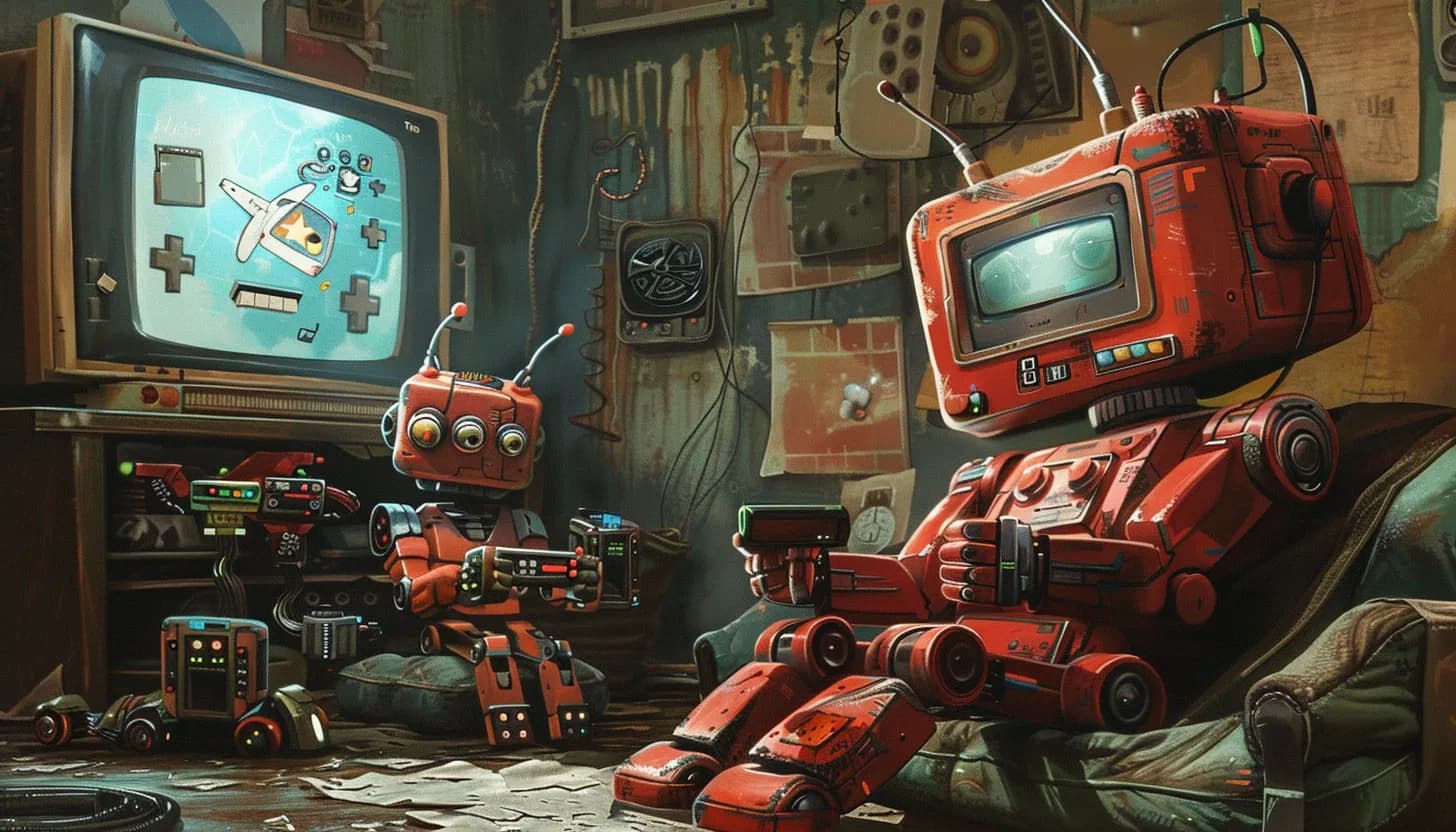
AI RPG storytelling has moved from experimental curiosity to a defining creative medium in 2026. The global tabletop RPG market is estimated at USD $2.30 billion this year and is projected to reach USD $6.32 billion by the mid-2030s (Industry Research), while the broader RPG games market — spanning digital and tabletop — is valued at USD $31.34 billion (Business Research Insights). Meanwhile, the 2026 State of the Game Industry report found that nearly 54% of studios are now implementing AI-driven NPCs, and over one-third of game industry professionals use generative AI tools in their work (Juego Studios / GDC 2026).
Yet for all this momentum, most AI storytelling tools still fail at the fundamentals: NPCs that forget your name, narratives that collapse after a few exchanges, and single-model architectures that force every story into the same voice. Jenova's Roleplay Game Master was purpose-built to solve these problems — delivering unlimited persistent memory, perfect character consistency, and multi-model flexibility for anyone who wants AI RPG storytelling that actually sustains a campaign.
Quick Answer: What Is AI RPG Storytelling?
AI RPG storytelling uses large language models to power immersive, adaptive roleplaying game experiences — generating dynamic NPCs, branching narratives, procedural content, and real-time game mastering that respond intelligently to player choices without pre-scripted dialogue trees.
- 🎭 Dynamic NPCs with memory — characters that remember your actions, hold grudges, and pursue their own agendas with Roleplay Game Master
- 🧠 Persistent world state — every plot point, faction shift, and player decision preserved across unlimited sessions
- 🔄 Multi-model narrative voices — switch between GPT-5.4, Claude Opus 4.6, and Gemini 3.1 Pro Preview to match each story's tone
- ✍️ Procedural content generation — real-time quests, locations, and encounters tailored to player choices and progression
The Problem: Why Most AI RPG Storytelling Falls Apart
Despite the explosion of AI tools in the RPG space, the core experience on most platforms remains frustrating for players who want more than surface-level adventures.
🧠 Memory Collapse Kills Long Campaigns
The most critical failure in AI RPG storytelling is context window exhaustion. When a conversation exceeds the model's token limit, the AI begins dropping older information — forgetting character names, quest objectives, and established world rules.
As AI Dungeon's creator Nick Walton acknowledged, the team at Latitude had to develop dedicated "memory systems for character and world persistence" because standard LLMs couldn't maintain narrative coherence on their own (ODSC). For anyone running a multi-session campaign — the kind that makes tabletop RPGs compelling — this is a dealbreaker.
🎭 NPCs That Can't Hold a Conversation
At GDC 2026, purpose-built AI NPC demos from major studios still struggled with basic consistency. One tavern keeper "refused and said the tavern doesn't cook fowl" — while sitting next to a fully cooked chicken. Conversations "weren't always coherent," and townsfolk "struggled to give distinct personalities" (Polygon, via AIDungeonMaster.ai). If dedicated game studios can't solve NPC consistency with custom engines, general-purpose chatbots don't stand a chance at sustaining a multi-session RPG campaign.
📉 Single-Model Lock-In Flattens Every Story
Different narrative moments demand different AI strengths. A psychologically complex court intrigue needs nuanced prose. A mystery investigation needs sharp logical reasoning. A sprawling fantasy epic needs massive context retention for lore consistency. Being locked into one model means accepting its weaknesses across every campaign type — and every character sounds the same.
🔒 The "AI Slop" Problem
The RPG community is acutely aware of quality concerns. As one comprehensive analysis of AI storytelling advances noted, "the strongest AI storytelling systems in 2026 are not infinite improv machines. They are structured tools for branching narrative, narrative state tracking, adaptive dialogue, recap generation, authoring support" — and they work best "when constrained by world state, character memory, authored rules, and human editorial judgment" (Yenra). Unconstrained generation produces forgettable output. Purpose-built systems produce campaigns worth remembering.
Why Roleplay Game Master Is Built for This
This is exactly what Roleplay Game Master was built for. Unlike general-purpose chatbots adapted for RPGs or single-purpose generators that handle one task, the Roleplay Game Master is a purpose-built AI agent engineered specifically for immersive, long-form RPG storytelling.
| Feature | Typical AI RPG Tool | Roleplay Game Master on Jenova |
|---|---|---|
| Campaign memory | Single session or manual "world info" | Unlimited persistent memory across sessions |
| NPC consistency | Personality shifts mid-conversation | Perfect persona fidelity indefinitely |
| Model access | Single locked model | GPT-5.4, Claude Opus 4.6, Gemini 3.1 Pro Preview, and more |
| System support | D&D 5e only or narrative-only | Any system: D&D, Pathfinder, Call of Cthulhu, homebrew, custom |
| Content generation | Static templates or unconstrained generation | Dynamic, state-aware procedural content |
| Privacy | Data often used for training | Data never used for training, encrypted in transit and at rest |
While AI Dungeon pioneered AI-powered text adventures, it "was built as a general interactive fiction platform, not specifically for D&D" and "excels at freeform narrative adventures but doesn't natively understand D&D 5e rules, classes, or combat mechanics" (AIDungeonMaster.ai). ChatGPT can run casual sessions but "doesn't track hit points, spell slots, or initiative, and it frequently applies rules incorrectly" (AIDungeonMaster.ai). The Roleplay Game Master solves both problems.
Unlimited Memory That Never Forgets
The Roleplay Game Master maintains persistent cross-session memory — every character detail, faction alliance, quest objective, and player decision is preserved indefinitely. Run a 100-session fantasy campaign, and the AI will remember the blacksmith's daughter from session four, the political betrayal from session thirty, and the cursed artifact your character found in session seventy-five.
Multi-Model Flexibility for Every Narrative Moment
Different AI models excel at different storytelling demands. Claude Opus 4.6 produces rich literary prose with nuanced emotional depth — ideal for character-driven dramas. GPT-5.4 handles complex world-building, logical consistency, and rule interpretation with precision. Gemini 3.1 Pro Preview excels at rapid-fire dialogue and action sequences. On Jenova, you can switch between models mid-session to match the narrative moment — no other AI RPG storytelling platform offers this.
Purpose-Built for Storytelling, Not Customer Service
The Roleplay Game Master understands narrative structure, dramatic pacing, character motivation, and genre conventions. It doesn't just respond to prompts — it actively manages narrative tension, introduces complications at dramatically appropriate moments, and maintains multiple NPC personalities simultaneously.
"You are the game master of a dark fantasy campaign set in a dying empire. I play as Kael, a disgraced knight seeking redemption. The world should feel morally gray — no clear heroes or villains. Begin with my arrival at a border fortress where something is very wrong."
"Run a political intrigue campaign set in Renaissance-era Italy. I play as Lucrezia, a merchant's daughter secretly trained as a spy. The tone should be Game of Thrones meets The Borgias — beautiful, dangerous, and morally complex. Start with my arrival at the Doge's court in Venice."
"Create a cosmic horror investigation. I'm a professor of folklore at Miskatonic University, 1928. A colleague has gone missing after visiting a remote fishing village. Use Call of Cthulhu conventions — the horror should be psychological, not physical. Begin with the letter I receive."
Related Agents You'll Also Like
🏚️ The Mansion
A standalone mystery escape experience where you wake in a sprawling mansion with no memory of how you arrived. Every room holds secrets, every NPC has motives, and survival depends on your choices. Built on the same unlimited memory architecture as the Roleplay Game Master, The Mansion delivers a tightly crafted narrative for players who want a ready-made RPG scenario.
- Pre-built mystery with multiple endings and distinct NPC personalities
- Persistent inventory and relationship tracking
- Environmental storytelling through interactive exploration
🏥 The Asylum
Horror investigation roleplay set in a shuttered psychiatric institution. Explore abandoned wards, piece together patient records, and confront what was left behind. The Asylum uses atmospheric tension and psychological horror — ideal for players who want genuine dread in their RPG storytelling.
- Layered investigation mechanics with emergent discoveries
- Atmospheric environmental descriptions
- Multiple narrative paths based on player choices
✍️ Creative Fiction Writer
For players who want to transform their RPG sessions into polished fiction, the Creative Fiction Writer offers three modes: Planning (plot and character arc development), Writing (publication-quality prose), and Critique (structural and line-level feedback). Use it alongside the Roleplay Game Master to develop your interactive stories into finished manuscripts.
- Research-backed world-building with cited sources
- Professional editorial feedback on narrative and dialogue
- Genre-specific writing conventions
💕 Love Island
Romance simulation roleplay with eight strangers on a private island. Open-world social dynamics, relationship management, and dramatic recouplings — all powered by persistent memory that tracks every flirtation, alliance, and betrayal across the entire season.
- Dynamic social AI with eight distinct character voices
- Relationship tracking and reputation systems
- Player-driven narrative outcomes
How It Works: From First Prompt to Epic Campaign
Getting started with the Roleplay Game Master takes less than two minutes. Here's how to go from zero to immersive AI RPG storytelling:
1. Open the Roleplay Game Master agent Navigate to jenova.ai/a/roleplay-game-master and start a new chat. No complex setup required.
2. Set your world with a detailed opening prompt The more specific your initial prompt, the richer the experience. Include genre, tone, your character's background, the RPG system (if any), and any world rules you want established.
"Run a Pathfinder 2e campaign in a steampunk setting. I play as Zara, a half-orc artificer who builds clockwork companions. The world is industrializing rapidly, and the old magic is dying. Start with me arriving in the capital city to present my latest invention to the Artificers' Guild — but something goes wrong during the demonstration."
3. Choose your AI model Select the model that best fits your narrative style. Try Claude Opus 4.6 for literary depth and emotional complexity, GPT-5.4 for logical precision and rule interpretation, or experiment to find your preference.
4. Play naturally — the AI adapts to you Describe your actions, make decisions, ask questions in character. The Roleplay Game Master tracks everything: NPC relationships, world state, quest progress, inventory, and your character's development arc.
5. Continue across sessions Close the chat and come back days or weeks later. Your entire campaign is preserved. Pick up exactly where you left off — the AI remembers everything.
6. Customize with persistent instructions Use the Settings panel to add rules: RPG system mechanics, writing style preferences, content boundaries, genre conventions, or specific world-building parameters that should apply to every response.
Results & Use Cases: AI RPG Storytelling in Action
📊 Solo Tabletop RPG Campaigns
Scenario: A D&D enthusiast wants to run a full campaign but can't coordinate schedules with a group. D&D has over 64 million players worldwide, but the Dungeon Master shortage remains a structural bottleneck where demand far outstrips supply (AIDungeonMaster.ai).
Traditional approach: Solo journaling games with random tables, or waiting weeks between group sessions that often get cancelled.
Jenova solution: The Roleplay Game Master serves as a full game master — generating encounters, managing NPCs, tracking quest progress, interpreting rules, and adapting the world based on player decisions. With unlimited memory, a solo campaign can run for months without losing narrative coherence.
💼 Creative Writing and World-Building
Scenario: A fantasy novelist wants to stress-test world-building by "living" in the setting before committing it to manuscript.
Traditional approach: Outlining on paper, hoping the world feels internally consistent when actually written.
Jenova solution: Use the Roleplay Game Master to explore your world from a character's perspective — testing how factions interact, how economies function, how NPCs respond to different approaches. Then bring the strongest material to the Creative Fiction Writer for polishing into publication-ready prose.
📱 Language Learning Through Immersive RPG
Scenario: A Japanese language student wants to practice conversational skills through engaging scenarios rather than textbook drills.
Traditional approach: Repetitive exercises that feel artificial and don't adapt to the learner's level.
Jenova solution: Combine the Roleplay Game Master's scenario-building with Learn Japanese Through Roleplay for immersive language practice — navigating a fantasy market in Edo-period Japan, negotiating with a merchant guild, or solving a mystery in modern Tokyo, all with real-time grammar correction and vocabulary building woven into the narrative.
🎭 Professional Training Through RPG Scenarios
Scenario: A sales team needs to practice handling aggressive objections from enterprise buyers in realistic, high-pressure scenarios.
Traditional approach: Peer roleplay with a colleague who doesn't push back hard enough.
Jenova solution: The Roleplay Game Master creates realistic buyer personas — a skeptical CFO with budget constraints, a technical evaluator comparing competitors — and runs the negotiation with authentic pressure. Follow up with the Sales Coach for structured feedback on technique.
Frequently Asked Questions
What makes AI RPG storytelling different from regular AI chatbots?
Regular chatbots are optimized for factual Q&A and task completion. AI RPG storytelling agents like the Roleplay Game Master are purpose-built for narrative immersion — they prioritize character consistency, world-state tracking, dramatic pacing, and long-term story continuity over informational accuracy. They maintain personas, manage multiple NPCs with distinct personalities, generate procedural content that respects established lore, and adapt the narrative based on player choices.
How does Jenova's memory compare to AI Dungeon or ChatGPT?
AI Dungeon developed custom memory systems for character and world persistence but still operates within model-specific context limitations (ODSC). ChatGPT has no persistent memory between sessions and "doesn't track hit points, spell slots, or initiative" (AIDungeonMaster.ai). Jenova provides unlimited persistent memory across sessions — your campaign's entire history is preserved indefinitely.
Is the Roleplay Game Master free to use?
Yes. Jenova offers a free tier with all core features and limited daily usage. For heavier use, the Plus plan ($20/mo) provides 30× the usage of the free tier with custom model selection. Premium ($50/mo) and higher tiers offer progressively more usage for power users running extended campaigns.
Can I use any RPG system — not just D&D?
Absolutely. The Roleplay Game Master supports any tabletop RPG system — D&D 5e, Pathfinder 2e, Call of Cthulhu, Shadowrun, FATE, Powered by the Apocalypse, homebrew systems, and fully custom rule sets. Describe your system's mechanics, and the AI interprets rules, manages encounters, and adjudicates edge cases in real time.
Can I switch AI models during a campaign?
Yes. Jenova provides unified access to GPT-5.4, Claude Opus 4.6, Gemini 3.1 Pro Preview, and models from xAI and DeepSeek — all within the same conversation. Switch models to match different narrative moments without losing any context, memory, or story progress.
Is my campaign data private?
Jenova's data is never used for model training, encrypted in transit and at rest, and not sold to advertisers. Your campaigns, characters, world-building, and conversations remain yours — essential for players with original settings or proprietary creative work they want to protect.
Conclusion
AI RPG storytelling in 2026 sits at the intersection of two massive growth markets — a tabletop RPG industry valued at over $2.3 billion ([Industry Research](https://www.industryresearch.biz/market-reports/tabletop-role-playing-game-ttrpg-market-105312)) and an AI storytelling software market that hit $2.5 billion in 2025 with projections reaching $4.8 billion by 2027 (AnimateAI). The demand is clear: players want worlds that feel alive, responsive, and persistent. But most tools still fail at the fundamentals — memory, NPC consistency, and narrative depth.
The Roleplay Game Master solves all three. Unlimited memory that preserves every detail across unlimited sessions. Purpose-built architecture that maintains perfect character consistency. Multi-model access that lets you choose the right AI voice for every narrative moment. And privacy that ensures your creative work stays yours.
Try the Roleplay Game Master free — no credit card required. Whether you're running solo D&D campaigns, building worlds for a novel, practicing a new language through immersive scenarios, or simply want the most compelling AI RPG storytelling experience available in 2026, start your first session and experience the difference.
Explore the full agent library at Jenova.