AI RPG Fog of War: Run Hidden-Map Campaigns With an AI Game Master
2026-10-22
Roleplay Game Master brings fog of war to solo and group roleplay. It keeps the whole world hidden behind your character's senses: unexplored corridors, ambushes, and NPC secrets stay concealed until you scout, listen, or ask the right question. As of October 2026, most AI chat tools still narrate too much, too soon. They describe the treasure room before you've found the door, or forget which halls you've already cleared. This AI game master keeps a persistent hidden world and reveals it only as fast as you earn it.
- ✅ Perception-gated reveals. You learn only what your character can see, hear, or deduce.
- ✅ Unlimited memory. Explored areas stay explored, even across sessions.
- ✅ Consistent characters. NPCs don't leak information they shouldn't have.
- ✅ Any genre, any scale. It works for dungeon crawls, kingdom-building campaigns, sci-fi derelicts, and haunted mansions.
Fog of war has been a staple of wargames and tabletop campaigns for decades. Bringing it into AI-driven storytelling exposes problems that a generic chatbot handles poorly. To see why a dedicated approach matters, it helps to look at what fog of war actually requires and where it breaks down today.
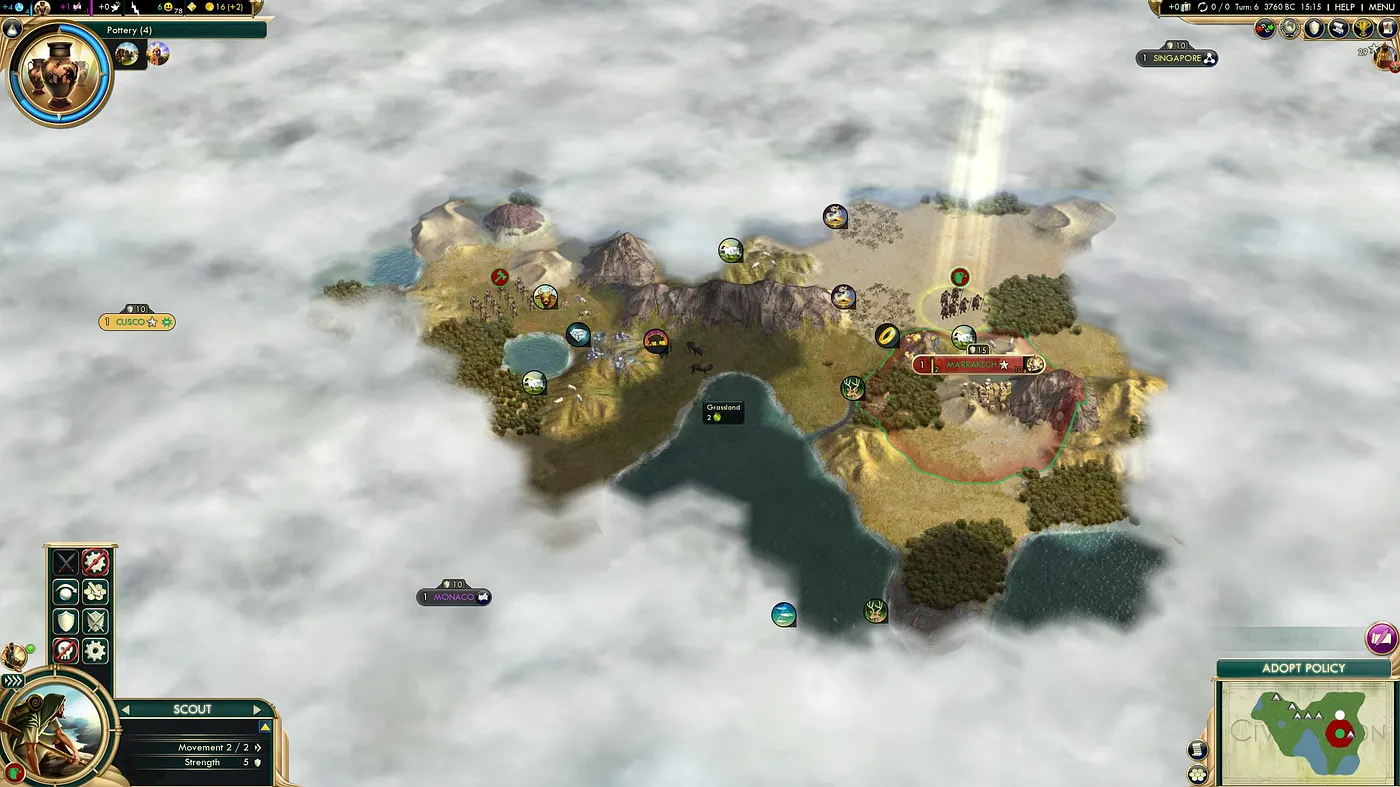
Quick Answer: What Is AI RPG Fog of War?
AI RPG fog of war is a game-mastering technique in which an AI narrator tracks the full hidden world (rooms, enemies, secrets) but reveals only what your character currently perceives or has already discovered.
The term comes from military strategy, where it describes uncertainty about an opponent's movements. Video games adopted it to force players to scout and decide with partial information.
Key capabilities of a capable AI game master:
- Hidden-state tracking. The AI holds the complete map and roster of threats without narrating them.
- Line-of-sight narration. Torchlight, darkvision, noise, and scouting skills shape what gets described.
- Explored-vs-unknown memory. Cleared areas stay mapped, while unvisited ones stay dark.
- Stale information. Areas you left behind can change without you knowing.
Why Fog of War Is Hard to Get Right in AI Roleplay
Role-playing is a large and growing category. AI is already embedded in how these experiences get built, especially for characters and narrative.
**$44.78 billion**: [Estimated size of the global role-playing games market in 2026, projected to reach $72.76 billion by 2035](https://www.businessresearchinsights.com/market-reports/role-playing-games-market-123713)
Skepticism is rising alongside adoption. Over half (52%) of game industry professionals now say generative AI is having a negative impact on the industry, up from 30% the year before. Players want AI that respects the rules of the game rather than shortcutting them.
Traditional fog of war is also labor-intensive. On virtual tabletops like Roll20, fog of war is controlled solely by the GM, who manually reveals areas as players explore. That works with a dedicated human game master, but solo players don't have one.
But getting this right in a text-based AI RPG is frustratingly difficult:
- Spoilers by default. General-purpose chatbots try to be helpful, so they describe everything, including rooms you haven't reached.
- Map amnesia. Long sessions push early details out of context. Cleared corridors get "rediscovered," or a sealed door quietly vanishes.
- Knowledge leaks. A goblin you've never met references your party's plan. An innkeeper knows about the vault you found in secret.
- No "explored but unobserved" state. Good fog of war distinguishes areas that are unknown, explored but not currently observed, and currently visible. Most AI narration collapses all three into one.
This is exactly the gap a dedicated AI game master was built to close.
Why Roleplay Game Master Handles Fog of War
Roleplay Game Master is built for immersive, long-form roleplay. It combines unlimited memory, consistent characters, and the freedom to run any scenario you describe. Those three traits are what fog of war depends on.
Memory keeps your explored map intact. Character consistency stops NPCs from knowing things they shouldn't. Creative freedom lets you define the visibility rules: torchlight radius, scouting range, or a sanity mechanic that warps what you see.
| Traditional Approach | Roleplay Game Master |
|---|---|
| A human GM manually reveals fog on a VTT each session | The AI reveals areas through narration as your character explores |
| Solo play has no one to hide information from you | The AI holds hidden state you can't access until you earn it |
| Generic chatbots over-describe and spoil encounters | Narration is limited to what your character perceives |
| Long campaigns lose track of explored areas | Unlimited memory keeps the explored map consistent |
| NPCs in chat tools often know everything | Characters act only on what they plausibly know |
Perception-Gated Narration
Ask the AI to filter every description through your character's senses. A human rogue in a pitch-black crypt hears dripping water and smells rot. A dwarf with darkvision sees the collapsed archway 40 feet ahead. The AI keeps the full layout in mind and reveals only the slice your character can access.
A Map That Stays Mapped
Fog of war only rewards exploration if discoveries persist. Because Roleplay Game Master retains your full campaign history, the trapped hallway you disarmed three sessions ago stays disarmed. The side passage you skipped still waits, unexplored.
Secrets That Stay Secret
The best hidden information involves people as well as places: the duke's hidden loyalties, the cult's meeting place, the traitor in your party. With consistent characters, NPCs reveal what they know only when persuaded, bribed, or caught. They never reveal what they couldn't know.
Example Prompts
"Run a dark fantasy dungeon crawl. Keep a hidden map of the entire dungeon and only describe what my character can see by torchlight. Never reveal unexplored rooms."
"I'm leading a scout party through unmapped jungle. Track what we've explored, what we can currently see, and what's still unknown. Enemy camps should only appear if we spot them."
"Play a city-intrigue campaign where every NPC has secrets. Don't tell me who the traitor is. Make me uncover it through conversations and evidence."
A note on limits: this is narrative fog of war. If you want visual battle maps with dynamic lighting, pair the AI with a virtual tabletop. Tools like TT-RPG combine AI battle map generation with fog of war tools, and Roll20 offers Dynamic Lighting for Plus and Pro subscribers.
Related Agents You'll Also Find Useful
If you're running hidden-map campaigns or designing them, these agents fit naturally into the same workflow.
Game Designer Assistant
If you're building your own RPG or strategy game, this agent can help you design the fog of war system itself. It covers visibility rules, scouting economies, and how much information to withhold before frustration sets in.
- Brainstorming and systems analysis for exploration mechanics
- Design documentation for visibility and line-of-sight rules
- Expertise across genres, platforms, and regional markets
Character Creator
Fog of war gets more interesting when your character's abilities shape what they perceive. Use this agent to build a scout, a blind oracle, or a paranoid sentry whose senses define the campaign's visibility.
- Quick-generate or guided builds for roleplay characters and OCs
- Portraits across genres
- Strong backstories that seed hidden plot threads
The Mansion
Want fog of war without setting anything up? This ready-made mystery drops you into a mansion with no memory of how you arrived. Every room hides secrets you uncover one at a time.
- Room-by-room exploration with concealed information
- Survival tension, because every shadow could be your last
- A built-in goal: uncover the truth and escape
Try Roleplay Game Master free, with no credit card required.
How to Run an AI RPG Fog of War Campaign
Step 1: Define the World and Its Visibility Rules
Open the AI game master and describe your setting, along with how visibility works. Be explicit: tell it to keep a hidden map and never narrate beyond your character's perception.
"Set up a sunken-city exploration campaign. Generate the full layout privately. Describe only what my lantern illuminates, roughly 20 feet, plus sounds I can hear."
Step 2: Establish Your Character's Senses
Your character's abilities determine how quickly the fog lifts. Note any perception traits, gear, or limitations so the AI can apply them consistently.
"My character is a half-elf ranger with darkvision to 60 feet, a spyglass, and keen hearing, but she's terrible at detecting magic."
Step 3: Explore, Scout, and Investigate
Act in-character and let the world reveal itself. Careful actions like listening at doors, sending a familiar ahead, or climbing for a vantage point should reveal more than charging blindly.
"I climb the bell tower and use my spyglass to survey the eastern district before we move."
Step 4: Request a Map Recap From Your Character's Perspective
At any point, ask for a summary of what's been explored. Ask the AI to flag stale information: areas you saw earlier that may have changed.
"Recap every area we've explored, list exits we haven't checked, and note which areas we haven't seen since yesterday."
Step 5: Return Anytime and Pick Up Where You Left Off
Close the session and come back days later. Your explored map, unresolved leads, and hidden threats are all still there.
"Where were we? Remind me what we found in the flooded archive and what we still haven't explored."
Results and Use Cases for AI Fog of War Roleplay
🗺️ Solo Dungeon Crawl With a Truly Hidden Map
Scenario: A solo player wants an old-school dungeon crawl where the map is hidden from them.
Traditional Approach: Solo players typically rely on random tables or pre-written modules. Either they generate rooms on the fly, losing any sense of a designed space, or they read the module and spoil it.
Roleplay Game Master: The AI privately lays out the full dungeon and reveals it room by room as the player explores.
- The dungeon exists before you enter it, so it isn't improvised around you.
- Secret doors reward searching, and skipped rooms stay unexplored.
- Cleared areas remain consistent across sessions.
🏰 Strategy-Style Kingdom Campaign With Scouting
Scenario: A player wants the feel of a 4X strategy opening, with a lone scout pushing into unknown territory. They want that told as a narrative RPG instead of a board.
Traditional Approach: Strategy games handle this visually, but they don't offer character-driven storytelling. Text roleplay offers story but rarely tracks territory.
The AI game master: It tracks discovered regions, rival settlements, and resources, revealing them only when scouts report back.
- Scout reports can be incomplete, exaggerated, or outdated.
- Rival factions expand in areas you aren't watching.
- Diplomatic NPCs know only their own corner of the map.
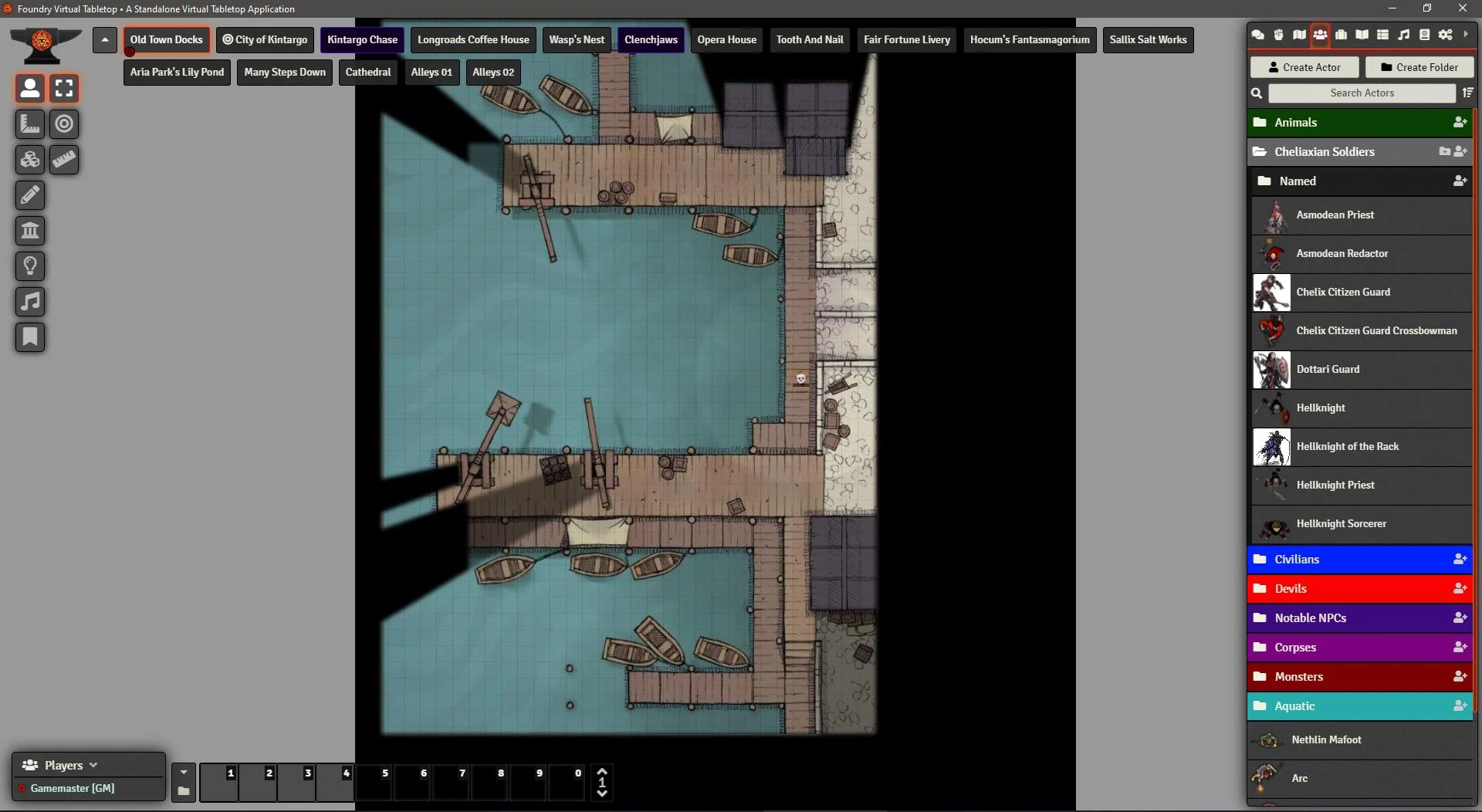
🎲 Human GM Prep for a Virtual Tabletop Session
Scenario: A game master runs a weekly Foundry or Roll20 campaign. They want help deciding what's hidden behind each fogged section of tonight's map.
Traditional Approach: The GM preps every room's contents, NPC motivations, and secrets by hand, then manually reveals the fog as players explore.
The AI-powered approach: The GM describes the map and asks the AI to populate each concealed area with encounters, clues, and NPC secrets that stay consistent with earlier sessions.
- Faster prep for each fogged region of the map
- Hidden content stays consistent with past campaign events
- The VTT handles visuals, and the AI handles what's behind the fog
📱 Mobile Exploration on the Commute
Scenario: A player explores a haunted asylum campaign in 15-minute bursts on their phone.
Traditional Approach: Short sessions usually mean re-reading notes or losing the thread of where you were.
With the AI game master: The player asks for a quick recap, sees which wings are still unexplored, and picks up mid-corridor.
- No session notes required
- The explored map and open leads persist between bursts
- Tension holds because unexplored areas stay hidden
Frequently Asked Questions
What does fog of war mean in an AI RPG?
Fog of war in an AI RPG means the AI narrator knows the full world, including rooms, enemies, and secrets, but reveals only what your character perceives or has already discovered. It mirrors the mechanic from strategy games and virtual tabletops, applied through narration instead of a visual overlay. Done well, it makes exploration meaningful: scouting, listening, and investigating reveal information, while reckless choices leave you blind.
Can an AI game master hide information without spoiling it?
Yes, if it's set up for it. Roleplay Game Master supports this through unlimited memory and consistent characters, so hidden areas and NPC secrets stay concealed until you uncover them. For best results, state your visibility rules at the start. For example, tell it to describe only what your character can see and never narrate unexplored areas.
Is there a ready-made AI game with fog of war-style exploration?
Yes. The Asylum casts you as an investigator inside a shuttered psychiatric institution where every ward hides secrets. Like The Mansion, it's built around discovering hidden information room by room. That makes it a good fit if you want exploration-driven tension without designing your own campaign first.
Does an AI fog of war replace a virtual tabletop like Roll20 or Foundry?
Not exactly. Virtual tabletops handle visual fog, maps, tokens, and dynamic lighting. An AI game master handles narrative fog: what your character perceives, what NPCs know, and what lies behind each unexplored door. Many groups combine both, using the VTT for visuals and the AI for hidden content, NPC dialogue, and consistent world state.
Is AI RPG fog of war free to try?
Jenova offers a free tier with all core features and limited usage, so you can test a fog of war campaign at no cost. Paid plans start at $20 per month for 30× the free usage and custom model selection. Usage resets monthly with no daily caps, which suits long exploration sessions.
Does AI fog of war roleplay work on mobile?
Yes. You can play on web, iOS, or Android with full feature parity, and your campaign syncs across devices. Because the AI retains your full history, you can explore a few rooms on your phone and continue on desktop later. The fog stays where you left it.
Conclusion: Make Exploration Matter Again
Fog of war is what makes exploration feel earned. Without it, maps are just descriptions and secrets are just text. Generic AI chat tends to spoil, forget, and leak information. A dedicated AI game master keeps the unknown unknown, preserves what you've discovered, and lets NPCs guard their own secrets.
Whether you're running a solo dungeon crawl, a scouting-heavy kingdom campaign, or prepping hidden content for your next tabletop session, AI RPG fog of war turns narration into real discovery. Try Roleplay Game Master now and step into a world that reveals itself only as fast as you explore it.
Explore more at Jenova.
For Developers: Roleplay Game Master is available programmatically via the Jenova API. You can integrate persistent, fog of war-aware AI game mastering into your game or roleplay app with a single API call. Full documentation →