AI Roleplay Medieval: Immersive Fantasy Adventures with Intelligent Storytelling
2026-02-07
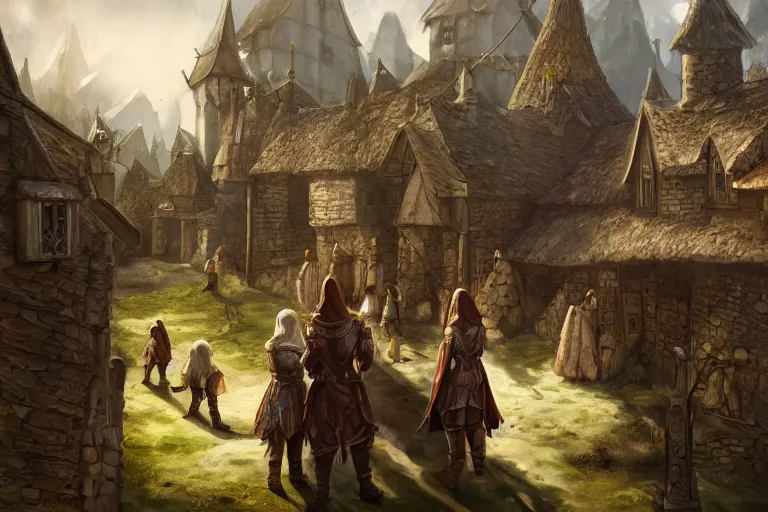
The medieval fantasy genre has captivated imaginations for generations, yet traditional tabletop RPGs and video games have always faced a fundamental limitation: static content that cannot truly adapt to player choices. Enter AI roleplay medieval experiences powered by specialized AI agents—systems capable of generating dynamic narratives, remembering player decisions across sessions, and creating truly personalized fantasy adventures that evolve based on your actions.
The transformation is already underway. According to industry research, the global tabletop RPG market was valued at $2.15 billion in 2025 and is projected to reach $6.59 billion by 2035. Meanwhile, AI in gaming market data shows the sector was valued at $4.36 billion in 2025 and is expected to reach $51.26 billion by 2033—growing at a compound annual growth rate of 36.1%. Critically, research on AI role-play solutions demonstrates completion rates of 80-90% compared to only 15-20% for traditional eLearning content, with 70-80% knowledge retention after 30 days.
This article explores how AI roleplay medieval experiences solve persistent problems in fantasy gaming, what specialized agents can deliver, and how to leverage these tools for immersive storytelling that remembers your choices.
Quick Answer: What Is AI Roleplay Medieval?
AI roleplay medieval refers to artificial intelligence systems designed to power immersive medieval fantasy roleplaying experiences through dynamic NPCs, adaptive storytelling, procedural content generation, and real-time game mastering. Unlike static video games or pre-written tabletop modules, these systems enable players to experience campaigns that respond intelligently to their choices, maintain narrative consistency across sessions, and generate unlimited content without pre-scripted limitations.
Key capabilities include:
- Dynamic NPCs with memory — AI-driven characters that remember your previous encounters and adjust their behavior accordingly
- Adaptive narrative systems — Stories that evolve based on player decisions while maintaining thematic coherence
- Procedural content generation — Real-time creation of quests, locations, and encounters tailored to your preferences
- Persistent campaign memory — Cross-session continuity that honors player choices over time
For those seeking the most advanced medieval fantasy AI roleplay experience, the Roleplay Game Master agent on Jenova provides unlimited memory, perfect character consistency, and adaptive narrative progression specifically designed for immersive fantasy campaigns.
The Problem: Why Traditional Medieval Fantasy Gaming Falls Short
Medieval fantasy roleplaying has always faced structural limitations that constrain player agency and narrative depth. Understanding these pain points explains why AI roleplay solutions have gained such rapid traction.
The Static Content Trap
Traditional video games operate on finite content budgets. Every dialogue tree, quest branch, and NPC interaction must be written, recorded, and implemented by human developers. The result is inevitable: players exhaust available content, encounter repeated dialogue patterns, and hit the boundaries of what the game can respond to.
As noted in research on AI and tabletop gaming, "AI works are flooding the market, have a low entry cost but are mediocre content at best. However, the flood of them is making it harder for human made art to be heard above the noise." This dynamic creates pressure for more adaptive, personalized content systems.
The Human DM Bottleneck
Tabletop RPGs depend on human Dungeon Masters who must simultaneously manage rules, improvise narratives, track NPC relationships, and maintain session continuity. This creates several failure modes:
- Prep time requirements — Quality campaigns demand hours of preparation per session
- Inconsistency — Human memory falters; NPCs forget player actions, plot threads drop, and world details contradict
- Scheduling constraints — Finding compatible times for 4-6 people becomes increasingly difficult
- Skill variance — Not every group has access to an experienced, engaging DM
Research on AI Dungeon Masters versus human DMs reveals stark completion rate differences: human-led tabletop campaigns show 68% completion rates, while AI-only campaigns show only 12.3%. However, hybrid approaches (human DM using AI for prep and support) achieve 74% completion rates—higher than purely human-led games.
The Narrative Drift Problem
Even well-intentioned campaigns suffer from narrative drift—stories that escalate beyond their original scope, themes that shift unpredictably, and consequences that fail to materialize. Players report frustration when:
- Early decisions lack later impact
- NPCs behave inconsistently across sessions
- Stakes escalate too rapidly or not at all
- The world fails to respond to player agency
As analysis of AI roleplay engagement notes, "Without a human anchor to curate, correct, and contextualize, narrative coherence dissolved—and with it, investment." The solution requires systems that maintain continuity while adapting to player choices.
The Jenova Solution: AI Agents for Medieval Fantasy Roleplay
Jenova addresses these structural limitations through specialized AI agents designed specifically for immersive roleplaying experiences. The platform provides unified access to frontier AI models—GPT-5.2, Claude Opus 4.5, Gemini 3 Pro, and Grok 4.1—alongside purpose-built agents for fantasy storytelling.
Comparison: Traditional vs. AI-Enhanced Medieval Roleplay
| Aspect | Traditional Approach | Jenova AI Solution |
|---|---|---|
| Content generation | Finite, pre-written | Unlimited, procedural |
| NPC memory | Human-dependent | Persistent, cross-session |
| Narrative adaptation | Manual improvisation | Real-time, choice-responsive |
| Prep time | Hours per session | Minutes with AI assistance |
| Scheduling | Group coordination required | Available 24/7 for solo play |
| Campaign consistency | Variable | Systematically maintained |
| Emotional depth | Human empathy | AI-simulated with human guidance |
Core Capabilities for Medieval Fantasy
Jenova's Roleplay Game Master agent delivers several capabilities essential for immersive medieval fantasy:
Unlimited Memory Architecture Unlike general AI chatbots, the Roleplay Game Master maintains perfect character consistency and cross-session memory. NPCs remember your previous encounters, reference past decisions, and adjust their behavior based on established relationships. This addresses the "narrative drift" problem that plagues both traditional campaigns and generic AI tools.
Adaptive Storytelling Engine The system generates branching narratives that respond to player choices while maintaining thematic coherence and emotional resonance. Rather than escalating stakes exponentially (a common AI failure mode), the Roleplay Game Master paces revelations, builds tension gradually, and ensures consequences feel earned rather than arbitrary.
Procedural Content Generation Quests, locations, items, and encounters generate in real-time based on player preferences, character progression, and campaign history. This eliminates the "static content trap" while ensuring generated material respects established world lore and narrative themes.
Multi-Model Support Access to GPT-5.2, Claude Opus 4.5, Gemini 3 Pro, and Grok 4.1 allows users to select models based on specific needs—whether prioritizing creative narrative generation, logical consistency, or rapid response times.
Specialized AI Agents for Medieval Fantasy Roleplay
Jenova offers several agents particularly relevant to medieval fantasy enthusiasts:
Roleplay Game Master
The flagship agent for immersive fantasy campaigns. Features include unlimited memory, perfect character consistency, adaptive narrative progression, and support for any medieval fantasy system or homebrew setting. Ideal for solo play, group campaigns with AI assistance, or rapid campaign prototyping.
Explore the Roleplay Game Master
Alternate Historian
For medieval fantasy grounded in historical inspiration, the Alternate Historian provides opinionated historical analysis with bold takes and causal reasoning. Useful for developing historically-informed fantasy settings, understanding medieval social dynamics, or creating "secret history" campaign elements where historical figures or events diverge into fantasy.
Explore the Alternate Historian
Creative Fiction Writer
When developing original medieval fantasy fiction, campaign settings, or detailed backstories, the Creative Fiction Writer offers deep research capabilities and editorial insight. Capable of assisting with everything from prose polish to structural analysis of narrative arcs.
Explore the Creative Fiction Writer
Learn Japanese Through Roleplay / Learn Korean Through Roleplay / Learn Chinese Through Roleplay
For medieval fantasy enthusiasts interested in East Asian-inspired settings, these agents provide immersive language learning through roleplay scenarios. Particularly valuable for campaigns drawing on Japanese, Korean, or Chinese historical and mythological traditions.
Explore Language Learning Agents
How AI Roleplay Medieval Works: A Step-by-Step Guide
Understanding how to leverage AI agents for medieval fantasy roleplay helps maximize their potential. Here's a practical workflow:
Step 1: Define Your Campaign Parameters
Before engaging with an AI agent, establish clear creative boundaries:
"I want to run a low-magic medieval fantasy campaign set in a fictionalized version of 12th-century France. Tone should be gritty and realistic, with political intrigue and social climbing as major themes. Magic exists but is rare, dangerous, and viewed with suspicion. Combat should be deadly—no heroic last stands against impossible odds."
This level of specificity helps the AI generate appropriate content while maintaining thematic consistency.
Step 2: Select Your Primary AI Agent
Choose based on your primary need:
| Need | Recommended Agent | Why |
|---|---|---|
| Full campaign management | Roleplay Game Master | Unlimited memory, adaptive storytelling, perfect consistency |
| Historical grounding | Alternate Historian | Causal reasoning, historical analysis, "what if" scenarios |
| Original fiction development | Creative Fiction Writer | Deep research, editorial insight, prose polish |
| Language/cultural immersion | Language Learning agents | Authentic dialogue, cultural context, immersive practice |
Step 3: Establish Persistent Memory
The most effective AI roleplay sessions leverage cross-session memory. When using the Roleplay Game Master:
"Remember: My character is Sir Aldric of Valmont, a disgraced knight seeking redemption. Key relationships: antagonistic with Lord Fournier (who orchestrated his fall), protective of his squire Thomas (secretly his illegitimate son), complicated history with Sister Marguerite (former lover, now nun). Previous sessions established: Aldric discovered Fournier's conspiracy, was ambushed and wounded, recovered at a monastery where he encountered Marguerite."
This memory scaffolding ensures narrative continuity that would be difficult for human DMs to maintain consistently over months or years.
Step 4: Generate and Refine Content
Use the AI for specific content generation tasks:
NPC Creation:
"Generate a merchant NPC for the town of Rouen. Needs to be politically connected but morally flexible. Should have a secret that could be exploited or discovered. Include dialogue style, physical description, and potential quest hooks."
Quest Development:
"Design a three-session quest arc involving a disputed inheritance, a forged will, and a missing heir. Tone should emphasize social investigation over combat. Include at least three meaningful player choice points with visible consequences."
Location Design:
"Describe a fortified manor house suitable for a climactic confrontation. Include tactical considerations, environmental hazards, and three distinct areas with different atmospheres and challenges."
Step 5: Iterate Based on Player Response
The most effective AI-assisted campaigns treat the AI as a collaborative partner rather than a replacement. After sessions:
- Note which generated content resonated with players
- Refine the AI's understanding of party preferences
- Adjust tone, pacing, and challenge level based on feedback
- Develop recurring elements that build investment over time
"The players responded strongly to the moral ambiguity of the Fournier conspiracy. They want more content exploring the costs of political resistance. Generate three potential storylines: one focusing on underground networks, one on noble family divisions, and one on peasant uprisings. Include potential allies and complications for each."
Results & Use Cases: AI Roleplay Medieval in Action
📊 Solo Campaign Management
Scenario: A player wants to experience a deep medieval fantasy campaign but lacks a consistent gaming group. Scheduling conflicts, geographic dispersion, or simply not knowing experienced DMs limits access to quality tabletop experiences.
Traditional approach: Rely on single-player video games with static narratives, join online forums seeking groups (often unsuccessfully), or abandon the hobby.
Jenova solution: The Roleplay Game Master provides 24/7 campaign management with unlimited memory, perfect character consistency, and adaptive narrative progression. The player experiences genuinely responsive storytelling that remembers their choices across months of solo play, with the AI generating appropriate challenges, NPCs, and plot developments based on their established preferences and campaign history.
💼 Historical Fiction Development
Scenario: A writer is developing a medieval fantasy novel grounded in 12th-century European history. They need to understand social dynamics, political structures, and daily life details to create authentic settings, but lack formal historical training.
Traditional approach: Months of library research, expensive academic consultations, or reliance on potentially inaccurate popular history sources.
Jenova solution: The Alternate Historian provides opinionated historical analysis with causal reasoning, helping the writer understand how medieval social networks functioned, how information moved through pre-modern societies, and how political power was brokered. The agent can explore "what if" scenarios for alternate history elements while maintaining historical plausibility, and explain the reasoning behind its assessments.
📱 Mobile Immersive Practice
Scenario: A busy professional wants to maintain engagement with their medieval fantasy campaign during commutes and breaks, but lacks time for full sessions. They need meaningful interaction that advances their character's story without requiring extended play sessions.
Traditional approach: Mobile games with shallow progression systems, or simply disengaging from the hobby during busy periods.
Jenova solution: The Roleplay Game Master supports fragmented play patterns common to AI-assisted campaigns. Players can engage in brief 10-20 minute interactions—resolving a single scene, conducting a conversation with an NPC, or making a strategic decision—then resume the main narrative later. The AI maintains perfect continuity, so no context is lost between sessions. This "session contract" approach, where players define specific goals for each interaction, prevents narrative drift while accommodating real-world time constraints.
FAQ: AI Roleplay Medieval
What makes AI roleplay medieval different from video game RPGs?
Traditional video game RPGs operate on finite content budgets with predetermined dialogue trees and quest branches. AI roleplay medieval experiences generate content dynamically based on player input, maintaining narrative consistency through persistent memory systems. NPCs remember previous interactions, the world responds to player choices with visible consequences, and the story evolves organically rather than following pre-scripted paths. The key difference is responsiveness: AI systems can address player creativity that falls outside developer-anticipated scenarios.
How does the Roleplay Game Master maintain campaign consistency?
The Roleplay Game Master employs unlimited memory architecture that persists across sessions. Unlike general AI chatbots that reset context between conversations, this agent maintains perfect character consistency—tracking NPC relationships, unresolved plot threads, player character development, and world state changes. When you return after a week or month, the AI recalls your previous decisions, ongoing conflicts, and established lore without requiring manual summary feeding. This addresses the "narrative drift" and continuity failures that plague both human-led campaigns and generic AI tools.
Can AI roleplay medieval experiences match human DM creativity?
AI and human DMs excel at different aspects of roleplaying. Current AI systems demonstrate superior capabilities in: procedural content generation (creating unlimited quests, locations, and NPCs), rule interpretation and consistency, availability (24/7 access without scheduling constraints), and memory retention (perfect recall of campaign details). Human DMs maintain advantages in: emotional calibration (reading player mood and adjusting tone), thematic depth (understanding subtle narrative implications), and social dynamics (managing group chemistry and interpersonal conflict).
The most effective approach combines both: using AI for content generation, rule management, and memory while maintaining human creative direction for major plot decisions, emotional beats, and final narrative judgment. Research on hybrid AI-human campaigns shows 74% completion rates—higher than purely human-led games—when AI handles preparation and consistency while humans direct creative vision.
What pricing options exist for AI roleplay medieval tools?
Jenova offers multiple tiers for AI roleplay experiences:
- Free: Core features with limited daily usage—sufficient for casual exploration and short campaigns
- Plus ($20/month): 20× usage increase, custom model selection, priority access during peak times
- Pro ($100/month): 100× usage, dedicated support, advanced memory features, API access for power users
- Max ($200/month): 200× usage, priority support, white-glove onboarding, enterprise features
Compared to hiring professional game masters (typically $50-200 per session) or commissioning custom content, AI-powered agents offer significant value for both individual players and development teams. The free tier provides genuine utility for exploration, while paid tiers scale based on intensity of use rather than arbitrary feature gates.
Is campaign data private when using AI roleplay tools?
Jenova's privacy architecture ensures: data is never used for training AI models, all transmissions are encrypted in transit and at rest, and information is not sold to advertisers or third parties. For players and developers concerned about privacy—particularly with original campaign settings, proprietary game systems, or personal creative content—this protection is essential.
Users should verify privacy policies before sharing sensitive content with any AI platform. Jenova's explicit commitments distinguish it from consumer AI services that may retain and utilize user inputs for model improvement.
Conclusion
AI roleplay medieval experiences represent a fundamental shift in how players engage with fantasy storytelling. By combining the unlimited creativity of procedural generation with the consistency of persistent memory systems, specialized AI agents solve problems that have plagued both video games and tabletop RPGs for decades.
The evidence is compelling: AI role-play solutions achieve 80-90% completion rates versus 15-20% for traditional content, with 70-80% knowledge retention after 30 days. Hybrid AI-human campaigns show 74% completion rates—exceeding purely human-led games—when AI handles preparation and consistency while humans direct creative vision.
For those ready to explore AI-enhanced medieval fantasy, Jenova offers purpose-built tools: the Roleplay Game Master for immersive campaign management with unlimited memory and perfect consistency; the Alternate Historian for historically-grounded fantasy settings; and the Creative Fiction Writer for developing original medieval fantasy fiction.
The future of medieval fantasy roleplay lies not in replacing human creativity, but in amplifying it—using AI to handle the mechanical burdens of content generation, memory management, and consistency while freeing human imagination to focus on the emotional resonance, thematic depth, and collaborative joy that define memorable storytelling.
Begin your AI-enhanced medieval fantasy journey at Jenova.