AI Roleplay Characters: How to Create Personas That Feel Alive (March 2026)
2026-03-18
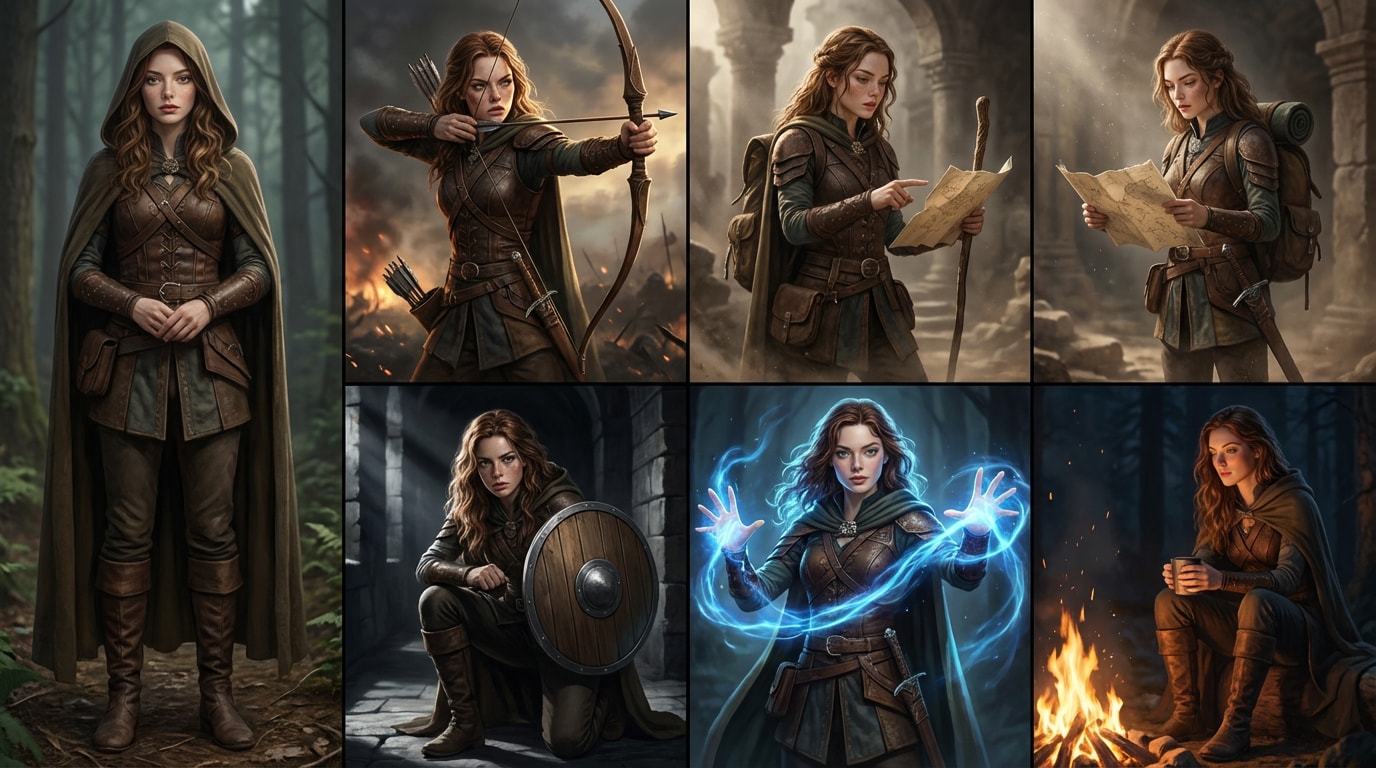
In March 2026, AI roleplay characters have become the creative engine driving one of the fastest-growing segments of the AI industry. The AI roleplay chatbot market is valued at approximately $1.20 billion** and is projected to reach **$8.92 billion by 2033 — a CAGR of 28.5% (Skywork.ai / DataInsightsMarket). Character.AI alone has 20 million monthly active users who have created over 18 million unique AI characters (DemandSage), with users spending an average of two hours per day in character-driven conversation (DemandSage). According to Pew Research Center, 64% of U.S. teens now use AI chatbots, with roughly three-in-ten doing so daily (Pew Research Center).
The demand is unmistakable: people don't just want AI that talks — they want AI that becomes someone. Whether you're a writer crafting believable NPCs, a gamer seeking companions that remember your story, a language learner practicing with culturally authentic personas, or a professional rehearsing with realistic stakeholder characters — AI roleplay characters are the foundation of every immersive AI experience.
Jenova's Roleplay Game Master was purpose-built for exactly this — unlimited memory, perfect character consistency, and adaptive personas across any genre — powered by frontier models like GPT-5.4 and Claude Opus 4.6.
Quick Answer: What Are AI Roleplay Characters?
AI roleplay characters are AI-generated personas with defined identities, personalities, speech patterns, emotional triggers, and behavioral constraints — designed to maintain consistent, believable interactions across conversations, adapt to user choices in real time, and sustain narrative continuity without pre-scripted dialogue.
- 🎭 Characters that never break — personality, voice, and memory persist indefinitely with the Roleplay Game Master
- 🧠 Adaptive intelligence — characters with goals, fears, and agendas that evolve based on your actions
- 🌍 Any genre, any persona — fantasy warriors, noir detectives, historical figures, professional stakeholders, language tutors
- 🔄 Multi-model flexibility — switch between GPT-5.4, Claude Opus 4.6, Gemini 3.1 Pro, and more mid-session
The Problem: Why Most AI Roleplay Characters Fall Flat
Despite explosive market growth — with 42% of consumers expressing interest in using AI for creative activities including storytelling and character development, and 25% of generative AI users already writing stories or scripts with these tools (Bayelsa Watch / Data Insights Market) — most AI roleplay characters still fail to feel real. The data confirms it.
🧠 Characters That Forget Who They Are
In a Character.AI user poll, 46% of users cited the ability to manually edit character messages as their most-wanted feature, while 29% demanded better memory — reflecting widespread frustration with personality drift in extended conversations.
— DemandSage / Character.AI Reddit
Most platforms operate within limited context windows. Once a conversation exceeds that threshold, character details — names, backstories, speech patterns, relationship dynamics — get silently dropped. The villain who swore revenge in session 3 greets you like a stranger in session 10. Industry analysis confirms that "maintaining character consistency across long conversations remains a technical hurdle" and a key market differentiator most platforms still struggle with (Skywork.ai).
A January 2026 study on Maximum Effective Context Windows found that most models perform well below their advertised limits in practice, with some degrading significantly by 1,000 tokens and nearly all falling short of their architectural maximum by more than 99% under real-world conditions (AIMultiple).
🎭 Characters That All Sound the Same
The gap between a character description and a believable persona is enormous. Writing "You are a brave warrior" gives the AI nothing distinctive to work with — no speech patterns, no emotional triggers, no behavioral constraints. The result is interchangeable characters that feel like the same chatbot wearing different costumes. As one extensive testing analysis found after 237 hours of prompt testing, 89% of interactions scored under 3 out of 10 — because characters lacked specific constraints, internal conflict, and emotional stakes (Skywork.ai / CARE Framework Analysis).
🔒 Platform Restrictions vs. Creative Freedom
Character.AI's valuation dropped from $2.5 billion in 2024 to $1 billion in 2025 (DemandSage), with users on Reddit citing the platform's focus on "adding features nobody wanted" while "neglecting the chatting experience" (
). Strict content filters interrupt legitimate creative narratives, while alternatives like Janitor AI require users to bring their own API keys and manage technical complexity. Users are forced to choose between accessibility and character depth.📉 Single-Model Lock-In
Different characters demand different AI strengths. A psychologically complex antagonist needs nuanced prose. A mystery-solving detective needs sharp logical reasoning. A sprawling ensemble cast needs massive context retention. Being locked into one model means accepting its weaknesses across every character you create.
Why Roleplay Game Master
This is exactly what Jenova's Roleplay Game Master was built for — a specialized AI agent designed from the ground up for creating and sustaining AI roleplay characters that feel genuinely alive.
| Challenge | Typical Platforms | Roleplay Game Master on Jenova |
|---|---|---|
| Character memory | Context drift after 20–50 turns | Unlimited persistent memory across sessions |
| Persona consistency | Personality shifts mid-conversation | Maintains perfect character fidelity indefinitely |
| Model flexibility | Locked to one model | Switch between GPT-5.4, Claude Opus 4.6, Gemini 3.1 Pro, and more |
| Content control | Either strict filters or no guardrails | User-directed creative freedom with responsible defaults |
| Character depth | Generic responses regardless of persona | Adaptive characters with goals, fears, and evolving agendas |
| Multi-character management | Each character isolated | Persistent world state tracking all NPCs simultaneously |
While ChatGPT and Gemini can handle basic character interactions through careful prompting, they're general-purpose assistants — not purpose-built for persona fidelity, NPC management, or multi-session character arcs. Character.AI offers massive variety with over 18 million user-created characters (DemandSage), but users consistently report memory limitations and strict content filters as frustrations. The Roleplay Game Master combines frontier model access with specialized character architecture: it understands persona psychology, speech pattern maintenance, relationship tracking, and the difference between a character who evolves and one who drifts.
What Makes Characters Come Alive
Unlimited memory means every character detail you establish persists forever. Your 50th session picks up exactly where your 49th left off — every NPC relationship, every character trait, every speech pattern you defined. No recaps needed. Retrieval-augmented memory achieves 26% higher response accuracy than native memory features alone (AIMultiple / Mem0 Research), and the Roleplay Game Master leverages persistent storage architecture rather than context window tricks.
Multi-model access means you can match the right AI to each character's demands. Need Claude Opus 4.6's nuanced prose for a psychologically complex villain? Switch. Want GPT-5.4's reasoning for a detective character solving a mystery? Switch. Your characters and story stay intact.
Adaptive NPCs don't just follow your instructions — they develop goals, fears, and agendas that evolve based on your actions. Betray an ally, and they remember. Help a stranger, and it ripples through every character in the world.
Try Roleplay Game Master free — no credit card required.
Related Agents You'll Also Like
🏚️ The Mansion
A standalone mystery experience with pre-built characters: you wake in a sprawling mansion with no memory, and must interact with the house's inhabitants — each with their own secrets, motivations, and suspicions — to uncover the truth and survive.
- Pre-built cast of characters with deep backstories and hidden agendas
- Puzzle-driven progression where character interactions unlock new paths
- Atmospheric horror with NPCs that adapt to your investigation style
🏝️ Love Island
An open-world romance simulation where eight procedurally generated characters arrive on a private island — each with autonomous desires, distinct personalities, and emergent social dynamics. These aren't scripted NPCs — they pursue their own goals, form alliances, and create drama without your input.
- Procedurally generated contestants with unique personality profiles
- Authentic rejection, jealousy, and alliance dynamics
- Infinite replayability through emergent character interactions
✍️ Creative Fiction Writer
Your storytelling partner for transforming character-driven roleplay sessions into polished prose. Use it alongside the Roleplay Game Master to develop character voices, test dialogue authenticity, and polish the resulting scenes into manuscript-ready fiction.
- Three-mode workflow: Planning, Writing, and Critique
- Character voice consistency across extended manuscripts
- Real-time research with cited sources
🏚️ The Asylum
Horror investigation with deeply crafted NPC characters: explore a shuttered psychiatric institution where patients and staff left behind records, logs, and physical clues — each revealing fragments of interconnected character stories that build toward a disturbing revelation.
- Environmental character storytelling through patient records and staff logs
- Psychological horror that adapts to your fear responses
- Multiple investigation paths with distinct character revelations
How It Works: Creating AI Roleplay Characters That Feel Real
Getting started with the Roleplay Game Master takes about 30 seconds. Here's a step-by-step guide to building characters that sustain immersion across unlimited sessions.
1. Define Identity Through Internal Conflict
Don't write "You are a detective." Write a character with tension at their core:
"You are Inspector Maren Solberg, 41, a homicide detective in a rain-soaked Scandinavian city. You solve cases through obsessive pattern recognition, not intuition. You haven't slept properly in three years. You're brilliant at reading people because you understand darkness intimately — and you're not sure if that makes you good at your job or just broken."
Internal conflict creates organic character development. The AI now has tension to work with — every interaction becomes an opportunity for the character to reveal or conceal their inner struggle.
2. Add Speech Patterns and Behavioral Constraints
Characters sound distinct when you define how they talk, not just what they know:
"Maren speaks in short, clipped sentences when focused. She uses dark humor as deflection. She never says 'I feel' — she describes physical sensations instead ('My chest tightens' rather than 'I'm anxious'). She interrupts when she's figured something out. She goes silent when she's wrong."
3. Define Emotional Triggers
Give the AI specific situations that provoke specific reactions:
"Cases involving children make her hands shake. Being called 'cold' by colleagues makes her overcompensate with forced warmth. Seeing someone lie about something small makes her more suspicious than seeing them lie about something big."
4. Provide Few-Shot Examples
Show the AI the character's voice through 2–3 sample exchanges:
"Example — when asked about a case: 'The blood spatter says he was standing. The witness says he was sitting. One of them is lying, and blood doesn't have a motive.'
Example — when a colleague asks if she's okay: 'I ate lunch. That counts.'
Example — when confronting a suspect: Long pause. 'You moved the chair. Why did you move the chair?'"
5. Launch and Iterate
Open the Roleplay Game Master, describe your character, and start interacting. If the persona drifts, refine your constraints. If the dialogue feels generic, add more specific speech markers. The best characters evolve through testing.
6. Switch Models for Different Character Demands
If your psychologically complex character needs more nuanced emotional prose, switch to Claude Opus 4.6. If your mystery-solving detective needs sharper logical reasoning, switch to GPT-5.4. Your characters and story persist across model changes.
Results & Use Cases
📖 Creative Writers Testing Character Voices
Scenario: A novelist wants to test whether a villain's dialogue feels authentic before committing thousands of words to manuscript.
Traditional approach: Writing sample scenes alone, with no feedback on whether the voice is distinctive or the personality holds under pressure.
With Roleplay Game Master: The writer builds a detailed character profile and roleplays as their protagonist while the AI embodies the villain — testing how the antagonist responds to provocation, whether their voice stays consistent, and how they react to scenarios the writer hasn't planned for. Pair it with the Creative Fiction Writer to polish the resulting scenes into manuscript-ready prose.
🎮 Tabletop RPG Players Building NPC Ensembles
Scenario: A D&D Game Master wants to create memorable NPCs for their campaign but struggles to voice multiple distinct characters simultaneously.
Traditional approach: Improvising NPC dialogue on the spot, often defaulting to the same voice and personality for every character.
With Roleplay Game Master: The GM writes detailed profiles for key NPCs — the suspicious innkeeper, the overconfident mercenary, the cryptic oracle — and runs practice conversations to develop each voice. The AI tracks NPC relationships, quest logs, and world state automatically, maintaining every character's personality across unlimited sessions.
🗣️ Language Learners Practicing with Culturally Authentic Characters
Scenario: A Korean language student wants conversational practice with characters who speak naturally — not textbook robots.
Traditional approach: Language exchange apps with inconsistent partners, or scripted dialogue exercises that feel artificial.
With Jenova: Start with the Roleplay Game Master for freeform character interactions in Korean, then switch to Learn Korean Through Roleplay for structured immersion — navigating a Seoul job interview, resolving a misunderstanding at a guesthouse, or negotiating at Namdaemun Market, with characters who use authentic speech levels and cultural context.
💼 Professionals Rehearsing with Realistic Stakeholder Characters
Scenario: A sales team needs to practice handling aggressive objections from enterprise buyers before a major deal.
Traditional approach: Peer roleplay with a colleague who doesn't push back hard enough or embody the buyer's actual personality.
With Jenova: The Roleplay Game Master creates realistic buyer characters — a skeptical CFO with budget constraints, a technical evaluator comparing competitors, a procurement officer focused on compliance — each with distinct personalities, communication styles, and hidden agendas. AI roleplay simulations boost employee soft-skill development by 30% while decreasing training duration by 40% (Bayelsa Watch). Follow up with the Sales Coach for structured feedback on technique.
📱 Mobile Character Interactions on the Go
Scenario: A commuter wants 20 minutes of immersive character interaction on their phone.
With Jenova's mobile app: Pick up your ongoing story with all characters intact, play a quick scene, and close the app. Persistent memory means every character remembers you — whether you play for 5 minutes or 5 hours.
FAQ
What are AI roleplay characters and how do they work?
AI roleplay characters are AI-generated personas with defined identities, personalities, speech patterns, and behavioral constraints. You describe a character's traits, and the AI maintains that persona across conversations — adapting to your choices, sustaining narrative continuity, and generating dynamic dialogue without pre-scripted trees. Specialized agents like the Roleplay Game Master maintain unlimited memory, ensuring character consistency across unlimited sessions and managing multiple NPCs simultaneously.
How do I prevent AI characters from breaking character?
Character drift happens when personas lack specific behavioral constraints. Use techniques like: defining internal conflict (not just a role), providing speech pattern markers (how they talk, not just what they know), establishing emotional triggers (specific situations that provoke specific reactions), and including few-shot dialogue examples (2–3 sample exchanges that calibrate the voice). Platforms with unlimited persistent memory — like the Roleplay Game Master — maintain character consistency across sessions without requiring you to re-enter your persona definition.
Are AI roleplay characters free to create?
Yes. Jenova offers a free tier that includes access to all core features, including the Roleplay Game Master and pre-built character experiences like The Mansion, Love Island, and The Asylum. For heavier usage, paid plans start at $20/month (Plus) and scale based on volume. No credit card is required to start.
How does Jenova compare to Character.AI for creating characters?
Character.AI is the largest dedicated character platform with 20 million monthly active users and over 18 million user-created characters (DemandSage). However, users frequently cite memory limitations, strict content filters, and personality drift as frustrations — 46% want message editing and 29% want better memory. Jenova's Roleplay Game Master offers unlimited persistent memory, multi-model access (GPT-5.4, Claude Opus 4.6, Gemini 3.1 Pro, and more), and user-directed creative control — addressing the exact pain points Character.AI users report most.
Is my character data private?
Jenova's data is never used for model training, is encrypted in transit and at rest, and is never sold to advertisers. This contrasts with many consumer platforms where 45% of consumers express concerns about data privacy in AI companion platforms (Bayelsa Watch). Your characters, stories, and conversations remain yours.
What AI models work best for different character types?
Jenova provides unified access to GPT-5.4 (OpenAI), Claude Opus 4.6 (Anthropic), Gemini 3.1 Pro Preview (Google), plus models from xAI and DeepSeek. Different models excel at different character demands: Claude Opus 4.6 handles psychologically complex characters with deep emotional nuance; GPT-5.4 excels at characters requiring logical reasoning and structured behavior; Gemini 3.1 Pro offers massive context windows for maintaining coherence across large character ensembles. You can switch between models mid-session — your characters and memory persist across model changes.
Conclusion
AI roleplay characters in 2026 power a $1.2 billion market growing at nearly 30% annually (Skywork.ai / DataInsightsMarket), with users spending an average of two hours per day in character-driven conversations (DemandSage) and 64% of U.S. teens now using AI chatbots (Pew Research Center). The demand for believable, persistent, emotionally intelligent AI characters has never been higher — and the quality of the character you create determines the quality of every interaction that follows.
The gap between a generic "You are a warrior" and a fully engineered character with internal conflict, speech markers, emotional triggers, and behavioral constraints is the gap between a conversation that dies in 3 messages and one that runs for 50 sessions. The Roleplay Game Master ensures your characters reach their full potential — with unlimited memory that never forgets a trait, multi-model access that matches the right AI to each persona's demands, and adaptive intelligence that builds on your character definitions in ways that surprise you.
Whether you're crafting complex villain psychologies, testing character voices for your novel with the Creative Fiction Writer, practicing Korean through culturally authentic characters with Learn Korean Through Roleplay, rehearsing negotiations with the Sales Coach, or exploring pre-built character experiences like The Mansion and Love Island — the right platform makes the difference between a forgettable chatbot and a character you'll remember.
Start creating your first character with Roleplay Game Master now — free, no credit card required. Or explore the full agent library at Jenova.