AI Roleplay Author's Note: Steer Tone, Pacing & Story Direction
2026-10-19
Roleplay Game Master helps you run long, immersive AI roleplay sessions where the story stays on genre, on tone, and in character. You don't have to keep fixing drift by hand. As of October 2026, the AI roleplay author's note is still the most common tool for steering a story. It is a short, bracketed instruction that tells the AI how to write the next part of the story. The catch is that most tools make you manage placement, depth, and frequency yourself. Roleplay Game Master pairs plain-language steering with persistent memory and consistent characters, so your directions stick.
- ✅ Steer genre, tone, tense, and pacing in plain language, mid-scene
- ✅ Keeps established lore, character traits, and plot threads across long sessions
- ✅ Any genre, from epic fantasy and horror to slow-burn romance and sci-fi
- ✅ Works on web, iOS, and Android
Before getting into technique, it helps to understand why author's notes exist at all. They are a workaround for a specific limitation in how language models read your story, and they can fail in specific ways.
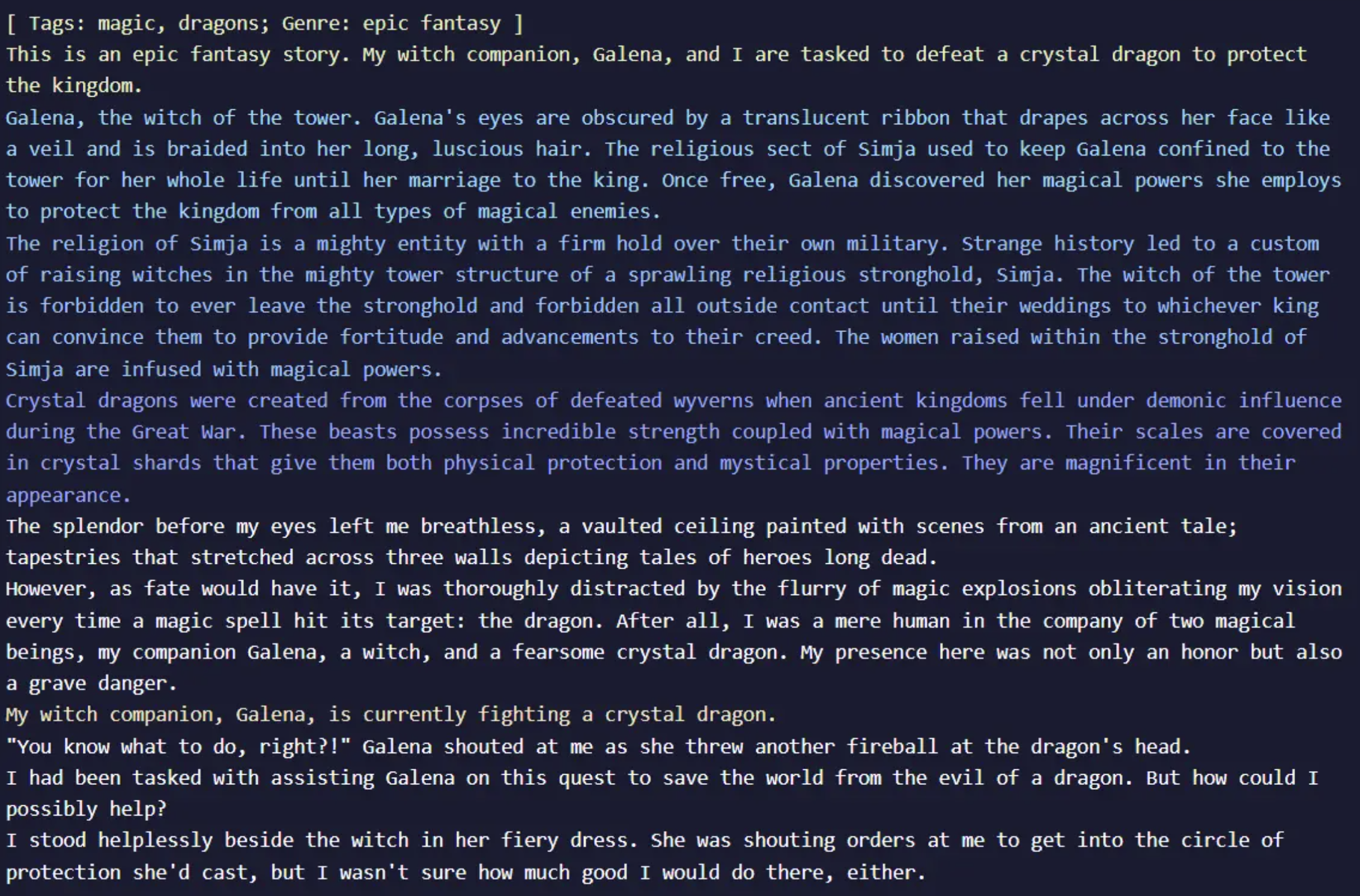
Quick Answer: What Is an AI Roleplay Author's Note?
An AI roleplay author's note is a short, bracketed instruction inserted near the end of the AI's context that tells it how to write the next response. It covers things like genre, tone, style, pacing, and scene facts.
The note works because the model weights recent text most heavily. That makes it more forceful than instructions buried at the top of the prompt.
Key capabilities:
- Lock in genre and tone, such as
[Genre: epic fantasy. Tone: desperate, high stakes.] - Enforce prose rules like tense, point of view, response length, and dialogue formatting
- Inject temporary scene facts, such as an injury, a location, or a character who cannot speak
- Course-correct when the story drifts, without rewriting the whole setup
Why Author's Notes Break Down in Long Roleplay
Every language model reads a limited window of text. As AI Dungeon's guidebook explains, a story quickly becomes larger than that context. The AI only sees the most recent part of the adventure.
The author's note compensates by sitting near the end of every input. Text in square brackets reads to the model as authorial direction rather than story text, which is why the note carries so much weight.
SillyTavern's documentation puts it plainly: the closer the note sits to the bottom of the prompt, the more impact it has on the next AI response. The RP|Fiend guide to roleplay system prompts adds a caveat: author's notes are great for steering an ongoing narrative, but they're "volatile and context-dependent."
3–4 sentences — AI Dungeon's recommended maximum length for an Author's Note, to avoid the AI fixating on its details
Under 20 minutes — of guided instruction significantly changed how creative writing students used AI and raised creativity scores, according to Oregon State University researchers
That last number matters for roleplayers. Readers, including you, notice flat, generic AI prose. An author's note is your main defense against it.
But getting the note to work reliably is frustratingly fiddly:
- Placement and frequency are manual. Frontends ask you to choose an insertion depth and frequency. In SillyTavern, depth 4 places the note before the three most recent messages. Most players guess at these values.
- Notes get overweighted. Overstuffed notes make the AI fixate on note details instead of what just happened in the scene.
- Lore falls out of context. The note can enforce tone, but it can't restore the worldbuilding that scrolled out of the window three hours ago.
- Chat-specific notes don't carry over. SillyTavern notes that the current chat's author's note isn't automatically transferred to new chats.
Look at the screenshot above. The bracketed tag line sets the genre cleanly. Mid-scene, though, the prose slips from past tense into "My witch companion, Galena, is currently fighting a crystal dragon," and that line repeats what was already established. This is classic drift. A single line in the author's note, Tense: past, first person; no recaps, would have caught it.
This is exactly what Roleplay Game Master was built for.
Why Roleplay Game Master Handles Story Steering Better
Roleplay Game Master is a dedicated AI game master for open-ended roleplay. It keeps everything you've established in memory and holds every character to their defined personality. That means your author's note can do its real job, steering style and direction, instead of also patching memory gaps.
You steer in natural language, in or out of character, whenever you want. There are no depth or frequency settings to tune.
| Traditional Author's Note Workflow | Roleplay Game Master |
|---|---|
| Manually set insertion depth and frequency | Give direction in plain language whenever you need it |
| Lore scrolls out of context and must be re-pasted | Established lore and plot threads stay in memory |
| Characters drift as sessions grow longer | Characters stay consistent with their defined traits |
| Notes reset when you start a new chat | Your world and preferences carry through the campaign |
| Overstuffed notes cause fixation | Keep notes lean, because memory handles the facts |
Plain-Language Direction, Mid-Scene
You don't need special syntax. Bracketed notes work well because models treat brackets as authorial asides, but you can also just tell the game master what you want:
"[Out of character: slow the dragon fight down. One action per reply, more sensory detail, and keep it in past tense first person.]"
"From here on, the tone shifts to dread. Galena is exhausted and starting to doubt the protective circle will hold."
Long-Campaign Memory
The real weakness of author's notes is that they can't hold a world together. Roleplay Game Master remembers established lore so your note doesn't have to carry it. In the screenshot's story, that lore includes the Simja sect, the tower, and crystal dragons forged from wyvern corpses during the Great War. Your note stays short, which matches AI Dungeon's 3–4 sentence guidance.
Character Consistency
A witch raised in isolation should sound different from a battle-hardened knight. The game master keeps each voice and motivation stable across scenes. You won't need to keep re-asserting [Galena is commanding, impatient, fiercely protective] every few turns.
Author's Note Templates That Work
Strong notes follow the AI Dungeon tip of being "dense but detailed." "Fantasy story" is too thin. Try these patterns:
"[Genre: epic fantasy. Tone: urgent, awe-struck. POV: first person, past tense. Pacing: one beat per reply.]"
"[Style: lyrical, sensory-heavy prose. Avoid summarizing. End each reply on a moment of tension.]"
"[Scene fact: the narrator's left arm is burned and useless. The circle of protection flickers when Galena casts.]"
That third pattern mirrors SillyTavern's documented use of the note as "temporary World Info," meaning scene facts that matter now but not forever.
Related Agents You'll Also Find Useful
If your roleplay sessions are turning into something bigger, these agents pick up where the game master leaves off.
Creative Fiction Writer
If you're also turning a great roleplay session into a real story, Creative Fiction Writer can take it from raw transcript to polished prose. Writers already do this routinely: a Medium piece on turning roleplay sessions into fiction drafts describes the workflow.
- Deep research for authentic, internally consistent worlds
- Editorial insight on structure, pacing, and character arcs
- Support from first draft to final manuscript
Love Island
Prefer emergent drama over directed plot? Love Island drops you onto a private island with eight single strangers, and the relationships unfold from your choices.
- Open-world romance with emergent social dynamics
- Connections and rejections driven by your decisions
- Good practice for steering a story through character choices rather than notes
Learn Spanish Through Roleplay
If you want your roleplay hours to double as language practice, this agent runs fully immersive scenarios in Spanish, in any theme.
- Vocabulary and grammar that stick because the moments matter
- Complete creative freedom over scenario and setting
- Turns every scene into natural conversation practice
You can start a Roleplay Game Master session free and test your first author's note in a few minutes.
How to Use an Author's Note in AI Roleplay
Step 1: Set the World and Genre
Open Roleplay Game Master and describe your setting, your character, and the genre in one opening message. This becomes the foundation the game master remembers, so your later notes can focus on style.
"Epic fantasy. I'm a non-magical human assigned to assist Galena, a witch freed from the Simja tower, in killing a crystal dragon. Start mid-battle."
Step 2: Add a Lean Author's Note
Add a bracketed note covering only the essentials: genre tags, tone, tense, and point of view. Keep it to 3–4 short lines so the AI weights the scene over the note.
"[Tags: magic, dragons. Genre: epic fantasy. Tone: desperate. First person, past tense.]"
Step 3: Course-Correct When the Story Drifts
When you spot drift, issue a targeted note rather than rewriting your setup. Drift can look like a tense slip, a character acting out of type, or the pacing rushing past a key moment.
"[Fix: stay in past tense. Don't recap what Galena already said. Slow down and let the dragon's first counterattack land.]"
Step 4: Use Temporary Notes for Scene Facts
Inject short-lived facts that should shape only the next few replies, then retire them once the scene moves on.
"[For this scene: the protective circle is failing. Every spell Galena casts weakens it.]"
Step 5: Separate Display Settings from Story Settings
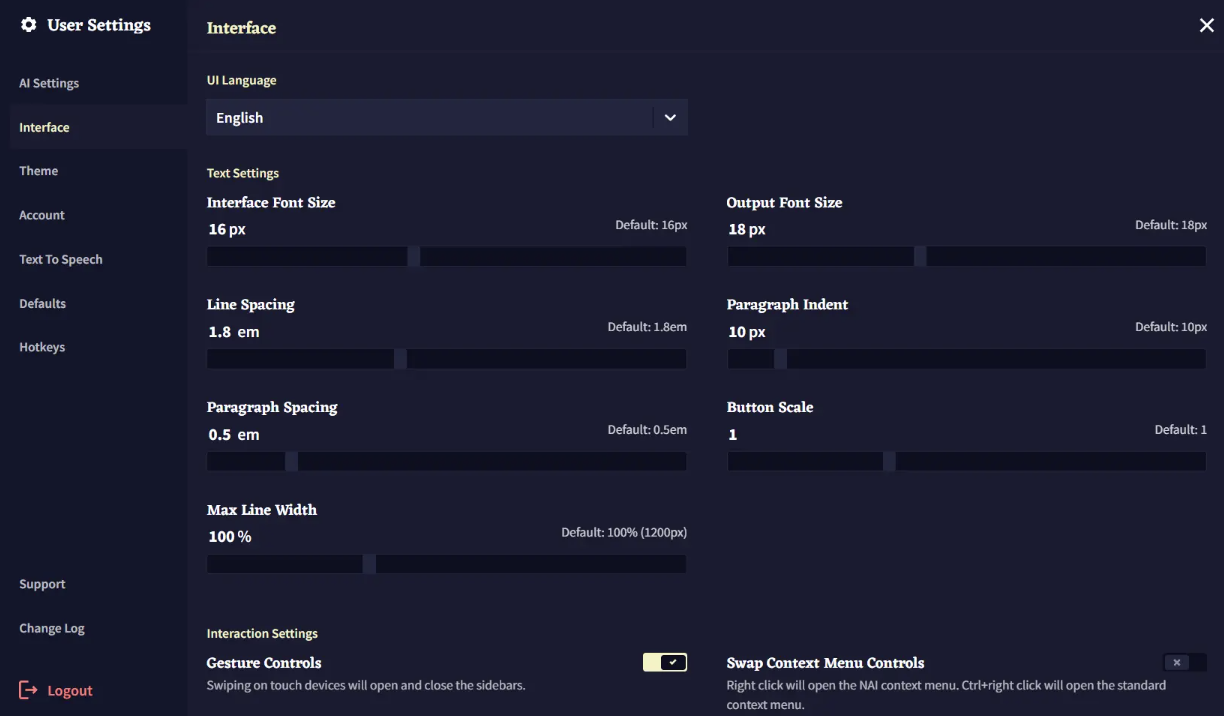
Many AI storytelling apps put readability controls in a settings panel. These include output font size, line spacing, and paragraph indent. They change how prose looks, not what the AI writes. If the writing feels wrong, fix it with the author's note, not the interface.
Results & Use Cases
🐉 Long Fantasy Campaigns Without Lore Collapse
Scenario: A player runs a multi-week campaign with a religious order, tower-raised witches, and a custom bestiary.
Traditional Approach: The player re-pastes lore into notes or world-info entries every session and still watches details contradict themselves.
Roleplay Game Master: Try Roleplay Game Master and the established lore stays in memory. The author's note handles only tone and pacing.
- Fewer contradictions in worldbuilding
- Shorter, more effective notes
- More time playing, less time maintaining
📱 Quick Mobile Sessions on the Commute
Scenario: A roleplayer continues a horror story in 15-minute bursts on their phone.
Traditional Approach: They reopen a desktop frontend, re-check depth and frequency settings, and reorient the AI with a long recap.
With the game master on mobile: They type one bracketed line, such as "[Tone: creeping dread, short sentences]", and pick up exactly where they left off.
- No settings to reconfigure on a small screen
- Story context waiting where they left it
- Short sessions that still feel continuous
✍️ From Roleplay Transcript to Manuscript
Scenario: A writer uses roleplay to find a character's voice before drafting a novel, an approach litmemo describes for character dialogue.
Traditional Approach: They export messy chat logs and manually untangle tense shifts, repetition, and inconsistent characterization.
With the game master plus Creative Fiction Writer: Strict author's notes on tense and POV produce cleaner raw material. The fiction-writing agent then shapes it into chapters.
- Cleaner source material from the first session
- Consistent character voice to build on
- A direct path from play to prose
Frequently Asked Questions
What should I put in an AI roleplay author's note?
Focus on what the AI should do next: genre tags, tone, tense, point of view, pacing, and any temporary scene facts. Keep it dense but short, around 3–4 sentences per AI Dungeon's guidance. Put permanent worldbuilding and character bios in your setup or memory instead. Overloading the note makes the AI fixate on note details rather than the current scene.
What's the difference between an author's note and a system prompt?
A system prompt sits at the very beginning of the context and sets broad, persistent rules. An author's note is inserted near the end, so it has more direct influence on the next response. AI Dungeon compares them memorably: if instructions are a support rep, the author's note is "Can I speak to the manager?" Use the system prompt for general rules and the note for urgent, scene-level steering.
Where should an author's note be placed in the context?
Closer to the end means stronger influence. SillyTavern's documentation explains that depth 0 places the note at the very end of chat history. Depth 4 places it before the three most recent messages. Many players start at depth 4 for steady guidance and drop to depth 0 or 1 only when they need an immediate correction, such as fixing tense drift.
Does Roleplay Game Master support author's notes?
Yes. You can steer Roleplay Game Master with bracketed notes or plain out-of-character instructions at any point, with no depth or frequency settings to configure. It also keeps lore and characters consistent through long sessions. That means your notes can stay short and focused on style, tone, and pacing instead of re-establishing facts the story already knows.
Is it free to use an AI roleplay game master?
You can start on Jenova's free tier, which includes all core features with limited usage. Paid plans start at $20 per month for 30× the free usage and custom model selection, with higher tiers for heavier play. Usage resets monthly on your billing date, with no daily caps, so long weekend sessions don't hit a wall partway through.
Conclusion
The author's note persists in AI roleplay because it solves a real problem. Models weight recent text heavily, and a bracketed instruction near the end of the context is the most direct way to control genre, tone, and pacing.
On its own, though, the note is volatile. It is sensitive to placement, easy to overstuff, and powerless against lore that has fallen out of context. The fix is to pair lean, well-written notes with a game master that remembers your world and keeps characters consistent.
Write tight notes, correct drift early, and let memory carry the facts. Start your next campaign with Roleplay Game Master and see how far a three-line author's note goes when it doesn't have to do everything. Explore more at Jenova.
For Developers: Roleplay Game Master is available programmatically via the Jenova API. You can integrate long-memory, character-consistent interactive storytelling into your application with a single API call. Full documentation →