AI Rising Sign Calculator: Find Your Ascendant and What It Means
2026-08-10
An AI rising sign calculator does what a standard lookup form cannot: it identifies the zodiac sign that was climbing over the eastern horizon at the exact moment you were born, then explains what that ascendant actually governs — your outward manner, your first instincts, and the entire house structure of your chart. Jenova hosts a library of expert AI agents built for precisely this kind of work: chart-aware, conversational, and grounded in your real birth data rather than a generic zodiac template. The ascendant shifts roughly every two hours, and its exact degree advances every few minutes, which is why this placement punishes imprecision more than any other.
✅ Ascendant identified from your birth date, exact time, and location ✅ Interpretation covering the ascendant sign, its ruling planet, and house structure ✅ Conversational handling of uncertain or missing birth times ✅ Free tier available on web, iOS, and Android with full feature parity
Before looking at how AI changes the process, it's worth understanding why rising sign lookups fail so often — and why the birth time requirement stops most people at the very first field of the form.

Quick Answer: What Is an AI Rising Sign Calculator?
An AI rising sign calculator determines which zodiac sign was ascending on the eastern horizon at your birth using your date, exact time, and location — then interprets that placement rather than returning the sign name alone.
Key capabilities:
- Identifies your ascendant from precise birth data, accounting for location and time zone
- Explains what the rising sign governs — outward manner, first reactions, physical presence, and self-image
- Establishes your house structure, since the ascendant defines the first house and everything that follows
- Delivers conversational interpretation through the Personal Astrologer, so you can ask follow-up questions instead of reading a fixed paragraph
The Problem: Why Rising Sign Lookups Break Down
Astrology has moved decisively into software. The astrology app market is valued at $5.69 billion and forecast to reach $11.71 billion by 2030 at a 19.8% compound annual growth rate, with the report naming AI-driven birth chart analysis and personalized horoscope generation among the leading trends of the forecast period.
$5.69 billion** — current global astrology app market value, projected to reach **$11.71 billion by 2030 at a 19.8% CAGR — Research and Markets, Astrology App Market Report
Every 1–2 hours — how often the rising sign changes, with the exact ascendant degree advancing every couple of minutes — CHANI
But the tools most people find stop at the calculation. Finding your rising sign is trivial if your data is perfect. That's the catch:
- Most people don't know their exact birth time — and the ascendant is unforgiving about it
- A 15-minute error can change your entire chart — not just the ascendant, but every house placement
- Calculators return a sign name with no interpretation — "Scorpio rising" means nothing on its own
- The ruling planet is almost always omitted — yet it fundamentally modifies the reading
- Static forms can't help you when data is missing — they either fail or quietly guess
The Ascendant Is the Most Time-Sensitive Point in Your Chart
Your birth chart is a freeze-frame of the sky. As CHANI explains, the rising sign is the sign climbing over the eastern horizon at any given moment, and it is the point that most intimately represents you — your body, your vitality, your sense of self. Rising signs shift every one to two hours, with the entire zodiac rotating over the horizon across a 24-hour period. The exact degree advances every couple of minutes.
Practitioners are blunt about the tolerance involved. One ascendant tool notes that because the ascendant changes roughly every two hours, even a 15–20 minute error can land you in a different rising sign or shift your house cusps.
Getting the Ascendant Wrong Breaks the Entire Chart
This is the part most people miss. The ascendant is not just one placement among many — it is the anchor for the whole house system. As Cafe Astrology puts it, the ascendant defines the houses, meaning that if you shift the ascendant, you shift all the planets and bodies in the chart, bumping them to different houses.
CHANI describes the same cascade: your rising sign forms your first house of self and identity, the next sign becomes the second house of assets and livelihood, the sign after that the third house of communication and daily life, and so on. If you don't know your rising sign, you won't know what signs correspond to what houses — and the MC, IC, and DC angles are lost along with it.
A Sign Name Is Not a Reading
Free calculators are built to do the ephemeris math and print a result. The astronomy is reliable. But knowing you have a Capricorn ascendant tells you nothing about why people read you as the responsible one, or why you present as more reserved than your sun sign would suggest.
Cafe Astrology's own guidance makes the layering explicit: the characteristics of an ascendant sign are modified by planets conjunct the ascendant, planets that aspect the ascendant, and the position of the ruling planet of the sign on the ascendant. A person with an Aries ascendant whose Mars sits in Sagittarius responds to the world differently than another Aries rising whose Mars is in Scorpio. Almost no lookup tool surfaces any of this.
Guessing Your Ascendant Doesn't Work
The temptation, when the birth time is unknown, is to read all twelve descriptions and pick the one that sounds right. Cafe Astrology advises against it directly — it's tempting, but it's complicated, because the ascendant is more than a set of traits. It's refined by aspects and by its ruler's position, and shifting it reshuffles the entire chart.
Static Tools Can't Work the Problem With You
When birth data is incomplete, what you need is a method, not an error message. CHANI recommends a structured approach: pull the chart using the earliest possible time, then the latest possible time — if the sign is the same for both, you've found your ascendant; if not, you've narrowed it to two possibilities to read and compare. That's a conversation, not a form submission.
This is exactly what Jenova was built for.
The Jenova Solution: Calculation, Interpretation, and Conversation
Jenova takes a fundamentally different approach from a single-purpose calculator. Rather than a form that returns a static result, the platform hosts specialized AI agents built with deep domain knowledge for specific workflows — including a dedicated astrologer that determines your ascendant, explains its full implications, works through uncertain birth times with you, and remembers your chart for every conversation afterward.
| Traditional Approach | Jenova |
|---|---|
| Form returns a sign name and stops | Full interpretation of the ascendant, its ruler, and house structure |
| Fails or guesses when birth time is unknown | Works the ambiguity conversationally using the earliest/latest method |
| Silent time zone errors produce wrong charts | Data checked and clarified before interpretation |
| Ruling planet position ignored | Chart ruler placement identified and factored into the reading |
| No follow-up questions possible | Unlimited conversation in natural language |
| Chart forgotten when you close the tab | Persistent memory across all future sessions |
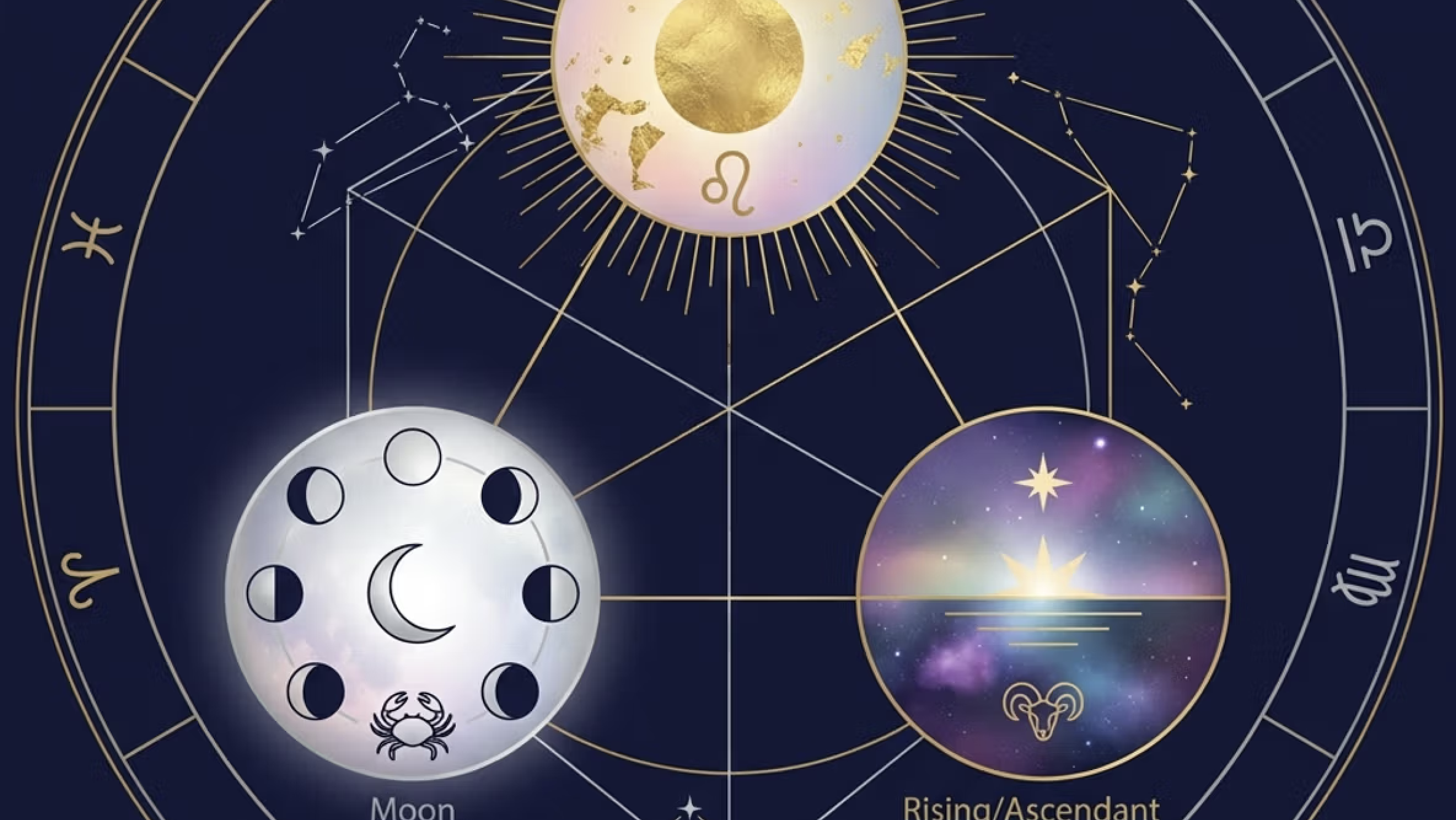
Ascendant Reading With the Full Picture
The Personal Astrologer interprets planetary movements and natal chart patterns, delivering readings grounded in celestial wisdom and psychological insight. Give it your birth data once and it identifies your rising sign, locates its ruling planet, notes any planets conjunct the ascendant, and lays out the resulting house structure.
"I was born 22 September 1997 at 11:15 PM in Manila, Philippines. What's my rising sign, and where is its ruling planet?"
"I have a Libra ascendant with Venus in Scorpio. How does that change the standard Libra rising description?"
"My sun is in Leo but my rising is Capricorn. People say I seem serious — is that the ascendant doing the work?"
Handling an Unknown Birth Time the Right Way
If your birth time is uncertain, a static calculator either refuses or produces a confident wrong answer. A conversational agent can run the earliest-time / latest-time comparison CHANI recommends, narrow the field to one or two candidates, and then test those descriptions against how you actually move through the world — including how others perceive you, which is the practical evidence the ascendant leaves behind.
Memory That Makes the Chart Cumulative
Your natal chart never changes, but your understanding of it deepens over months. Jenova's persistent memory means the agent holds your birth data and past conversations, so a question in month six builds on what was established in week one. No re-entering birth details. No starting from scratch.
Multi-Model Intelligence Behind Every Reading
Jenova provides always-current access to the newest models from OpenAI, Anthropic, Google, DeepSeek, xAI, and others. Subscribers select which model powers their agent, and supported models offer a reasoning toggle for slower, more thorough synthesis when working through a complex chart.
Grounded in Your Own Materials
Attach your natal chart printout, an ephemeris table, or astrological reference texts as a knowledge base. The agent reads from your documents rather than improvising — useful when you want interpretations aligned with a specific tradition or school, whether tropical Western, Vedic, or whole-sign versus Placidus houses.
Specialized AI Agents for Chart Work and Self-Knowledge
Rising sign questions rarely stay contained. People asking about their ascendant are usually working toward a broader question about identity, perception, and self-understanding. Jenova's library covers that whole territory.
Core Astrology and Chart Work
Personal Astrologer — Your dedicated astrologer interpreting planetary movements and natal chart patterns. This is the primary agent for ascendant work, delivering personalized daily, weekly, and monthly readings grounded in celestial wisdom and psychological insight.
- Ascendant identification, chart ruler analysis, and full house structure
- Complete natal chart interpretation across planets, houses, and aspects
- Ongoing readings that reference your established chart
Chinese Fortune Teller — A venerable BaZi (八字) master who reads the Four Pillars of Destiny with precision and wisdom. An entirely different tradition of birth-data analysis, and equally time-sensitive — the hour pillar depends on birth time exactly as the ascendant does.
- Four Pillars chart construction from your birth data
- Direct readings on career, relationships, health, and life timing
- Luck cycle analysis across the lifespan
Numerology Reader — Master numerologist reading your full chart across Pythagorean, Chaldean, Vedic, and Kabbalistic systems.
- Life Path, Expression, and Soul Urge calculation
- Karmic pattern identification
- Cycle and compatibility synthesis
Identity, Perception, and Inner Life
Personality Analyzer — Integrative psychological profiling that pairs naturally with ascendant work, since both address the gap between how you experience yourself and how others read you.
MBTI Personality Guide — Conversational typing, mistype verification, and cognitive function deep dives. Particularly useful when a strong ascendant has caused you to mistype yourself.
Dream Interpreter — Your intuitive, mystic guide to dream interpretation, drawing from Jungian, Freudian, cognitive science, cultural, and spiritual frameworks.
Past Life Reader — An ancient mystic who perceives the Akashic Records, revealing karmic threads that still shape present circumstances.
Divination and Oracle Work
Mystic Tarot Reader — Draws, interprets, and reveals your reading as a visual ritual. Useful for questions about self-presentation and how you're being perceived.
- Full spread draws with visual card reveals
- Situational and open readings
- Traditional symbolic interpretation
I Ching Oracle — Coin-cast hexagram readings with changing lines, trigram analysis, and three thousand years of accumulated commentary.
Palm Reader — Upload both palms for a deep reading covering lines, mounts, markings, elemental typing, and bilateral comparison.
Face Reader — Chinese face reading (面相) across the Five Officers, Twelve Palaces, Three Divisions, moles, face shapes, and Five Elements. A direct parallel to the ascendant's traditional association with physical appearance and first impressions.
Aura Reader — Upload a selfie for a reading of your energetic colors and layers, rendered as a portrait.
Cup Reader — Tasseography from your tea or coffee cup, from preparation ritual through symbol interpretation.
Practice and Philosophy
Feng Shui Advisor — Spatial analysis, Flying Star charts, Kua calculations, and practical remedies for homes and offices.
Daoist Sage — Philosophical counsel rooted in Laozi and Zhuangzi, including wu wei guidance and cosmological exploration.
Try Jenova free — no credit card required.
How It Works: From Birth Data to Ascendant Reading
Step 1: Open the Personal Astrologer
Navigate to the Personal Astrologer and start a conversation. No chart software to install, no subscription required to begin.
Step 2: Track Down Your Exact Birth Time
This is the step that determines everything else. Check your long-form birth certificate — CHANI notes that many people only hold the short-form version, which typically lists the date but not the time, while the long-form certificate recorded at the hospital often includes the birth time. Contact the local vital statistics office, or the hospital directly, and verify the time is on the record before ordering.
Step 3: Ask for Your Ascendant
Share your date, exact time, and place of birth, and ask directly. The agent will identify the rising sign and can flag if your time sits near a sign boundary.
"Born 3 June 1995, 4:20 AM, Cebu City, Philippines. What's my rising sign and which planet rules my chart?"
Step 4: Go Deeper Than the Sign Name
This is where conversation separates from a lookup form. Ask about the chart ruler, planets on the angles, or how the ascendant interacts with your sun and moon.
"My ascendant is Virgo and Mercury is in Cancer. How does that soften the standard Virgo rising description?"
Step 5: Work Through an Uncertain Birth Time
If you only have a window, say so. The agent can run the earliest and latest possible times, and if the sign holds across both, you have your answer. If not, you have two candidates to compare against lived experience.
"I only know I was born between 2 and 5 in the afternoon. Run both ends of that window and tell me if the ascendant changes."
Step 6: Return as Questions Come Up
Because your chart and conversation history persist, later sessions build on earlier ones.
"We established I'm Scorpio rising with Pluto in the eighth house. I keep getting told I'm intimidating on first meeting — is that connected?"
Results & Use Cases
🌅 Finding Your Ascendant for the First Time
Scenario: You know your sun and moon signs, but people consistently describe you in ways that match neither, and someone suggested the rising sign explains the gap.
Traditional Approach: Enter data into a free calculator, receive "Capricorn rising," search the phrase, read five contradictory articles with no mention of your chart ruler.
Jenova: The Personal Astrologer identifies the ascendant, locates Saturn as chart ruler, and explains how that specific placement colors the whole reading.
- Ascendant sign, ruling planet, and house structure identified together
- Interpretation you can question and push back on
- Chart retained for every future conversation
💼 Resolving an Uncertain Birth Time
Scenario: Your birth certificate lists no time and your parent's memory is "late morning, maybe." Standard calculators either refuse or produce a guess you can't verify.
Traditional Approach: Two possible signs, no way to choose between them, permanent uncertainty about your entire house structure.
Jenova: Run the earliest-time / latest-time comparison recommended by CHANI, then test the surviving candidates against how people actually describe you.
- Both candidate signs identified with clear distinguishing traits
- Guided comparison against lived experience and outside perception
- Honest acknowledgment of what remains uncertain
📱 Quick Chart Questions on Mobile
Scenario: Someone asks about your big three mid-conversation and you want a real answer rather than a half-remembered one.
Traditional Approach: Open a browser, re-enter your birth data, squint at a form built for desktop.
Jenova: Full feature parity across web, iOS, and Android, with your chart already in memory. Speech-to-text lets you ask by voice.
- Chart-aware answers without re-entering anything
- Settings and history sync across all devices
- Voice input for quick questions
🎯 Understanding Why People Misread You
Scenario: You feel like your outward impression consistently mismatches your inner life, and you want to know whether the chart explains it.
Traditional Approach: Generic sun sign content that has nothing to say about the gap between presentation and interior.
Jenova: Ask specifically about the tension between your ascendant, sun, and moon — the exact three-way dynamic that produces this experience.
- Analysis of ascendant versus sun and moon placements
- Discussion of planets conjunct the ascendant, which strongly modify first impressions
- Practical framing of where the mismatch originates
📊 Cross-Referencing Multiple Systems
Scenario: Your ascendant reading landed and you want a second perspective from a different tradition.
Traditional Approach: Three separate apps, three subscriptions, no shared context between them.
Jenova: Ask the Chinese Fortune Teller for a BaZi reading from the same birth data, or the Face Reader for a reading on physical presentation — all on one platform.
- Multiple traditions applied to the same birth information
- Use
@in any chat to bring another agent in with full conversation context - No app-switching, no re-explaining your situation
Frequently Asked Questions
What is a rising sign, and how is it different from a sun sign?
Your sun sign reflects the Sun's zodiac position at birth and is associated with core identity. Your rising sign, or ascendant, is the sign that was climbing over the eastern horizon at your birth — traditionally linked to outward manner, first reactions, physical presence, and self-image. It also anchors your house system. Because the ascendant shifts every one to two hours, people born the same day in the same city can have entirely different rising signs.
Do I need my exact birth time to find my rising sign?
Yes — more so than for any other placement. The ascendant changes roughly every two hours, and its exact degree advances every few minutes, so even a 15–20 minute error can produce a different sign or shift your house cusps. Your long-form birth certificate is the most reliable source. If the time is genuinely unknown, the Personal Astrologer can narrow the possibilities with you.
Can I figure out my rising sign without a birth time?
Sometimes. If you can narrow it to a one- or two-hour window, run the earliest and latest times — if the ascendant is the same for both, you've found it. If not, you have two candidates to compare. Cafe Astrology cautions against simply guessing from descriptions, since the ascendant is refined by aspects and its ruler's position and shifting it reshuffles every house.
Is an AI rising sign calculator accurate?
The calculation itself is straightforward astronomy and is reliably accurate given correct input. The two genuine failure points are user error — wrong time, wrong time zone — and interpretation quality. Static tools cannot catch input problems or explain what the result means. A conversational agent can clarify ambiguous data before calculating, then interpret the placement alongside its ruling planet and house structure.
What does my rising sign actually tell me?
The ascendant is often described as the mask you wear when meeting others, though Cafe Astrology frames it more precisely as your automatic responses to your environment — your natural defenses and how you handle day-to-day situations. It also determines your first house and, by extension, every subsequent house placement in your chart, which is why it carries so much interpretive weight.
Is Jenova free to use?
Yes. Jenova offers a free tier with access to all core features, including the Personal Astrologer, with limited monthly usage. Paid tiers start at $20/month and scale up, adding higher usage limits, custom model selection, and watermark removal. Check "Usage Limit" and "Subscribe" in the menu for current details.
Conclusion
Calculating a rising sign takes seconds — provided you have an exact birth time, the correct time zone, and something useful to do with the answer. Most people have none of the three, which is why standard ascendant calculators return a word and leave the actual work undone.
An AI rising sign calculator built on genuine astrological depth closes that gap. Jenova's Personal Astrologer identifies your ascendant, locates its ruling planet, establishes the house structure that follows from it, and explains what all of that means for how you meet the world. When your birth time is uncertain, it runs the comparison method with you rather than guessing — and it remembers the result for every conversation afterward.
Around it sits a full library of complementary agents: the Face Reader for a parallel tradition on physical presentation, the Personality Analyzer for a psychological read on the same terrain, the Numerology Reader for an independent system of cycles, and the Chinese Fortune Teller for a Four Pillars reading from the same birth data.
With the astrology app market projected to reach $11.71 billion by 2030 and AI-driven birth chart analysis named among its defining trends, the tools are converging on genuine personalization. What separates them is whether the intelligence behind the reading actually understands your chart.
Explore the full agent library at Jenova — free to start, on web, iOS, and Android.
For Developers: Every agent in this article is available programmatically via the Jenova API — build chart-aware astrological features into your application with a single integration. Full documentation →