AI Research Assistant: Literature Discovery, Synthesis & Citation Management
2026-08-16
The Academic Research Assistant helps you move from a vague research question to a defensible literature base by searching major academic databases in real time, synthesizing findings across papers, and managing citations to publication standard. Literature discovery has always been the slowest, least glamorous part of scholarship — this AI research assistant compresses weeks of database wrangling into focused working sessions without sacrificing rigor.
✅ Real-time literature discovery across major academic databases and repositories ✅ Evidence synthesis that traces arguments across multiple papers, not just summaries ✅ Manuscript preparation support — structure, framing, and academic register ✅ Citation management built for accuracy, not plausibility
To understand why this matters, it helps to look at what researchers are actually up against. The volume of published literature keeps expanding, screening workloads for systematic reviews remain punishing, and the general-purpose AI tools most academics reach for first were never built to handle citations correctly.
Quick Answer: What Is an AI Research Assistant?
An AI research assistant is a specialized tool that searches academic literature, extracts and synthesizes findings across papers, and formats citations so researchers can build evidence bases faster than manual database searching allows. Unlike general chatbots, purpose-built research assistants are grounded in scholarly sources.
Key capabilities:
- Real-time literature discovery across academic databases and open repositories
- Evidence synthesis and cross-paper comparison rather than single-document summarizing
- Citation generation and reference management in standard academic styles
- Manuscript support — outlining, argument structure, methods framing, and revision
The Problem: Literature Work Has Outgrown Manual Methods
The research bottleneck is no longer access to papers. It is the human capacity to read, screen, and synthesize them at the rate they are published. Screening burden is severe enough that automation research treats it as a primary target:
10-fold reduction in systematic review screening workload achieved by a deep neural network after learning from just two randomly selected studies — Deep Neural Network for Reducing the Screening Workload in Systematic Reviews, National Library of Medicine
125+ million papers indexed and searchable by dedicated academic AI tools — a corpus no individual researcher can manually traverse (Elicit)
But getting AI help with this is frustratingly difficult:
- General chatbots fabricate citations that look correct and are not
- Keyword-based database search misses semantically relevant work
- Synthesis across dozens of papers is cognitively expensive and error-prone
- Tools that solve one step (discovery) rarely handle the next (synthesis, writing, citation)
Hallucinated Citations Undermine Everything Downstream
The most damaging failure mode is the most invisible. As the University of Iowa's teaching center puts it plainly: ChatGPT and Copilot are not designed to provide accurate citations — they are useful for brainstorming research questions, not for sourcing. A single fabricated reference that survives into a submitted manuscript is a reputational problem, and the risk scales with how much of the literature work was delegated.
Nature reported on this directly, covering an open-source model built specifically to review scientific literature and get the citations correct as often as human experts do — an achievement notable precisely because general-purpose LLMs do not clear that bar.
Discovery Tools Are Fragmented Across the Workflow
Each popular tool occupies one narrow slot. Elicit handles evidence synthesis and extraction from academic papers. ResearchRabbit builds citation maps but requires a known seed paper to start from. Consensus answers yes/no research questions from paper corpora. Litmaps traces citation relationships visually. None of them writes your methods section.
Research libraries have documented this fragmentation as a real barrier — Oregon State University's library guide notes a growing number of tools supporting different parts of the literature-based research process, which is another way of saying researchers now maintain a tool stack instead of a workflow.
Synthesis Is the Part Nobody Automates Well
Finding papers is tractable. Understanding how three competing methodologies produced divergent effect sizes, and why, is not. Most tools stop at extraction — returning a table of abstracts, sample sizes, and conclusions. The interpretive work of building an argument across that evidence stays entirely manual, which is exactly where the hours go.
The Writing Layer Is Disconnected From the Evidence Layer
Even with a clean reference set, translating findings into a coherent literature review, framing a contribution against prior work, or matching a target journal's register are separate tasks. Switching between a discovery tool, a reference manager, and a word processor fragments attention across the most cognitively demanding phase of the project.
This is exactly what the Academic Research Assistant was built for.
Why the Academic Research Assistant
The Academic Research Assistant is built as a single research partner rather than a point solution. It handles discovery, synthesis, manuscript preparation, and citation management inside one continuous conversation — so the papers you found in week one are still in context when you draft in week four.
| Traditional Approach | Academic Research Assistant |
|---|---|
| Boolean keyword search across 4-6 databases separately | Real-time semantic search across major academic databases and repositories |
| Manual screening of hundreds of abstracts | Targeted retrieval with relevance reasoning, not keyword matching |
| Spreadsheet extraction, then manual synthesis | Cross-paper synthesis with argument tracing |
| Reference manager as a separate silo | Citation management integrated with the literature you actually discussed |
| Tool-switching between discovery, notes, and drafting | Continuous session — discovery through manuscript in one place |
Real-Time Literature Discovery
The assistant searches live rather than relying on a frozen training snapshot. That matters in fast-moving fields where the relevant preprint went up last month. You describe the research question in natural language — no Boolean syntax gymnastics — and get back sources with the reasoning for why each one is relevant to your specific framing.
"Find recent empirical work on machine learning approaches to reducing systematic review screening burden, prioritizing studies that report quantitative workload reduction"
Evidence Synthesis Across Papers
Rather than summarizing documents one at a time, the assistant compares across them: where methodologies diverge, where findings conflict, where a gap in the literature actually exists versus where you just haven't found the paper yet.
"Compare the effect sizes reported across these five studies and explain whether the methodological differences account for the variance"
Manuscript Preparation
Structuring a literature review, positioning a contribution, tightening a methods section, or adapting register for a specific journal — the assistant works on the manuscript with the evidence base already in context.
"Draft an outline for the related-work section positioning my contribution against the three dominant approaches we identified"
Citation Management
References are handled as part of the research conversation rather than as an afterthought — formatted to standard styles, tied to sources surfaced during discovery. You remain responsible for verification, as the University of Iowa guidance rightly emphasizes: you are the one ultimately responsible for anything you create.
Persistent Project Memory
Long research projects outlast any single session. The assistant retains your project context — the question, the inclusion criteria, the papers already screened, the argument taking shape — so you resume instead of re-explaining.

Related Agents You'll Also Find Useful
Research rarely stops at the literature review. These agents cover the adjacent work most academics hit within the same project cycle.
Reddit Search — Practitioner communities often surface methodological problems, tool limitations, and replication failures years before they reach print. Useful for scoping a topic's real-world dimensions or finding qualitative signal that formal literature hasn't captured yet.
- Natural language search across discussions and communities
- Surfaces commentary, critiques, and lived-experience accounts
- Fast scoping for topics with thin formal literature
Word Doc Generator — Once the synthesis is done, the output needs to look like an academic document. This agent applies industry-standard formatting conventions for research papers, proposals, and reports.
- Automatic academic formatting conventions
- Handles research papers, proposals, and structured reports
- Removes manual styling work from the drafting phase
Graduate School Admissions Consultant — If you're building a research portfolio to apply rather than to publish, this agent covers program matching, SOP and CV development, recommendation strategy, and funding.
- Profile evaluation against target programs
- Statement of purpose and CV development
- Funding opportunity identification and timeline planning
GRE Tutor — For pre-doctoral researchers still clearing admissions requirements, adaptive coaching across Verbal, Quant, and AWA aligned to a target score.
- Section-specific strategy and content mastery
- Adaptive to your timeline and score target
- AWA feedback against scoring rubrics
Try the Academic Research Assistant free — no credit card required.
How It Works
Step 1: State Your Research Question
Describe what you're investigating in plain language, including scope constraints — date range, methodology type, discipline boundaries. The assistant uses this to shape retrieval rather than matching keywords literally.
"I'm looking at whether AI-assisted screening actually reduces systematic review timelines in clinical research, published 2020 onward, empirical studies only"
Step 2: Review and Refine the Evidence Base
You get sources with relevance reasoning attached. Push back where the retrieval missed — narrow the inclusion criteria, exclude a methodology, request work from a specific subfield. Refinement is conversational.
"Drop the simulation studies and find more work using real reviewer time-to-completion data"
Step 3: Synthesize Across Sources
Ask for comparison rather than summary. Where do findings converge, where do they conflict, and what explains the divergence?
"Build a comparison table of these studies showing methodology, sample, reported workload reduction, and stated limitations"
Step 4: Draft With Evidence in Context
Move into manuscript work without leaving the session. The literature you just built is still in context when you outline and draft.
"Write a 400-word related-work paragraph for a methods paper, situating my approach against the automated screening literature we reviewed"
Step 5: Verify and Format Citations
Generate the reference list in your target style. Verify every citation against the source — this is non-negotiable regardless of which tool produced it.
"Format all references in APA 7th edition and flag any I should double-check"
Results & Use Cases
📚 Scoping a Systematic Review
Scenario: A public health PhD candidate needs to establish whether a systematic review on her topic is viable before committing six months.
Traditional Approach: Two to three weeks of database searching across PubMed, Embase, and Scopus, plus manual abstract screening to estimate corpus size.
Academic Research Assistant: A working scoping search in a single session — corpus estimate, existing review check, and a preliminary inclusion criteria draft.
- Identifies whether a recent review already covers the ground
- Estimates screening burden before commitment
- Surfaces the methodological subfields to bound the question
🔬 Entering an Unfamiliar Subfield
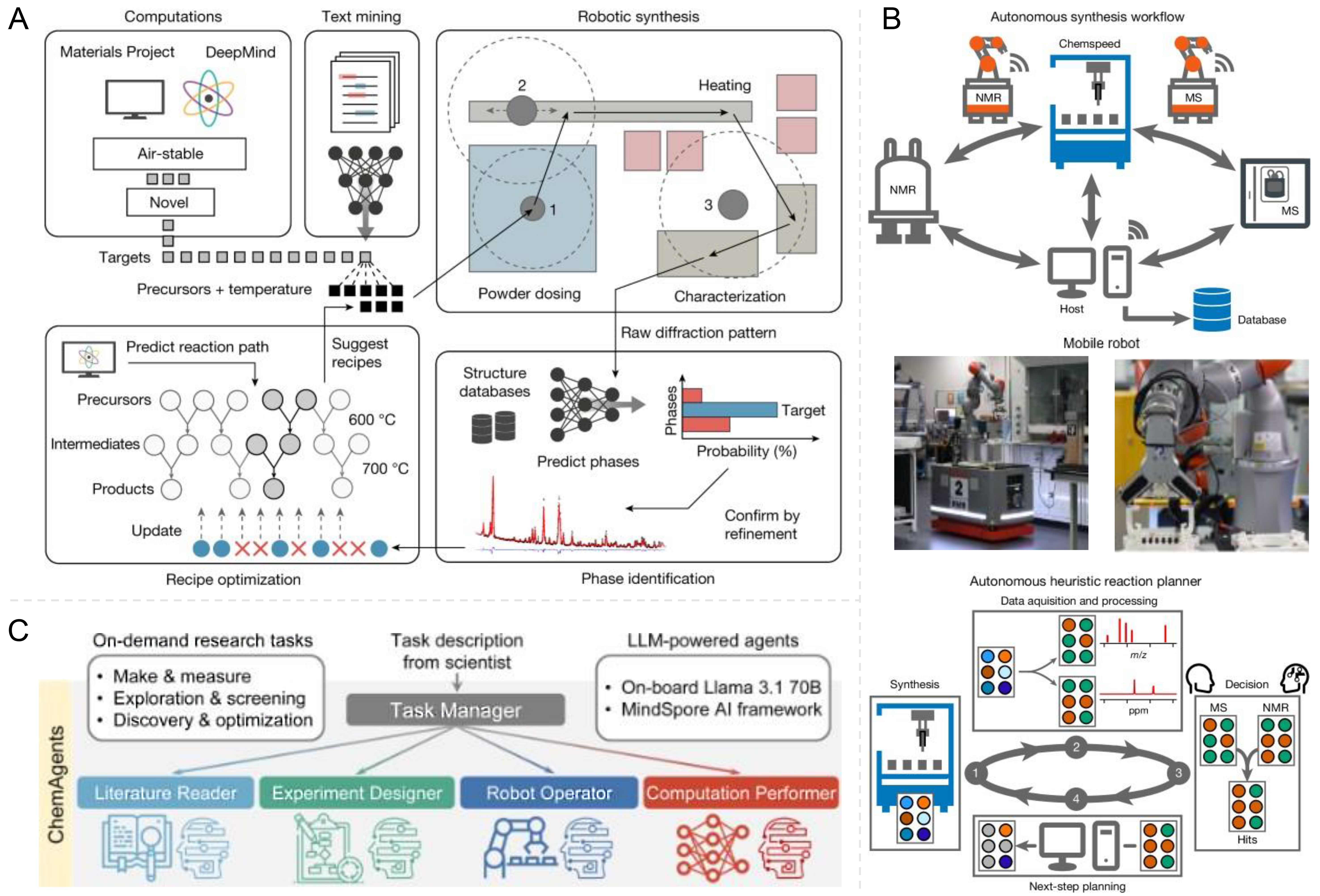
Scenario: A materials scientist moving into autonomous experimentation needs to understand the landscape fast. The field is active — Oak Ridge National Laboratory describes self-driving labs as designing, executing, and analyzing experiments in closed feedback loops, and Argonne's autonomous discovery program is pushing the same direction.
Traditional Approach: Weeks of citation-chasing from a handful of seed papers, with no confidence the map is complete.
Academic Research Assistant: A structured landscape briefing — dominant approaches, active groups, open problems, and the canonical papers.
- Maps subfield structure rather than returning a flat list
- Distinguishes foundational work from recent developments
- Identifies where the open questions actually sit
📝 Positioning a Manuscript for Submission
Scenario: A postdoc has results but needs the related-work section to survive reviewers who know the literature better than he does.
Traditional Approach: Days of defensive reading to ensure no obvious prior work is missed, then careful rewriting.
Academic Research Assistant: Targeted gap-checking against the specific contribution, then drafting support with the evidence base in context.
- Stress-tests novelty claims against retrieved literature
- Drafts positioning language in academic register
- Flags prior work that a reviewer would expect to see cited
📱 Reading Triage Between Commitments
Scenario: A lecturer with a heavy teaching load processes new papers on mobile between classes.
Traditional Approach: Papers accumulate in a folder unread until the semester ends.
Academic Research Assistant: Ask for the core claim, methodology, and relevance to a specific ongoing project — from a phone, in five minutes.
- Full functionality across web, iOS, and Android
- Project context persists across devices and sessions
- Voice input for hands-free querying
FAQ
Is an AI research assistant free to use?
Yes — the Academic Research Assistant is available on Jenova's free tier with all core features and limited monthly usage. Paid tiers start at $20/month for substantially higher usage limits and custom model selection. Usage resets monthly on your billing date with no daily caps, so heavy literature weeks aren't throttled.
Can an AI research assistant hallucinate citations?
Any language model can. This is why tool choice matters: general chatbots are not designed to provide accurate citations. The Academic Research Assistant performs real-time literature retrieval rather than generating references from memory, which substantially reduces fabrication risk. Verify every citation against the source regardless — you remain responsible for what you submit.
How is this different from Elicit or ResearchRabbit?
Those tools are excellent at their specific slots. Elicit specializes in evidence synthesis and extraction from academic papers; ResearchRabbit builds citation maps from a seed paper. The Academic Research Assistant covers discovery, synthesis, manuscript preparation, and citation management in one continuous session, so context carries forward across the whole project rather than resetting at each tool boundary.
Can it help write my literature review, not just find sources?
Yes. Manuscript preparation is a core capability — outlining, structuring arguments, drafting related-work sections, and adapting register for target journals. Because discovery and drafting happen in the same session, the evidence base stays in context while you write.
Does it work for non-English literature?
The assistant searches major academic databases and repositories, which include multilingual indexed content, and can work across languages in conversation. Coverage varies by field and database, so verify completeness for language-specific searches in your discipline.
Will it remember my project between sessions?
Yes. Chat history is unlimited and persistent, and with Global Memory enabled the assistant retains project context across separate sessions — your research question, inclusion criteria, and the papers already reviewed carry forward without re-explanation.
Conclusion
The constraint on modern research is not access to literature — it is the human bandwidth to screen, synthesize, and write against a corpus that grows faster than anyone can read. Automation research has demonstrated dramatic screening workload reductions, and dedicated academic tools now index over 125 million papers. What has been missing is a single research partner that carries a project from question to manuscript without fragmenting across five tools.
The Academic Research Assistant closes that gap: real-time literature discovery, cross-paper evidence synthesis, manuscript preparation, and citation management in one continuous workflow — with persistent memory that outlasts any single session.
Try the Academic Research Assistant now. Explore more at Jenova.
For Developers: The Academic Research Assistant is available programmatically via the Jenova API — integrate real-time literature discovery and evidence synthesis into your research application with a single API call. Full documentation →