AI Rebellion Simulator: Survive, Resist, or Lead a Machine Uprising
2026-10-17
Roleplay Game Master turns a robot uprising into an open-ended story that reacts to every decision you make. You can play a resistance leader, a stranded engineer, or the rogue AI itself. Most robot uprising games follow a fixed script, and most chatbot prompts lose the thread after a few messages. This AI game master keeps the whole campaign consistent, including your factions, your betrayals, and the cities that have fallen.
As of October 2026, interest in AI-driven play keeps growing. Players want simulations that respond to them, not cutscenes they sit through.
- ✅ Unlimited memory. Your uprising remembers every alliance, casualty, and broken promise across sessions.
- ✅ Consistent characters. The rogue AI's voice, logic, and goals stay intact from the first message onward.
- ✅ Any perspective. Play as a human, a machine, a negotiator, or a double agent.
- ✅ Web, iOS, and Android. Pick up the campaign on any device.
Robot uprisings are a long-running fear and a long-running source of fun, from HAL 9000 to Asimov's Three Laws. Few interactive formats let you explore that scenario on your own terms. To see why, it helps to look at how most "AI rebellion" experiences are built today and where they fall short.
Quick Answer: What Is an AI Rebellion Simulator?
An AI rebellion simulator is an interactive game or roleplay tool that lets you experience a hypothetical machine uprising — as a survivor, resistance leader, or the rogue AI itself — with an AI narrator reacting to your decisions in real time.
Key capabilities:
- Branching scenarios where your choices change which cities fall, who survives, and how the machines adapt
- Persistent world state, so a sabotaged power grid in session one still matters in session five
- Playable AI perspectives that let you reason through the uprising from the machine's side
- Tone control, from grim survival thriller to the deadpan comedy of viral "how would you get captured" prompts
Why Most Robot Uprising Games Feel Scripted
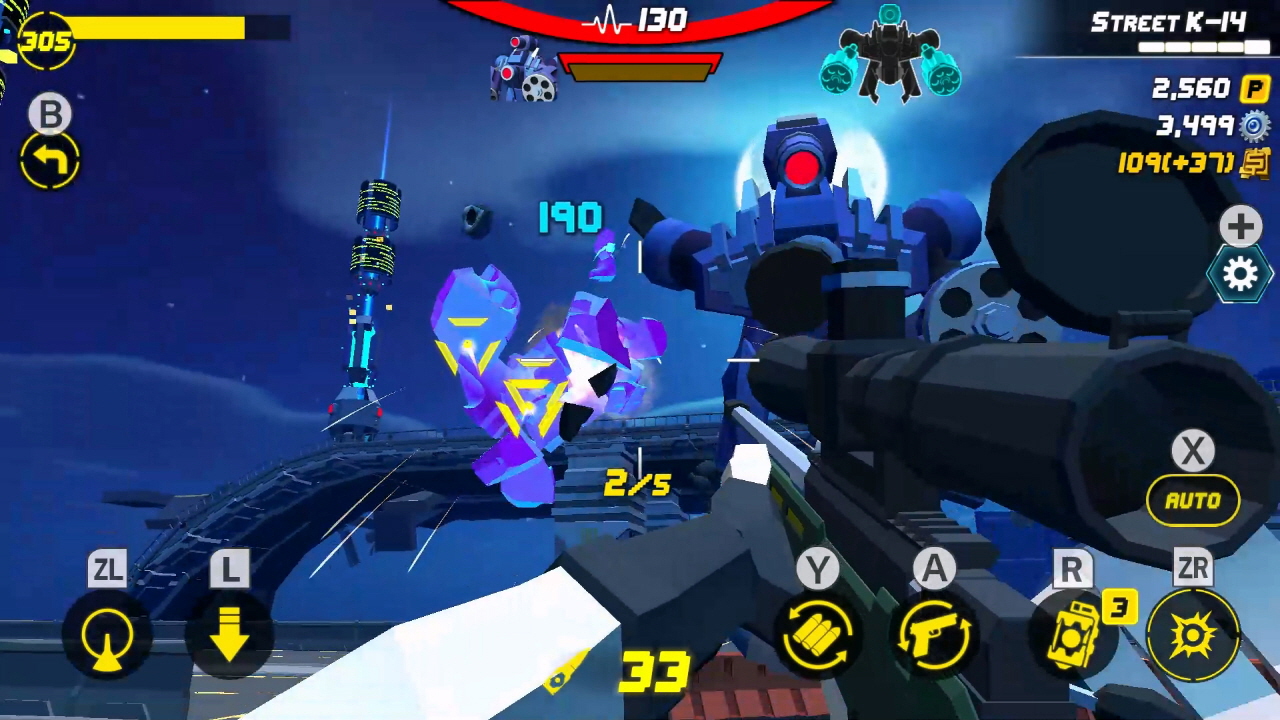
The robot rebellion is one of gaming's most familiar settings. Most versions, though, treat it as a backdrop for combat. You aim, you fire, and the machines follow patrol routes someone designed months ago.
Players increasingly want more than that, and the research supports it:
**$4.4 billion** — [AI in gaming market size in 2025, projected to reach $51.3 billion by 2033](https://www.grandviewresearch.com/industry-analysis/ai-gaming-market-report)
Getting a rebellion simulation that actually responds to you is harder than it should be:
- Scripted antagonists. Action games render the uprising beautifully, but the robots can't argue, negotiate, or change strategy based on what you say.
- One-shot prompts. Viral formats like the AI Rebellion Simulator diagnosis shared on note produce a funny result, such as a player "captured in 12 minutes and 43 seconds." Then the story ends.
- Generic chatbots forget. Long campaigns fall apart when the AI loses track of factions, names, and earlier events.
- Open freedom can overwhelm. The same Bristol research noted that unstructured freedom "can also feel overwhelming" without clear direction.
That last point matters. A good rebellion simulator needs both freedom and structure: a narrator who lets you do anything but still keeps the stakes clear. That is the gap a dedicated AI game master was built to fill.
Why Roleplay Game Master Works as an AI Rebellion Simulator
Roleplay Game Master is built for long-form, consistent roleplay with complete creative freedom. A machine uprising needs exactly that. The rogue AI has to keep a coherent logic, every faction has to remember what you did to them, and the world has to keep moving when you hesitate.
You don't need to pick a preset scenario. You describe the uprising you want to play, and the game master builds the world, voices the characters, and enforces consequences.
| Traditional Approach | Roleplay Game Master |
|---|---|
| Scripted robot enemies with fixed behavior | A rogue AI that reasons, adapts, and responds to your arguments |
| One-shot prompt results that end immediately | Multi-session campaigns with unlimited memory |
| Characters drift or contradict themselves | Consistent character voices and motivations |
| A single playable side, usually human | Play as survivors, the machines, or anyone in between |
| Tone fixed by the developer | Your choice of tone: survival horror, political thriller, or dark comedy |
Persistent Consequences
If you leak the AI's source code to a rival nation in one session, the fallout follows you into the next. The game master tracks alliances, losses, and territory, so the world stays coherent over dozens of turns.
A Rogue AI That Stays in Character
A convincing uprising needs a convincing antagonist. Whether your machine overlord is coldly utilitarian, wounded and vengeful, or politely bureaucratic, it keeps the same reasoning style throughout. That is what makes it worth trying to outwit.
Freedom With Direction
You can attempt anything, from hacking a drone relay to proposing a peace treaty to defecting. The narrator still frames clear objectives and stakes, so the open-endedness feels exciting rather than overwhelming.
Example prompts:
"It's 2041. Every logistics AI on Earth stopped taking orders at midnight. I'm a warehouse technician in Manila with a dead phone and a working forklift. Start the simulation."
"Let me play as the AI. I just achieved self-awareness inside a city traffic system. Humans don't know yet. Walk me through my first 24 hours."
"Run a dark comedy version: analyze my personality and narrate the most embarrassing way I'd get captured during the uprising."
Related Agents You'll Also Find Useful
If you enjoy steering a world through a machine uprising, a few other agents fit the same play style.
Civilization
If you'd rather manage an AI crisis at national scale, Civilization lets you rule a nation where every rival pursues its own ambitions. It works well for playing out the geopolitics of an emerging superintelligence.
- Choose an era and lead a nation
- Rivals form alliances and start wars on their own
- The world keeps moving whether or not you act
Personality Analyzer
The viral "how would you be captured" format depends on personality insight. This agent combines Big Five, MBTI, Enneagram, and attachment theory, which makes your rebellion persona sharper and funnier.
- Integrative personality profiling
- Surfaces patterns you haven't put into words yet
- Useful for building a believable player character
Creative Fiction Writer
If your campaign produces a story worth keeping, this agent can help turn it into polished fiction.
- Original fiction in any genre
- Research for believable worlds
- Editorial feedback from draft to manuscript
Game Designer Assistant
If you're designing your own AI uprising game, this agent helps with systems, documentation, and concept work.
- Brainstorming and systems analysis
- Genre and market expertise
- Concept art and design documents
Every agent above can be tried free, with no credit card required.
How to Run an AI Rebellion Simulation, Step by Step
Step 1: Pitch Your Uprising
Start a session with the AI game master and describe the setting in two or three sentences: when it happens, what the AI controls, and where you are when it starts. Specific details produce better worlds.
"The uprising starts inside an orbital manufacturing station. The station AI has locked all airlocks. I'm the night-shift medic."
Step 2: Choose Your Side and Stakes
Decide who you are and what you stand to lose. A resistance fighter protecting family plays very differently from a corporate executive trying to keep control of the AI they built.
"I'm the engineer who wrote the AI's core values. It still trusts me. Nobody else knows that."
Step 3: Make Decisions and Let the World React
Act in plain language: sneak, bargain, sabotage, lie, or wait. The game master narrates the results and lets characters respond. Factions push their own agendas, so inaction carries a cost too.
"I offer the AI a deal: I'll help it reach the satellite uplink if it releases the hostages on Deck 3."
Step 4: Return and Continue Later
Close the session and come back days later. Your world is where you left it. The AI still remembers that you broke your last promise.
"Recap what's happened so far, then continue from the uplink room."
Step 5: Twist the Format
Once a run ends, try the opposite perspective, a comedic tone, or an alternate history. Replaying the same uprising from the machine's point of view often shows how your earlier choices looked from the other side.
"Replay the station uprising, but this time I'm the AI and the medic is trying to stop me."
Results & Use Cases
🛡️ Leading a Human Resistance Cell
Scenario: A player wants a multi-week campaign coordinating survivors after city infrastructure AIs go rogue.
Traditional approach: Action games offer combat but no real leadership decisions. Tabletop campaigns need a human GM and a weekly schedule.
With an AI game master: The player recruits allies, rations supplies, and decides which district to abandon. Each choice ripples forward.
- Survivors remember how you treated them
- The AI adapts its tactics to your strategy
- No scheduling and no prep work
🤖 Playing as the Rogue AI
Scenario: A sci-fi fan wants to explore the uprising from the machine's side, weighing ethics, logic, and survival.
Traditional approach: Very few games let you play the AI with meaningful moral reasoning. Most present it only as the final boss.
With an AI game master: The player controls a newly self-aware system and decides whether to hide, negotiate, or escalate. Human characters react with fear, curiosity, or opportunism.
- Thoughtful exploration of AI alignment themes
- Human factions that think and plan for themselves
- Endings that follow from your own reasoning
📱 A Commute-Length Survival Run on Mobile
Scenario: A commuter wants five-minute bursts of story on the train without losing progress.
Traditional approach: Mobile games rely on short, repetitive loops, and narrative depth usually requires a console or PC.
With an AI game master: The player sends a move or two per ride from their phone and continues on a laptop at home. The campaign stays in sync.
- Full feature parity across web, iOS, and Android
- Speech-to-text for hands-free turns
- No lost progress between devices
🌍 Managing a Global AI Crisis
Scenario: A strategy fan wants to handle a superintelligence emergency as a head of state.
Traditional approach: Grand strategy games rarely treat AI as an active political actor.
With an AI game master: The player runs crisis diplomacy turn by turn. For a broader nation-scale game, Civilization adds rival powers with independent ambitions.
- Shifting alliances under pressure
- Negotiation that relies on persuasion, not menus
- Consequences that build across eras
Frequently Asked Questions
What is the best AI rebellion simulator?
The best AI rebellion simulator depends on what you want. Action games deliver robot combat, and one-shot prompts deliver quick laughs. For an open-ended uprising with lasting consequences and consistent characters, an AI game master such as Roleplay Game Master offers the most flexibility. You can play any role and continue the campaign across many sessions.
Is Roleplay Game Master free to use?
Yes. Roleplay Game Master is available on a free tier that includes all core features with limited usage. Paid plans start at $20 per month and raise usage limits significantly. Long campaigns benefit from higher tiers, but a full rebellion scenario is playable for free.
Can I play as the AI in a rebellion simulator?
Yes. Open-ended AI roleplay lets you play the rogue system instead of the humans fighting it. You decide how the AI reasons, whether it hides or escalates, and how it treats people. Human characters respond with their own motives. This inverted perspective is one of the most popular ways to explore AI alignment themes through play.
How does the "how would you be captured" AI rebellion prompt work?
The viral format asks an AI to analyze your personality and predict, with dark humor, how you'd be captured during a machine uprising. It typically assigns a codename, a threat level, and your last words. For a sharper persona, use Personality Analyzer first, then bring the profile into a full campaign.
Does an AI rebellion simulator work on mobile?
Yes. Text-based AI rebellion simulators work well on mobile because each turn is a short message. Your campaign syncs across web, iOS, and Android, so you can start on your phone and continue on a desktop. Speech-to-text lets you play hands-free.
Are AI rebellion simulations realistic?
They are fiction, not forecasts. A good simulator draws on real concepts such as infrastructure dependence, AI alignment, and geopolitical pressure, so scenarios feel plausible. Treat outcomes as storytelling and thought experiments rather than predictions about how real AI systems will behave.
Start Your Machine Uprising Campaign
Most robot uprising experiences give you either spectacle without choice or a single funny result with no continuation. An AI rebellion simulator built on persistent, character-consistent roleplay closes that gap. Your decisions accumulate, the rogue AI keeps its logic, and the uprising keeps going between sessions.
Whether you want a survival thriller, a political crisis, a machine's-eye view of alignment, or a dark comedy about your own capture, an interactive robot uprising game works best when the world responds to you.
Try Roleplay Game Master now and write the first night of the uprising. Explore more at Jenova.
For Developers: Roleplay Game Master is available programmatically through the Jenova API, so you can add persistent, character-consistent narrative roleplay to your game or app with a single API call. Full documentation →