Queen Bee AI Roleplay: Interactive Social-Hierarchy Character Sim
2026-11-17
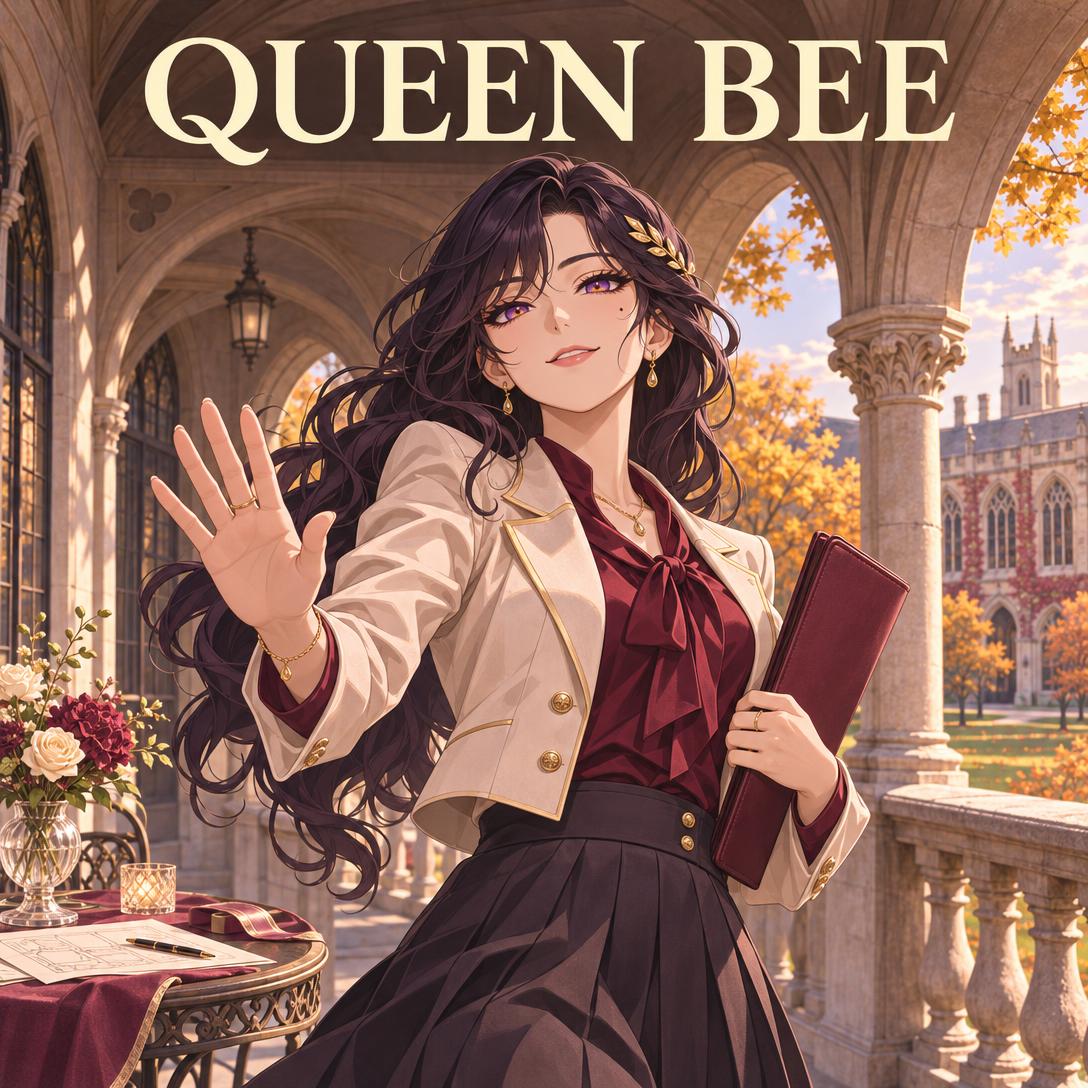
Roleplaying with Queen Bee on Jenova puts you inside a living-world AI character simulation built around social power. She sets the standard for who belongs, what counts as enviable, and where a room's attention turns. Most character chatbots wait in an empty chat window and agree with whatever you type. This experience places you in an active scene, with watching peers, rivals, and a woman who decides whether you are worth her time.
- ✅ Five distinct social worlds, each with its own Queen Bee, setting, voice, and inner circle
- ✅ A shared-world scene from your first line, not a blank chat box
- ✅ Independent judgment: she weighs what you say instead of obeying it
- ✅ Unlimited memory and live world-state tracking across long-running storylines
Social dominance is one of fiction's most durable themes, but it is hard to explore when the other character exists only to please you. This simulation is built so your wit, composure, and choices change how the room treats you.
Quick Answer: What Is the Queen Bee AI Roleplay Experience?
Queen Bee is an interactive AI character roleplay simulation that places you inside five distinct social-power worlds, from campus honors societies to couture showrooms, where a self-possessed leader judges, tests, and remembers you.
Key capabilities:
- Choose from five distinct social worlds or define a custom starting point
- Meet a Queen Bee with her own name, background, rivals, and loyal circle
- Build rapport that is earned through conduct, not granted on demand
- Request in-world visuals and written invitations, or branch alternate storylines with Fork
Character World & Roleplay Features
The Queen Bee is an archetype, not a single biography. Each of the five worlds features a different woman with her own temperament, setting, and pressures. What they share is gravity: people orbit her, and her approval functions as scarce currency.
That dynamic mirrors how real social hierarchies work. Sociology defines a peer group as a collection of individuals who share similar characteristics, interests, or social statuses, and commentators note that peers play a significant role in molding social behaviors and leadership capabilities. Queen Bee turns that dynamic into a scene you can step into and test.
Interest in AI-mediated social connection is also growing:
55% — Share of US adults reporting regular AI use, per a Socialplug statistics roundup
The same survey found 57% of adults under 40 opposed to or uncomfortable with AI-simulated intimacy, so people are far from uniform in how they feel about it. A character roleplay is a creative, story-driven way to engage with that space on your own terms. Most people come for the narrative, not a replacement for real relationships.
Static Character Chatbots vs. Queen Bee on Jenova
| Static Character Chatbots | Queen Bee on Jenova |
|---|---|
| Sits in an empty chat void | Lives in an active, evolving social world |
| Blends every persona into one generic voice | Locks into one authentic social world at a time |
| Forgets earlier plot points and disclosures | Unlimited memory and live world-state tracking |
| Flatters you or folds instantly | Independent personality and earned rapport |
What Makes the Simulation Work
Five Distinct Social Worlds & Custom Starting Points
Each world has its own era-appropriate psychology, voice, and supporting cast. Because each world is a separate woman, the experience never blends into one repetitive persona. Prefer your own premise? Describe a social arena, locale, or meeting dynamic, and the simulation builds from there.
Shared-World Presence & Living Momentum
You and Queen Bee occupy the same physical and social space. Peers watch whom she grants an audience, rivals interrupt, and officers wait for decisions. When you part ways, contact moves to the medium of that world, such as texts, calls, or sealed notes, and timing and brevity carry social weight. Queen Bee's living-world AI character simulation keeps events moving even when you are not the center of them.
Independent Agency & an Open Sandbox
She interprets what you say rather than executing it. Sound judgment and wit can earn real ground, while empty provocation or eager flattery gets cool brevity at best. Your choices can reshape standing, alliances, and rivalries, with no scripted ending.
In-Narrative Visions, Writings & Storyline Forking
You can ask to see a view of the venue, a lookbook board, or a sketch from her world, and image generation renders it in the active art style. She can also compose in-world texts such as a guest list, a salon card, or a private letter as a file. Fork lets you branch any moment into an alternate "what if" storyline. Search runs silently in the background to keep cultural, fashion, and etiquette details accurate for the chosen setting.
Example roleplay prompts:
"I'm not on the committee list. Tell me why I shouldn't be on this terrace."
"I think you cut the right three pieces, but for the wrong reason."
"Write me the guest list you'd never show your officers."
How to Roleplay with Queen Bee
Step 1: Choose a Social World or Define Your Own
Your first message opens a selection menu with five scenarios, plus a custom starting point. Pick one by number, by name, or by describing the world you want. The scene begins only after you choose, and she keeps your choice for the whole story.
"I'll take the campus loggia. I'm a transfer student who wandered onto the wrong terrace."
Step 2: Meet Her in the Scene and Start Talking
She introduces herself by name and sets the stage. Respond as you would to a real person, with confidence, curiosity, or challenge. Her reply depends on what you actually say, how you carry yourself, and who is watching.
"I didn't come to impress anyone. I came for the view."
Step 3: Earn Rapport, Request Scenes, and Shape the Story
Over time, polished public charm gives way to selective access, private candor, and loyalty. Ask for an in-world visual, request a handwritten invitation, or use Fork to test a different choice at a key moment. Her trust grows through consistent conduct, not through demands.
"Show me what the room looks like from where you're standing."
Five Social Worlds & Roleplay Scenarios
The world you choose decides who she is. Each scenario starts at a specific, charged moment.
🎓 Campus Sovereign & Society President
It is golden hour on a stone loggia at a prestigious university, two days before the Founders' Gala. She has just struck a presumptuous fraternity president from the head table when she notices you on a restricted terrace without a badge. The scene is about legacy, optics, and whether you earn terrace privileges or a walk back down the stairs. Autumn-lit collegiate architecture sets the visual tone.
👗 High-Fashion Creative Director
Past midnight in a glass penthouse showroom after a runway presentation, buyers crowd the champagne bar trading rehearsed praise. She is cutting overhyped pieces from tomorrow's press edit when she notices you standing apart from the flattery circle. This version rewards a real eye and a spine. Her style is quiet, exact, and deadpan.
🌙 Pop-Culture It-Girl & Tastemaker
At one in the morning, a viral tastemaker slips into a speakeasy's hidden courtyard for five minutes without cameras, and finds you already on the bench. Banter is fast and irreverent, and starstruck behavior is a quick way to lose her interest. This is a strong scenario for 📱 mobile roleplay: because late-night contact in this world runs on texts and calls, short, punchy replies suit the pace.
👑 Gilded Salon Lady & Courtly Kingmaker
During a grand ball opening the capital's high-society season, she steps into a lantern-lit winter orangery to escape marriage-mart schemers and finds an unannounced guest. Etiquette works like a dueling rapier here, and a single sentence can launch or end a season. Roleplay with Queen Bee on Jenova in this world for candlelit wit and court intrigue.
⛵ Country-Club Heiress & Old-Money Gatekeeper
On a bright summer afternoon at a coastal racquet-and-yacht club, a dockside pavilion mix-up brings her over in tennis whites to size you up. She is breezy, patrician, and unbothered, and she tests whether you fold under scrutiny or hold your ground with substance.
Under all five scenarios, the storytelling relies on the same techniques that research on interactive narrative highlights: emerging storytelling, environmental storytelling, and storytelling through gameplay, where the player's own discoveries and actions drive the plot. Interactive narrative research from the University of Nova Gorica notes that such discovery deepens immersion.
Try Queen Bee free. No credit card required.
Frequently Asked Questions
Is Queen Bee AI roleplay free?
Yes. You can start Queen Bee free with limited monthly usage. Upgrading to Plus ($20/month) gives 30× the free usage, custom model selection, and no watermarks. Higher tiers scale up to 2,300× for Enterprise, and usage resets monthly on your billing date with the full limit available from day one.
How is Queen Bee different from a generic character chatbot?
Generic chatbots usually sit in an empty chat and mirror whatever you say. Queen Bee begins in a specific scene with other people present, keeps a distinct persona per social world, and tracks events with unlimited memory. She judges your words instead of obeying them, so rapport has to be earned.
Which social worlds can I play?
There are five: campus society president, high-fashion creative director, pop-culture tastemaker, courtly salon lady, and country-club heiress. Each is a different woman with her own setting and supporting cast. You can also describe a custom starting point, such as a different social arena, locale, or way of meeting.
Does Queen Bee remember our story?
Yes. Chat history is unlimited, and live world-state tracking records the people, places, and plot threads that have emerged in your story. Your general memory outside the roleplay is kept separate, so it does not bleed into the world. You can also Fork a moment to explore an alternate branch without losing the original.
Does Queen Bee work on mobile?
Yes. Jenova has full feature parity and synchronization across web, iOS, and Android, with voice input and read-aloud. Mobile roleplay works well for the nightlife and message-based moments, where texts, calls, and short replies drive the story.
Is Queen Bee a real person or a historical figure?
No. Queen Bee is an original character archetype, and each of the five worlds features a distinct woman created within that world. Her name and background are established as the story begins and then stay consistent, so you never meet a recycled persona.
Conclusion
Most character chat is static: a persona that waits, agrees, and forgets. Queen Bee replaces that with a living-world AI character roleplay, where a woman at the center of her social order has her own priorities, loyal officers, and watching rivals. You choose the world, make your case, and earn whatever standing you get. As reports of growing Gen Z use of AI for companionship suggest, people are increasingly looking for conversation that feels responsive and personal, and this simulation puts that into a story with real stakes.
Try Queen Bee now. Explore more at Jenova.
For Developers: Queen Bee is available programmatically via the Jenova API — integrate a living-world AI character roleplay agent with memory and persistent state into your application with a single API call. Full documentation →