AI Python Assistant: Write Better Code Faster With AI (May 2026)
2026-05-14
Python isn't just the world's most popular programming language — it's the language AI understands best. AI coding assistants produce higher-quality Python than most other languages because they've been trained on vastly more Python code than any other language in their training data. The AI coding assistant market reached [$12.8 billion in 2026](https://www.ideaplan.io/blog/ai-coding-assistant-market-share-2026) and is projected to hit $30.1 billion by 2032, while 85% of developers now regularly use AI tools for coding and development. For Python developers specifically, the productivity gains are among the highest of any language — GitHub reports users completing coding tasks 55% faster with AI assistance.
Yet most general-purpose AI tools treat Python like any other language — no deep ecosystem knowledge, no framework-specific guidance, no understanding of Pythonic conventions. Jenova's Python Coding Assistant is purpose-built for Python development — an expert partner fluent in everything from quick scripts to complex multi-file projects, with deep knowledge of Python's ecosystem, libraries, and best practices.
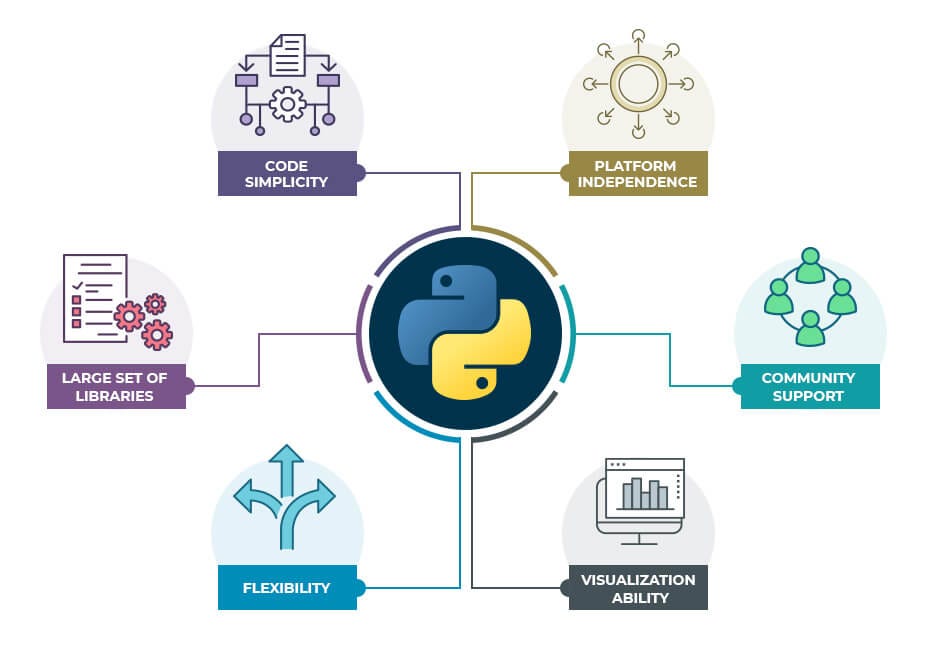
Quick Answer: What Is an AI Python Assistant?
An AI Python assistant is a specialized AI tool that helps developers write, debug, refactor, and optimize Python code using natural language interaction and deep understanding of Python's ecosystem.
- 🐍 Expert Python development partner — from quick scripts to complex projects with Python Coding Assistant
- 💡 Algorithm and interview prep — adaptive problem-solving guidance and mock interviews with LeetCode Coach
- 🗄️ Database integration — optimized SQL queries, schema design, and ORM guidance with SQL Coding Assistant
- 🔍 Code research and troubleshooting — find solutions across Google, Reddit, GitHub, and Stack Overflow with Real-Time Search
The Problem: General AI Tools Don't Think in Python
Python remains the undisputed language of AI, data science, web backends, and automation in 2026. LinkedIn declared Python "no longer just a programming language — it is infrastructure for AI, data, and automation". Yet the tools most developers use for AI-assisted coding weren't built with Python-specific depth — and the gap between "generates Python" and "generates good Python" costs developers hours of debugging, refactoring, and rework every week.
AI Code Looks Right But Often Isn't
The most frustrating problem with AI-generated code isn't obviously wrong output — it's code that looks correct while containing subtle errors. GitClear's analysis of 211 million changed lines of code found that code churn — new code revised within two weeks — rose from 3.1% in 2020 to 5.7% in 2024, while code duplication increased approximately 4× and refactoring declined from 25% of changes to under 10%. For Python specifically, academic research found that 29.1% of Python code generated by Copilot contains potential security weaknesses requiring review.
84% of developers now use or plan to use AI coding tools, but only 29% trust the output — down from 40% in 2024. Usage and trust are moving in opposite directions. — Stack Overflow 2025 Developer Survey via Uvik
General AI Tools Lack Python Ecosystem Depth
A Python developer doesn't just write Python — they work within a vast ecosystem of frameworks and libraries: Django, Flask, FastAPI, pandas, NumPy, SQLAlchemy, Celery, pytest, asyncio, Pydantic, and hundreds more. General-purpose AI tools can generate syntactically correct Python, but they often miss framework-specific conventions, produce deprecated API calls, or suggest patterns that work in isolation but break in production. The difference between "valid Python" and "production-grade Python" is ecosystem fluency — and that requires specialized depth.
Productivity Gains Are Real but Uneven
The JetBrains 2025 Developer Ecosystem Survey found that nearly 9 in 10 developers who use AI save at least one hour per week, and 1 in 5 saves eight hours or more. GitHub's controlled study of 4,800 developers showed 55% faster task completion with AI assistance. But independent research from METR found experienced developers were 19% slower with AI tools despite perceiving themselves 20% faster — suggesting that the productivity gains depend heavily on how the AI tool is used, not just whether it's used.
The Skill Development Trade-Off
Anthropic's randomized controlled trial found that developers using AI assistance scored 17% lower on comprehension quizzes — the equivalent of nearly two letter grades — compared to those who coded by hand. The largest gap was on debugging questions, suggesting that AI-reliant developers may lose the exact skills most needed when AI-generated code fails. The developers who maintained strong comprehension were those who used AI not just to produce code, but to build understanding through follow-up questions, explanations, and conceptual queries.
This is exactly what Python Coding Assistant was built for — not just code generation, but genuine development partnership that helps you write better Python and understand what you're building.
Why Python Coding Assistant by Jenova
Jenova's Python Coding Assistant is a dedicated development partner with deep fluency across Python's full ecosystem — standard library, major frameworks, data science tooling, async patterns, testing, packaging, and deployment. Instead of generating generic code that requires hours of adaptation, it produces production-grade Python that follows Pythonic conventions and integrates cleanly with your existing codebase.
| General-Purpose AI | Python Coding Assistant (Jenova) | |
|---|---|---|
| Python depth | Treats Python like any other language | Purpose-built with deep ecosystem fluency |
| Framework knowledge | Generic suggestions, often outdated APIs | Current best practices for Django, FastAPI, pandas, etc. |
| Code quality | Syntactically correct but often un-Pythonic | Idiomatic, PEP 8/PEP 257 compliant, production-ready |
| Debugging | Pattern-matches error messages | Understands root causes in Python-specific contexts |
| Context | Resets with each query | Persistent memory across sessions, retains project context |
| Learning | Generates answers without explanation depth | Explains why, not just what — builds understanding |
While tools like GitHub Copilot and Cursor excel at inline autocomplete within IDEs, they operate at the code-line level — predicting the next line rather than reasoning about architecture, design patterns, or framework-specific trade-offs. Jenova's Python Coding Assistant operates at the conversation level — you describe what you're building, discuss trade-offs, debug complex issues interactively, and iterate on solutions with an AI that retains full context across your session and beyond.
Production-Grade Code Generation
Describe what you need — a feature, a script, an API endpoint, a data pipeline — and receive Python code that's ready for code review, not just ready to compile:
"Build a FastAPI endpoint that accepts a CSV file upload, validates the schema against a Pydantic model, processes the data with pandas to calculate monthly revenue aggregations, and returns the results as JSON. Include proper error handling, type hints, and async file handling."
The agent produces code with proper type annotations, async patterns, error handling, and framework-specific conventions — not a minimal example that needs three hours of production hardening.
Deep Debugging and Root Cause Analysis
Paste your error traceback, describe the unexpected behavior, or share your code — the assistant doesn't just pattern-match the error message. It traces the root cause through Python-specific contexts: import resolution, virtual environment issues, async race conditions, ORM query inefficiencies, or framework version incompatibilities:
"I'm getting a
RuntimeError: Event loop is already runningwhen trying to use asyncio.run() inside a Jupyter notebook. My code works fine when run as a standalone script."
Ecosystem Navigation
Python's greatest strength — its massive ecosystem — is also its greatest complexity. The assistant navigates library selection, compatibility, and integration with the judgment of an experienced Python developer:
"I need to build a task queue for processing image uploads in a Django app. Compare Celery with RQ and Dramatiq — which one makes the most sense for a team of 3 developers handling about 10,000 tasks per day?"
Learning While Building
Anthropic's research showed that developers who used AI to ask conceptual questions and request explanations retained far more than those who simply delegated code generation. The Python Coding Assistant is built for this mode — it explains why a particular approach is better, what trade-offs exist, and how Python's internals handle the problem, so you grow as a developer while shipping faster.
Related Agents You'll Also Like
JavaScript/TypeScript Coding Assistant
For full-stack developers who work across Python backends and JavaScript/TypeScript frontends. This agent brings the same depth to Node.js, React, and modern JS/TS frameworks that the Python Coding Assistant brings to the Python ecosystem — making it the natural companion for full-stack projects.
- Full-stack fluency in Node.js, React, Next.js, and modern TS frameworks
- API integration guidance between Python backends and JS frontends
- TypeScript type system expertise and migration support
SQL Coding Assistant
Python and SQL are inseparable in data engineering, analytics, and backend development. This agent handles optimized queries, schema design, and ORM integration — whether you're working with raw SQL, SQLAlchemy, Django ORM, or pandas read_sql.
- Query optimization for PostgreSQL, MySQL, and SQL Server
- Schema design and migration strategy
- ORM-specific guidance for SQLAlchemy and Django
- Performance tuning for data-heavy Python applications
LeetCode Coach
For Python developers preparing for technical interviews — FAANG, startup, or AI-round. The LeetCode Coach provides adaptive problem-solving guidance, mock interview simulations, and Python-specific optimization strategies.
- Adaptive difficulty that matches your skill level
- Python-specific algorithmic solutions and time/space complexity analysis
- Mock interview simulations with real-time feedback
- AI-round preparation for ML/AI engineer roles
Academic Research Assistant
For Python developers working in research — machine learning, data science, computational biology, or scientific computing. This agent helps with literature discovery, methodology design, and research code documentation.
- Literature discovery for ML and data science research
- Research methodology design and statistical validation
- Citation management for technical papers
- Documentation of research codebases
How It Works
Step 1: Open Python Coding Assistant and Describe Your Task
Navigate to Python Coding Assistant and describe what you're building, debugging, or learning — in plain language. Whether it's a quick utility script, a complex microservice, a data pipeline, or a machine learning workflow, start with your specific situation.
"I'm building a web scraper that collects product prices from three e-commerce sites, stores results in a SQLite database, and sends a Slack notification when a price drops below a threshold. I want to use httpx for async requests, BeautifulSoup for parsing, and schedule it to run every 6 hours."
Step 2: Review Production-Ready Code
The agent produces structured, well-documented Python code — not a minimal snippet that requires extensive modification. Expect proper project structure, error handling, type hints, docstrings, and configuration patterns that follow Python best practices.
Step 3: Debug and Refine Conversationally
Encountering an error? Paste your traceback directly into the chat. Want to add a feature? Describe it naturally. The agent retains full context from your conversation, so refinements build on everything discussed:
"The scraper works, but it's hitting rate limits on one of the sites. Add exponential backoff with jitter, and also add a rotating user-agent header to avoid detection."
Step 4: Expand with @Mention
Type @ to bring in complementary agents without leaving your conversation. Need to optimize the database queries? Mention SQL Coding Assistant. Building a frontend for the scraper's dashboard? Bring in JavaScript/TypeScript Coding Assistant.
"@SQL Coding Assistant — optimize the price history query to efficiently find the minimum price per product over the last 30 days. The table has 500K+ rows."
Step 5: Download and Deploy
Download the conversation as a document for reference, or copy the code directly into your project. The Python Coding Assistant also remembers your project context across sessions — come back next week to add features, and it picks up right where you left off.
Results & Use Cases
🚀 Backend API Development
Scenario: A startup engineer needs to build a RESTful API with FastAPI for a new product feature — user authentication, CRUD operations, database migrations, and automated tests — by end of sprint.
Traditional approach: Scaffold the project manually, reference FastAPI documentation for each endpoint pattern, write boilerplate for auth middleware, set up Alembic migrations from scratch, and write pytest fixtures. Time: 15–20 hours across 3–4 days.
With Python Coding Assistant: Describe the API requirements — endpoints, data models, auth scheme, and database choice. Receive a complete project structure with production-ready code: routers, Pydantic schemas, SQLAlchemy models, Alembic migration scripts, JWT auth middleware, and pytest test suite with fixtures. Iterate on edge cases conversationally. Time: 3–5 hours of review and customization.
📊 Data Science Pipeline
Scenario: A data analyst needs to build an ETL pipeline that ingests CSV files from an S3 bucket, cleans and transforms the data with pandas, and loads it into a PostgreSQL warehouse — with logging, error handling, and idempotent re-runs.
Traditional approach: Research S3 integration with boto3, write pandas transformation code with trial-and-error data cleaning, set up SQLAlchemy connections, handle edge cases one at a time as they appear in production. Time: 2–3 days.
With Python Coding Assistant: Describe the pipeline requirements, source format, and transformation rules. The agent produces a structured ETL pipeline with proper error handling, logging, idempotency guards, and configuration management — following production data engineering patterns. Bring in SQL Coding Assistant to optimize the warehouse schema and loading queries.
🎓 Technical Interview Preparation
Scenario: A mid-level developer preparing for FAANG interviews needs to master dynamic programming, graph algorithms, and system design — all in Python — within three weeks.
Traditional approach: Grind LeetCode problems solo, watch YouTube explanations, and hope the patterns stick. No feedback on code quality, no mock interview pressure, no Python-specific optimization guidance. Time: 40+ hours with uneven results.
With Python Coding Assistant + LeetCode Coach: Use LeetCode Coach for structured problem-solving guidance, mock interviews, and difficulty progression. Use Python Coding Assistant for deep dives into Python-specific optimizations — generator expressions vs. list comprehensions for memory efficiency, collections module usage, and Python-specific time complexity nuances. The combination provides both algorithmic strategy and language-specific execution.
📱 Automation and Scripting
Scenario: A DevOps engineer needs to write a Python script that monitors AWS CloudWatch metrics, compares them against custom thresholds, and triggers PagerDuty alerts with contextual incident data — replacing a brittle Bash script that fails silently.
Traditional approach: Read boto3 docs, figure out the CloudWatch API, write PagerDuty integration code, handle authentication and error cases through trial and error. Time: 6–8 hours.
With Python Coding Assistant: Describe the monitoring requirements, AWS services involved, and alerting logic. Receive a production-ready script with proper AWS credential handling, retry logic, structured logging, and PagerDuty integration — plus a requirements.txt and deployment instructions. Time: 1–2 hours of review and configuration.
FAQ
What is an AI Python assistant?
An AI Python assistant is a specialized coding tool that helps developers write, debug, refactor, and optimize Python code through natural language conversation. Unlike generic AI chatbots, Jenova's Python Coding Assistant has deep fluency across Python's full ecosystem — standard library, major frameworks like Django and FastAPI, data science libraries, async patterns, testing, and deployment — producing production-grade code rather than minimal examples.
Will using an AI Python assistant hurt my coding skills?
It depends on how you use it. Anthropic's research found that developers who delegated coding entirely to AI scored 17% lower on comprehension, while those who asked conceptual questions and requested explanations retained strong understanding. The Python Coding Assistant is designed for the second pattern — it explains why approaches work, discusses trade-offs, and builds your understanding alongside your codebase.
Is Jenova's Python Coding Assistant free to use?
Yes. All core features are available on the free tier, including access to the Python Coding Assistant and other specialized agents. For higher usage limits and additional features like custom model selection, paid plans start at $20/month. No credit card required to get started.
How does this compare to GitHub Copilot or Cursor?
GitHub Copilot and Cursor excel at inline autocomplete within IDEs — predicting the next line of code as you type. Jenova's Python Coding Assistant operates at the conversation level: you describe entire features, debug complex multi-file issues, discuss architecture decisions, and iterate on solutions interactively. The assistant also retains persistent memory across sessions, so it remembers your project context, coding preferences, and technical stack. They complement each other well — use Copilot for line-level speed and the Python Coding Assistant for project-level reasoning.
Can it handle advanced Python topics like async, metaclasses, and C extensions?
Yes. The Python Coding Assistant covers the full range of Python development — from beginner scripts to advanced topics including asyncio patterns, concurrent.futures, metaclass programming, descriptors, C extensions with ctypes and cffi, performance profiling, memory optimization, and CPython internals. Describe your problem at whatever level of complexity you're working at.
Can I combine it with other coding assistants?
Absolutely. Type @ in the chat to bring in the SQL Coding Assistant for database work, JavaScript/TypeScript Coding Assistant for full-stack projects, or any other agent — all within the same conversation with full context carried over.
Conclusion
Python's dominance in 2026 is undeniable — it's the infrastructure behind AI, data science, web backends, and automation across every industry. The AI coding assistant market has grown to $12.8 billion, 85% of developers now use AI tools regularly, and Python developers see some of the highest productivity gains of any language. But the data also shows that trust is declining even as adoption rises — because most AI tools generate code that looks right but often isn't. The developers who thrive in 2026 aren't the ones who delegate to AI blindly; they're the ones who use AI as a genuine development partner — one that understands Python's ecosystem deeply enough to produce code worth trusting.
Python Coding Assistant by Jenova gives you that partner — production-grade Python code, deep ecosystem fluency, intelligent debugging, and explanations that build your skills alongside your codebase. Try it free — no credit card required.
Explore the full agent library at Jenova.