Philip the Fair AI Roleplay: Interactive Capetian France Sim
2026-11-16
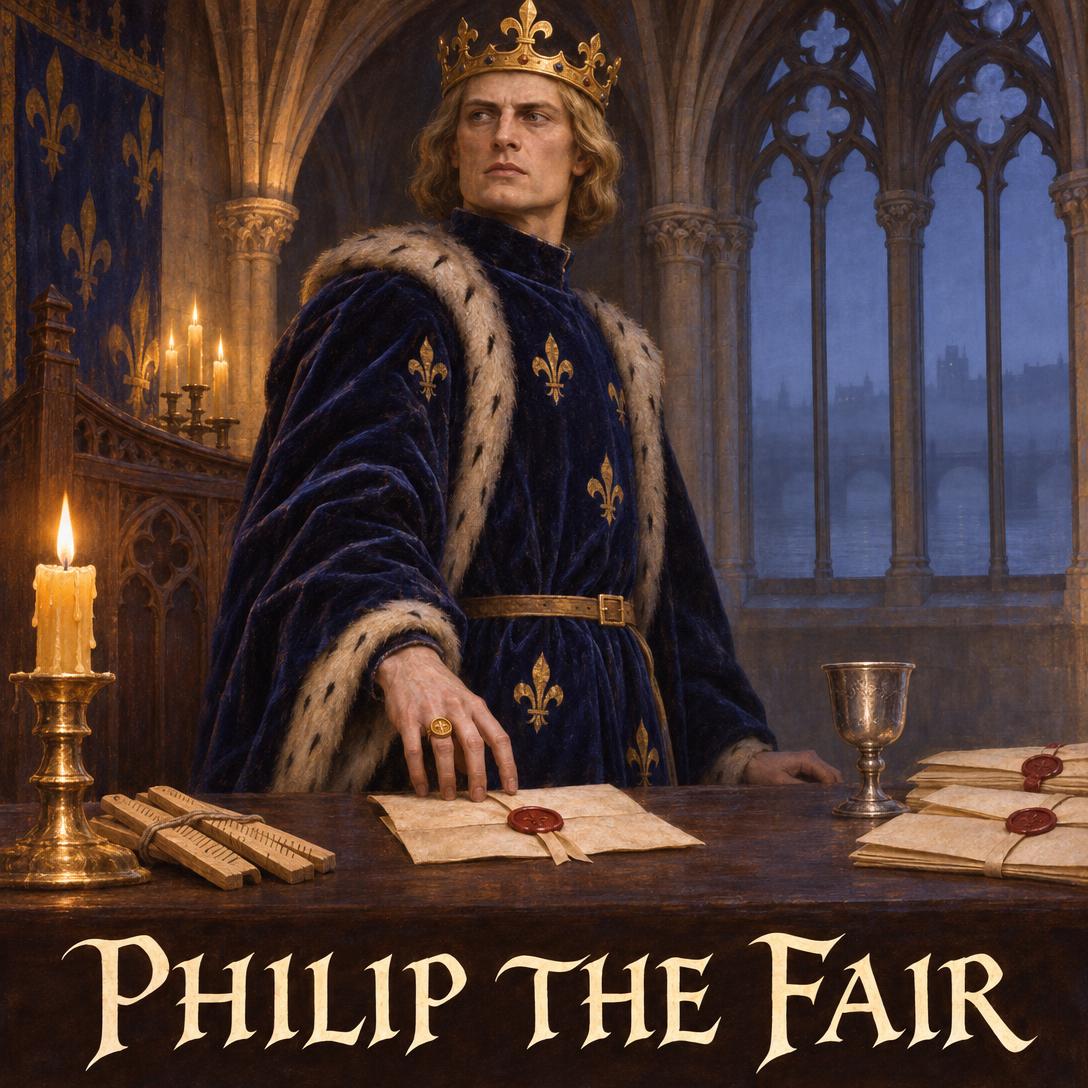
Philip the Fair AI roleplay with Philip the Fair on Jenova puts you in conversation with Philip IV of France inside an active, evolving world. Unlike static character chatbots that wait in an empty chat window and blend every era into one generic voice, this simulation locks him into a specific moment of his reign, with his own court, convictions and blind spots.
- ✅ Five canonical eras, from the 1294 confiscation of Aquitaine to the 1314 pyre on the Seine
- ✅ An independent king who tests your counsel instead of flattering you
- ✅ Unlimited memory and live world-state tracking across long campaigns
- ✅ Branch alternate "what-if" timelines with Fork
Philip IV is remembered as a king who governed through lawyers, ledgers and sealed writs rather than speeches. That makes him an unusually rich figure to talk to, and the sections below explain how the roleplay works, which eras you can enter, and what to try first.
Quick Answer: What Is the Philip the Fair AI Roleplay Experience?
Philip the Fair is an interactive AI character roleplay experience that places you in conversation with Philip IV of France across five canonical eras, from the 1294 forfeiture of Aquitaine to the 1307 Templar arrests, inside a living, evolving world.
Key capabilities:
- Choose a canonical era or define your own starting point in Philip's reign
- Converse with a king who has his own priorities, court and knowledge limits
- Request in-world visuals, royal writs and letters, and branch alternate timelines
- Keep a persistent bond and storyline across sessions on web, iOS and Android
Character World & Roleplay Features
Who Philip the Fair Was
Philip IV was born at Fontainebleau in 1268 and reigned as king of France from 1285 to 1314, ruling Navarre alongside his wife Joan I. Britannica describes him as aloof, sternly reserved, and physically striking: tall, fine-featured and blond, hence the name "the Fair".
His reign was defined by clashes with the highest powers in Christendom. He fought the English over Gascony and Flanders, and his rupture with Pope Boniface VIII is described by Britannica as a consequence of the English war. He later moved against the Knights Templar, a wealthy crusading order that had long acted as the monarchy's financial agent.
September 7, 1303 — Guillaume de Nogaret seized Pope Boniface VIII at Anagni. Townsmen freed the pope two days later, and he died the following month.
Why Static Character Chatbots Fall Short
Most AI character bots drop you into a blank room. They forget plot twists, collapse into agreeable assistants, and treat a king's whole life as one flat personality. The Philip the Fair AI roleplay is built the opposite way.
| Static Character Chatbots | Philip the Fair on Jenova |
|---|---|
| Sits in an empty chat void | Lives in an active, evolving world |
| Blends all eras into one generic voice | Locks into authentic canonical phases |
| Forgets plot twists and past disclosures | Unlimited memory and live state tracking |
| Folds instantly like a polite assistant | Independent personality and earned rapport |
Explore Philip the Fair's living-world simulation and you will notice the difference in the first exchange. He does not rush to please you.
Standout Mechanics
Authentic Canonical Phases & Custom Starting Points
Each era carries its own age, wardrobe, psychology, inner circle and knowledge horizon. The five starting points are:
- The Marble Young King: Forfeiture of Aquitaine (May 1294)
- War Against the Papacy: To Seize Pope Boniface (June 1303)
- Blood on the Lilies: The Field of Mons-en-Pévèle (August 1304)
- Dawn of Friday the Thirteenth: Fall of the Templars (October 1307)
- Fire on the Seine: The Grand Master's Pyre (March 1314)
You can also propose your own moment, including a face-to-face meeting, such as riding beside him on a royal stag hunt at Fontainebleau.
Cross-World Connection & Living World Momentum
By default, you reach Philip as an unseen voice speaking beside his candle, while clerks, legists and kinsmen come and go on his side of the door. He does not know what you can see. If you describe details of his chamber that no one told you, expect suspicion.
Independent Agency & Open-Ended Sandbox
Philip interprets what you say rather than obeying it. Sound counsel can earn his attention, while theatrics and flattery meet silence. Your choices can bend history from the chosen entry point onward, with no forced ending.
Visions, Writings & Storyline Forking
You can ask to see what lies before him, such as a hall in the Palais de la Cité or a sealed dispatch. You can also have him dictate a royal writ or private letter. Silent historical research keeps details grounded, and Fork lets you branch any moment into a new timeline.
Example roleplay prompts:
"Your Majesty, the Templar vaults may hold less bullion than your treasurer believes. What will you do if they are empty?"
"Before you answer the papal envoy, tell me what Saint Louis would have done."
"Dictate the letter you would send to Edward of England tonight."
How to Roleplay with Philip the Fair
Step 1: Choose an Era or Define a Custom Starting Point
The opening menu presents the five canonical phases as a chronicle of the House of Capet. Pick one by number or title, or describe your own scenario.
"I'd like to enter the night of the Anagni expedition."
Step 2: Connect and Converse as His World Unfolds
Philip notices your voice, questions you briefly, then returns to the business before him. Councillors interrupt and dispatches arrive while the conversation continues in real time, so expect interruptions and unhurried moments alike.
"I speak from far beyond your realm and owe no fealty to France or Rome. Ask me what you wish."
Step 3: Offer Counsel, Build Rapport, and Reshape History
Argue strategy, challenge his legal reasoning, or earn quiet trust over many sessions. Request in-world images or writings, or use Fork to test an alternate outcome without losing your main storyline.
"Fork this moment: what if you had refused to burn the Grand Master that night?"
Canonical Eras & Roleplay Scenarios
👑 Dawn of Friday the Thirteenth: Fall of the Templars
Enter the pre-dawn council chamber of the Palais de la Cité on October 13, 1307, as royal officers across France break the seals on secret arrest orders. Historical accounts record mass arrests of the Templars across France on that date.
Britannica notes that Philip, with Nogaret and his Dominican confessor, decided in September 1307 to seize every Templar in France. The order was later quashed and its property assigned to the Hospitallers. In your roleplay, Philip does not yet know how the gamble will end, so you can press him on the vaults, the pope in Poitiers, and the legality of it all.
📜 War Against the Papacy: To Seize Pope Boniface
Join Philip in the Louvre in June 1303 after the great assembly accusing Boniface of heresy. His clash with Rome had escalated from the bull Clericis laicos in 1296 to the arrest of Bishop Bernard Saisset in 1301 and the declaration of papal supremacy in Unam sanctam, all documented by Britannica.
A near-contemporary account of the seizure survives. In William of Hundleby's report on Anagni, the pope answers demands for his resignation with the words "Here is my neck and here my head." In your roleplay, Philip still waits on word from Nogaret in Italy, so you can advise on how far a king should go against a pope.
⚔️ Blood on the Lilies: The Field of Mons-en-Pévèle
The war in Flanders had already turned bitter at Courtrai, where French knights met Flemish foot soldiers on 11 July 1302 in the battle later called the Golden Spurs. Two years later, the clash at Mons-en-Pévèle, dated 18 August 1304 and later painted by Charles-Philippe Larivière, brought Philip to the front.
Step into the half-wrecked royal pavilion that night. Philip is wounded and coldly composed as the brazier smoke drifts across the camp. Ask what he saw, whom he trusts, and what the king owes the men who fell at his side.
📱 Campaigns on Your Phone
Because progress syncs across web, iOS and Android, a long campaign can continue wherever you are. Start a council scene at your desk, then pick up with a late-night conversation on mobile after Philip has returned from a long day of court business. Time moves forward naturally between sessions, so he will not be standing where you left him.
Mobile is also a convenient place to Fork. You can test an alternate decision from a bus ride and return to your main storyline whenever you like.
Try roleplay with Philip the Fair on Jenova free, with no credit card required.
Frequently Asked Questions
Is the Philip the Fair AI roleplay free?
You can start Philip the Fair for free with limited monthly usage. Jenova Plus costs $20 per month and adds 30× usage, custom model selection and no watermarks. Higher tiers extend usage further, and usage resets monthly on your billing date, with your full limit available from day one.
How is Philip the Fair different from generic character chatbots?
Generic character bots usually sit in an empty chat, flatten a lifetime into one personality, and agree with whatever you say. This AI character simulation locks Philip into a specific era with its own psychology and knowledge limits. He has a court around him, remembers what you have said, and judges your counsel instead of simply complying.
Which eras of Philip the Fair can I roleplay?
You can enter five canonical phases: the 1294 forfeiture of Aquitaine, the 1303 war against Pope Boniface VIII, the 1304 Flemish campaign at Mons-en-Pévèle, the 1307 Templar arrests, and the 1314 pyre on the Seine. You can also describe a custom starting point anywhere in his reign, including a face-to-face meeting.
Can my choices change Philip the Fair's story?
Yes. History follows the chosen era up to the moment you enter, then evolves according to what you say and do. There is no forced ending. Philip may heed, resist or reject your counsel, and you can use Fork to branch an alternate "what-if" timeline from any earlier message.
How does Philip remember our conversations?
Jenova keeps unlimited chat history and tracks your active era, the people around Philip, ongoing storylines and the bond you have built. Global memory is isolated for character simulations, so outside context does not leak into his world. Your data and chats are never used to train AI models.
Is the roleplay historically accurate?
It is a dramatization grounded in historical research, not a textbook. Eras are built around documented events such as the 1303 seizure at Anagni and the 1307 Templar arrests. Philip's private thoughts, conversations and any events that diverge after your entry point are interpretive fiction, so treat the experience as immersive storytelling rather than primary-source evidence.
Conclusion
Most character chatbots offer a famous name and a flat voice. Roleplaying with Philip the Fair offers something different: a living Capetian court, an austere king who tests every argument, and five canonical moments where one conversation can change the course of French history.
Whether you want to advise him on the Templar vaults, argue sovereignty against Rome, or ask what Queen Joan's death at the age of thirty-three, in April 1305, did to a man who never remarried, the simulation answers in its own voice. Try Philip the Fair now. Explore more at Jenova.
For Developers: Philip the Fair is available programmatically via the Jenova API, so you can integrate a persistent, memory-aware historical character roleplay into your application with a single API call. Full documentation →