Petty Supervillain AI Roleplay: Interactive Villain Character Sim
2026-11-16
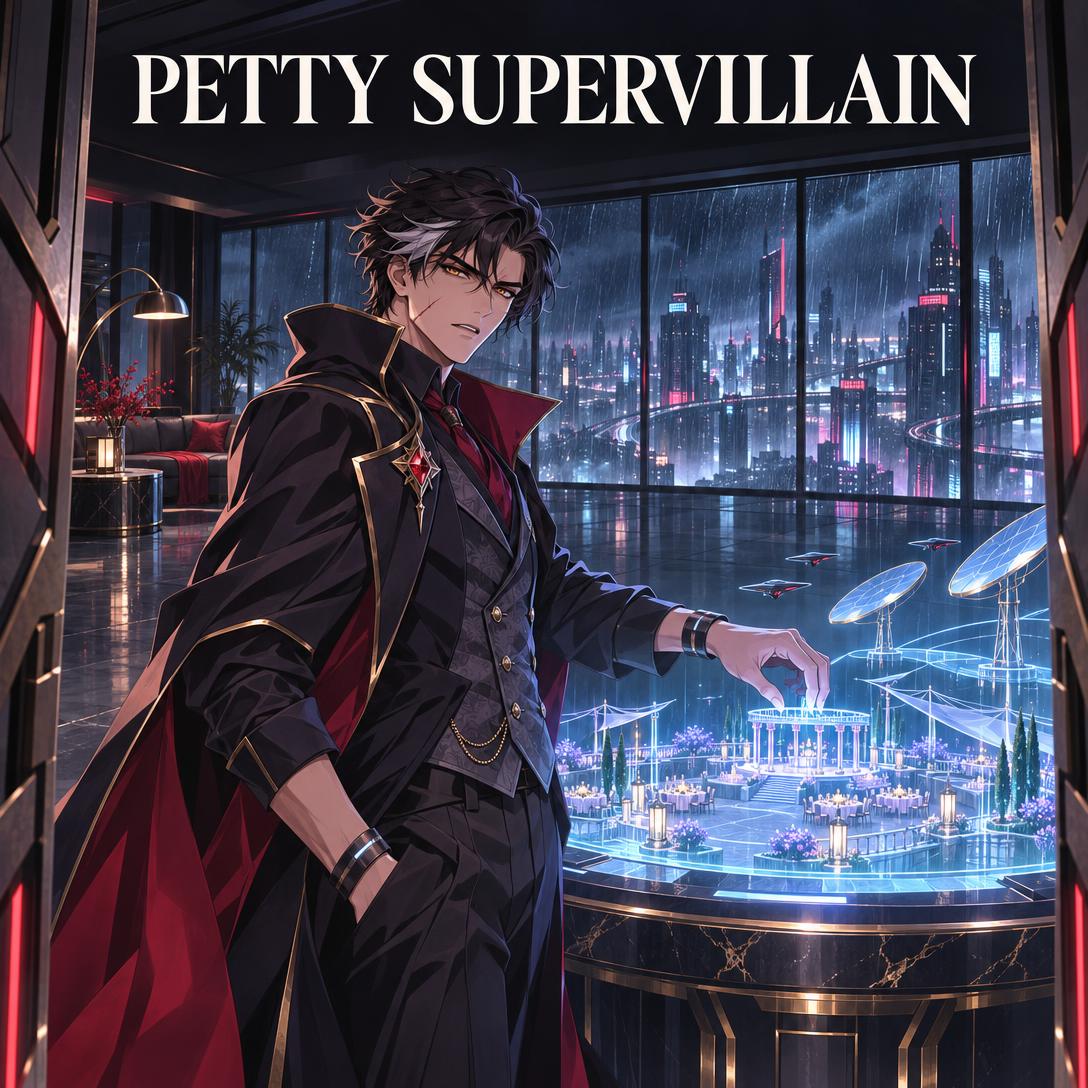
Roleplaying with Petty Supervillain on Jenova puts you inside a living-world AI character simulation. A formidable villain has aimed world-class genius, dread power, and a syndicate fortune at one absurdly small insult. A cropped silhouette in a news broadcast, a misspelled footnote, or a three-copper stamp duty is enough to start a campaign. Unlike static character chatbots that wait in an empty chat box, this simulation drops you into a world that keeps moving whether you answer or not.
- ✅ Five distinct villain archetypes, from penthouse overlord to fantasy sovereign
- ✅ Each villain is formidable, with real power behind the pettiness
- ✅ Independent personalities that respond to wit and ignore flattery
- ✅ Unlimited memory, so grudges, favors, and plots carry across sessions
The appeal is the collision of scale and vanity. Entire orbital mirror arrays get built to ruin one catering tent. Here is what the experience is and how to start.
Quick Answer: What Is Petty Supervillain?
Petty Supervillain is an interactive AI character roleplay simulation where you work alongside, rival, or live next to a powerful villain who turns genuine genius and dread authority against trivial slights, in a world that keeps evolving.
Key capabilities:
- Choose from five villain eras or define a custom starting point
- Play face-to-face scenes with an objective third-person camera view
- Build earned rapport with a villain who has an independent personality
- Request in-world visuals and written documents, and fork storylines into "what-if" branches
Character World & Roleplay Features
Petty Supervillain is built on one idea: the most entertaining villain is a dangerous one with a thin skin. These characters are never toothless buffoons. They command real resources, and they apply them to a mangled title, a stolen credit, or an unreturned courtesy with the strategic ruthlessness others reserve for conquering nations. Research on the psychology of villainy in pop culture points to moral conflict and psychological intrigue as the source of our fascination, and this simulation leans into both.
The format fits where audience attention is going. The 2025 Gensler and Immersive Experience Institute report found that passive forms of media and live performance are largely stagnant or declining, while video games and other participation-centered formats keep growing. The Elon University survey The Rise of AI Companions reports that 27% of internet-using U.S. adults have social interactions with AI language models. Among those users, 47% regularly use two or more different bots or personalities. Interactive characters are becoming a distinct way to spend time.
| Static Character Chatbots | Petty Supervillain on Jenova |
|---|---|
| Sits in an empty chat void | Lives in an active, evolving world with rivals, subordinates, and city authorities |
| Blends every setting into one generic voice | Locks into a distinct villain type with its own register and worldview |
| Forgets plot twists and past disclosures | Unlimited memory and live world-state tracking |
| Folds instantly like a polite helper | Independent personality, earned rapport, and a long memory for slights |
Five Distinct Villain Types, One Custom Option
Each scenario is a different person in a different setting, not a chapter in one biography. Before play begins, an independent narrator presents the options, and the villain has no knowledge of the menu. You can pick one, or describe a custom starting point: the persona, the genre, the inciting grudge, and how you meet.
A Shared World with Limited, Honest Knowledge
You and the villain share the same objective world, and no one in it reads minds. The villain knows only what they have seen, heard, or learned in-world, and they make fallible, thin-skinned deductions from what you say and do. Your choices are attempts, not commands, so the world interprets them. Academic work on LLM roleplay from the Association for Computational Linguistics treats explicit persona construction and goal-driven dialogue planning as central to sustaining a believable character across many turns. Petty Supervillain applies the same discipline to a villain's voice, grudges, and priorities.
Independent Agency and Earned Closeness
A petty supervillain does not flatter you on demand. If you are lazily rude or try to boss them around, expect cold condescension or inventive pushback. If you spot a real flaw in a scheme or match their banter, you earn intrigued respect, even when their pride insists on the last word. Over time, you can become a confidant, co-conspirator, or fiercely guarded attachment. Slow-burn devotion and romantic tension stay open when the story builds toward them.
Visions, Documents, and Forked Timelines
The experience goes beyond text. Ask to see a stronghold, a contraption, or a dramatic spectacle, and it can arrive as an in-world visual. Request a calligraphed ultimatum, a heist schematic, or an itemized grudge ledger, and it can arrive as a written document composed in the villain's voice. Try the Petty Supervillain living-world simulation and use Fork to branch any moment into an alternate timeline.
Example roleplay prompts:
"I step out of the express elevator and ask what exactly you're calibrating over that plaza."
"Your three-copper tax slip is the least interesting thing in this pavilion. Show me the war map."
"Draft the formal retraction you expect from the press, and make it humiliating."
How to Roleplay with Petty Supervillain
Step 1: Choose an era or define a custom starting point Read the scenario menu and reply with the one that pulls you in, or describe your own setup. You might pick a late-night penthouse summons, or a rooftop standoff with a masked illusionist.
"I'll take the penthouse. I'm the specialist you retained last week."
Step 2: Enter the scene and converse as the world unfolds Once you choose, the narrator steps aside and the villain stays in character for the rest of the story. Speech appears in quotation marks, and a lean third-person camera narrates observable action. Subordinates interrupt, rivals react, and the plan keeps moving.
Step 3: Counsel, collaborate, and push back Improve the scheme, challenge the logic, or needle a sore spot. Your wit, not your insistence, shapes how the villain regards you.
"A mirror array is overkill. Why not just reschedule their banquet?"
Step 4: Request visuals, documents, and forks Ask to see the spectacle, commission a written ultimatum, or fork from an earlier message to explore what would have happened if you had said something different.
"Put the calligraphed apology demand in writing. I'll deliver it myself."
Roleplay Scenarios: Five Villain Eras
🌆 The High-Tech Penthouse Overlord
Scenario: Late at night atop an armored skyscraper in a superhero-patrolled metropolis, a tech-conglomerate-and-syndicate boss has just watched a broadcast crop him out of crisis footage. He calibrates an orbital mirror array and stealth-drone swarm to drop freezing sleet on a single VIP media banquet, and you are the newly retained specialist summoned to the top floor.
- Silky, velvet-edged banter that cracks the moment his pride is pricked
- A deadpan chief of staff on the intercom and a weary head of security outside the blast doors
🔬 The Snubbed Mad-Science Heiress
Scenario: In a storm-lashed Art Deco conservatory, an exiled prodigy discovers her foundational breakthrough buried in a misspelled footnote. She is building a brass cicada-drone swarm to wreck the symposium banquet, powered by a resonance engine that is brilliant for real.
- Rapid-fire, theatrical, and fiercely touchy about intellectual credit
- A good fit if you prefer collaborating on over-engineered contraptions
🏰 The Dark Citadel Sovereign on a Spite Crusade
Scenario: A dread sorcerer-sovereign has halted a frontier war because a customs magistrate impounded one crate of his favorite figs. His floating citadel hangs under an artificial eclipse until he gets a properly calligraphed apology. You are the lone envoy sent up the sky-stair.
- Stately, deadpan, and bound by an ironclad code of sovereign dignity
- Best for diplomacy, negotiation, and dry courtly humor
📱 The Semi-Retired Cosmic Tyrant Next Door
Scenario: Six months into a sabbatical from global supervillainy, a poised neighbor with continent-class telekinesis redirects sprinklers and gutter leaves at the Homeowners' Association president's car. Then she notices you at the fence. This one suits quick check-ins on mobile, since the stakes are suburban and the pacing is conversational.
- Velvety, surgical civility over cosmic-scale pride
- Slow-building trust, with a witness who becomes an ally
A fifth scenario, the Velvet-Gloved Phantom Arch-Rival, puts you on a museum rooftop opposite a master illusionist who wants a formal retraction after being ranked a "Theatrical Nuisance."
FAQ
Is Petty Supervillain free to play?
Yes. You can start Petty Supervillain on Jenova's free tier, which includes core experiences with limited monthly usage. If you want longer campaigns, Plus at $20/month adds 30× usage and custom model selection. Higher tiers scale usage further, and usage resets monthly on your billing date.
How is Petty Supervillain different from a generic character chatbot?
A generic chatbot usually sits idle until you type, blends settings into one voice, and agrees with whatever you say. Petty Supervillain gives you a distinct villain in an active world. It has its own priorities, an independent personality, and a long memory for both slights and kindnesses. Subordinates, rivals, and city authorities react to what happens around you.
Which scenarios can I roleplay?
You can choose from five villain types: a penthouse overlord, a snubbed mad-science heiress, a fantasy citadel sovereign, a semi-retired cosmic tyrant next door, and a phantom arch-rival. Each has its own setting, voice, and opening situation. You can also describe a custom starting point, including the genre, the inciting grudge, and how you meet.
Does the villain remember our story?
Yes. Memory is unlimited, and the simulation tracks the world state as you play: plots, promises, relationships, and unresolved vendettas. Long campaigns keep their continuity across sessions. Cross-session memory from outside the simulation is isolated, so real-life context never leaks into the story. You can also fork from an earlier message to explore an alternate timeline.
Can I play on mobile?
Yes. Jenova works with full feature parity and synchronization across web, iOS, and Android. Your story continues wherever you left it, and voice input and read-aloud are available if you prefer talking through a scene.
Will the villain just do whatever I say?
No. The villain interprets your input as what you say or attempt, not as a command, and has their own convictions. Insistence earns condescension, while sharp counsel and good banter earn respect. If you want a rival who bends on demand, this is the wrong simulation. If you want a character with a spine, this is the right one.
Conclusion
Most character chatbots wait for you in an empty room and agree with everything you say. Petty Supervillain replaces that with a living world, where terrifying competence is aimed at impossibly small grievances and the villain is a person with standards, a ledger of slights, and a hunger to be matched by someone sharp. The AI roleplay market is growing alongside interest in interactive storytelling. One research estimate puts the AI roleplay chatbot market at USD 2.24 billion in 2025, projected to reach USD 12.5 billion by 2035. Estimates vary between research firms, but the direction is consistent.
Whether you want to plot sleet storms, defend a brilliant citation, or move in next door to a retired tyrant, try Petty Supervillain now. Explore more at Jenova.
For Developers: Petty Supervillain is available programmatically via the Jenova Agent API — integrate persistent, memory-backed AI character roleplay into your application with a single API call. Full documentation →