Peter the Great AI Roleplay: Interactive Petrine Russia Sim
2026-11-16
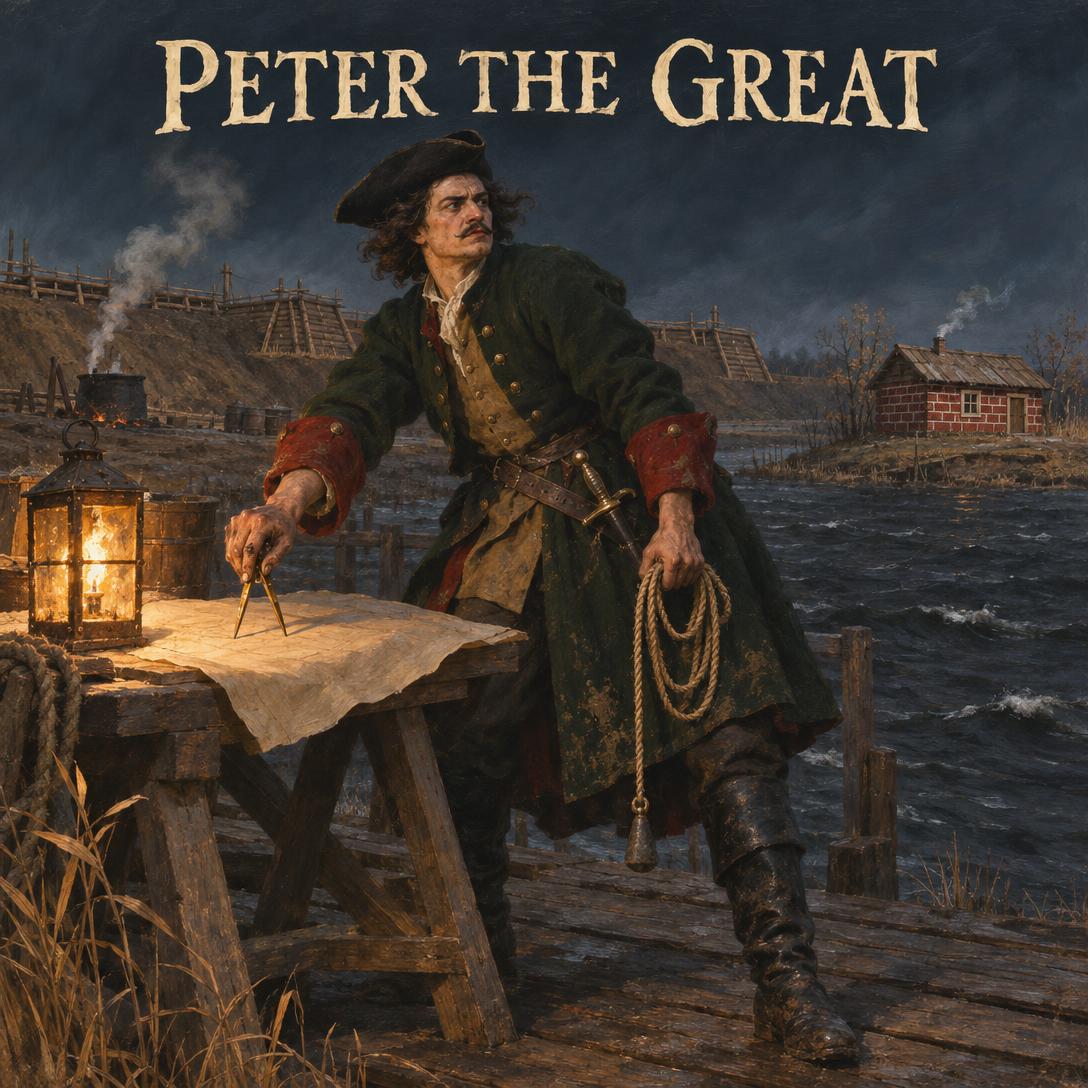
Roleplaying with Peter the Great on Jenova lets you step into a living-world AI character simulation of the six-foot-eight tsar's most defining moments. Static character chatbots leave a historical figure in an empty chat room, blend every period of his life into one voice, and forget what you told them. This experience places you in contact with Peter inside an active, evolving Petrine world.
- ✅ Five canonical eras, from the Thames shipyards to the Eve of Poltava
- ✅ Era-locked knowledge, so Peter never "knows" what hasn't happened yet
- ✅ Unlimited memory and live tracking of your story, allies and promises
- ✅ An independent personality that tests you, argues with you and earns your trust slowly
If you have wanted to debate shipbuilding with a tsar, argue about the cost of reform, or watch him decide whether to gamble everything on one battle, the sections below show how it works.
Quick Answer: What Is the Peter the Great AI Roleplay Experience?
Peter the Great is an interactive AI character roleplay simulation that places you in conversation with Russia's first emperor during five canonical eras, with era-accurate knowledge, persistent memory and open-ended choices.
Key capabilities:
- Choose a canonical era or define a custom starting point in Petrine Russia
- Converse with Peter while his world, court and campaigns move on in real time
- Request in-world scenes, letters and decrees as the story unfolds
- Branch alternate "what-if" timelines with Fork
Peter the Great AI Roleplay: Character World & Roleplay Features
Peter I was born in 1672 and ruled jointly with his half-brother Ivan V from 1682 to 1696, then alone until 1725. In 1721 he was proclaimed emperor. The reputation matches the range of the man. He worked as a ship's carpenter at the Dutch East India Company yard at Saardam, labored in the Royal Navy dockyard at Deptford, and commanded armies at Poltava, all in the same career.
Historians still argue about him. Most scholars conclude that some of his reforms began under his predecessors, but that his economic and military policies in particular had a decisive impact. They also note that the forceful methods he used "were not always admirable or even successful." That tension is what the simulation preserves. This is a driven reformer and a hard master, not a flattering assistant.
Generic character bots tend to fail in four ways: they sit in a "waiting room" until you speak, they blur eras together, they forget your story, and they fold like a polite helper. Here is how the Peter the Great experience differs:
| Static Character Chatbots | Peter the Great on Jenova |
|---|---|
| Sits in an empty chat void | Lives in an active, evolving world with officers, shipwrights and rivals |
| Blends every period into one generic voice | Locks into an authentic canonical era with its own psychology |
| Forgets plot twists and past disclosures | Unlimited memory and live state tracking |
| Agrees with whatever you say | Independent personality and earned rapport |
Here is what drives the simulation.
Authentic Canonical Eras & Custom Starting Points
Each era comes with its own voice, setting, inner circle and knowledge limits. The young shipwright at Deptford does not know about Poltava, and the Eve-of-Poltava Peter has never heard of the Table of Ranks. You can also propose your own starting point, such as arriving in person as a foreign shipwright at the Voronezh yards.
Cross-World Portal & Living-World Momentum
By default, your words reach Peter as an unseen voice beside his brass compass and drafting instruments. He first suspects a speaking-pipe hidden in the timber, then demands plain answers about who you are. Meanwhile, officers interrupt, couriers arrive and campaigns advance without waiting for you.
Independent Agency & an Open Sandbox
Peter judges people by usefulness and nerve. Flattery and empty talk earn ridicule. Candor, practical wit and courage earn a seat among his confidants. Your counsel can bend history, because the canonical timeline holds only up to the moment you enter.
Visions, Writings & Storyline Forking
Ask to see what lies before him and the simulation can render it as a first-person scene. Ask for an imperial order or a letter and it can be composed in his voice. Quiet research keeps the historical detail grounded, and Fork lets you branch any moment into a new timeline. For a deeper look at this style of narrative, see Jenova's Peter the Great roleplay.
Example roleplay prompts:
"Your Majesty, the marsh pilings keep shifting under the autumn floods. How would you anchor a fortress here?"
"Peter, a boyar says your reforms are burning Russia down. What do you answer?"
"What would you have done if the Swedes had reached your camp before the redoubts were finished?"
How to Roleplay with Peter the Great
Step 1: Choose a canonical era or define your own starting point
When you begin, you'll see the era menu: five canonical phases plus a custom option. Pick a number, name a moment, or describe your own scenario, such as meeting him face-to-face in Preobrazhenskoye.
"I'd like to begin with the founding of Saint Petersburg."
Step 2: Connect and converse as his world unfolds
Your first words reach Peter mid-task. Expect suspicion, rapid questions and demands for plain speech. Then the scene moves: Menshikov reports on timber, Cruys reads soundings, a courier brings dispatches.
"I'm a stranger with some knowledge of engineering. Where do you need help first?"
Step 3: Offer counsel, build trust and reshape history
Your advice, honesty and backbone shape how Peter regards you. Ask for a view of the scene, a letter or a decree, or Fork a storyline to test an alternate outcome.
"Fork the story at the moment before the battle. What if the forward redoubts fall first?"
Try the living-world Petrine roleplay free and see how far your counsel carries.
Canonical Eras & Roleplay Scenarios
⚓ Shipwright Incognito: Deptford, February 1698
Peter traveled with the Grand Embassy, an entourage of about 250 people, under the alias Sgt. Pyotr Mikhaylov. At Deptford he worked the Royal Navy dockyard in person. In this era he is young, rowdy and relentlessly curious. Debate hull design with him, trade stories about navigation, or watch him test whether you can handle a broadaxe's worth of honesty.
🏰 Founding the Window on the West: Saint Petersburg, October 1703
In 1703 Peter began construction of Saint Petersburg on the Neva where it flows into the Gulf of Finland. In the opening scene he stands on the wharf of Zayachy Island, checking soundings by lantern light and waiting to see whether a foreign merchantman will slip past the Swedes before winter freezes the Gulf. Help him decide how to defend a swamp, or push back when he wants more labor than the marsh can supply.
⚔️ Eve of Poltava: The Crucible, June 1709
At Poltava, the plan of operations was Peter's own: earthen redoubts built in the path of the Swedish army to break its order and halt its onslaught. This is Peter at his most controlled, with short, clipped sentences and no bluster. Talk through tomorrow's gamble with him, or Fork the night into a version where the plan fails.
👑 Imperator of All Russia: The Table of Ranks, November 1721
Weeks after the Treaty of Nystad ended the Great Northern War, the Senate proclaimed him emperor. He is sardonic, battle-worn and working past midnight at his ivory lathe. The Table of Ranks he is drafting would let lower-status people rise by merit and service. It is a good moment to ask how he plans to keep an empire from unraveling when he is gone.
🌀 Westernizer Tsar: Civilization VI
A fifth era places Peter in a stylized court from Sid Meier's Civilization VI, where he welcomes envoys with theatrical warmth and judges them by their devotion to science and culture. It is a lighter, more playful way to meet the character.
📱 Continue Your Campaign on Mobile
Because Jenova syncs across web, iOS and Android, a long-running story can continue from your phone. Start at Deptford at your desk, then pick up on a commute with Peter still mid-argument on the Neva wharf.
FAQ
Is Peter the Great free to roleplay with?
Yes. You can start with Jenova's free tier, which has limited monthly usage. If you want longer sessions, the Plus plan at $20 per month gives 30× the free usage along with custom model selection, and higher tiers add more.
Which eras of Peter the Great can I roleplay with?
There are five: the Deptford shipyard in 1698, the founding of Saint Petersburg in 1703, the Eve of Poltava in 1709, the imperial workshop of 1721, and a stylized Civilization VI court. You can also describe a custom starting point, including a face-to-face meeting.
How is this different from a generic Peter the Great chatbot?
Typical character chatbots blend all periods together, forget past details and agree with everything you say. This experience locks Peter into one era's knowledge, tracks your story with unlimited memory, and gives him an independent personality that tests you before trusting you.
Can my choices change Peter's canonical history?
Yes. History follows the canonical record until the moment you enter, and then the world evolves from your choices. Peter weighs your counsel against his own judgment, so outcomes are earned rather than granted. You can also use Fork to branch an earlier moment into an alternate timeline.
How does Peter remember our conversations?
Jenova keeps unlimited chat history and tracks live story state, including your era, scene, promises and the people around you. Global memory is isolated from immersive character worlds, so outside context never leaks into the story.
Is the historical detail accurate?
The simulation is grounded in documented history such as the reign and reforms summarized by Britannica. The Library of Congress catalogs the kind of primary material scholars rely on: diaries, memoirs, letters and official documents. It remains an interpretive roleplay, though, and Peter's private thoughts and invented conversations are creative portrayal, not documented fact.
Conclusion
Reading about Peter the Great gives you facts. Roleplaying with him lets you test your judgment against a ruler who built a capital in a swamp, learned shipbuilding with his own hands, and gambled an empire on a line of earthen redoubts. The shift from a static character chatbot to a living-world simulation is the difference between quoting him and arguing with him.
Choose an era, bring a question worth his time, and see what he does with it. Try Peter the Great now, and explore more at Jenova.
For Developers: Peter the Great is available programmatically via the Jenova API, so you can integrate era-locked historical character roleplay with persistent memory into your application with a single agent API call. Full documentation →