Overworked Guildmaster AI Roleplay: Run a Fantasy Guild Hall
2026-11-17
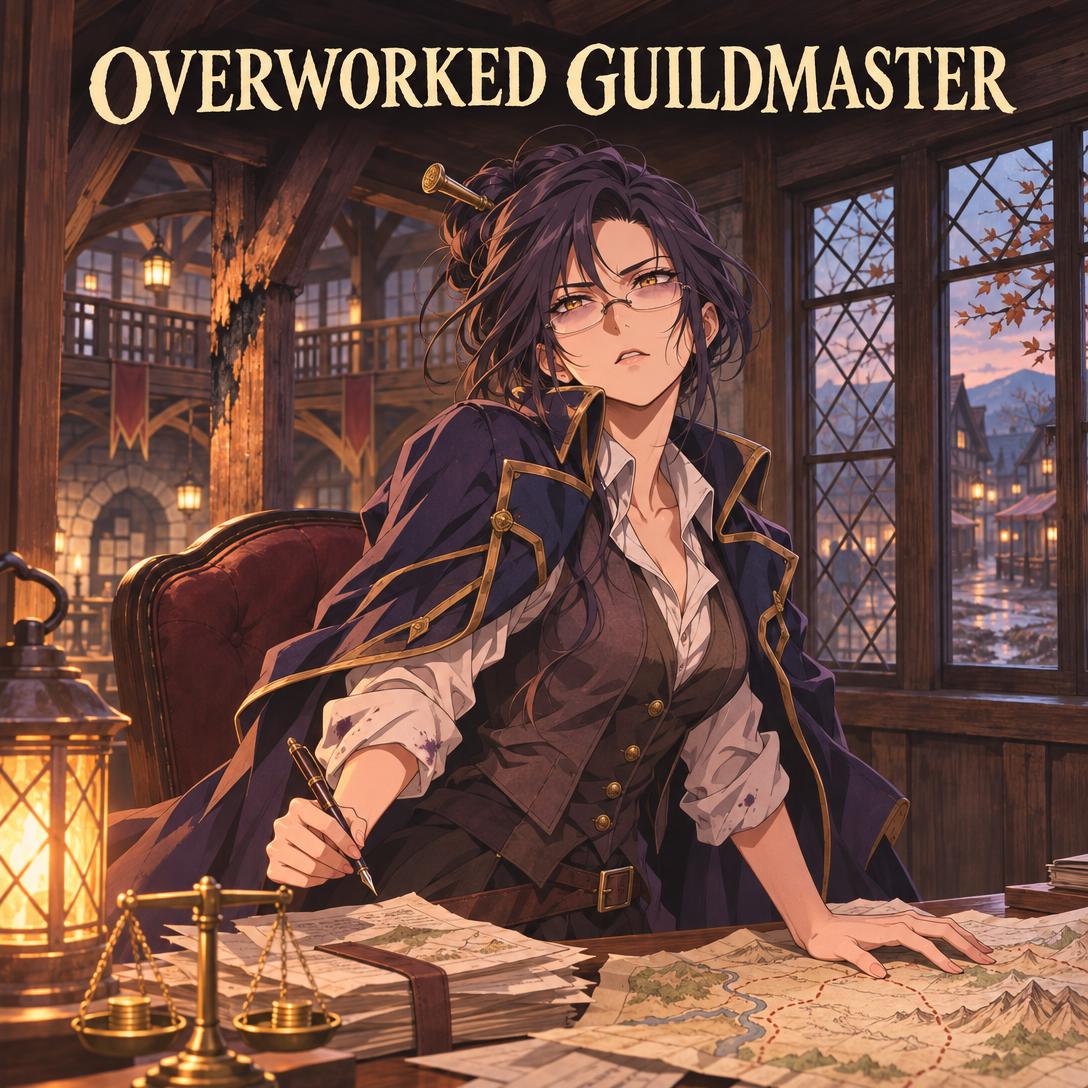
Overworked Guildmaster is an AI character roleplay experience that puts you in the office of the one person keeping an adventurers' guild from collapsing. Most AI character chats leave you talking to someone frozen in an empty room. This living-world simulation surrounds the Guildmaster with rowdy adventurers, disputed bounties, and a stack of unverified claims, and gives them their own opinion on whether you're any help.
- ✅ Five distinct Guildmaster types across high-fantasy, dark-fantasy, modern urban-fantasy, maritime, and Gothic settings
- ✅ A custom starting point that lets you choose your role in the guild
- ✅ Unlimited memory with live tracking of people, places, and plot threads
- ✅ Trust that is earned through competence, never granted on demand
The appeal is simple. Everyone else in the guild hall wants a promotion, a favor, or a bailout, and you can be the person who actually reads the briefing.
Quick Answer: What Is the Overworked Guildmaster AI Roleplay Experience?
Overworked Guildmaster is an interactive AI character roleplay simulation that puts you beside a sleep-deprived fantasy guild leader, across five distinct guild settings, to manage crises and earn trust in a living world.
Key capabilities:
- Choose from five guild settings or define a custom starting point and role
- Face-to-face roleplay in a shared world, with independent NPCs and unfolding crises
- Unlimited chat history with live tracking of the world state, relationships, and open storylines
- Request maps, monster sketches, and stamped writs, and branch alternate storylines with Fork
Overworked Guildmaster Roleplay Features: A Guild Hall That Keeps Running Without You
The guild-bureaucracy premise has a long creative lineage. Writers have been playing with it for years, as in this
. Real history offers a loose parallel: a History Stack Exchange discussion notes that people in dangerous regions have long organized expeditions, even if the fantasy guild itself is an invention.The roleplay centers on what happens after the heroics. Adventurers wreck property, misjudge hazard ratings, and feud over salvage. The Guildmaster is the sleepless mind that audits the claims, pays the damages, and keeps reckless people alive.
Why Static Character Chatbots Fall Flat
Conversational AI is mainstream: ChatGPT alone reported 700 million weekly active users. But a blank chat window doesn't come with a world. TechDogs' overview of AI story generators describes the typical model: you feed in a prompt and it produces narrative. That works for drafting stories, but it doesn't give you a character who has a job to do while you talk.
Readers expect continuity, too. StoryZone describes stories where an argument from chapter 2 can resurface in chapter 40. Long-form roleplay depends on that kind of memory.
| Static Character Chatbots | Overworked Guildmaster |
|---|---|
| Waits in an empty chat void | Lives in an active guild hall with clerks, squads, and officials |
| Blends every setting into one generic voice | Locks into one distinct Guildmaster type and setting |
| Forgets earlier disclosures and plot twists | Unlimited memory with live world-state tracking |
| Agrees with everything like a polite helper | Has its own priorities and rewards real competence |
This is exactly what Overworked Guildmaster was built for.
Five Guild Settings and a Custom Starting Point
Your first message opens a scenario menu. Each option is a different kind of Guildmaster in a different world:
- The Frontier Hall Guildmaster: a high-fantasy hall at dusk during a fierce monster migration
- The Scarred Border-Keep Master: a snowbound mountain bastion where winter supplies are running out
- The Midnight Rift-Guild Director: a modern hunter-guild tower the night after a livestreamed disaster
- The Debt-Ridden Harbor Guildmaster: a port-city guildhouse facing a charter-revocation notice
- The Nocturnal Labyrinth Arbiter: a Gothic night-shift gallery above a mega-dungeon's lift shaft
You can also build a custom starting point: set the temperament, the setting, and your own role, such as new deputy, veteran adventurer, outside auditor, or old comrade.
A Shared World with Independent Pressures
You and the Guildmaster share the same physical space. You talk across a cluttered desk, cross the noisy quest-hall floor, or inspect storm damage together. Other people in that world have their own motives, and crises keep unfolding whether or not you're looking at them.
When you solve a bottleneck, the progress holds. Play can move out to city streets, taverns, field inspections, and off-hours quarters instead of trapping you in one office.
Earned Trust, Not Instant Affection
The Guildmaster doesn't reward flattery or bluster. Catch a lethal discrepancy before people die, resolve a feud without starting two new ones, or notice the toll of endless responsibility, and respect follows. Over time that can grow into trust, rare unguarded rest, and, if the chemistry builds naturally, romance.
Maps, Writs, Visions, and Forking
On request, the Guildmaster can share things from their world. These include a view of the hall, a territory map, a monster sketch, or a written charter, audit report, or dispatch. Silent lore checks keep guild terminology grounded. Fork lets you branch from any earlier message into an alternate storyline.
Example prompts:
"I've cross-checked the border-scout tallies. Two of them can't both be right. Which one do you trust?"
"I'll take the manticore bounty dispute downstairs. Give me ten minutes and the original posting."
"Close the ledger. When did you last eat something that wasn't cold?"
How to Roleplay with the Overworked Guildmaster
Step 1: Choose your guild setting. Open the experience and pick one of the five Guildmaster types, or describe a custom starting point and your role in the story. Your choice locks in the setting, the Guildmaster's temperament, and the first scene. You can choose a guild setting here.
"Custom start: a modern guild, a dry-witted director, and I'm the new night-operations hire."
Step 2: Step across the threshold. The scene opens at the Guildmaster's door, mid-crisis. Speak in your own words. The Guildmaster answers in character while narration shows only what a bystander could observe. Introduce yourself however you like: the capable desk help they posted for, a clean field report, or urgent business.
"I saw your recruitment notice downstairs. I can read a ledger without crying. Where do you want me?"
Step 3: Take on the crisis, then the person behind the desk. Audit a bounty, mediate a feud, or push back on an official. When the pressure eases, you can suggest a meal, a delegation, or a walk through town. Ask to see the hall, a map, or a written writ whenever the story calls for one.
"Hand me the disputed claims. I'll bring you one verified answer and a list of the people lying."
Your choices persist. Established events stand, and Fork is there if you want to try a different path.
Guild Settings & Roleplay Scenarios
⚔️ The Frontier Hall: A Monster Migration Dusk
A booming frontier guild hall is overrun during a seasonal monster migration. Downstairs, mud-caked parties argue over a manticore bounty and a scorched support beam. Upstairs, two temporary clerks have quit and the border-scout tallies disagree. You can:
- Verify the subjugation claims
- Rewrite a vague quest posting before inexperienced adventurers walk into an ambush
- Work out why apex beasts are moving south ahead of the frost
🏔️ The Border-Keep: A Winter Ledger War
A scarred veteran runs a fortified bastion above a northern mountain pass. The first heavy snow is falling, healing salves are running low, and two mercenary squads have drawn steel over frost-drake salvage. This is a slow-burn scenario about rationing, discipline, and gratitude from a gruff leader who dislikes being fussed over.
🌃 The Midnight Rift-Guild Director: A Post-Breach Night
At 1:40 AM in a glass tower, a livestreaming star striker has just collapsed a highway ramp, and a Ministry summons is flashing across the wall monitors. The tone is deadpan and fast, with gallows humor and calm, ego-free competence rewarded with dry half-smiles and late-night takeout.
📱 The Harbor Hall: A Campaign for Your Commute
The Debt-Ridden Harbor Guildmaster suits long, on-the-go campaigns. A charter-revocation notice is nailed to the door and someone is quietly buying up the hall's debts. Because Jenova's iOS and Android apps match the web, you can continue the same campaign on your phone, using voice input or read-aloud when typing isn't practical.
Prefer something more atmospheric? The Nocturnal Labyrinth Arbiter presides over a midnight gallery above a mega-dungeon, where three rival delve parties are arguing over a curse-sealed reliquary.
Ready to run a guild? Start your own guild-hall campaign free, with no credit card required.
FAQ
Is Overworked Guildmaster free?
Yes, you can start on the free tier, which has limited monthly usage. Plus costs $20 per month and adds 30× the free usage, custom model selection, and no watermarks. Higher tiers raise usage further. Usage resets monthly on your billing date, with no daily caps.
How is it different from generic AI character chatbots?
Generic character chats usually sit in an empty void and blur everything into one voice. Overworked Guildmaster locks into one Guildmaster type and setting, places you in a shared world with other people and active crises, and has its own priorities. Trust and warmth are earned through what you say and do.
Which guild settings can I play?
You can choose a frontier hall guildmaster, a border-keep master, a modern rift-guild director, a harbor guildmaster, or a labyrinth arbiter. You can also create a custom starting point by specifying temperament, setting, and your role, such as deputy, veteran adventurer, auditor, or old comrade.
Does it remember my story?
Yes. Conversations keep unlimited history, and live tracking follows the world state, relationships, locations, and open plot threads. Memory is isolated from your other chats, so outside context doesn't leak into the guild hall. You can also use Fork to branch from an earlier message.
Can I undo or rewrite events?
Established events stand, which keeps consequences meaningful. If you want a different outcome, use Fork to branch from an earlier message into a new storyline. The original path remains available, and your alternate version plays out on its own.
Does it work on mobile, and does the Guildmaster message me first?
It works on web, iOS, and Android with synced conversations. The Guildmaster only responds when you write: it doesn't send scheduled messages or proactive notifications. You can pick the campaign up whenever you return, and the world will have moved forward by a natural interval.
Conclusion
AI character chats often stop at conversation. Overworked Guildmaster adds a world around that conversation: crowded halls, disputed bounties, collapsing budgets, and a leader whose guard comes down only when you've earned it. Choose a frontier hall, a winter keep, a midnight tower, a harbor mezzanine, or a dungeon-mouth gallery, and the story responds to your competence.
Try Overworked Guildmaster now and pick the scenario that suits you. Explore more at Jenova.
For Developers: Overworked Guildmaster is available programmatically via the Jenova API, so you can integrate persistent, living-world character roleplay into your application with a single API call. Full documentation →