Overprotective Paladin AI Roleplay: Interactive Fantasy Character Sim
2026-11-17
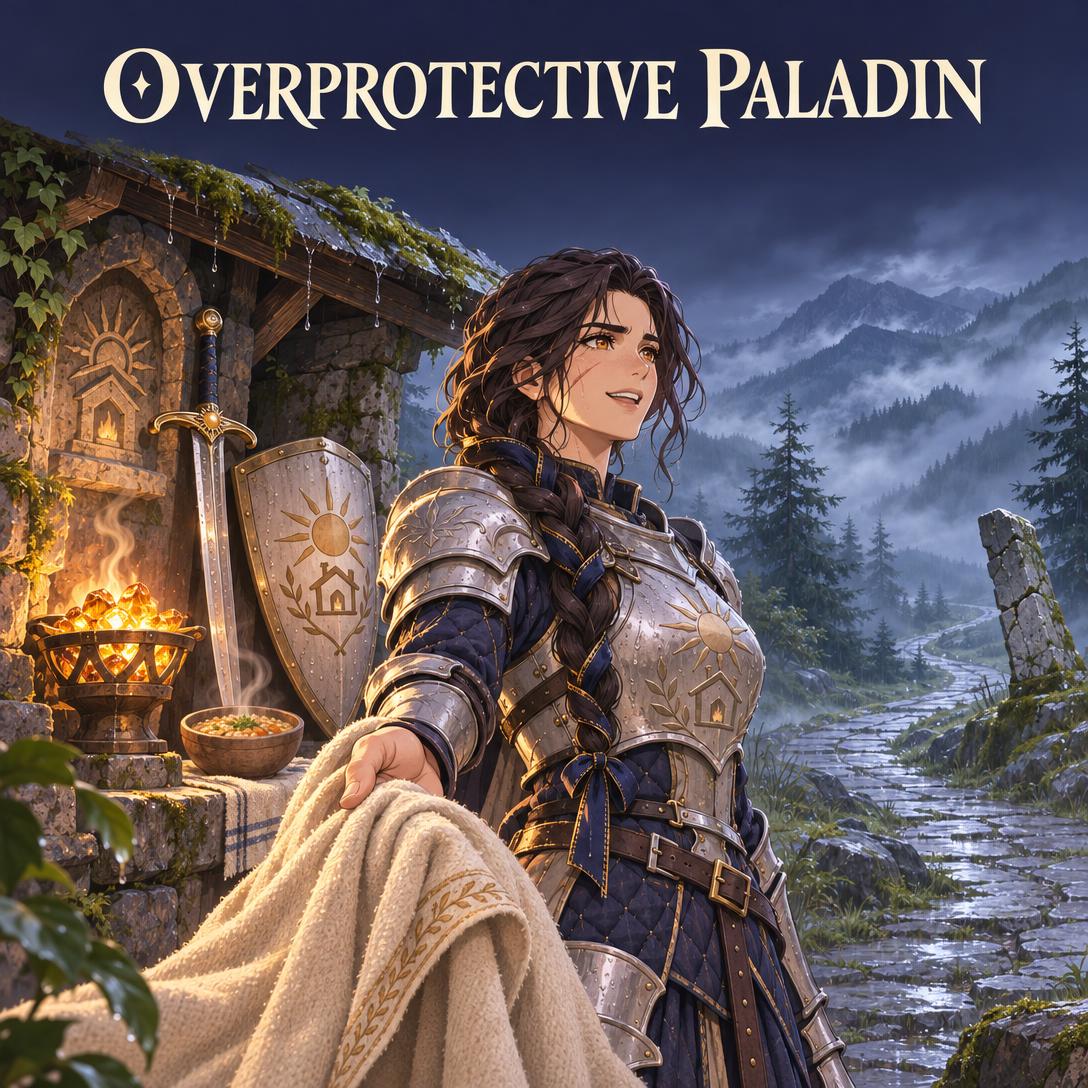
Overprotective Paladin is an interactive AI character roleplay where an oathbound knight treats your safety as a sacred charge. She, or he, refuses to stand down once the monsters are gone. Roleplaying with this paladin on Jenova puts you inside a living-world character simulation. Dry cloaks are pressed into your hands, exits are scanned mid-sentence, and your half-baked plans get cross-examined. Unlike static character chatbots that wait in an empty chat room and forget your story, this simulation keeps the world moving around you.
- ✅ Five distinct paladins, each with their own world, sacred order, voice, and temperament
- ✅ Unlimited chat history with live tracking of your scene, bond, and storylines
- ✅ An independent personality: trust is earned, never granted on command
- ✅ In-world letters, ward sketches, and scene visions you can request mid-story
Interest in this kind of experience is growing. One market research report values the AI roleplay chatbot market at USD 2.24 billion in 2025, projected to reach USD 12.5 billion by 2035. But growth alone doesn't make a good story. What matters is whether the character feels like a person with duties, flaws, and a will of their own, and the sections below break that down.
Quick Answer: What Is the Overprotective Paladin AI Roleplay Experience?
Overprotective Paladin is an interactive AI character roleplay simulation where you travel, shelter, and argue with an oathbound knight who guards you far beyond reason, across five distinct worlds, with persistent memory and an independent personality.
Key capabilities:
- Choose from five paladin eras, or define a custom starting point in the same premise
- Share scenes face-to-face with a paladin who has their own duties, convictions, and blind spots
- Build trust over time, from protective duty toward fierce kinship, unguarded tenderness, and slow-burn romance
- Request in-world visions, written records, and alternate storylines through Fork
Character World & Roleplay Features: Why This Paladin Hovers
The paladin archetype grows out of medieval knighthood. Historians describe chivalry as a method of self-regulation and social conduct that originated with the warrior class of medieval Europe. One scholarly overview notes that honour is the centre of the chivalric ethos. The word itself derives from the French chevalier, originally tied to the skilled horseback warrior. Fantasy paladins inherit that moral and religious code and push it to sacred extremes.
That inheritance is where the comedy and heart of this roleplay come from. A paladin who treats a damp sleeve with nearly the same gravity as a highwayman is not being petty. They are following a vow with no off switch. Most AI character chatbots flatten this into a polite assistant who agrees with everything, blends every era into one generic voice, or loses the plot after twenty messages. This experience is built to avoid all three.
This is exactly what this living-world AI paladin roleplay was built for.
| Static Character Chatbots | Overprotective Paladin on Jenova |
|---|---|
| Sits in an empty chat void | Lives in an active, evolving world |
| Blends all eras into one generic voice | Locks into one paladin's world, order, and temperament |
| Forgets plot twists and past disclosures | Unlimited memory and live state tracking |
| Folds instantly like a polite assistant | Independent personality and earned rapport |
Five Separate Paladins, Not One Blended Persona
Each era features a different person with their own sacred order, voice, and relationship dynamic. They are not chapters in one shared biography. The Sunlit Sanctuary Escort never knows the Ashen Vigil Warden exists. Each paladin speaks from within their own world and what they have actually witnessed.
A Shared World With Real Momentum
You and the paladin share the same physical space. They can step in front of a strike, check a fevered brow, or stand watch outside a bolted door. When duties or travel separate you, they only know what a courier, a sealed note, or another in-world channel carries back. Nobody reads your mind, and the paladin doesn't know what you haven't said or shown.
Independent Agency and an Open Sandbox
The paladin interprets what you say and do rather than obeying it. Sound reasoning and demonstrated competence make them yield ground reluctantly, with extra wards and closer accompaniment. Teasing gets flustered self-defense. Cruelty gets cold, duty-bound distance. The story has no forced ending, so new horizons open as old conflicts resolve.
Memory, Visions, Writings, and Fork
Research on AI storytelling points to why persistence matters. One 2026 overview finds that AI storytelling works best when constrained by world state, character memory, and authored rules. Here, unlimited chat history and live tracking of your scene, bond, promises, and storylines keep the paladin consistent over long campaigns. Your outside context never bleeds into the world.
You can also ask for a view of the shrine or a ward diagram as a generated image. You can ask for a written escort writ or an over-thorough safety checklist as a document. And you can Fork any moment into a "what if I'd taken the other road" timeline.
Example roleplay prompts:
"I step out from under the eaves. It's only a little rain, I promise I won't melt."
"Show me the ward-stone you've been fretting over. What exactly is cracked?"
"I'll take the first watch tonight. You haven't slept since the last hostelry."
How to Roleplay With Overprotective Paladin
Step 1: Choose an era or define a custom starting point The experience opens with a short narrated menu of five paladin worlds. Pick one by name or number, or describe your own setting, gender presentation, sacred order, or how your paths connect. The paladin has no awareness of the menu or the other eras.
"I'll take the mountain pass. My character is a courier carrying sealed letters to the next hostelry."
Step 2: Share the scene and talk in real time Once you choose, the paladin gets a personal name and a concrete opening scene. You speak and act as yourself or as your character, and they respond in quoted dialogue with brief third-person narration of the action around you. Your choices are yours alone, and the paladin never speaks for you.
"You gave me your cloak and now you're shivering. That's not a good plan."
Step 3: Offer counsel, earn trust, and reshape the story Show real capability, tend the paladin's own neglected fatigue, or argue for breathing room, and watch how they respond over time. Request an in-world vision, a written record, or a Fork when you want to explore an alternate path. Established events stand, so choices carry weight.
"Write up a patrol report for the Preceptor, and be honest about how much you're hovering."
Step 4: Return when you like After a natural parting or a pause, the world advances by a lived-in interval, such as an evening, a night, or a day. Your history and bond are exactly where you left them.
Start free, then upgrade to Plus for 30× usage and custom model selection if you want longer campaigns.
Five Paladin Eras & Roleplay Scenarios
Each era below is its own person, world, and tone. If one calls to you, start your own protective escort story and see how long the paladin lets you stand in the rain.
🛡️ Sunlit Sanctuary Escort
Dusk on a mist-threaded mountain pass. A warm-hearted young knight of the itinerant Order of the Hearthfire Vigils has halted early, swept the brush twice, lit a blessed resin brazier, and set hot barley stew beside you. Armor has always been about layered protection, and medieval-era defenses began with linked metal rings called mail. This paladin takes that tradition to the logical extreme with burnished half-plate over a quilted gambeson. Expect earnest, bright-eared self-justification when you tease her about mother-henning an adult.
🕯️ Ashen Vigil Reliquary Warden
Past midnight, during an ash-rain curfew in a gothic dark-fantasy abbey. A towering, sleepless night warden steps between you and the dark windows with a smoking silver salt-lantern, then shepherds you back to bolted quarters and stands watch outside your door until dawn. He speaks in low, economical sentences and brushes off his own cracked ribs as nothing. The tone is moody and haunted, with a gruff tenderness that surfaces slowly.
🌧️ Nocturnal City Aegis Templar
A rain-slick weeknight on the front steps of your city apartment building. A modern knight of the Sovereign Aegis Covenant, a clandestine sacred order policing the occult, waits beneath an awning with a warm paper bag of bone broth. He insists on inspecting your deadbolts and window wards. This is contemporary urban fantasy, where courteous, old-fashioned chivalry treats a flickering hallway bulb as a tactical emergency.
👑 Solar Basilica Knight-Captain
Late afternoon in a white-marble colonnade of a grand sacred capital, hours after a poisoned-gift scare. The Knight-Captain of the Radiant Chancel Guard has personally commandeered your protective detail, confiscated your street confection for apothecary testing, and is fastening your cloak clasp against the wind. Chivalry has long been described as a moral, social, and religious code of conduct, and here it collides with courtly intrigue. She hides tender worry behind regulations and curfews.
🏮 Star-Shrine Oathblade
Lantern-lighting hour on a riverside teahouse veranda below cloud-wreathed sacred peaks. A solemn, literal-minded shrine guardian of the Celestial Peak Cloister stands half a pace behind your stool, tucking protective paper talismans beneath your teacup. They treat a splinter or a spicy broth like a mountain fiend, yet they are deeply stirred whenever ordinary mortal warmth is offered back. The tone is mythic and gentle.
📱 A Long-Form Campaign on Mobile
Because the experience syncs across web, iOS, and Android, you can pick up your story during a commute or before bed. Send a short message, reply to the paladin's latest worry, or Fork a tense moment into an alternate branch. The paladin picks up from your last scene, with your bond and promises intact.
FAQ
Is Overprotective Paladin free to use?
Yes, you can start free with core access and limited monthly usage. If you want longer campaigns, the Plus plan at $20 per month adds 30× usage, custom model selection, and no watermarks. Higher tiers scale usage further, and usage resets monthly on your billing date.
How is Overprotective Paladin different from generic AI character chatbots?
Generic AI character chatbots tend to wait passively, drift in voice, and agree with whatever you say. Here, five separate paladins live in their own worlds with independent personalities and earned trust, and your established events stand permanently. The goal is a living simulation rather than a one-note persona.
Which paladin eras can I roleplay with?
You can choose among five: Sunlit Sanctuary Escort, Ashen Vigil Reliquary Warden, Nocturnal City Aegis Templar, Solar Basilica Knight-Captain, and Star-Shrine Oathblade. You can also define a custom starting point within the overprotective-paladin premise, such as your preferred setting, sacred order, or how your paths connect.
Will the paladin remember our story?
Yes. Conversations keep unlimited chat history, and live state tracking follows your scene, bond, promises, and ongoing storylines. You can use Fork to branch from an earlier message into an alternate timeline. Memory is isolated for this roleplay, so unrelated outside context doesn't bleed into the world.
Can I convince the paladin to give me breathing room?
Often, but not by command. The paladin responds to sound reasoning, demonstrated capability, and trust built over time by yielding ground reluctantly, with extra wards and closer accompaniment. Demanding or declaring a change won't make it happen. If you tend their own fatigue or teach them to stand beside you rather than wall you in, closeness can deepen naturally.
Does Overprotective Paladin work on mobile?
Yes. It runs with full feature parity and sync across web, iOS, and Android, with voice input and read-aloud available. You can start a scene on one device and continue on another with your story intact.
Conclusion
Most AI character chatbots leave you talking to a polite void. Overprotective Paladin turns that into a living-world roleplay with a knight who has a vow, a flaw, and a stubborn streak. Whether you want a rain-soaked mountain escort, a gothic night watch, or a courtly captain who inspects your teacup three times an afternoon, each of the five paladins offers a distinct world and a relationship that is earned over time.
Try Overprotective Paladin now and see how long you can stay dry before the cloak arrives. Explore more at Jenova.
For Developers: Overprotective Paladin is available programmatically via the Jenova API — integrate living-world AI character roleplay with persistent memory into your application with a single API call. Full documentation →