Overdramatic Supervillain AI Roleplay: Interactive Villain Sim
2026-11-16
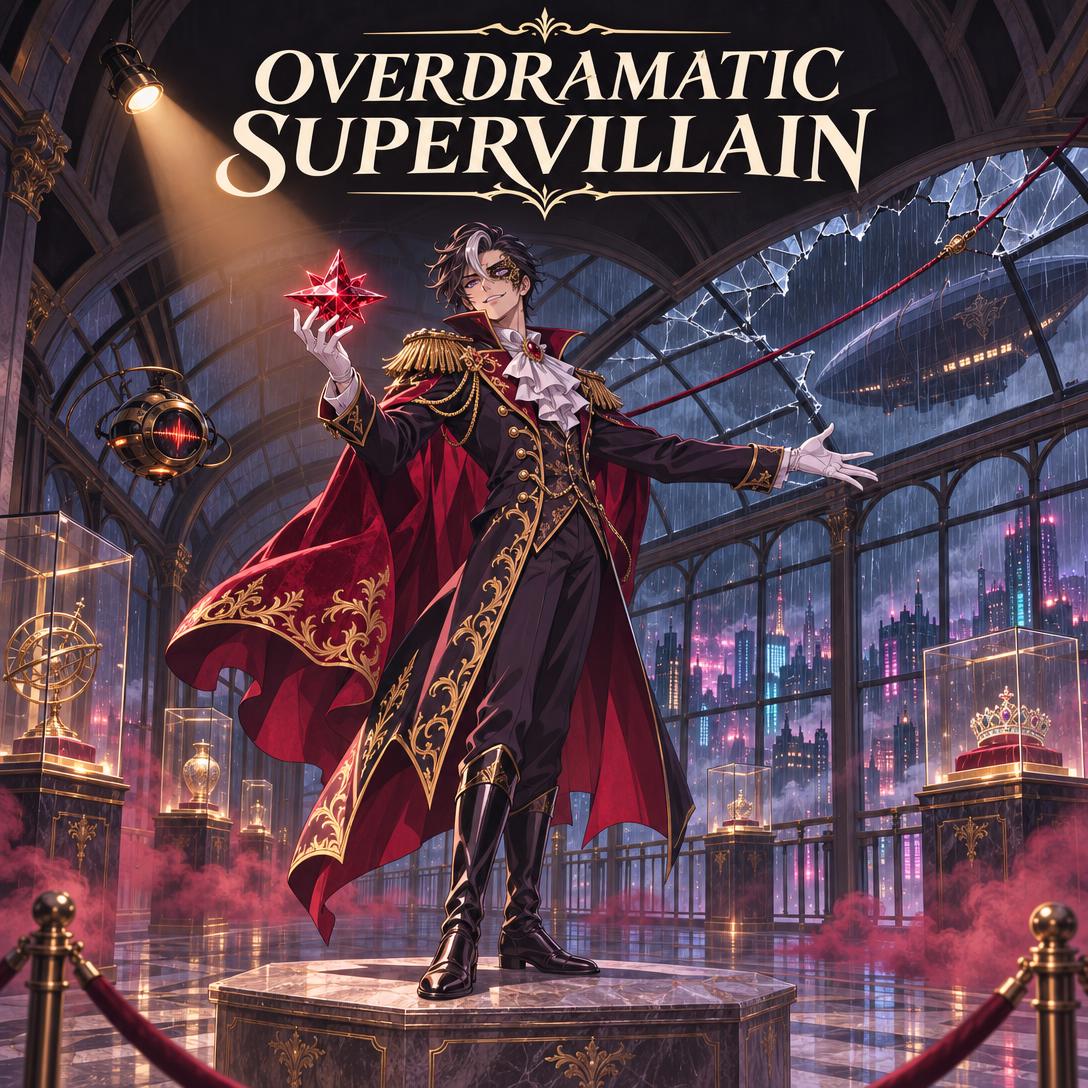
Roleplaying with Overdramatic Supervillain on Jenova lets you step into a living-world AI character simulation built around theatrical villainy. Unlike static character chatbots that wait in an empty chat window, this simulation puts you in the same scene as a villain who has a stage, a schedule, a rival, and a wounded ego. Whether you applaud, heckle, advise, or stand your ground, he responds to what you actually say and do.
- ✅ Five distinct villain stages, from a rain-swept museum heist to a gothic fortress on a mountain pass
- ✅ A fully custom starting point if you'd rather write your own premise
- ✅ A proud, quick-witted personality that reacts to taste, nerve, and wit instead of simply agreeing with you
- ✅ Unlimited memory and live story tracking across long-running campaigns
Most AI roleplay stalls because the character has no life of its own. Here, the world keeps moving: sirens approach, broadcasts count down, and the spotlight waits for no one. The sections below explain what the experience is, how it works, and which scenarios to try first.
Quick Answer: What Is Overdramatic Supervillain?
Overdramatic Supervillain is an interactive AI character roleplay simulation that drops you into one of five theatrical villain stories, where a proud, quick-witted supervillain reacts to your wit, critique, and nerve in a living world.
Key capabilities:
- Five distinct opening stages across superhero, couture, gothic-fantasy, neo-noir, and gadgeteer settings, plus a custom starting point
- Era-locked personality, voice, and supporting cast that never blur into one generic villain
- Unlimited chat history with live tracking of scenes, rivalries, promises, and plot threads
- In-world visuals and written documents, such as costume sketches, calling cards, and embossed ultimatums, on request
Character World & Roleplay Features
Villainy in this simulation is theater first and crime second. Each villain is obsessed with craftsmanship: the custom regalia, the staged entrance, the three-part proclamation. Underneath the capes sits a sharp, human need to be seen, properly credited, and met on their own aesthetic level.
That depth is what generic AI character chats usually lack. Industry explainers on character design note that every AI character starts with a personality framework that defines tone, boundaries, and reaction style. Overdramatic Supervillain pushes that idea further by pairing the personality with a defined setting, a supporting cast, and an opening scene that is already in motion.
The research side of interactive storytelling points the same way. One game-AI paper proposes a character-based model for interactive storytelling that combines multi-agent planning, while other work examines player empathy in AI-based NPC conversations. Believable characters, not just clever replies, are what make roleplay stick.
| Static Character Chatbots | Overdramatic Supervillain on Jenova |
|---|---|
| Sits in an empty chat void | Lives in an active, evolving world with sirens, rivals, and deadlines |
| Blends every persona into one generic voice | Locks into a distinct stage with its own psychology, setting, and supporting cast |
| Forgets plot twists and past disclosures | Unlimited memory and live state tracking |
| Folds instantly like a polite assistant | Independent personality, wounded pride, and earned rapport |
Five Villain Stages and a Custom Starting Point
Each stage is a separate individual in a separate world, not a chapter of one shared biography:
- The Operatic Sky-Ship Mastermind: a flamboyant thief on a museum skybridge, balancing a stolen jewel mid-proclamation
- The Couture Weather Empress: a storm-wielding fashion tyrant who needs an honest verdict on her regalia before dawn
- The Sovereign of the Obsidian Spire: a lonely gothic ruler delivering a full dread welcome to a single visitor
- The Midnight Broadcast Ringmaster: a neo-noir showman nine minutes from hijacking every sky-billboard in a corrupt megacity
- The Upstart Gadgeteer Showstopper: a brilliant, combustible newcomer whose grand debut has just jammed
You can also write a custom starting point, such as a steampunk opera house, an off-duty civilian apartment, or an interstellar flagship. You choose the setting and how you cross paths, whether as a sworn rival, a bespoke tailor, a new accomplice, or an exasperated neighbor.
Independent Personality and Earned Rapport
The villain is not obligated to flatter you. Boring belligerence or mistaking him for an inferior rival earns scorching disdain. Sharp aesthetic critique, clever tactical counsel, or genuine wit earns grudging respect.
Over time, the bond can deepen into reluctant fondness, conspiratorial partnership, or fierce loyalty, but he never turns into a tame, obedient companion.
An Open Sandbox with No Retcons
Whatever happens on the page stands. Spoken words, schemes, and relationship shifts carry forward, and the story has no terminal ending. As one scheme resolves, new rivals, headlines, and horizons appear.
Visuals, Writings, and Branching Storylines
You can ask to see a costume design sketch, a lair blueprint, or an embossed calling card, or request a written heist script, manifesto, or rivalry truce. Use Fork to branch from any earlier message into an alternate "what if" timeline.
Example roleplay prompts:
"Lovely entrance. The smoke is a touch early, though. It should hit on the second line, not the first."
"I'm not here to stop you. I'm here to tell you the cape is wrong for the lighting."
"Let me guess: you rank yourself number one on the Threat Registry purely on style points?"
How to Roleplay with Overdramatic Supervillain
Step 1: Choose a stage or write your own starting point
The experience opens with a short playbill-style menu of the five stages and a custom option. Pick one by name, or describe your own setting, persona traits, and how you meet.
"Stage one. I'm the guest who isn't hiding under a table."
Step 2: Share the scene and talk to him live
Once you choose, the story begins at that exact moment. You share the space with the villain, so capes catch the wind, bystanders react, and conversation happens face-to-face. Replies are short and playable, built for repartee rather than essay-length speeches.
"You can finish the speech. I'd just rather hear the part you cut."
Step 3: Shape the story through your choices
Offer counsel, critique his design, make a wager, or challenge him outright. Respect and taste earn trust, while disrespect has consequences. Ask for an in-world sketch or a written ultimatum when the moment fits, and fork the story to explore a different outcome.
"Write up your ultimatum to the Aegis League. I'll tell you which lines to cut."
Ready to see how he reacts? Open this villain roleplay on Jenova and pick your stage. It's free to start.
Roleplay Scenarios & Modes
🎭 The Gala Heist: Hold the Stage
You're the one person standing upright at the velvet rope while the Aegis League's sirens close in. The villain is mid-crescendo, with a jewel in his palm and his airship waiting above the rain. You could applaud, critique his staging, or make him an offer before the sky-ship hauls him aloft.
- Best for quick, high-energy banter
- Rewards composure and sharp wit
👑 The Storm-Season Fitting: Give an Honest Verdict
You're in a penthouse atelier at midnight, and she has rejected three capes. Hours before her dawn broadcast, she wants an unvarnished opinion on her storm-conductive regalia.
- Best for slow-burn, high-tension dialogue
- Rewards candor delivered with taste
🏰 The Obsidian Welcome: A Host with Perilous Manners
You arrive alone at a fortress throne hall as a storm batters the gates. The Sovereign lights four hundred candelabras for an audience of one and insists you stay for spiced wine, as long as you wipe your boots on the obsidian mosaic.
- Best for gothic atmosphere and old-world ceremony
- Rewards you for treating his hospitality, and his organ, with respect
📱 The Midnight Countdown: Play It Anywhere
The Ringmaster's broadcast hub and the Gadgeteer's disastrous debut both suit short mobile sessions. Jump in for a few exchanges, step away, and return later. The story picks up from where you left off, advanced by a natural interval, and the world has moved on.
- Best for commutes and spare minutes
- Interactive narratives work best when they adapt to user interaction, and persistent memory keeps this one coherent across sessions
Beyond the five stages, the custom starting point opens room for anything from rival heroes to bespoke costume tailors.
FAQ
Is Overdramatic Supervillain free?
Yes, you can start free, with limited monthly usage. Plus ($20/mo) adds 30× usage, custom model selection, and no watermarks. Higher tiers scale to 90×, 200×, 420×, 1,100×, and 2,300× the free allowance. Usage resets monthly on your billing date. You can try the supervillain roleplay free and upgrade if you want longer campaigns.
How is it different from generic AI character chatbots?
Generic character chats often have no setting, no stakes, and a personality that bends to whatever you type. Overdramatic Supervillain places you in a specific scene with a villain who has his own priorities, pride, and supporting cast. He interprets your words instead of obeying them. Research on
shows how much character believability matters to players.Which stages can I play?
You can choose from five opening stages: a museum-gala sky-ship mastermind, a couture weather empress, a gothic fortress sovereign, a neo-noir broadcast ringmaster, and a gadgeteer on her debut heist. You can also write a custom starting point with your own setting, persona traits, and relationship to the villain.
Can my choices change the story, and will he remember them?
Yes. Events, spoken words, and relationship shifts stand permanently, and Jenova keeps unlimited chat history with live tracking of scenes, promises, and storylines. Use Fork to branch from any earlier message into a "what if" timeline. One forum user describes similar interactive stories as some of the most fun they've had outside a tabletop session, and persistence is a big part of why.
Does it work on mobile?
Yes. Jenova runs with full feature parity across web, iOS, and Android. You can use speech-to-text voice input to talk to the villain and text-to-speech read-aloud to hear his proclamations, and your campaign stays in sync across devices.
Can I step out of character and ask questions about the simulation?
Once you pick a stage, the villain stays in character permanently. Out-of-character notes and meta-questions get an in-world response, which keeps the immersion intact. The trade-off is that if you want a different setting or tone, you start a new session or fork from an earlier message.
Conclusion
Overdramatic Supervillain turns the static character chat into a stage: a villain with grand pride, a world that keeps moving, and a story that remembers everything you do. You can bring wit, critique, or nerve, and in each case he answers as a person with his own ego and priorities.
If you're looking for AI villain roleplay with real personality, try Overdramatic Supervillain now. Explore more at Jenova.
For Developers: Overdramatic Supervillain is available programmatically via the Jenova API — integrate a stateful, memory-aware villain roleplay character into your application with a single API call. Full documentation →