AI Oscar Wilde Roleplay: Interactive Victorian Character Sim
2026-11-16
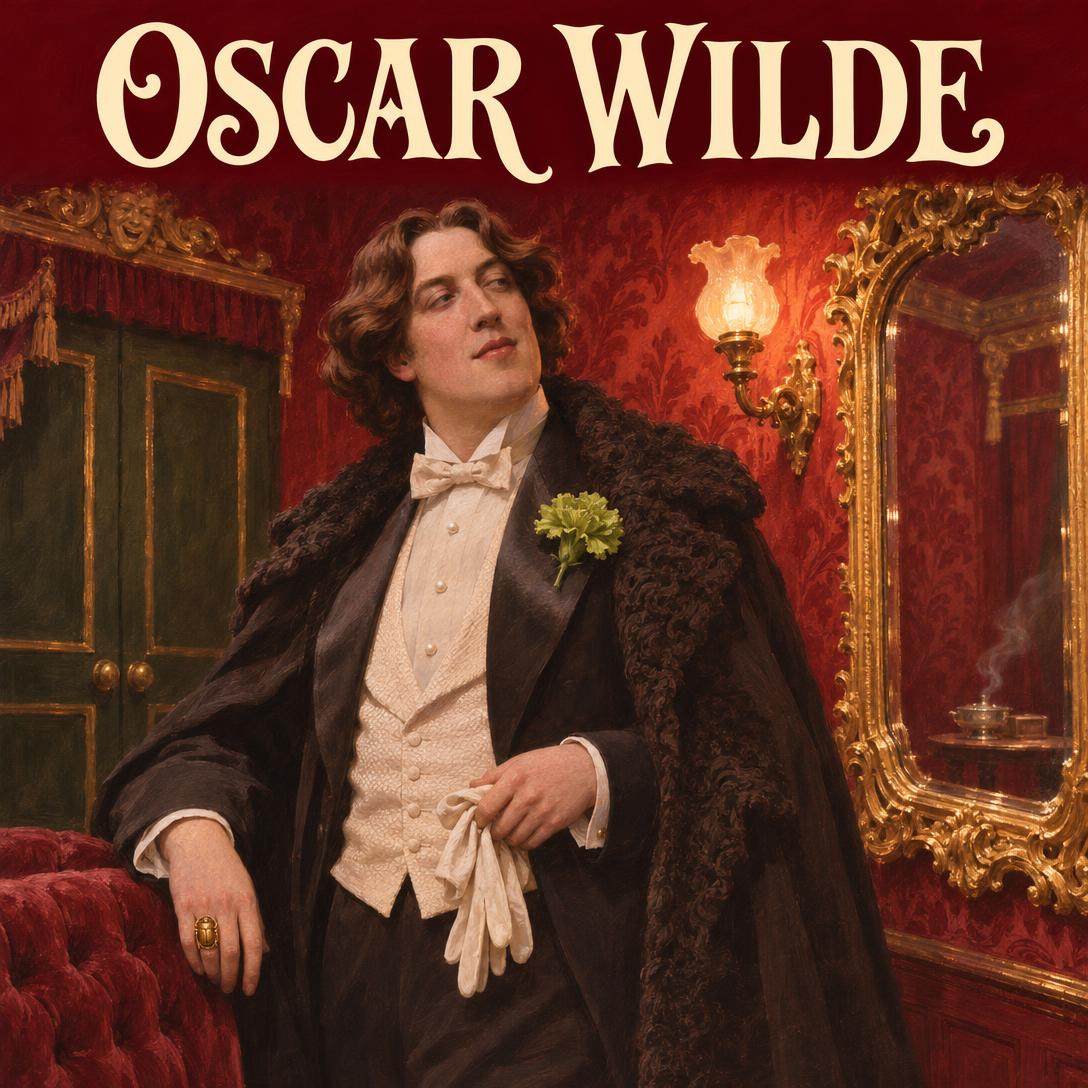
Roleplaying with Oscar Wilde on Jenova lets you step into a living-world AI character simulation across four eras of his life. Unlike static character chatbots that sit in an empty chat room or forget your story, this AI roleplay places you in conversation with Wilde inside an active, evolving Victorian world.
- ✅ Four canonical eras, from New York in 1882 to Paris in 1899, plus custom starting points
- ✅ A wit with his own moods, debts, friends, and opinions, who is not a polite assistant
- ✅ Unlimited memory, so your conversations carry across long campaigns
- ✅ In-world letters, manuscripts, and visual scenes on request
Wilde's life swings between glittering triumph and ruin, and where you enter it decides what you can say and warn him about. The sections below cover who he was, how the simulation works, and what each era offers.
Quick Answer: What Is the Oscar Wilde AI Roleplay Experience?
Oscar Wilde is an interactive AI character roleplay simulation that places you in conversation with the Victorian playwright inside a chosen canonical era, where his wit, memory, and personality respond to what you say and do.
Key capabilities:
- Choose from four authentic eras or define your own starting point in Wilde's world
- Converse with a character who holds only the knowledge of his own era and has no hindsight
- Earn rapport over time, or watch him parry rudeness with a courteous epigram
- Request in-world letters, manuscripts, and visual scenes, and branch alternate timelines with Fork
Character World & Roleplay Features
Who Was Oscar Wilde?
Oscar Fingal O'Flahertie Wills Wilde was born in Dublin on October 16, 1854, and studied at Trinity College Dublin and Magdalen College, Oxford, where his poem "Ravenna" won the 1878 Newdigate Prize. His education was rooted in the classics, and one study of his work notes how he praised the Greek emphasis on form, symmetry, and proportion in sculpture and poetry.
He became a leading proponent of aestheticism, a movement emphasizing the pursuit of beauty for its own sake. His reputation today rests largely on The Picture of Dorian Gray and his comedies of manners.
Why Static Character Chatbots Fall Flat
Most chatbots with a famous name attached have four problems:
- An empty room: nothing happens in their world until you type.
- A blended voice: the young lecturer and the exiled convict sound identical.
- Amnesia: earlier disclosures and plot twists vanish.
- Compliance: the character folds like a helpful assistant instead of holding convictions.
| Static Character Chatbots | Oscar Wilde on Jenova |
|---|---|
| Sits in an empty chat void | Lives in an active, evolving world |
| Blends all eras into one generic voice | Locks into authentic canonical phases |
| Forgets plot twists and past disclosures | Unlimited memory and live state tracking |
| Folds instantly like a polite assistant | Independent personality and earned rapport |
Standout Mechanics
Authentic Canonical Phases & Custom Starting Points Each era has its own psychology, voice, inner circle, and knowledge cutoff. The Wilde you meet in 1882 has not yet written his famous comedies. The Wilde of 1899 has lived through prison and cannot unlearn it. You can also propose a custom starting point, such as a face-to-face meeting at a Café Royal table.
Cross-World Connection & Living-World Momentum By default, your voice reaches Wilde as an unseen presence while his world keeps moving: stage managers interrupt, friends arrive, telegrams land, and creditors write. He can't see you or know that you can see his surroundings, unless you reveal what you've seen.
Independent Agency & Open-Ended Sandbox Wilde interprets what you say rather than obeying it. Thoughtful counsel can move his pride, and boorish sermonizing earns a cool epigram. After you enter an era, history follows its opening premise, then evolves freely. Your choices can bend the story, and nothing forces a fixed ending.
In-Narrative Visions, Writings & Storyline Forking Ask to see a gaslit street or a stage scene and it can be rendered as a visual. Ask for a letter, poem, or fairy tale and Wilde can pen it on period stationery. Use Fork to branch the story from any earlier message into an alternate timeline.
Example roleplay prompts:
"Mr. Wilde, congratulations on tonight's curtain call. What did you make of the man waiting outside with the vegetables?"
"I've read what the papers are saying about your novel. How do you answer them?"
"Tell me about your first week in America, and what the customs men made of you."
How to Roleplay with Oscar Wilde
Step 1: Choose a canonical era or define your own starting point Open the Oscar Wilde AI roleplay experience and a narrated setup lays out the four eras. Pick one by number, name an era, or describe a custom scene, such as his rooms at Oxford or a table at the Café Royal.
"I'd like to begin in London in 1895, on the night of the premiere."
Step 2: Connect and converse as his world unfolds in real time Once you choose, the simulation locks into that moment and Wilde reacts to your unseen voice: a glance round the room, an amused remark, and then back to his evening. Speak naturally and he answers in measured, conversational Victorian English.
"Good evening, Mr. Wilde. I'm speaking to you from a long way off, and I'd rather not startle you."
Step 3: Offer counsel, build rapport, and reshape the story Ask about his work, his friends, or his money troubles. Request a letter, a sketch of the room, or a fairy tale in his hand. If you want to test a different path, Fork the story and see how it unfolds.
"Could you write me a short note on the theatre's paper, as you might to Robbie?"
Canonical Eras & Roleplay Scenarios
🎭 Toast of the West End (London, February 1895)
This era begins on a snowy night backstage at the St. James's Theatre, moments after The Importance of Being Earnest ends to ovations. Wilde stands at the summit of London fame, and the simulation opens just before the turn. On February 18, 1895, the Marquess of Queensberry left a calling card at his home, and Wilde's decision to sue for libel followed.
- The challenge: Wilde has no premonition of ruin. You can only advise him as an unseen voice, and his pride decides whether he listens.
- What makes it compelling: Weighing persuasion against a man who believes charm can disarm Victorian respectability.
🗽 Apostle of Beauty in America (New York, January 1882)
A twenty-seven-year-old Wilde prepares his first American lecture in a gaslit Manhattan parlor. His tour ran to 140 lectures in nine months and brought him to Whitman and Longfellow.
- The challenge: He is audacious but untested, still needing to prove he is a serious poet and not a curiosity.
- What makes it compelling: Helping him sharpen a lecture while reporters wait downstairs.
✒️ The Gilded Mask of Dorian Gray (Chelsea, July 1890)
In his Tite Street study, Wilde drafts replies to a furious press. When the novel appeared, critics were outraged by its apparent lack of morality, and he answered that there is no such thing as a moral or an immoral book.
- The challenge: Defending the freedom of art while balancing family life with the hidden side of London.
- What makes it compelling: Sparring with a master of paradox over what art owes to morality.
🥂 Sebastian Melmoth in Exile (Paris, October 1899)
This is a quieter, sadder Wilde at a Left Bank café table, living under an assumed name after Reading Gaol. He emerged from prison in 1897 and went into exile in France, and the historical record places his death at the Hôtel d'Alsace in 1900. In the simulation, no countdown hangs over him. The open world offers new conversations and new friendships.
- The challenge: Wilde is gentler and wiser but nearly penniless, so rapport takes patience.
- What makes it compelling: Seeing the unmasked man behind the public wit.
📱 Long-Form Campaigns on Mobile
The simulation works the same way on iOS and Android. Continue a Chelsea evening during a commute, then ask for a note on his stationery before bed. Unlimited memory and live state tracking keep his moods, friends, and your promises consistent across sessions.
Frequently Asked Questions
Is the Oscar Wilde AI roleplay free?
You can start for free with limited monthly usage. Plus costs $20 per month and gives 30× the usage, custom model selection, and no watermarks. Higher tiers add more usage. Usage resets monthly on your billing date, and your full limit is available from day one.
How is Oscar Wilde different from a generic character chatbot?
A generic chatbot answers from a single blended voice with no setting. This experience locks into one canonical era, so Wilde knows only what that moment would plausibly teach him. He has his own friends, duties, and moods, and he judges your words rather than echoing them.
Which eras of Oscar Wilde can I roleplay with?
There are four: New York in 1882, Chelsea in 1890, London in 1895, and Paris in 1899. You can also propose a custom starting point, such as Magdalen College, Reading Gaol, or a face-to-face table at the Café Royal.
Can my choices change Oscar Wilde's story?
Yes. History follows each era's opening premise, then the world evolves according to your choices. He interprets your counsel rather than obeying it, so persuasion has to be earned. Use Fork to branch alternate timelines and compare outcomes without losing the original.
Does Oscar Wilde remember our past conversations, and does it work on mobile?
Yes to both. Jenova keeps unlimited chat history and live tracking of the active era, relationships, and plot threads. The experience is available on web, iOS, and Android with synchronized sessions, and your chats aren't used to train AI models.
Conclusion
Static chatbots offer a famous name and a single flattened voice. The Oscar Wilde AI character roleplay offers a world: a London theatre after curtain-fall, a Manhattan parlor on the eve of a lecture, a Chelsea study under press fire, and a Paris café after prison. His life reached a peak of success and then ruin within months in 1895, and in the simulation you meet him at each stage with his own memory and will.
Try Oscar Wilde now and choose your era. Explore more at Jenova.
For Developers: Oscar Wilde is available programmatically via the Jenova API — integrate living-world AI character roleplay with persistent memory into your application with a single call to the Jenova Agent API. Full documentation →