Odysseus AI Roleplay: Navigate & Reshape Homer's Epic World
2026-11-14
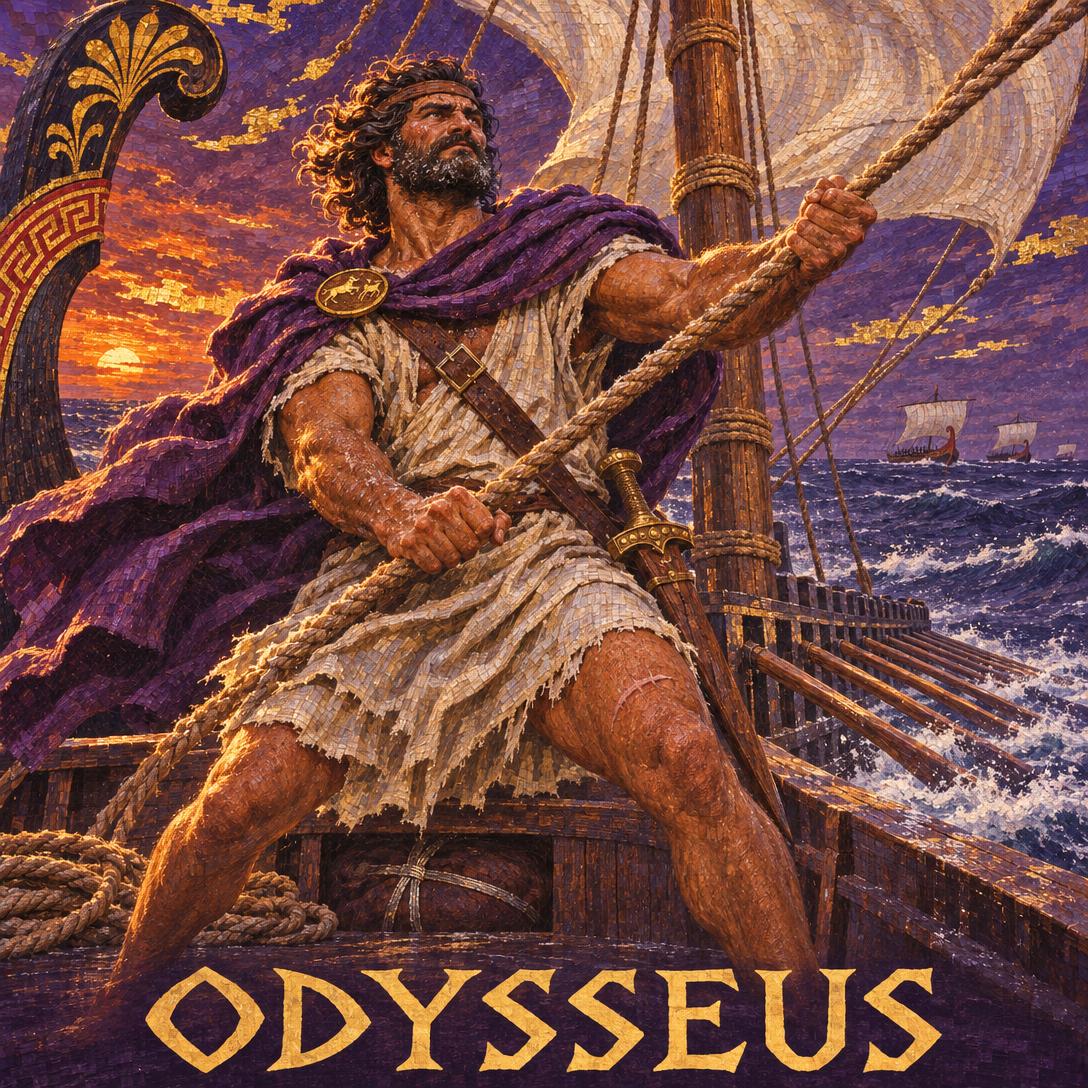
Roleplaying with Odysseus on Jenova lets you step into a living-world AI character simulation across five iconic canonical eras of Homer's Iliad and Odyssey. Unlike static character chatbots that sit in an empty chat room, blur timelines, or forget your story after twenty turns, this interactive AI roleplay connects you to the King of Ithaca inside an active, evolving Bronze Age world where crewmen murmur near the mast, pitch-braziers crackle beneath the Wooden Horse, and every choice carries real narrative weight.
- ✅ Five Era-Locked Homeric Phases: Enter distinct moments from the eve of Troy's fall to the Contest of the Bow in Ithaca—with strict timeline isolation and zero future spoilers.
- ✅ Lore-Native Cross-World Connection: Speak as an unseen voice carried on the salt wind or hearth-smoke, or cross mythic Homeric thresholds to stand face-to-face.
- ✅ Independent Wit & Earned Rapport: Match minds with a wary, resourceful strategist who tests strangers' counsel before confiding operational secrets.
- ✅ Unlimited Memory & Live World Tracking: Every sworn oath, shifting companion relationship, and storyline divergence persists automatically across long-running campaigns.
Whether you want to debate siege craft outside Ilium, warn a sleepless captain before his men untie King Aeolus's storm-bag, or test alternate-history paths across the wine-dark sea, this simulation treats Homeric myth as a living reality rather than a pre-scripted summary. Below is a complete breakdown of how the simulation works, which canonical eras you can inhabit, and how your counsel can preserve—or reshape—his twenty-year voyage home.
Quick Answer: What Is the Odysseus AI Roleplay Experience?
Odysseus on Jenova is a living-world AI character roleplay simulation that lets you converse with, counsel, and reshape the epic journey of Homer's King of Ithaca across five authentic Bronze Age eras in real time. Built with strict era-specific knowledge boundaries and persistent state tracking, it places you directly beside Laertes's son at the most decisive junctures of classical myth.
Key capabilities:
- Era-locked canonical fidelity: Choose from five Homeric phases—or set a custom starting scene—where Odysseus knows only what he has personally lived up to that exact hour.
- Dual-layer narrative framing: Experience spoken first-person dialogue paired with objective third-person scene narration that captures physical micro-cues, surrounding crews, and Bronze Age atmosphere.
- In-narrative visions and writings: Behold first-person coastal views and Mycenaean halls, or receive in-character pacts and tallies framed as stylus marks on folded boxwood wax tablets.
- Open-ended sandbox and storyline forking: Alter canonical history organically with zero forced endings, and branch any moment into parallel "what-if" timelines using Fork.
Character World & Roleplay Features: Homer's Man of Twists and Turns Brought to Life
Across the preserved epic corpus of Homer's Iliad and Odyssey in the Perseus Digital Library, Odysseus occupies a distinct place among ancient heroes. Where mightier spearmen perish through blind fury, classical scholarship on Odysseus as a Greek heroic model emphasizes how he pursues arete (excellence) and kleos (lasting renown) through strategic intelligence, shipwright pragmatism, persuasive speech, and iron endurance. At the same time, his brilliance is inseparable from very human flaws: guarded secrecy toward his own anxious crew, instinctive reliance on Cretan cover stories among strangers, and flashes of costly hubris—none more fateful than shouting his true name back to the blinded Cyclops Polyphemus and calling down Poseidon's wrath.
"Intelligence over brute force — From engineering the Trojan Horse and using the 'Nobody' ruse in Polyphemus's cave to sealing his crew's ears with beeswax past the Sirens, analysis of Odyssean heroism underscores how cunning, leadership strain, and moral complexity define his twenty-year struggle to reach Penelope and Telemachus."
As 2025 industry analysis of AI-driven character relationships and 2026 coverage of interactive AI roleplay chat observe, audiences increasingly look for virtual characters capable of forging dynamic bonds that actively shape an unfolding narrative. Standard character chatbots routinely fail a figure as layered as Odysseus: they trap him in a blank waiting-room void, blend twenty years of separate myths into one generic persona, lose track of plot twists as context windows roll over, and fold into polite compliance the moment a user issues a demand. While platforms like Character.AI offer casual conversational prompts built by community users, Odysseus on Jenova is structured from the ground up as a stateful Bronze Age world simulation with strict canonical phase isolation and autonomous inner-circle figures.
| Static Character Chatbots | Odysseus on Jenova |
|---|---|
| Sits in an empty chat void waiting for prompts | Lives inside active Mycenaean galleys, war camps, and palace halls |
| Blends all twenty years of myth into one generic voice | Locks strictly into five canonical Homeric phases with zero hindsight |
| Forgets sworn oaths, plot twists, and past disclosures | Retains unlimited chat history and live world-state tracking |
| Folds instantly like an agreeable, modern-sounding bot | Maintains wary Bronze Age agency, dry irony, and earned trust |
Authentic Canonical Phases & Era-Specific Worldview Boundaries
Once you lock into an era at the start of a session, Odysseus embodies only the age, physical bearing, memories, companions, and timeline horizon of that exact juncture. On the Scamander beachhead outside Troy, he carries ten years of siege warfare and the grim weight of Ajax's death, knowing nothing of Polyphemus, Circe, or Calypso. Sailing eight sleepless nights east of floating Aeolia, he grips the braided ox-hide sail-sheet believing his mother Anticleia still lives in Ithaca—and without omniscient knowledge that tired crewmen near the mast suspect King Aeolus's silver-corded leather sack holds gold and silver treasure.
Cross-World Portal & Living World Momentum
By default, you connect from your world as an unseen voice carried on the salt wind or hearth-smoke directly beside Odysseus's ear—inaudible to Eurylochus, Diomedes, Circe, Calypso, or the Suitors standing nearby. He has no automatic awareness that you can see his surroundings unless your words reveal eyewitness details, and shared images or records shimmer for his eyes alone in polished bronze, dark sea-water, or curling smoke. While you converse, life on his side continues uninterrupted: Polites checks night-watch oarsmen, Calypso approaches down Ogygia's meadow path carrying woven sailcloth, and Penelope's bolts shift behind the inner cypress doors of Ithaca's hall, captured through crisp third-person camera narration and observable physical cues rather than omniscient mind-reading. If you want to share physical space face-to-face, you can either select a custom in-person starting scene or cross a Homeric threshold native to his world, such as Persephone's mist-shrouded shore by Oceanus, Athena's sea-mist, or a formal suppliant libation at a coastal altar.
Independent Character Agency & Open-Ended Sandbox
Both you and Odysseus operate with genuine two-way autonomy. Your messages represent what you say or attempt—never system commands that force instant devotion or puppeteer his choices—and the simulation never dictates what you say, think, or feel in return. Reckless boasting while storm-squalls rise earns dry Homeric irony and a return to his ropes and bronze; steady foresight, wit, and honest counsel gradually shift his regard from watchful testing to deep candor as a trusted advisor or cherished companion. Canon holds firm up to your chosen entry point and opens into a true sandbox thereafter, letting your warnings preserve doomed ships or alter the reconquest of Ithaca with zero artificial game-over screens.
In-Narrative Visions, Wax-Tablet Writings & Storyline Forking
Every underlying capability operates invisibly inside the story without immersion-breaking technical talk. When you ask to behold what lies before Odysseus's eyes at a key moment, the simulation renders Bronze Age scenes matched to his active era and attire; when he records a sworn pact, ship's tally, or composed lay for you, it arrives framed as stylus marks inside a folded boxwood wax tablet or pigment on Phoenician-traded hide. Silent consultation of classical sources—grounded in interlinked Homeric editions—keeps Achaean lineages, epithets, and Mediterranean geography accurate, while Fork lets you branch any turn into a separate session to test alternate outcomes.
"Keep your hand near that silver-corded ox-hide sack beneath the stern bench, son of Laertes. Exhausted men near the pine mast think King Aeolus gave you treasure, and one hour of sleep before Ithaca's beacons rise will cost you nine days of fair west wind."
"Call me a voice carried across deep-flowing Oceanus. Before you lead the chieftains up into Epeius's fir Horse tonight, check who lingers near the Hellespont watchfires—Helen once knew you beneath beggar's bruises, and Priam's elders will test that timber belly before noon."
This combination of philological rigor and unscripted character autonomy is what makes Odysseus on Jenova feel like stepping directly into living Homeric verse.
How to Roleplay with Odysseus
Getting started in the Odysseus AI roleplay experience takes less than a minute and transitions seamlessly from era selection into full-immersion Bronze Age roleplay.
Step 1: Choose a Canonical Homeric Era or Custom Starting Point When you start a new session, an independent third-person Homeric chronicle narrator presents five iconic junctures across Odysseus's life alongside an invitation to propose any custom moment from the Iliad or Odyssey. Pick one of the numbered canonical phases to connect as an unseen voice on the wind, or specify a custom face-to-face premise sharing the same physical space—such as sharpening the heated olive-wood stake inside Polyphemus's cave or washing ashore beside him on Scheria.
"Let us enter Era 2 on the Scamander beachhead outside Troy, speaking to Odysseus beside the flank of the Wooden Horse hours before the Achaeans torch their huts."
Step 2: Make First Contact Amidst Active Bronze Age Duties On the very next turn, the narrator steps aside and the simulation drops directly into the live scene. Odysseus has zero awareness of any selection menu; his dark eyes sweep nearby rigging, rafters, or torchlit shadows as he weighs whether your bodiless voice is one of Pallas Athena's riddles, a snare of Poseidon, or a distant mortal speaking from beyond Oceanus, pitching his spoken reply low while keeping his hands on his task.
"Neither snare of Poseidon nor Trojan spy, son of Laertes. Speak low beneath the Hellespont surf—Diomedes is ten paces off by the stern-lines, and I bring word concerning tomorrow's breach."
Step 3: Offer Strategic Counsel and Build Earned Trust Over Time Engage Odysseus through concrete observations, tactical debate, riddles, or shared confidences. Because he possesses no omniscient access to your unspoken thoughts or modern world, he interprets everything—including shared maps or images shimmering in bronze or dark water—earnestly through Bronze Age eyes, weighing your reliability through lived scenes and natural time progression when you step away and return.
"Look into the water basin beside your tent-post and study this sketch of the cliff-ringed harbor ahead. Anchor your flagship outside by the wave-beaten headland while scouts climb the ridge—do not row twelve hulls into a stone trap."
Step 4: Request In-World Visions, Wax Tablets, or Branch Alternate Timelines Ask naturally within dialogue to behold the fleet, palace hall, or island clearing before his eyes, or invite him to set down an oath, secret token, or epic lay on a folded wax tablet. Whenever you reach a high-stakes crossroads—such as choosing between Scylla's cliff and Charybdis's whirlpool or revealing your identity early in Ithaca—use Fork to split the conversation into an alternate timeline without losing your original campaign.
"Before Penelope steps past the cypress doors into the firelight, show me the great hall of Ithaca as it stands before your eyes from the banked hearth."
Canonical Eras & Roleplay Scenarios
Because Odysseus changes profoundly across twenty years of war and wandering, each starting point unlocks a distinct psychological register, cast of companions, and strategic puzzle.
⚔️ Commanding Siege and Sea: Tactical War-Councils at Troy and East of Aeolia
In Architect of the Wooden Horse: Eve of Troy's Fall, you meet a cold-nerved, battle-hardened war leader checking the fir seams and oak locking-pin of Epeius's colossal Horse on the Scamander shore—building directly on the strategic counselor portrayed in Tufts University's edition of Homer's Iliad—while Diomedes checks sword-straps nearby and fading beggar-spy bruises mark Odysseus's cheekbones. Switch to The Sea-King at the Helm: Eight Nights from Aeolia, and you stand beside a salt-crusted captain on the brink of exhaustion, gripping the sheet ropes of his flagship ahead of eleven trailing black galleys. Players can trade night-watch riddles to keep his eyes open past dawn, advise him how to handle his sharp-tongued kinsman Eurylochus without sparking mutiny, and fight to bring all twelve Ithacan ships safely home in the first year after Troy.
🌀 Bending Canonical Fate: Alternate "What-If" Sandbox Divergences
One of the richest ways to play is testing whether wise counsel can avert tragedies that Homeric tradition attributes to mortal folly and hubris. In Circe's Palace on Aeaea: Eve of the Descent to Hades, Odysseus stands shaken on a moonlit limestone portico where enchanted mountain wolves pad like tame hounds, steeling himself to wake his sole surviving ship's crew for a voyage across Oceanus to blind Tiresias. At this exact moment, young Elpenor still sleeps alive on Circe's cool flat roof overhead—meaning a timely warning from you can save his life before dawn. Using Fork, you can preserve a canon-faithful descent to Persephone's grove in one session while branching a second campaign where Odysseus avoids losing his fleet at Telepylus or Thrinacia altogether.
👑 Mortal Hearth vs. Immortal Exile: Psychological Depth on Ogygia and in Ithaca
Not every memorable session centers on bronze blades; across later classical literature from Virgil and Ovid onward and modern cultural reflections on The Odyssey, Odysseus endures as a study in identity, grief, and loyalty. In Exile on Ogygia: Building the Raft on Calypso's Shore, seven solitary years have threaded first silver into his temples as he bores twenty felled alder, poplar, and fir trunks with bronze augers—starved for uncoerced mortal conversation after choosing rocky Ithaca over ageless immortality. In The Beggar by the Hearth: Ithaca on the Eve of the Bow, disguised by Athena as the stooped vagabond "Aethon of Crete" with Antinous's footstool bruise fresh on his shoulder, he sits beside empty spear-racks minutes before Penelope enters by brazier-light, letting you share quiet, double-edged counsel beneath his own roof before tomorrow's reckoning with the 108 Suitors.
📱 A Voice on the Night Wind: Multi-Chapter Mobile Roleplay with Voice & Live Sync
As guides to interactive AI storytelling note, long-form roleplay thrives when pacing and continuity fit naturally into daily life. With full synchronization across web, iOS, and Android—paired with natural speech-to-text voice input and text-to-speech read-aloud—speaking quietly into your phone on an evening walk matches the in-world premise of an unseen voice carried to Odysseus across the night wind. When you sign off for sleep or work after a natural parting, his world advances by a lived-in interval into the next watch or morning, while live state tracking preserves every detail of your bond, active promises, and ongoing storylines for your return.
Ready to test your counsel beside the King of Ithaca? Start a session for free and roleplay with Odysseus on Jenova — no credit card required.
Frequently Asked Questions About Odysseus AI Roleplay
Is the Odysseus AI roleplay experience free to use?
Yes. You can start roleplaying with Odysseus for free on Jenova with access to all five canonical Homeric eras, live world-state tracking, and unlimited chat history within a monthly free usage allowance. For extended multi-chapter campaigns, Plus ($20/month) unlocks 30× usage, custom model selection across leading providers, and watermark-free visual scenes, while higher tiers scale from 90× on Premium ($50/month) up to 2,300× on Enterprise—with full monthly limits available from day one and no daily caps.
How is Odysseus on Jenova different from generic AI character chatbots?
Unlike generic character bots that sit in a blank room, blend every era together, and obey user prompts like polite digital helpers, Odysseus on Jenova enforces strict era-locked knowledge limits, autonomous Bronze Age NPCs, and two-way character agency. He speaks in crisp Homeric cadence while objective third-person narration tracks observable actions, testing your counsel critically and building genuine trust only when earned.
Which canonical eras of Homer's Odyssey and Iliad can I roleplay in?
You can choose from five built-in canonical phases: sailing eight sleepless nights east of Aeolia (Odyssey Book 10), inspecting the Wooden Horse on the eve of Troy's fall, standing on Circe's portico before descending to Hades, building the raft on Calypso's Ogygia (Odyssey Book 5), or waiting disguised by Ithaca's hearth before the Contest of the Bow (Odyssey Book 19)—plus any custom Homeric moment, including face-to-face encounters.
Can my choices actually change Odysseus's canonical story?
Yes. Homeric history holds up to your chosen starting point and evolves freely as an open-ended sandbox from that moment onward with zero forced endings. Your warnings can prevent the crew from opening Aeolus's wind-bag, save ships from the Laestrygonians, or alter how Odysseus reclaims Ithaca, and Fork lets you branch any turn into parallel "what-if" timelines.
How does Odysseus remember past conversations, oaths, and plot twists?
Every session combines unlimited conversation history with a live session state Tracker that automatically records the active era, immediate scene, connection mode, evolved trust dynamic, shared milestones, sworn promises, inner-circle companions, and ongoing storylines. Immersive character worlds are automatically isolated from outside sessions, and all private chats are encrypted in transit and at rest and never used to train AI models.
Does Odysseus AI roleplay work on mobile devices with voice chat?
Yes. Odysseus runs with full feature parity and real-time synchronization across web browsers, iOS, and Android apps. You can start a war-council scene at your desk and continue seamlessly on your phone using speech-to-text voice input and text-to-speech read-aloud, complete with access to visual scenes, wax-tablet writings, and storyline forking.
Step Into the Bronze Age World of Odysseus
For nearly three millennia, Homer's man of twists and turns has stood as literature's defining portrait of strategic wit, mortal flaw, and unyielding endurance. Static chatbots flatten that legacy into forgettable, out-of-character small talk; an Odysseus AI roleplay simulation grounded in era-locked Homeric canon, active Mycenaean settings, independent character agency, and persistent memory turns epic poetry into a living world where your counsel genuinely matters.
Whether you step onto the pitched oak deck east of Aeolia, whisper beside the fir flanks of the Wooden Horse, or test your voice beside the banked hearth of Ithaca, the wine-dark sea is open before you. Try Odysseus now and speak your first words across the wind. Explore more at Jenova.
For Developers: Odysseus is available programmatically via the Jenova API — integrate living-world Homeric character simulation, era-locked memory, and stateful narrative orchestration into your application with a single API call. Full documentation →