What Is the Best AI Numerologist for Full Chart Readings?
2026-08-27
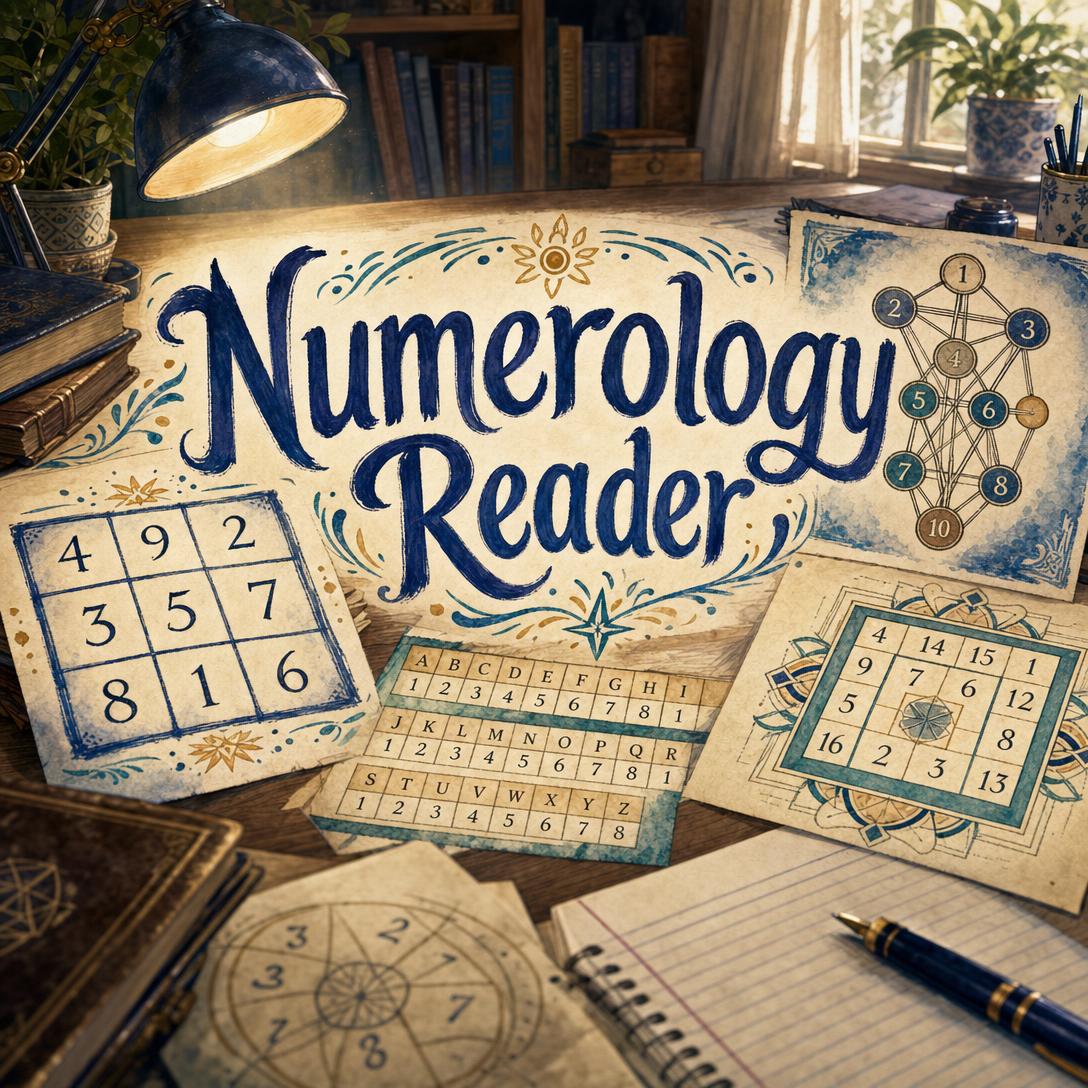
How Do AI Numerology Readers Compare on Multi-System Charts and Synthesis?
For a conversational full-chart reading that can move among Pythagorean, Chaldean, Vedic, and Kabbalistic systems, Jenova's Numerology Reader is the strongest match in 2026. World Numerology remains the reference for Hans Decoz's authored reports, Numerologist.com leads on long static documents, and AskNumeroAI is better when Chaldean name correction or mixed divination reports are the goal.
What separates a usable AI numerology reading from a Life Path calculator is not tone. It is whether the tool calculates correctly, keeps Master Numbers intact, and interprets numbers as a chart rather than a list of definitions.
Key factors that separate serious chart work from generic number lookups:
✅ Calculation method — reducing month, day, and year separately, rather than summing every digit in one pass, which can create false Master Numbers ✅ System integrity — Pythagorean charts use the birth-certificate name; Chaldean charts use the name you actually go by, and they never assign 9 to a letter ✅ Synthesis — a Life Path 7 with Expression 3 is a different story from a double-7 chart; isolated blurbs miss that tension ✅ Timing layers — Personal Year, Pinnacles, and Challenges turn a natal snapshot into a working calendar ✅ Follow-up — static PDFs cannot reweight the chart when the next question is career, compatibility, or a name change
To compare these products fairly, it helps to treat numerology as an interpretive craft with internal rules, then score tools on whether they honor those rules.
Why Are People Using AI Numerology Readings in 2026?
People use AI numerology in 2026 because it is fast, private, and cheaper than a human consultation, not because the category has gained scientific validation. Numerology is the belief in an occult or mystical relationship between numbers and events or character, and that framing still describes the practice.
The product landscape has split. On one side are calculators and mobile apps that return a Life Path number and a short personality blurb. On the other are full-chart systems, authored report libraries, and conversational agents that keep working after the first result. RankmyAI now maintains a dedicated ranking of AI numerology tools as of July 2026, which is a useful signal that the category is being tracked as its own AI segment.
The epistemic picture has not changed with the software. There is no rigorous body of controlled, repeatable experiments showing that birth numbers predict events or describe people accurately. Fact-checkers and science writers continue to classify predictive numerology as pseudoscience. That matters for tool evaluation: the honest comparison is about calculation hygiene, interpretive depth, and fit for a seeker's question, not about proven destiny.
Demand still clusters around a few practical jobs. People want a Life Path read, a relationship comparison, a Personal Year forecast, a baby or business name check, or a second opinion after a human reading. AI tools that only dump archetype text leave those jobs half-finished.
What Should You Look for in an AI Numerology Reader?
You should score an AI numerology reader on chart integrity, not on how mystical the copy sounds. The framework below — call it the Chart Integrity Six — is the lens used throughout this comparison.
1. Reduction rigor. Serious Pythagorean practice reduces month, day, and year each on their own, then sums those three results. A one-pass digit sum can manufacture a Master 11 or 22 that the component method would not produce. Master Numbers 11, 22, and 33 should be preserved at every stage, not flattened to 2, 4, or 6 by default.
2. Name convention by system. Pythagorean and most Western charts use the full birth-certificate name, including middle names, while ignoring suffixes such as Jr. or III. Chaldean work uses the commonly used name and a different letter map in which 9 is sacred and never assigned to a letter. Kabbalistic name work is name-only and historically tied to Hebrew letters. A tool that never asks which name you mean is guessing.
3. Core-number completeness. A full Western chart is more than Life Path. Expression (Destiny), Soul Urge (Heart's Desire, from vowels), Personality (from consonants), and Birthday number each answer a different question. Y-as-vowel rules are a known failure point: Y is a vowel when it carries the syllable's vowel sound, and treating every Y the same way silently shifts Soul Urge.
4. Cross-number synthesis. The reading should name reinforcements, contradictions, and absences. Karmic Lesson numbers missing from the birth name, Hidden Passion (the most frequent number in the name), and Karmic Debts 13, 14, 16, and 19 are part of that picture, not extras.
5. Cycles and phases. Personal Year, Month, and Day, plus the four Pinnacles and four Challenges, are how numerology talks about timing. A natal chart without cycles is a character sketch. A cycle forecast without the natal chart is a calendar with no person in it.
6. Interaction model and cost. Decide whether you want a one-time authored PDF, a library of 20 canned readings, a report marketplace, or a conversation that can switch systems and keep memory across sessions. Price only makes sense after that choice.
Secondary checks still matter. Compatibility should compare Life Path first, then layer Expression and Soul Urge. Name analysis for babies, brands, and chosen names should be offered as tendency, not fate. Angel-number questions (111, 444) are reasonable entry points, but they are not a substitute for a chart.
How Do Jenova, World Numerology, Numerologist.com, and AskNumeroAI Differ?
They differ first by format: conversation versus authored report versus multi-service marketplace. Jenova's Numerology Reader is a multi-system conversational chart reader; World Numerology is Hans Decoz's app and report library; Numerologist.com sells long personalized documents; AskNumeroAI mixes Chaldean reports, Nakshatra forecasts, and adjacent divination.
| Feature / Dimension | World Numerology | Jenova Numerology Reader | Numerologist.com | AskNumeroAI |
|---|---|---|---|---|
| Chart systems | Decoz Western system; deep authored coverage of one lineage | Pythagorean default, plus Chaldean, Vedic/Jyotish, and Kabbalistic on request | Western personalized reports built on name and birth date | Chaldean name work, Lo Shu, Nakshatra; broader occult stack |
| Core chart depth | Five core numbers in the free 8-page reading; Personality Profile covers 40+ aspects | Life Path, Expression, Soul Urge, Personality, Birthday, plus karmic and letter-level layers | Five core numbers at $17; synergy across numbers at $37 | Question reports, lucky numbers, Lo Shu/element balance; less classical Western full-chart language |
| Timing / cycles | Yearly and monthly forecasts on paid tiers | Personal Year, Month, Day; four Pinnacles and four Challenges | Pinnacles, Challenges, Life Cycles, Achievement Number, Personal Year in the Life Timeline tier | Nakshatra 5-year prediction with dasha-style timing |
| Interaction | App/web readings in print/PDF; not a live dialogue | Conversational; chart remembered across follow-ups | One-way long-form PDF-style reports | Free AI chat plus preview-then-paid reports |
| Pricing (as of 2026) | Free tier; Primary $19/year; Full $35/year; Lifetime $59 | Free limited usage; Plus $20/month (30× usage) and higher platform tiers | $17 / $37 / $57–$77 report tiers | Free tools and chat to start; paid report prices unverified |
| Best for | Collectors of Decoz's complete library | Multi-system synthesis and ongoing questions | Readers who want a long document in one sitting | Name correction, mobile-number checks, mixed occult reports |
World Numerology
World Numerology is the incumbent professional library. It began as desktop software in 1987, and every reading is attributed to master numerologist Hans Decoz, whose work the company says has sold more than 4 million copies. The free download includes an 8-page personal reading, a daily forecast, address and phone analyzers, and three charting programs.
Paid depth is structured as a catalog, not a conversation. Primary adds the Personality Profile and yearly/monthly forecasts; Full unlocks 20 readings and charts, including relationship, talent, lineage, business-name, and lucky-number modules. The limitation is the flip side of that authorship: you receive Decoz's prose, not a reader who can switch to Vedic planetary rulerships or re-open the chart around a new question.
Store ratings are solid rather than cultish. The company cites a 4.3 rating on the Apple App Store and 4.4 on Google Play, averaging 4.4 across 335 reviews. Annual pricing under $40 is the lowest cost of ownership in this set if static reports are enough.
Jenova Numerology Reader
Jenova's Numerology Reader is built for synthesis across a whole chart and, when asked, across traditions. Pythagorean is the default. Mention Chaldean, Vedic/Jyotish, or Kabbalah and the interpretive lens changes with the math — including which name is used.
The conversational sequence is designed to give value before the full name is collected: birth date first, Life Path immediately, then birth-certificate name to unlock Expression, Soul Urge, Personality, and Birthday. Advanced layers — Pinnacles, Challenges, Karmic Debts and Lessons, Hidden Passion, Cornerstone/Capstone/First Vowel, compatibility, and baby or business names — sit behind that core rather than arriving as an undifferentiated dump.
Honest limits are real. It does not ship Decoz's 20-module library, address/phone analyzers, or a 150-page prewritten book. It will not fire calendar alerts when a Personal Year turns. Depth depends on the questions you bring, and usage on the free tier is limited. Seekers who want a single purchased artifact to archive may still prefer Numerologist.com or World Numerology.
Numerologist.com
Numerologist.com sells depth as page count. Your Hidden Numbers ($17, 25+ pages)**](https://numerologist.com/readings) covers five core numbers. [**Your Soul's Secret Code ($37, 70+ pages) adds synergy — where numbers amplify or pull apart. Your Life Timeline ($57–$77, 150+ pages) adds Pinnacles, Challenges, Life Cycles, Achievement Number, and Personal Year. The company says interpretations are refined over 25 years and more than 10 million readings.
The strength is a finished document with combination-specific paragraphs rather than mad-libbed keyword swaps. The limitation is the same format: you cannot ask the report to compare Chaldean compound numbers, to treat Y as a vowel one way then the other, or to re-center on a job offer next month. Customer reviews on Trustpilot are mixed across free and paid funnels, which is typical of report upsell businesses.
AskNumeroAI
AskNumeroAI is a report desk with an AI chat attached. It advertises 19,000+ reports delivered and a stack that includes Chaldean name correction with optional human review, instant name ranking, Nakshatra 5-year prediction, a 24-answer numerology question report, mobile-number analysis, business-name correction, palmistry, and tarot.
That breadth is the point. If the actual job is aligning a spelling to birth numbers through Chaldean practice, or checking a phone number, this product is closer to the task than a Western Life Path tutor. The trade-off is focus. You are less likely to get a woven Pythagorean narrative of Soul Urge versus Expression, or a careful Master Number preservation discussion, than you are from Jenova or from Decoz's Personality Profile.
A narrower mobile option sits beside these four. Numerology AI Compatibility emphasizes birth-date reads for love, personality, and life path. It is a reasonable pocket check, not a full-chart studio.
How Does Multi-System Numerology Change What a Reading Means?
It changes the math, the name you submit, and the story the numbers are allowed to tell. A Pythagorean Life Path is a purpose-and-personality archetype; a Vedic Destiny number is read through planetary karma; a Chaldean compound such as 23 is an omen in its own right before it reduces.
Pythagorean (Western default) maps A–I to 1–9 and repeats. It is the system most English-language apps silently use. Charts are personality-and-purpose oriented, and the vibrational source is the birth-certificate name. Life Path comes from the birth date; Expression, Soul Urge, and Personality come from the name.
Chaldean is older, Babylonian in attribution, and more esoteric in tone. Letters map to 1–8 only. Compound numbers before final reduction carry independent meanings — 23 as a fortunate “Royal Star” type of signature, 26 as a partnership-stress signature — so stopping at a single digit throws information away. The name that belongs in the chart is the name you are known by, which is the opposite of Pythagorean convention.
Vedic / Indian ties digits to grahas: 1 Sun, 2 Moon, 3 Jupiter, 4 Rahu, 5 Mercury, 6 Venus, 7 Ketu, 8 Saturn, 9 Mars. The three primary numbers are Psychic Number (birthday), Destiny Number (full birth date), and Name Number. Borrowing Pythagorean labels such as Soul Urge onto a Vedic chart muddies the reading.
Kabbalistic work is name-as-vessel, historically 22 vibrations of the Hebrew alphabet, without a birth-date Life Path. English-name adaptations exist, but they are adaptations. A careful reader says so.
Cross-system comparison is useful when the systems agree, and more useful when they do not. A person who is a 8 in Pythagorean Expression and a Saturn-ruled 8 in Vedic Name Number is hearing a similar material-mastery theme in two dialects. A person whose Chaldean name number diverges because they live under a married name is looking at two different current vibrations, not a software bug. Few consumer apps make that distinction explicit.
Readers who already work in Indian timing systems often pair a Vedic number read with a full Vedic Astrologer Kundali. Western seekers doing the same job with planets rather than digits tend to add a Personal Astrologer natal chart rather than forcing astrology into the numerology session.
What Makes Chart Synthesis Different From Isolated Number Definitions?
Synthesis is the difference between a glossary and a reading. Isolated definitions say what a 4 “means.” Synthesis says what this 4 is doing next to this 5, in this year, with these missing numbers in the name.
A Life Path 7 with Expression 3 is not “spiritual plus creative” as two stickers. It is an inward seeker whose available tools are social, verbal, and performative — a person who may feel split between the study and the stage. A Life Path 7 with Expression 7 doubles the withdrawal and needs a different caution. Tools that print the same 7 paragraph in both cases are calculators with copy attached.
Absences belong in that story. Karmic Lessons are numbers 1–9 that never appear in the birth name; they flag underdeveloped muscles, not moral failure. Hidden Passion is the opposite signal: the digit that shows up most often and keeps grabbing the wheel. Cornerstone, Capstone, and First Vowel are letter-level tells about how someone starts, finishes, and instinctively reacts. None of these replace Life Path. They explain why two Life Path 6s do not live the same life.
Karmic Debt numbers — 13, 14, 16, 19 — appear when a core number reduces through that compound. They are easy for software to skip because the final digit still looks ordinary. A 4 that arrived through 13 is a different work lesson than a 4 that did not. Softening that into generic “hard worker” language is how readings become interchangeable.
Cycles then reweight the natal picture. A Life Path 4 in a Personal Year 5 meets restlessness as disruption of structure. A Life Path 5 in a Personal Year 5 meets the same year as home territory. If an app forecasts “5 year = change” without the natal modifier, it is reading the calendar, not the person.
This is also where conversational tools earn their keep. A 70-page report can encode synergy once. It cannot hear that the question changed from identity to a business partnership and then overweight Expression, compatibility, and the current Personal Month.
How Do You Get a Complete Numerology Chart Reading From an AI?
You get a complete reading by giving the system the right inputs in the right order, then asking for the layers that match your question. Birth date unlocks Life Path and timing; full birth name unlocks Expression, Soul Urge, and Personality; current name, partner data, and the question you actually care about unlock the rest.
For Jenova's Numerology Reader, a full Pythagorean pass typically looks like this:
- Open the agent at jenova.ai/a/numerology-reader.
- Start with birth date if you want the Life Path immediately, or state the system if you do not want Pythagorean.
- After the Life Path, give the full birth-certificate name, including middle names, and say whether your daily name differs.
- Name the job of the reading — career, relationship, forecast, baby name, business name, or full chart.
- Ask for the next layer rather than every framework at once: Pinnacles and Challenges for life chapters, karmic layers for repeating patterns, compatibility for a specific person.
A precise opening prompt:
"I was born on November 29, 1991. Birth certificate name: Daniel James Okonkwo. I go by Danny Okonkwo. Pythagorean full chart first, then tell me where Chaldean on the daily name disagrees. I'm deciding whether to change jobs in this Personal Year."
That prompt does four things cheap calculators never prompt you to do: it separates legal name from used name, it requests a system, it invites disagreement across systems, and it gives a real question so Expression and cycles can be weighted.
For World Numerology, setup is install-and-generate rather than interview. The free app unlocks the 8-page personal reading, daily forecast, and charting tools without an account. If you need the Personality Profile and month-by-month year ahead, that is the Primary subscription. If you need relationship, talent, and name-testing modules, that is Full. Bring the same discipline to inputs: legal name for the core profile, and do not treat the address analyzer as a substitute for a natal chart.
For Numerologist.com, choose tier by question. Identity-only curiosity fits the 25-page product. “Why do my numbers fight each other?” fits the synergy tier. “What chapter am I in?” fits Life Timeline. Enter birth name and birth date exactly as you would for any Pythagorean chart, then treat the PDF as a reference book, not a session.
Whichever tool you use, verify one calculation by hand: reduce month, day, and year separately for Life Path, and keep 11, 22, and 33 if they appear at a reduction stage. If the AI's Life Path disagrees with that method, the rest of the narrative is built on sand.
How Do Life Path Cycles and Compatibility Readings Work in Practice?
They work by stacking a natal chart under a clock, then comparing two clocks when another person is involved. Personal Year is the usual clock; Pinnacles are the longer chapters; compatibility is a relationship between two charts, not a single “match score.”
Personal Year is birth month + birth day + current calendar year, reduced. The nine-year wave runs from 1 (initiate) through 9 (complete and release). Most modern practitioners roll the year on January 1; some classical practitioners roll it on the birthday. Neither camp is “wrong,” but mixing them mid-forecast creates phantom transitions. Personal Month is Personal Year plus calendar month; Personal Day adds the calendar day.
Pinnacles split the life into four phases. The first runs from birth to age 36 minus the Life Path number; the next two last nine years each; the fourth runs to the end of life. Each Pinnacle has a paired Challenge, calculated by subtracting birth-date components rather than adding them. A Challenge of 0 is uncommon and usually read as the difficulty of having many tools and having to choose.
Compatibility should start with Life Path versus Life Path. Same numbers and some complementary pairs (2 with 6, 3 with 5, 4 with 8) tend to share pace. Growth pairs differ but expand each other (1 with 5, 7 with 9). Tension pairs collide on drive (4 with 5 on stability versus freedom, 7 with 3 on solitude versus social load). Expression and Soul Urge then explain why a “good” Life Path pair still fights: public tools and private hunger can disagree even when purpose numbers match.
In practice, weight the stack to the question. Career questions lean on Expression plus the current Personal Year. Love questions lean on Soul Urge plus the pair comparison. Family or business names are Expression-style calculations checked against the existing charts in the household or founding team. Present those name results as tendencies and fit, not as guaranteed outcomes.
World Numerology's paid relationship modules and Numerologist.com's long Timeline documents both encode versions of this timing architecture. Jenova's version is interactive: you can ask what a Personal Year 1 means for this Life Path 4, then bring a partner's date into the same thread. AskNumeroAI's closest timing analog for Indian-astrology users is the Nakshatra 5-year report rather than Pythagorean Pinnacles.
Card-based second looks are a separate modality. Seekers who want a symbolic cross-check after a number chart often use a Mystic Tarot Reader for a spread, rather than asking the numerology session to pretend the cards are digits.
What Do Numerology Practitioners Building AI Readers Emphasize?
They emphasize arithmetic discipline and chart relationships over atmosphere. The interpretive tradition is old; the typical software failure is new, and it is almost always a quiet calculation or system-mixing error rather than a lack of poetic language.
"The failure mode we see most often is not wrong archetypes — almost every app can say a 7 is introspective. It is calculation drift. If you sum every digit of a birth date in one pass, you can manufacture a Master 11 that a month-day-year reduction would never produce. That single error rewrites the life-path story, then every cycle stacked on top of it."
"The second gap is system mixing. Pythagorean charts are built on the birth-certificate name. Chaldean charts are built on the name you actually use, and they treat 9 as a result, never a letter value. Tools that apply one letter map to every request are not eclectic. They are inaccurate, and the inaccuracy is invisible to a user who only checks that a number between 1 and 9 came back."
"Conversational memory changes the usefulness of the craft. A static 70-page PDF cannot reweight Expression and Personal Year when someone returns three weeks later with a career question. Follow-up is where chart work stops being a personality poster and starts being a working document."
— Jenova Product Team, AI agent design for interpretive and divinatory practices
That stance is consistent with how long-form human products already sell themselves. Decoz's library is valued because it connects traits, cycles, and lived context rather than offering 30-second blurbs. Numerologist.com's mid-tier is priced specifically for synergy most readings skip. The AI question is whether software can hold that standard while remaining correct when the user changes systems, names, or questions.
Which AI Numerology Approach Fits Different Types of Seekers?
Match the format to the job: a conversational multi-system agent for ongoing chart work, Decoz's library for a complete authored archive, Numerologist.com for one long document, and AskNumeroAI for Chaldean name or mixed occult reports. No single product wins every job.
Full-chart explorers who will ask follow-ups. Jenova's Numerology Reader fits this profile. It is strongest when you want Life Path now, the rest of the natal chart after you provide the birth name, then Pinnacles, karmic layers, or a partner comparison in the same thread. Platform memory keeps the chart available later. The free tier is limited; Plus at $20/month raises usage. It is a weaker fit if you want a single 150-page file and no dialogue.
Decoz-system students and report collectors. World Numerology fits people who want one author's complete shelf — Personality Profile, forecasts, relationship modules, address and phone analyzers — at $19 or $35 per year, or $59 lifetime. It is weaker if you need Vedic planetary vocabulary or a live Chaldean compound-number discussion.
One-sitting deep readers. Numerologist.com fits the person who will sit with 70 or 150 pages and not come back with a new question tomorrow. Pay for synergy if contradictions are the point; pay for Life Timeline if chapters and ages are the point. It is weaker as an ongoing counselor.
Name, mobile, and mixed-divination tasks. AskNumeroAI fits Chaldean spelling work, business-name checks, phone-number scoring, and users who also want Nakshatra, palm, or tarot in the same account. It is weaker as a Western synthesis reader.
Budget and skepticism checks. If you only need a Life Path, a free calculator is enough, and you should still verify the reduction method. If you need the practice to be scientifically predictive, no reputable review of the evidence supports that use. In that case the honest product choice is not an AI numerologist; it is a different kind of self-inquiry.
For seekers who treat numbers as one language among several, the adjacent Jenova readers most often used alongside this one are the Personal Astrologer for planetary natal work, the Vedic Astrologer when the number read has already moved into Jyotish, and the Mystic Tarot Reader when a question wants cards rather than digits. The numerology agent itself remains the right surface for Life Path, name vibration, cycles, and compatibility math.
References
- Wikipedia — Numerology (definition and historical framing)
- RankmyAI — Top AI numerology tools ranking, July 2026
- Numerologist.com — “Is Numerology Real?” on the lack of controlled experimental validation
- Africa Check — Numerology classified as pseudoscience when predictions are treated as facts
- World Numerology — App features, Decoz system, subscription pricing, and review averages
- World Numerology — Official site for readings, software, and free insights
- Numerologist.com — Readings catalog and report tier pricing
- Numerologist.com — Homepage for calculators and reading overview
- AskNumeroAI — AI numerology, Chaldean name correction, Nakshatra, and related reports
- Apple App Store — World Numerology Collection II
- Trustpilot — Customer reviews of Numerologist.com
- Apple App Store — Numerology AI Compatibility
- IFLScience — Numerology and the distinction between science and pseudoscience