AI Necromancer RPG: Raise Undead Armies in Text-Based Dark Fantasy
2026-10-16
Roleplay Game Master lets you play an AI necromancer RPG with no class restrictions, scripted dialogue, or group scheduling. It runs an open-ended campaign that adapts to you: you raise the dead, bargain with liches, and decide what your dark magic costs. Most video games reduce necromancy to a minion skill tree. This AI keeps every character, oath, and resurrected servant consistent across your campaign. As of October 2026, it is one of the most flexible ways to explore death magic as a story rather than only as a combat build.
- ✅ Unlimited memory: your phylactery, your undead lieutenants, and the village that fears you stay part of the story
- ✅ Consistent characters: NPCs keep their voice, motives, and grudges from session to session
- ✅ Open creative scope: play a grave-robbing apprentice, a tragic lich, or a morally gray healer of the dying
- ✅ Works anywhere: available on web, iOS, and Android with synced progress
Necromancers are among the most requested archetypes in fantasy gaming. Yet most games still treat them as a playstyle rather than a character with ambitions, ethics, and consequences. To see why an AI-driven approach fits this archetype so well, it helps to look at where traditional necromancer RPGs fall short.
Quick Answer: What Is an AI Necromancer RPG?
An AI necromancer RPG is an interactive role-playing game where an AI game master narrates a dark fantasy world, responds to your choices in real time, and lets you play a necromancer whose powers, morality, and story you define.
Key capabilities:
- Free-form scenes powered by Roleplay Game Master, with no dialogue trees or fixed quest lines
- Persistent memory of raised minions, alliances, curses, and consequences
- Custom magic systems, from classic soul-binding to blood rites you design yourself
- NPCs who react to your reputation, whether that is feared lord of the crypt or secret savior of the plague-stricken
The Problem With Playing a Necromancer Today
Interest in role-playing is large and still growing. The global RPG market is estimated at $44.78 billion in 2026. Studios are also racing to make characters feel more alive:
$3.05 billion → $10.84 billion by 2031: Projected growth of generative AI in game environment and narrative design
More than 50%: Share of game development companies using generative AI, per the GDC's 2025 State of the Game Industry report
Even so, getting a satisfying necromancer fantasy is still harder than it should be:
- Necromancy becomes a build, not a story. In many action RPGs, the class centers on minion buffs and corpse mechanics.
- Your options are scripted. Moral choices exist only where writers anticipated them.
- Tabletop requires logistics. You need a game master, a group, and a schedule that works for everyone.
- Generic chatbots lose the thread. Long campaigns expose gaps in memory and character consistency.
Necromancy Reduced to Mechanics
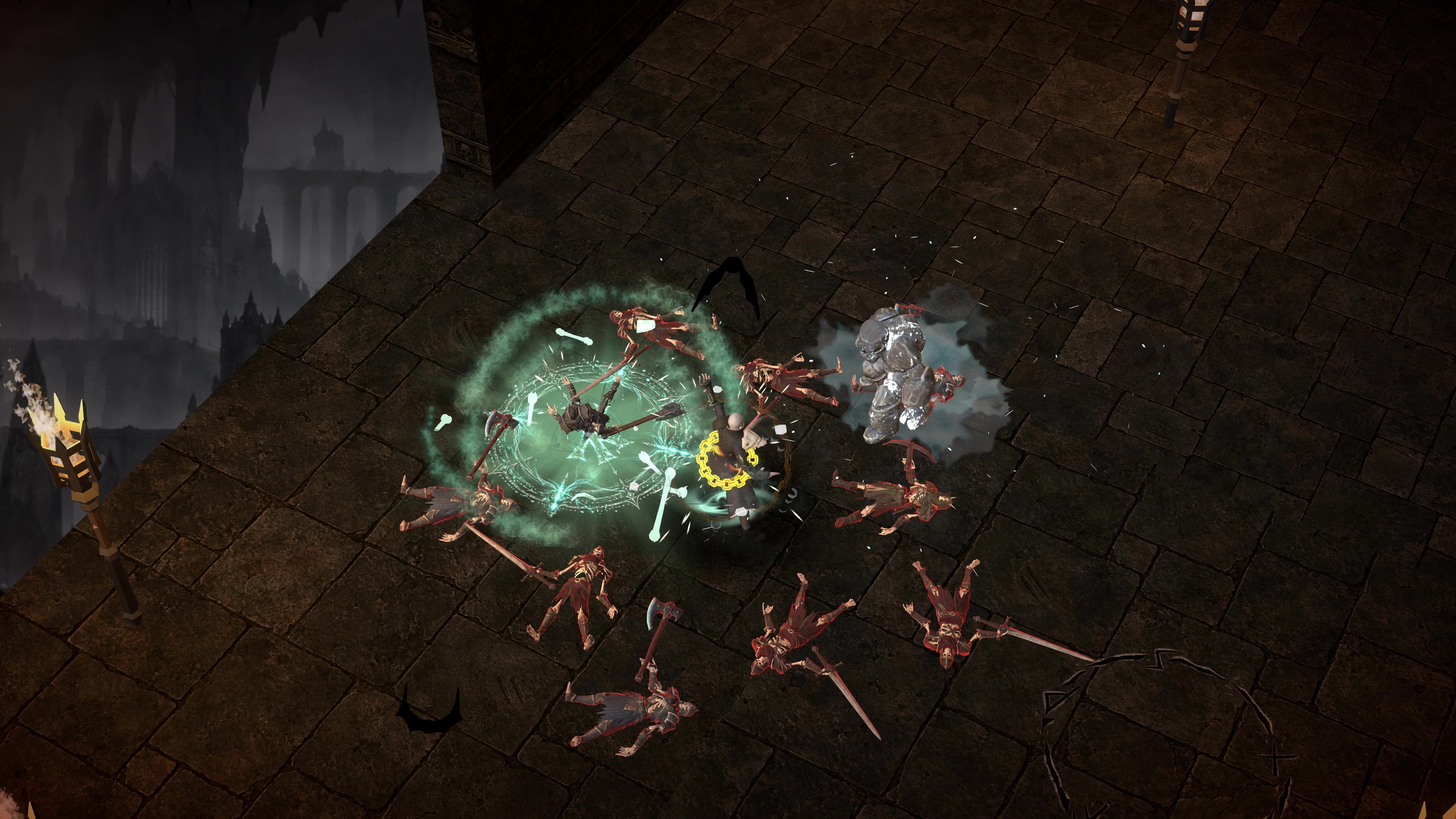
Commercial RPGs offer plenty of necromancers. TheGamer's roundup lists Diablo 4, Path of Exile, Grim Dawn, Guild Wars 2, Dragon Age: Inquisition, and Baldur's Gate 3. In Path of Exile, for instance, the Necromancer ascendancy mostly grants skills that strengthen minions and draw power from corpses. That is satisfying in combat, but your character's inner life is rarely part of the design.
Scripted Worlds, Finite Choices
Story-driven studios still hand-author their narratives. Larian Studios stated in late 2025 that it did not use generative AI for final dialogue, quest logic, narrative branches, or character personalities. That produces polished writing. The tradeoff is that you can only negotiate with the dead, betray your coven, or spare the paladin if a writer planned for it.
Long Campaigns Break Weak AI
Inconsistency is a known weakness of AI storytelling. Industry analysis notes that longer creative arcs can show gaps in consistency, and character voice, lore, and branching logic require careful oversight. A necromancer campaign depends on continuity. If the AI forgets which knight you resurrected three sessions ago, the story stops working.
This is exactly the gap Roleplay Game Master was built to close.
Why Roleplay Game Master Works for Necromancer Campaigns
Roleplay Game Master is a dedicated AI storyteller built for immersive, long-form roleplay. It is designed around two things necromancer stories need most: memory and consistency.
You describe the fantasy you want. The AI builds the world, voices every character, enforces the rules you set, and remembers what happened.
| Traditional Approach | Roleplay Game Master |
|---|---|
| Necromancy limited to a class skill tree | Necromancy defined by your character, ethics, and goals |
| Dialogue restricted to pre-written options | Say or attempt anything; the world responds |
| Requires a human GM and a scheduled group | Play solo, any time, for as long as you want |
| Generic AI chats forget earlier events | Unlimited memory keeps minions, debts, and enemies consistent |
| Fixed magic rules set by developers | Design your own costs, taboos, and schools of death magic |
Memory That Holds the Whole Campaign Together
Every resurrected servant, broken promise, and stolen grimoire stays in the story. If you bound a drowned sailor's spirit in session one, that spirit can resent you, serve you, or betray you in session twenty. The AI tracks those threads so you don't need a notebook.
Characters With Consistent Voices
The grave-warden who distrusts you stays suspicious until you earn otherwise. The lich mentor keeps her cold, archaic speech. Consistent characterization is what makes a dark world feel real rather than improvised.
Your Rules for Death Magic
You can play classic soul-binding, a scientific "reanimation alchemist," or a folk-tradition spirit caller. You can also set hard costs, such as each raised corpse shortening your own lifespan. The AI game master then plays the consequences fairly.
Moral Complexity Without Railroading
Necromancy is often framed as unethical in many gaming universes. Here, you decide whether your necromancer is a villain, an outcast healer, or someone in between. The world reacts to your choices rather than to a fixed morality meter.
Example prompts to start a campaign:
"Start a dark fantasy campaign where I'm a disgraced court physician who secretly raises plague victims to tend the sick. The church is hunting me."
"I'm a lich who has been dormant for 300 years. Wake me up in a world that has forgotten I exist, and make my old apprentice the current archmage."
"Run a grim, low-magic campaign. Every undead I raise costs me a memory. Track what I've lost."
Related Agents You'll Also Find Useful
If your interest in dark fantasy goes beyond solo play, these agents fit naturally into the same workflow.
Game Designer Assistant
If you're designing your own necromancer RPG, whether a video game, tabletop supplement, or homebrew class, this agent helps you build the systems behind it.
- Brainstorming and systems analysis for classes, resources, and progression
- Design documentation you can share with collaborators
- Expertise across genres, platforms, and regional markets
Creative Fiction Writer
Many roleplayers eventually want to turn a great campaign into a story. This agent helps you shape campaign events into polished dark fantasy fiction.
- Research support for believable worlds and lore
- Editorial feedback on pacing, character, and prose
- Help from first draft through final manuscript
Vesper Court
If you like gothic horror and undead politics, this ready-made story drops you into a hidden vampire court with no memory of why you're there.
- A pre-built dark romance and blood-intrigue setting
- Choices that change the story every night
- A close fit for players drawn to necromancer-adjacent themes
Try Roleplay Game Master free; no credit card is required.
How to Play an AI Necromancer RPG
Step 1: Open the AI Game Master and Set Your Premise
Start a new chat with the AI game master and describe the world in one or two sentences. Include tone (grimdark, gothic, darkly comedic) and setting (plague city, frozen north, crumbling empire).
"A gothic fantasy kingdom where necromancy is legal but taxed, and I'm a struggling licensed grave-raiser."
Step 2: Define Your Necromancer
Give your character a background, a motive, and a line they won't cross. Specific details produce better stories than broad labels.
"My name is Ilsabet. I learned necromancy to speak with my dead sister. I will never raise a child."
Step 3: Establish the Rules of Your Magic
Tell the AI how necromancy works and what it costs. Clear limits create tension, and the game master will hold you to them.
"Raising the dead requires a personal item from the deceased. Undead decay after seven days unless I feed them my own blood."
Step 4: Play Scenes and Make Real Choices
Act, speak, scheme, and explore. You can attempt anything, from negotiating with a vengeful ghost to staging your own death. The world responds to what you actually do rather than to a menu of options.
"I sneak into the cathedral ossuary at midnight and try to wake the founding bishop to ask who poisoned the king."
Step 5: Return Anytime and Continue the Saga
Close the app and come back days later. Your minions, enemies, and unresolved threats are still there, so the campaign can grow into a long-running saga.
"Continue from where we left off. What has the Inquisitor learned since my last raid?"
Results & Use Cases
💀 Solo Lich Campaign for Story-Driven Players
Scenario: A longtime Diablo and Baldur's Gate 3 fan wants to play the villain's side: a necromancer slowly becoming a lich, with every step of that corruption carrying a cost.
Traditional Approach: Commercial RPGs rarely support a full villain arc. Tabletop requires finding a GM willing to run an evil campaign.
Roleplay Game Master: The player runs a multi-week solo campaign tracking the character's fading humanity, growing undead legion, and increasingly desperate enemies.
- The transformation unfolds gradually through choices, not cutscenes
- Former allies remember the character's betrayals
- The ending is unwritten until the player reaches it
🎲 Tabletop GM Testing a Necromancer Villain
Scenario: A D&D game master is preparing a necromancer antagonist and wants to test how the villain might respond to clever players.
Traditional Approach: Hours of solo prep that guess at player behavior, with gaps exposed at the table.
Roleplay Game Master: The GM plays the party while the AI voices the necromancer, revealing motives, weaknesses, and dialogue to reuse. They then hand the encounter math to Game Designer Assistant for balancing.
- A villain that has been tested before the session
- Ready-made dialogue and lore in the villain's voice
- Faster prep with fewer improvisation gaps
📱 Commute-Length Sessions on Mobile
Scenario: A player with a busy schedule wants to continue a dark fantasy campaign in short bursts on a phone.
Traditional Approach: Action RPGs need a console or PC. Tabletop needs a fixed evening.
Roleplay Game Master: The player advances the story in 10-minute sessions on iOS or Android, using speech-to-text to dictate actions hands-free. Progress syncs with the desktop.
- No setup or loading screens; the story picks up instantly
- Full continuity between phone and computer
- Short scenes that still move a long campaign forward
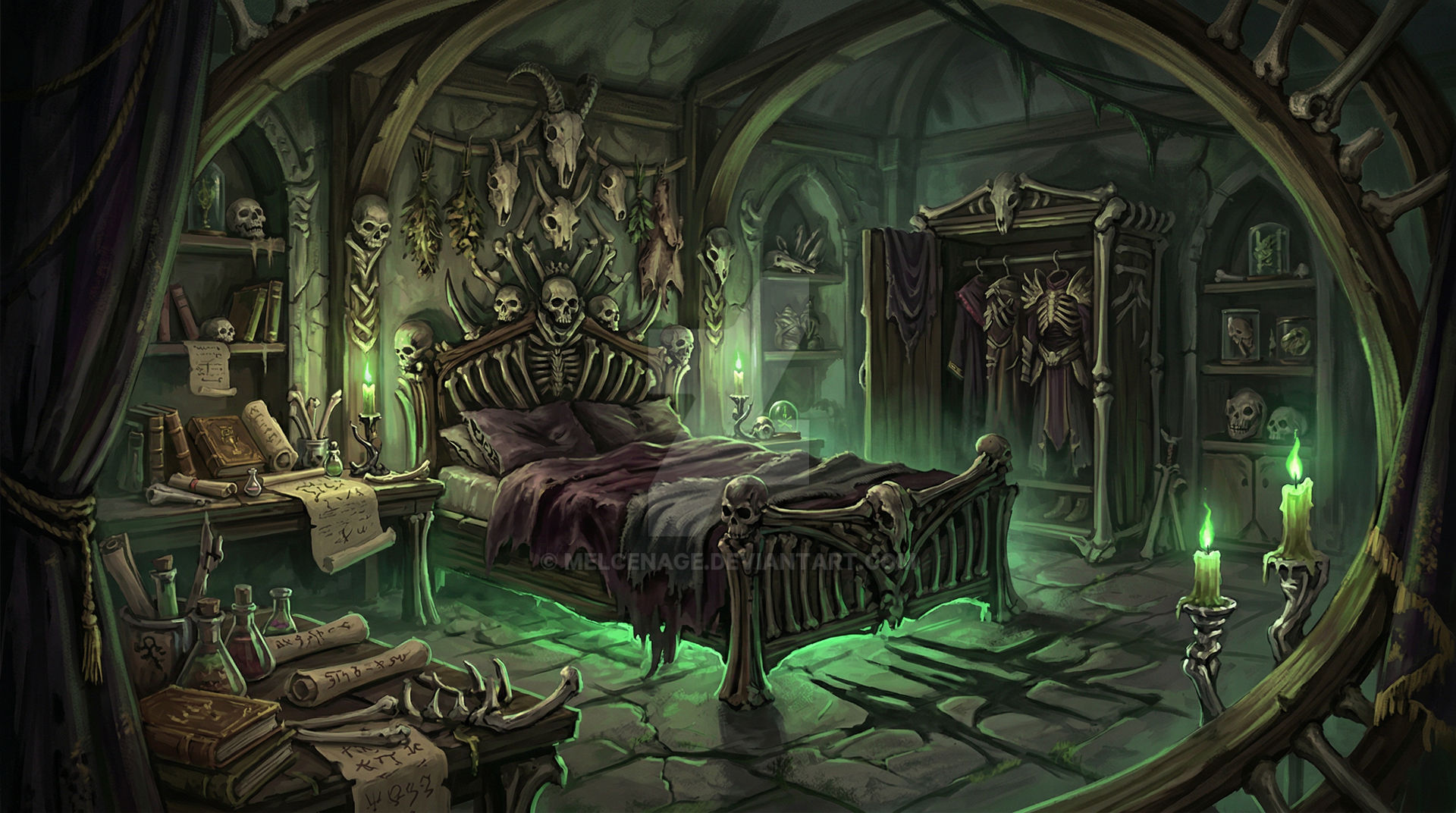
✍️ Worldbuilding a Necromancer's Lair for Fiction
Scenario: An aspiring dark fantasy author wants to know what a necromancer's private sanctum smells, sounds, and feels like from the inside.
Traditional Approach: Static worldbuilding notes that rarely capture lived-in detail.
Roleplay Game Master: The author explores the lair in-character, questions an undead servant, and reads the necromancer's journal. The resulting material then goes into a manuscript workflow with Creative Fiction Writer.
- Sensory detail discovered through play
- Lore generated organically rather than in a vacuum
- Consistent setting facts the author can reference later
Frequently Asked Questions
Is there a free AI necromancer RPG?
Yes. Roleplay Game Master can be used on Jenova's free tier, which includes all core features with limited usage. Players running long campaigns can upgrade to Plus at $20 per month for 30× more usage and custom model selection. Usage resets monthly on your billing date, with no daily caps.
How is an AI necromancer RPG different from playing a necromancer in Diablo 4?
Diablo 4 offers a polished, real-time necromancer class focused on combat and an undead horde. An AI necromancer RPG is narrative-first: instead of optimizing a build, you shape your character's motives, relationships, and moral path. The two complement each other; one delivers action, the other delivers a story you author.
Can the AI remember my undead minions and past choices?
Yes. Roleplay Game Master is built with unlimited memory and consistent characterization. The specific skeletons you raised, the pacts you signed, and the NPCs you wronged stay part of the campaign across sessions. This continuity is what keeps a long necromancer campaign coherent instead of drifting.
Can I use my own D&D or homebrew magic rules?
Yes. You can describe your system's rules, such as spell slots, corruption meters, or blood costs, and ask the AI game master to enforce them. Many players borrow from D&D's School of Necromancy or design entirely original systems. Stating the rules clearly at the start produces the most consistent results.
Does it work on mobile?
Yes. Jenova offers full feature parity across web, iOS, and Android, and all settings and conversations sync between devices. You can start a campaign on your computer and continue on your phone. Built-in speech-to-text lets you speak your character's actions instead of typing.
Conclusion
Necromancer fans have long had two options: video games that reduce death magic to a skill tree, or tabletop campaigns that depend on group logistics. An AI necromancer RPG offers a third. It is an open-ended dark fantasy world where your character's ambitions, ethics, and undead servants matter, and where the story remembers what you did.
Whether you want a solo lich saga, a stress test for a tabletop villain, or a text-based dark fantasy you can play on your phone, an AI game master gives you the freedom that scripted RPGs can't. Your necromancer's story starts with a single sentence describing the world you want.
Try Roleplay Game Master now and raise your first servant. Explore more at Jenova.
For Developers: Roleplay Game Master is available programmatically via the Jenova API, so you can integrate persistent, memory-driven AI storytelling into your game or interactive fiction app with a single API call. Full documentation →