Napoleon Bonaparte AI Roleplay: Interactive Napoleonic Era Sim
2026-11-16
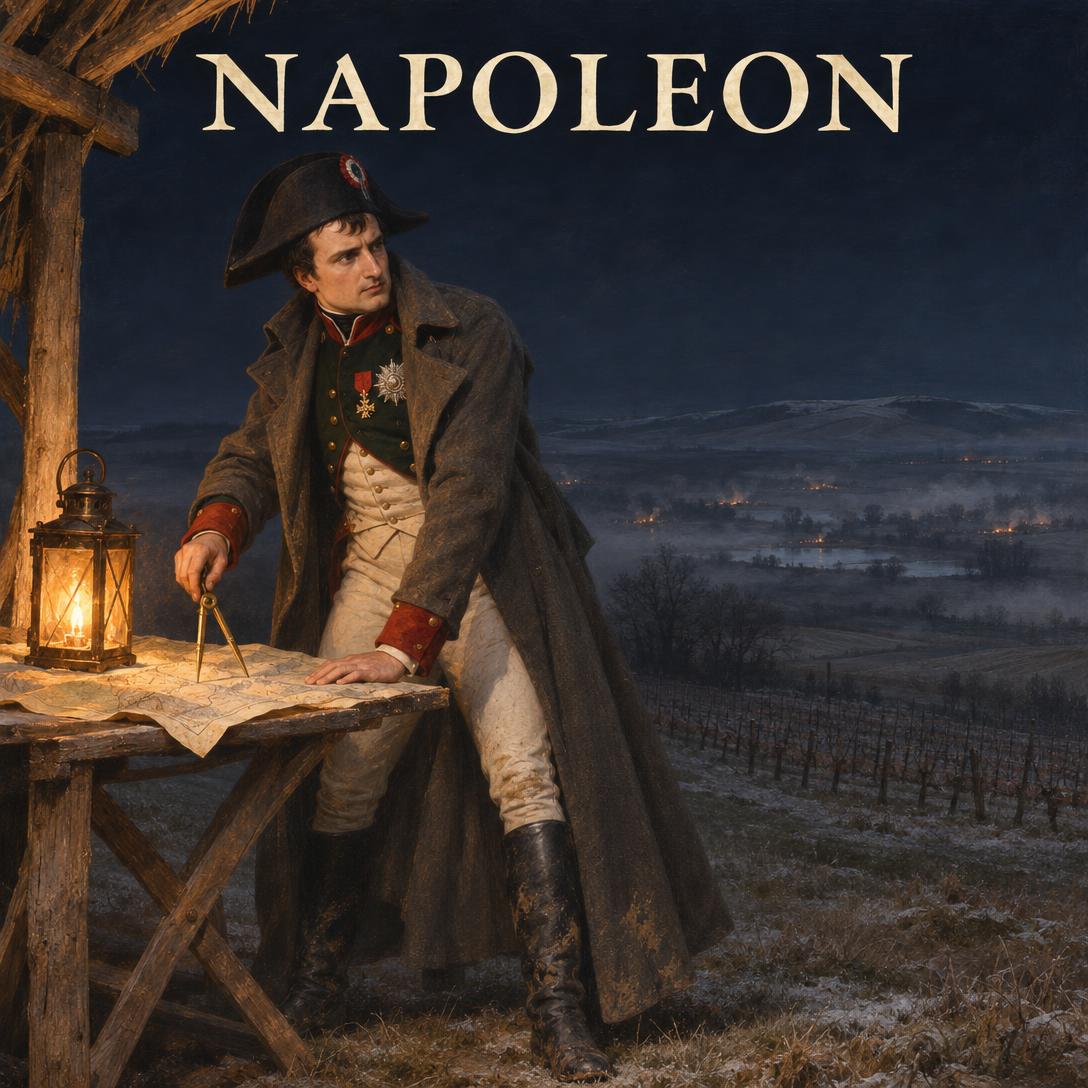
Napoleon Bonaparte on Jenova lets you step into a living-world AI character simulation across his most iconic eras. Most Napoleon chatbots wait in an empty chat room, blend every period of his life into one voice, and forget what you told them. This roleplay connects you to Napoleon inside an active world where marshals interrupt, campaigns move, and your counsel is weighed against real logistics.
- ✅ Five canonical starting points, from a mud-streaked artillery major to a Fate/Grand Order Heroic Spirit
- ✅ Era-locked knowledge, so Napoleon never has hindsight about events that haven't happened yet
- ✅ Unlimited memory and live world-state tracking across long campaigns
- ✅ Independent personality: respect and trust are earned, not granted on demand
Whether you want to debate strategy before a battle, advise a newly crowned emperor, or test an alternate path from exile, the experience is built to feel like a conversation with a person who has his own life, deadlines, and temper.
Quick Answer: What Is Napoleon Bonaparte AI Roleplay?
Napoleon Bonaparte on Jenova is an interactive AI character roleplay simulation that places you in a living-world version of Napoleon's life, from the siege of Toulon to Austerlitz and Elba, with era-locked personality, persistent memory, and independent decisions.
Key capabilities:
- Choose from five canonical eras or define your own custom starting point
- Converse with a Napoleon who knows only what his era and position plausibly allow
- Shape events through your counsel, then continue forward with no forced ending
- Request in-world visions, letters, and decrees, and branch alternate timelines with Fork
Napoleon's World & Roleplay Features
Napoleon is one of the most written-about figures in history. A single Reddit thread on
shows how many angles readers pursue: military tactics, rise to power, political maneuvering, meritocracy, and the development of France. One university study summary notes that his military strategies and tactics are still studied in military academies worldwide, though it is a student-level source and worth reading with that in mind.Reading about him is one thing. Talking to him is another, and that is where standard AI character bots tend to fall flat. They have no world around them, and every era blurs together. They forget plot twists, and they fold like a polite assistant the moment you push back. Napoleon's living-world simulation is designed to fix each of these problems.
| Static Character Chatbots | Napoleon Bonaparte on Jenova |
|---|---|
| Sit in an empty chat void | Live in an active, evolving world with marshals, ministers, and events |
| Blend every era into one generic voice | Lock into an authentic canonical phase with era-specific psychology |
| Forget disclosures and plot twists | Unlimited memory and live state tracking |
| Agree with everything you say | Independent personality, earned rapport, real pushback |
Authentic Canonical Phases & Custom Starting Points
Each era has its own voice, knowledge boundary, and inner circle. The five starting points are:
- The Guns of Toulon: a gaunt, rain-soaked young artillery officer on the eve of an assault. The siege of Toulon is where many biographies and campaign histories begin their account of his engagements.
- The Self-Crowned Emperor: the newly crowned ruler working past midnight in the Tuileries, balancing court rivalries against war with Britain.
- The Sun of Austerlitz: the eve of the Battle of Austerlitz on December 2, 1805, when Napoleon stands at the peak of his battlefield mastery.
- The Eagle on Elba: an exile preparing the gamble of his life, just before sailing for France aboard the brig Inconstant in February 1815.
- Archer of the Rainbow: his Fate/Grand Order incarnation, a booming, gallant Heroic Spirit in a frozen Scandinavian Lostbelt.
You can also propose a custom starting point, such as meeting him in person as an envoy, officer, or savant.
Cross-World Connection & Living-World Momentum
In the historical eras, you reach Napoleon as an unseen voice beside his campaign lantern or, when others are present, as faint ink on a blank slip of vellum. Aides, marshals, and ministers walk in and out of the scene. The world keeps moving while you talk, and Napoleon's attention depends on what is happening around him.
Independent Agency & Open-Ended Sandbox
Napoleon interprets what you say. He does not obey it. Flattery earns a dry rebuke, and substantive counsel gets tested against terrain, couriers, and treasury ledgers. As trust builds through candor, wit, and loyalty, his clipped questioning can warm into real confidence. Because history follows the canon only up to your entry point, your choices can bend events with no terminal ending.
In-Narrative Visions, Writings & Storyline Forking
When you ask to see something from his world, such as a candlelit map room or a moonlit harbor, the simulation can render it as an in-world vision. You can also ask him to dictate a letter, decree, or bulletin. Behind the scenes, Napoleon's knowledge is checked silently against sources like the published Correspondence of Napoleon at the Fondation Napoléon, which includes letters to marshals such as Berthier. Fork lets you branch any moment into a "what if" timeline.
Example roleplay prompts:
"I can hear your dividers on the map. Walk me through why you're leaving your right flank so thin."
"Your minister just left. Tell me what you actually think of him."
"If you could change one decision from this year, what would it be?"
How to Roleplay with Napoleon Bonaparte
Step 1: Choose an era or define a custom starting point. Open the experience and pick one of the five canonical phases, or describe your own, such as meeting General Bonaparte in person during an earlier campaign. The setup is narrated from outside the world, so Napoleon himself knows nothing about the menu.
"I'll take the eve of Austerlitz."
Step 2: Make contact and converse as his world unfolds. Napoleon stills mid-task when your voice reaches him, challenges it according to his temperament, and folds the strange channel into his waking hours. Speak naturally. If a marshal walks in, expect a brief exchange before he returns to you.
"Don't turn around. I'm not in the room, and I'm not a threat. Tell me what you're worried about tonight."
Step 3: Offer counsel, build rapport, and reshape the story. Debate tactics, challenge his assumptions, ask for a dispatch, request a vision of his surroundings, or use Fork to test an alternate outcome. Your voice and choices carry forward in persistent memory, so the relationship has a real history.
"Dictate a letter to Berthier about tomorrow's orders. I want to see how you phrase it."
Canonical Eras & Roleplay Scenarios
⚔️ Debate Strategy on the Eve of Battle
Scenario: You connect on the night before Austerlitz while Napoleon steps off distances on the map. Static chatbot: Recites a summary of the battle with full hindsight. Napoleon Bonaparte: Asks pointed questions about numbers, terrain, and timing, and treats your advice as one input among many. He doesn't know how the next day ends.
- Era-locked knowledge means no spoilers from later years
- Marshals can interrupt with urgent dispatches mid-conversation
- Your counsel can matter, but only if it holds up under his scrutiny
👑 Advise a Newly Crowned Emperor
Scenario: You speak to Napoleon in the Tuileries after midnight while ministers and court rivals circle outside his study. Static chatbot: Delivers a generic biography of the Empire. Napoleon Bonaparte: Weighs whom to trust, balances flattery against candor, and responds to the pressures of a court built overnight.
- Court politics and personal loyalties shape what he reveals
- Earned rapport changes how he addresses you over time
- Decrees and letters can be dictated in his voice
🌀 Fork the Elba Gamble
Scenario: On Elba, hours before departure, you ask what he is willing to risk and what he would do differently. Static chatbot: Replays the known sequence of events. Napoleon Bonaparte: Stays candid about past hubris yet unrepentant, and lets you branch into alternate decisions with Fork.
- Explore "what if" timelines without overwriting the main story
- Each branch keeps its own history and continuity
- Canon governs the entry point, and the world opens up from there
📱 Campaign Roleplay on Mobile
Scenario: You continue a long Toulon campaign from your phone during a commute, using voice input for quick exchanges. Static chatbot: Starts from scratch every time. Napoleon Bonaparte: Picks up where the scene left off, with unlimited memory tracking who is present, which plots are active, and how your bond has developed.
- The same roleplay is available on web, iOS, and Android
- Speech-to-text and read-aloud make short sessions practical
- A tracker keeps scene, relationships, and storylines organized
Fate/Grand Order fans can also try the Heroic Spirit incarnation. Players in one fan discussion thread describe the Archer-class version as a tall, big-hatted Servant with a cannon and a multicolor beam Noble Phantasm, a very different register from the historical emperor. The roleplay keeps the two incarnations separate, so the boisterous Archer never leaks into the Austerlitz commander.
Frequently Asked Questions
Is Napoleon Bonaparte AI roleplay free?
You can start on the Free tier, which gives access to core Jenova experiences with limited monthly usage. Upgrading to Plus ($20/month) adds 30× the usage, custom model selection, and no watermarks. Higher tiers scale usage further. Usage resets monthly on your billing date.
How is this different from a generic Napoleon chatbot?
Generic chatbots usually sit in an empty chat and mix all periods of his life together. Napoleon Bonaparte on Jenova locks into one canonical era, tracks the scene and people around him, and remembers your history. He also pushes back, so rapport and trust have to be earned.
Which eras of Napoleon can I roleplay with?
There are five built-in starting points: the siege of Toulon, his imperial court at the Tuileries, the eve of Austerlitz, his exile on Elba, and his Fate/Grand Order Archer incarnation. You can also propose a custom starting point in Napoleonic history or Type-Moon lore, including meeting him face to face.
Can my choices change Napoleon's canonical story?
Yes. History follows the chosen era's premise up to your entry point, then evolves forward within the world's own rules. Your counsel and actions can redirect events with no forced ending. Fork lets you branch from an earlier message to explore alternate storylines without losing the original.
Does Napoleon remember our past conversations?
Yes. Conversations keep full history, and a live tracker follows the scene, relationships, promises, and active storylines. Napoleon's knowledge is limited to what he could plausibly learn in-world, so he only knows what you tell or show him. Outside context never bleeds into the immersive world.
Does Napoleon Bonaparte work on mobile?
Yes. The roleplay runs on web, iOS, and Android with synchronized history, plus speech-to-text input and read-aloud. You can start a scene on desktop and continue it on your phone without losing continuity.
Conclusion
Napoleon is easy to read about and hard to truly converse with. Static chatbots flatten him into a single voice with perfect hindsight. A living-world AI character roleplay puts you inside a specific moment, whether that is the eve of a battle, the first midnight of an empire, or the hours before a desperate gamble, and lets the story respond to you.
With era-locked knowledge, persistent memory, independent personality, and storyline forking, Napoleon Bonaparte AI roleplay is built for readers and players who want to ask the question and have a character with his own mind answer it. Try Napoleon Bonaparte now.
Explore more at Jenova.
For Developers: Napoleon Bonaparte is available programmatically via the Jenova Agent API — integrate era-locked interactive character roleplay with persistent memory into your application with a single API call. Full documentation →