AI Mystery Game: Solve Living Cases That Never Repeat (August 2026)
2026-08-06
An AI mystery game hands you a case no one has solved before — because no one wrote it. On Jenova, you can wake in a locked manor with no memory of arriving, walk into a shuttered institution to find out what happened there, or run an entirely custom investigation where the culprit, motive, and evidence chain are generated live. Traditional detective games have one solution and a walkthrough on page one of the search results; an AI-driven mystery generates the answer as you investigate, and it remembers every conclusion you jumped to.
✅ No spoilable solution — the culprit and clue chain are generated per playthrough ✅ Persistent case memory so suspects, alibis, and your own deductions carry forward ✅ Any mystery subgenre — locked room, noir, cozy, police procedural, gothic, conspiracy ✅ Web, iOS, and Android with full feature parity for investigating anywhere
To understand why this matters, it's worth looking at what actually breaks the mystery genre — the one-solution problem, the coordination cost of tabletop investigation, and the way generic AI collapses a case the moment it forgets which suspect it already cleared.
Quick Answer: What Is an AI Mystery Game?
An AI mystery game is an interactive investigation where an AI generates the crime, suspects, clues, and solution in real time from your choices, so every case is unique and no walkthrough can spoil it. You interrogate, deduce, and accuse — and the outcome depends entirely on your reasoning.
Key capabilities:
- Procedural case generation — culprit, motive, timeline, and evidence chain created fresh each session
- Interactive interrogation — question suspects in natural language and catch them contradicting themselves
- Persistent case memory — testimony, alibis, and your working theory carry across sessions
- Any subgenre — locked-room puzzle, hardboiled noir, cozy village mystery, procedural, gothic
The Problem: Why Detective Games Are Solved Once and Never Again
Mystery is uniquely fragile as an interactive genre. The entire experience depends on you not knowing the answer — and every authored detective game contains exactly one answer, written before release, discoverable in fifteen seconds on any forum. Replaying a mystery you've solved isn't investigation, it's recitation. Meanwhile, generative tooling is spreading through game development precisely because static, hand-authored content is expensive to produce and finite by nature.
Over one-third (36%) of game industry professionals report using generative AI tools as part of their job — GDC 2026 State of the Game Industry
AI tools could create a $22 billion profit opportunity for video game companies by lowering production costs and shortening development timelines — Morgan Stanley Research
The AI in Games Market, valued at USD 3.4B in 2026, is projected to reach USD 6.73B by 2030 at an 18.6% CAGR — Research and Markets
Generative AI in gaming is growing from $1.79 billion in 2025 to $2.21 billion in 2026 — Yahoo Finance / Generative AI in Gaming Market Report
But getting a mystery experience that stays genuinely unsolved remains difficult:
- Detective games have exactly one culprit, and that culprit is on the internet
- Murder mystery parties and tabletop investigation need four to eight people in one room
- Boxed mystery kits are single-use by design — once opened, permanently spent
- Custom cases you'd love to run require authoring an entire evidence chain by hand
- General AI chat loses track of testimony, contradicting its own suspects mid-case
The One-Solution Problem
Every scripted mystery has a fixed answer, and the moment you know it, the game becomes a walkthrough of your own memory. Deduction only functions under uncertainty — remove that, and clue-gathering turns into fetch questing. This is why detective games have historically had the shortest effective lifespan per development dollar of almost any narrative genre: enormous authoring effort, one satisfying playthrough.
Group Mysteries Have a Coordination Tax
Murder mystery parties, tabletop investigation modules, and social deduction games work brilliantly — when everyone shows up. They require scheduling multiple adults simultaneously, assigning roles in advance, and someone taking on host duties. Academic work examining player categories and motivations in murder mystery games has looked directly at what players want from these experiences and why they seek them out, and the format's dependence on group assembly is a structural constraint, not a preference.
Boxed Cases Are Consumable
Physical mystery kits and one-shot case files are explicitly single-use. You solve it, you know it, and the box becomes a keepsake. The economics push players toward buying more cases rather than deepening the experience — and the per-hour cost climbs fast for anyone who investigates regularly.
Generic AI Chat Can't Keep a Case Straight
A general chatbot will happily improvise a murder scene. What it won't do reliably is hold a consistent evidence chain — remembering that the gardener claimed to be in the greenhouse, that the timeline puts him elsewhere, and that this contradiction is the actual solution. It will also cave when you guess, confirming whatever theory you propose. In mystery, an agreeable narrator is a broken one. The underlying challenge is narrative state modeling, an area explored in depth in research on human–AI co-creativity in storytelling and in broader AI interactive storytelling work on character memory and branching narrative.
This is exactly what Jenova's mystery and roleplay agents were built for.
The Jenova Solution: A Complete Mystery Investigation Stack
Jenova treats AI mystery as a full workflow rather than a single chat box. You get ready-to-play investigation scenarios, an open-ended game master for cases of your own design, and creative agents for the suspects, lore, and case files around them — all backed by memory that holds the evidence chain steady.
| Traditional Approach | Jenova |
|---|---|
| One authored solution, spoiled on any forum | Culprit and clue chain generated per playthrough |
| Boxed case is consumed after one session | Unlimited new cases, indefinitely |
| Needs a group and a scheduled evening | Investigate solo, any hour, at your own pace |
| Hours of prep to run a case for others | Zero prep — the case starts immediately |
| Chatbot forgets who alibied whom | Persistent cross-session memory for testimony and evidence |
Ready-Made Cases You Can Open Right Now
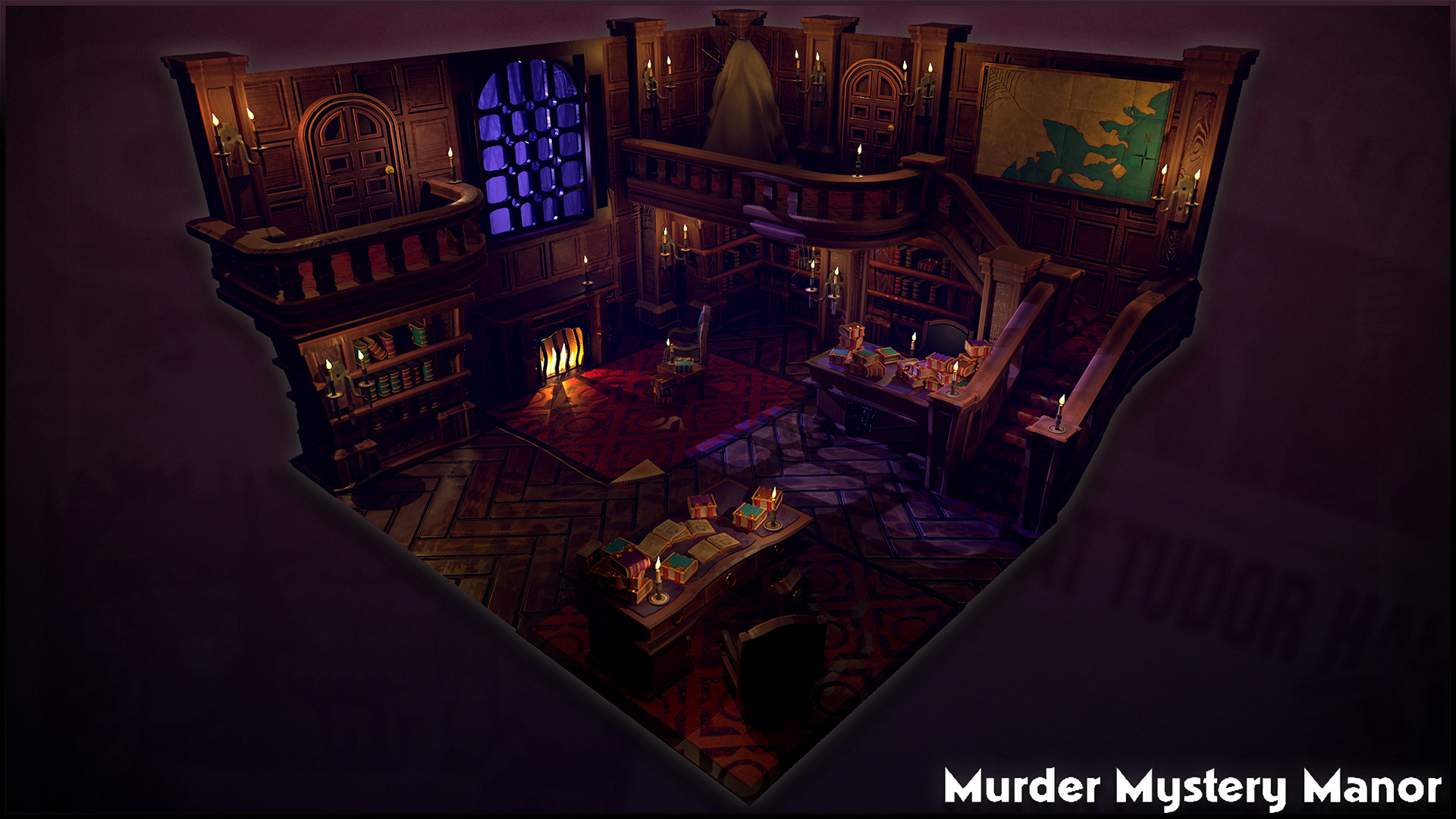
If you want a mystery without setup, Jenova has self-contained investigation scenarios. In The Mansion, you wake with no memory of how you arrived — every room hides secrets, every shadow could be your last, and the central question is whether you uncover the truth in time to escape with it. In The Asylum, you're an investigator sent to a shuttered psychiatric institution where something went wrong, and every ward holds a fragment of a story someone worked hard to bury.
Both are structured, contained, and immediately playable — a full case in a single evening, with a different path through it every time.
Open-Ended Investigation With Persistent Evidence
For cases of your own design, the Roleplay Game Master runs your mystery as an improvising narrator with unlimited memory and perfect character consistency. It holds the state of the case — who said what, which alibi doesn't survive the timeline, what you've already ruled out — and lets suspects lie consistently rather than folding the moment you press them.
"1930s locked-room mystery. A publisher is dead in his study, door bolted from inside, six houseguests. I'm the outside investigator. Don't tell me who did it, and let the suspects lie to me."
"I'm accusing the secretary. Walk me through what happens next — and if I'm wrong, let me be wrong publicly."
A Suspect List Worth Interrogating
A mystery is only as good as its cast of liars. The Character Creator handles quick-gen or guided builds — motivations, secrets, relationships, and the specific thing each person is hiding that isn't the murder — with portraits so your suspect board has faces on it.
"Six houseguests for a 1930s country-house mystery. Each has a plausible motive and a separate secret they'd lie to protect. Give me portraits."
Case Files, Lore, and the Story Behind the Crime
Mystery runs on documents — letters, ledgers, coroner's notes, the newspaper clipping nobody thought mattered. The Creative Fiction Writer turns sessions into readable detective fiction and builds the in-world paperwork your case needs, with deep research so period detail, forensic language, and procedure hold up.
Design the Mechanics If the Case Becomes a Project
If your scenario starts turning into an actual game, the Game Designer Assistant covers brainstorming, systems analysis, documentation, and concept art across every genre and platform — including the clue-gating, deduction, and accusation systems mystery design depends on.
Any Model, Any Case
Investigation prose benefits from different voices — clipped procedural, ornate gothic, hardboiled first person. Jenova offers always-current access to the newest models from OpenAI, Anthropic, Google, DeepSeek, xAI, and more, with no vendor lock-in, so you can switch narrator style mid-case without losing the evidence chain.
Specialized AI Agents for Mystery Games
🕯️ The Mansion
The fastest entry into AI mystery. In The Mansion, you wake with no memory of how you arrived. Every room hides secrets. Every shadow could be your last. Will you uncover the truth and escape?
- Amnesia premise — you're investigating your own situation
- Room-by-room discovery that rewards methodical searching
- Self-contained case, playable start to finish in one sitting
🏚️ The Asylum
For institutional investigation with a buried record. In The Asylum, you're an investigator sent to a shuttered psychiatric institution — but something went wrong, and every ward hides secrets.
- A concealed history you assemble from fragments
- Ward-by-ward structure with escalating stakes
- Strong pick for players who prefer documents and deduction over chases
🔍 Roleplay Game Master
The engine for custom cases. The Roleplay Game Master delivers immersive roleplay with unlimited memory and perfect character consistency, plus complete creative freedom over any scenario you imagine.
- Generates culprit, motive, timeline, and evidence live
- Suspects lie consistently instead of folding under pressure
- Adapts from cozy village mystery to hardboiled noir to conspiracy thriller
🎭 Character Creator
Your suspect roster. Character Creator handles quick-gen or guided builds for roleplay, fiction, and original characters, with media research and portraits across genres.
- Full builds: motive, alibi, secret, and relationship web
- Visual portraits for detective, suspects, and victim
- Works for a two-hander interrogation or a twelve-person house party
📁 Creative Fiction Writer
For everything written around the case. The Creative Fiction Writer is a storytelling partner across any genre, with deep research for authentic worlds and editorial insight from first draft to final manuscript.
- Turn session logs into a polished detective story
- Draft case files, coroner's reports, letters, and newspaper clippings
- Structural feedback on clue placement, misdirection, and the reveal
🧩 Game Designer Assistant
For turning a case into a real project. The Game Designer Assistant provides brainstorming, systems analysis, documentation, and concept art with expertise across every genre, platform, and regional market.
- Design deduction, evidence-gating, and accusation mechanics
- Produce concept art and design documentation
- Genre and market expertise for original mystery projects
🏛️ Civilization
For readers whose taste runs to political intrigue rather than a single corpse. Civilization lets you choose an era, rule a nation, and reshape history — with rivals pursuing their own hidden ambitions while alliances shift and wars erupt.
- Conspiracy and betrayal at national scale
- Autonomous rivals with concealed intentions
- A world that keeps scheming whether or not you're watching
Try any of these free — no credit card required.
How It Works
Step 1: Take a Ready Case or Commission Your Own
For an immediate investigation with structure, open The Mansion or The Asylum and start. For a custom case, open the Roleplay Game Master and specify the era, crime, suspect count, and your role in one message.
"Cozy mystery, English village, 1962. The postmistress is dead and everyone liked her. I'm a visiting niece with no authority whatsoever. Five suspects. Don't reveal the culprit."
Step 2: Build the Detective and the Liars
A case needs someone to solve it and a cast worth doubting. The Character Creator turns rough concepts into realized suspects, each with a motive, an alibi, and a secret unrelated to the crime.
"Five village suspects. Every one of them is hiding something embarrassing that isn't murder. Give me their alibis and the one detail each would slip up on."
Step 3: Investigate, Interrogate, and Get It Wrong Sometimes
Question people in plain language. Search rooms. Compare timelines. Suspects hold their stories, contradictions surface only if you find them, and a bad accusation has consequences you'll carry for the rest of the case.
"I ask the gardener again about the greenhouse — but this time I mention I already spoke to the housekeeper. I watch his hands."
Step 4: Make the Accusation
When you're ready, name the culprit and lay out your reasoning. The narrator resolves whether your deduction holds, where you went right, and — if you missed — exactly which clue you walked past.
Step 5: Write It Up, or Open a New File
Hand the completed case to the Creative Fiction Writer to draft it as a detective story, or formalize your scenario into a design document with the Game Designer Assistant. Persistent memory keeps closed cases on record and open ones exactly where you left them, synced across devices.
Results & Use Cases
📊 The Detective Fan Who's Solved Everything
Scenario: You've finished the celebrated detective games, and you can spot the guilty party from the character portrait before the first interrogation.
Traditional Approach: Watch someone else's blind playthrough and borrow their surprise.
Jenova: The Roleplay Game Master generates a fresh culprit, motive, and evidence chain per case, with no forum thread to spoil it.
- No canonical solution to look up
- Subgenre, suspect count, and difficulty set by you
- A new unsolved case every session, indefinitely
💼 The Host Who Runs Mysteries for Other People
Scenario: You organize murder mystery evenings and need suspects, motives, red herrings, and printable case files faster than you can write them.
Traditional Approach: Buy a boxed kit that gets used once, or spend a weekend authoring an evidence chain by hand.
Jenova: Build the full suspect roster with the Character Creator, draft in-world case documents with the Creative Fiction Writer, and pressure-test clue pacing with the Game Designer Assistant.
- Complete suspects with motive, alibi, and secret in minutes
- Printable case files, letters, and reports
- Clue-gating and reveal-timing feedback before you run it
📱 The Commute Case
Scenario: Twenty-five minutes on a train and you want real deductive progress, not a match-three loop with a detective skin.
Traditional Approach: A mobile puzzle game that calls itself a mystery and asks you to find hidden objects.
Jenova: Full feature parity across iOS and Android means The Mansion is one tap away, with the same case state and speech-to-text when typing isn't practical.
- Same investigation, same evidence, any device
- Text-driven interrogation suits short sessions perfectly
- Voice input for hands-busy commuting
🎯 The Writer Testing a Plot That Has to Hold
Scenario: You're writing a mystery novel and need to know whether your solution is deducible — or whether a reader will guess it on page forty.
Traditional Approach: Hand the manuscript to a friend and hope they're honest about when they figured it out.
Jenova: Run your case as a playable investigation with the Roleplay Game Master, attach your outline as a knowledge base so it stays inside your canon, then develop the prose with the Creative Fiction Writer.
- Upload plot documents for canon-accurate play
- Stress-test clue placement and misdirection interactively
- Turn what worked into drafted chapters
FAQ
Is an AI mystery game free to play on Jenova?
Yes. The Free tier includes all core features with limited monthly usage — enough to finish full cases like The Mansion or The Asylum and test several agents. Paid tiers start at $20/month for 30× the usage, custom model selection, and no watermarks on generated content. Usage resets monthly on your billing date with no daily caps.
How is this different from a traditional detective game?
Traditional detective games have one authored solution, and that solution is searchable the day after release. An AI mystery game generates the culprit, motive, and clue chain in response to how you investigate, so nothing can be spoiled in advance. The Roleplay Game Master also remembers testimony across sessions, so contradictions stay catchable.
Can the AI actually keep a case consistent?
Yes — this is the core requirement, and Jenova provides unlimited chat history plus persistent cross-session memory. Alibis, timelines, cleared suspects, and your own working theory carry forward. You can also attach case documents as a knowledge base so responses stay inside your established facts.
Will the AI just tell me the answer if I ask?
The Roleplay Game Master is built for immersive roleplay with consistent characters, so suspects hold their stories rather than folding the moment you press. You can set the rules explicitly at the start — instruct it not to confirm theories, to let bad accusations stand, and to make you earn contradictions through actual investigation.
Which mystery agent should I start with?
For a structured case with a defined ending, start with The Mansion for a locked-manor amnesia mystery, or The Asylum for institutional investigation. If you'd rather define your own era, crime, and suspect list, start with the Roleplay Game Master.
Does it work on mobile?
Yes — there's full feature parity across web, iOS, and Android, with state-of-the-art speech-to-text and settings that sync across devices. Text-based investigation is well suited to short mobile sessions, and you can start a case on desktop and continue it on your phone without losing any of the evidence.
Conclusion
The mystery genre's structural weakness was never a shortage of good ideas — it was that a solution, once written, is permanently knowable. Someone had to decide who did it before you ever started, and the internet has known the answer since launch week. AI mystery games break that dependency. The culprit is generated as you investigate, the suspects lie consistently, and the case stays unsolved until your reasoning is good enough to close it.
Whether you want a self-contained case tonight, a long-running investigation you return to for weeks, or a way to pressure-test the mystery novel you're writing, the tools are here now. Wake up in The Mansion, open the file on The Asylum, commission your own case with the Roleplay Game Master, or explore the full agent library at Jenova.
For Developers: Every agent in this article is available programmatically via the Jenova API — build interactive investigation, character generation, and persistent-memory narrative into your application with a single integration. Full documentation →