AI Multiplayer Story Game: Co-Op Campaigns That Remember You
2026-09-09
Roleplay Game Master helps you play a multiplayer story game by running a living campaign your party can share. Friends, AI companions, or both occupy one world that remembers every choice, grudge, and unfinished job. While most co-op titles lock two people into a scripted prison break or a tavern crawl with fixed dialogue, this AI provides an open story that reacts when the party splits, argues, or improvises. In September 2026, that gap — canned co-op set pieces versus a campaign that is actually yours — is why so many shared-story promises still feel hollow.
✅ A single campaign memory that keeps party members, clues, and consequences aligned
✅ Co-op stories that replot around what the group actually did, not a two-player flowchart
✅ Any setup — prison breaks, tavern jobs, heists, political investigations
✅ Play on web, iOS, and Android, including voice input when your hands are full
To understand why this matters, let’s look at the gap between the co-op stories people want and the ones most games can actually sustain.
Quick Answer: What Is a Multiplayer Story Game?
A multiplayer story game is a cooperative narrative you play with others — human friends or AI companions — where shared decisions change the quest, the party, and the ending. This dedicated game master runs that loop: you set the world, take actions in character, and the campaign updates around the group.
Key capabilities:
- Persistent memory so yesterday’s lie still matters when the other player logs back in
- Party play with distinct roles, motives, and failure states
- Open quests — split the group, botch the plan, or talk your way past the fence
- Instant start in any genre, with no rulebook, dice set, or human GM required
Why Shared Stories Are Still Hard to Play
Players do not just want more plot. They want a story they can inhabit together — the prison-yard pact, the tavern argument, the plan that only works if both people commit. Demand for that kind of play is not a niche taste. MIDiA Research found that 20% of gamers class couch co-op as a favourite genre, rising to 27% among console players. On the commercial side, co-op is punching far above its catalog weight.
5.7% vs 36% — Despite only 5.7% of Steam games offering co-op, they accounted for 36% of units sold among new releases in 2023
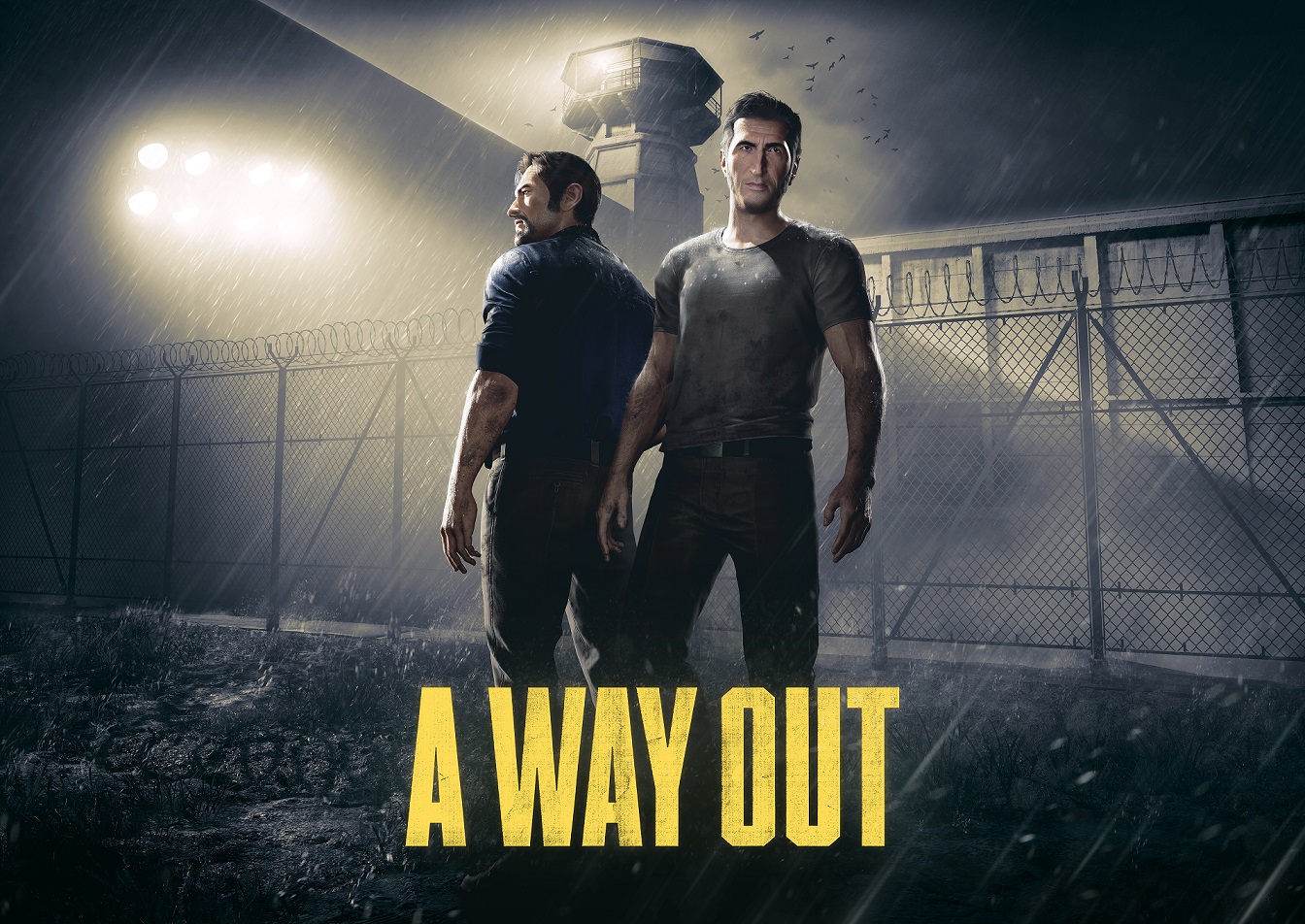
The broader category is large and still expanding. The multiplayer games market was valued at $38.6 billion in 2025](https://dataintelo.com/report/multiplayer-games-market) and is projected to keep growing through the next decade. [Games with co-op generated an estimated $4.1 billion on Steam in the first half of 2025 alone. Hazelight’s Split Fiction — a co-op-only adventure in the lineage of It Takes Two and A Way Out — sold over 2 million copies in a week, with a friend pass that effectively doubled the number of people who could play.
But getting a true multiplayer story game — not a shooter with cutscenes, and not a single-player plot you take turns watching — is still frustratingly difficult:
- Authored co-op is beautiful and finite: one prison, one ending graph, then you are done
- Human game masters are scarce, and five calendars rarely align
- Live-service multiplayer holds attention through social loops, not through a story you author together
- Generic chatbots forget the party, flatten NPCs, and stall the mission
Newzoo’s rankings show player attention staying locked in established social ecosystems — Fortnite, Minecraft, Roblox, League of Legends — while unique multiplayer experiences still have to fight for a slot in someone’s week. Meanwhile Technavio notes social interaction as a major factor in casual play, even as the wider games market keeps adding spend. The appetite is there. The format most people can actually start on a Tuesday night is not.
MIDiA’s analysis of couch co-op is blunt about the production problem: split-screen, skill gaps, and communication design are expensive, which is one reason the catalog stays thin even after breakout hits. Tabletop campaigns have the opposite problem — infinite story, impossible scheduling. Live-service PvP has the opposite problem again: always on, almost never about the two of you.
This is exactly what this AI game master was built for.
Why Roleplay Game Master
Roleplay Game Master is not a dialogue tree with extra seats. It is a dedicated game master for multiplayer story games: it holds the world state, plays every NPC, tracks the job, and keeps pressure on the objective while still letting the party wander off the map, fight each other, or invent a third way over the fence.
You bring the premise and the people. It brings continuity. Two of you can be convicts under floodlights, arguing about whether to trust the other man. Four of you can be a tavern party — the cautious one, the loud one, the person already picking the lock — while the GM plays the innkeeper, the job-giver, and the consequences. The tool does not wait for Player A or Player B. It waits for someone to do something.
| Traditional Approach | Roleplay Game Master |
|---|---|
| Finite two-player scripts that reconverge on set pieces | Campaigns that replot around what the party actually did |
| Need a human GM, a table, and matching calendars | Start a full co-op story in one message |
| Live-service lobbies with thin narrative | Persistent memory — grudges, clues, and debts survive the session |
| Generic chat that forgets who is in the party | Character-consistent NPCs and companions with motives |
| Replay means watching the other taped ending | Replay means a different plan, tone, or betrayal |
A party that stays in character
The failure mode of most AI story chat is amnesia with extra voices. The rogue who pocketed the key yesterday greets the paladin like a stranger. A plan you whispered in the rain vanishes. This GM is built for the opposite: unlimited conversation memory and stable character behavior, so a co-op campaign can run for weeks without the world resetting.
That is the mechanic that makes multiplayer possible. A shared story is a chain of promises between people — I boost you, you cover me, neither of us tells the warden. If the chain breaks, you do not have co-op. You have two monologues in the same room.
Shared decisions that rewrite the job
Cosmetic co-op feels busy and means nothing: both players press a button, the cutscene plays anyway. Here, one of you warning a guard can burn the tunnel. One of you taking the feast invitation can walk the party into an ambush. One of you going silent on the radio can let the other person walk into a yard they were not briefed on.
You can be cautious, chaotic, loyal, or the reason the plan fails. The story does not need you to be the writer’s dual protagonists. It needs the group to be accountable.
Any genre of co-op story
Because the campaign is not pre-authored as a single graph, you are not stuck in one licensed prison or one licensed tavern. Run a two-person escape. Run a four-person dungeon job with inventory and wounds. Run a political investigation where the “combat” is a hearing and the party has conflicting loyalties. Shift from grounded crime to high fantasy mid-week if you want a palette cleanser — the same GM, a new brief.
Prompts that start the engine
You do not need special syntax. Speak like a table sitting down together:
"You are our GM. Two players: Leo is the planner, Mara is the muscle. We are in a rainy prison yard at night. Give us the fence, the tower, and the first problem — then wait. Do not decide for us."
"Run a tavern-party job. I play Matteo. Fill the rest of the party as distinct people with their own tempers. Track health, rumors, and who is already angry. If we split up, play both rooms."
"Same campaign as last night. I lied to the other player’s character about the tunnel. Play the fallout when they find the second set of keys. Do not smooth it over."
Related Agents You'll Also Find Useful
If you want a ready-made social story, a locked-room mystery to tackle with a partner, or you are designing co-op quests for a game of your own, these pair naturally with a multiplayer story game habit.
Love Island
Eight strangers, one island, and a story that only exists because people choose each other — or don’t. If the multiplayer story you want is social rather than tactical, this is emergent group drama: alliances, rejections, and public consequences unfolding from what you do in front of the others.
- Open-world romance with group dynamics instead of a single romance track
- Connections and blow-ups that come from play, not from a scripted rose ceremony
- A useful warm-up if your co-op group cares more about people than puzzles
The Mansion
You wake in a mansion with no memory of how you arrived. Every room hides secrets; every shadow could be your last. Play it as a solo investigation, or treat it as a two-person search — one of you pushing doors, the other tracking what the house just contradicted.
- Room-by-room investigation with escalating dread
- Clue-driven progress rather than a linear tour
- Multiple ways to press for answers — or to fail quietly together
Game Designer Assistant
Playing co-op stories often turns into wanting to build them. This is the design partner for systems, documentation, and genre craft — useful when you have just lived through a two-person escape or a tavern split and now want to specify one for a tabletop module, a narrative game, or a production pitch.
- Brainstorming and systems analysis across genres
- Quest structure, documentation, and concept support
- Practical craft for platforms and regional markets
Try Roleplay Game Master free — no credit card required.
How It Works
You do not install a ruleset. You start a session, name who is playing, and act. The campaign GM handles narration, NPCs, timing, and fallout.
Step 1: Brief the party and the job Name the setting, each player’s role, the tone, and what “winning” the first scene would even mean. Specificity is fuel: two convicts under a tower play differently from a four-person tavern crew with a debt to collect before closing.
"Grounded crime, no magic. Two players, Leo and Mara. First job: get past the inner fence without killing a guard. If we make noise, the tower reacts."
Step 2: Take real actions, not menu picks Move, boost, lie, wait, or split the party. Write what your character does. The GM should narrate outcome and new pressure — then stop, so the other person still owns the next beat.
"Leo keeps watch on the tower. Mara cuts the first wire. Tell us what the floodlight does before anyone moves again."
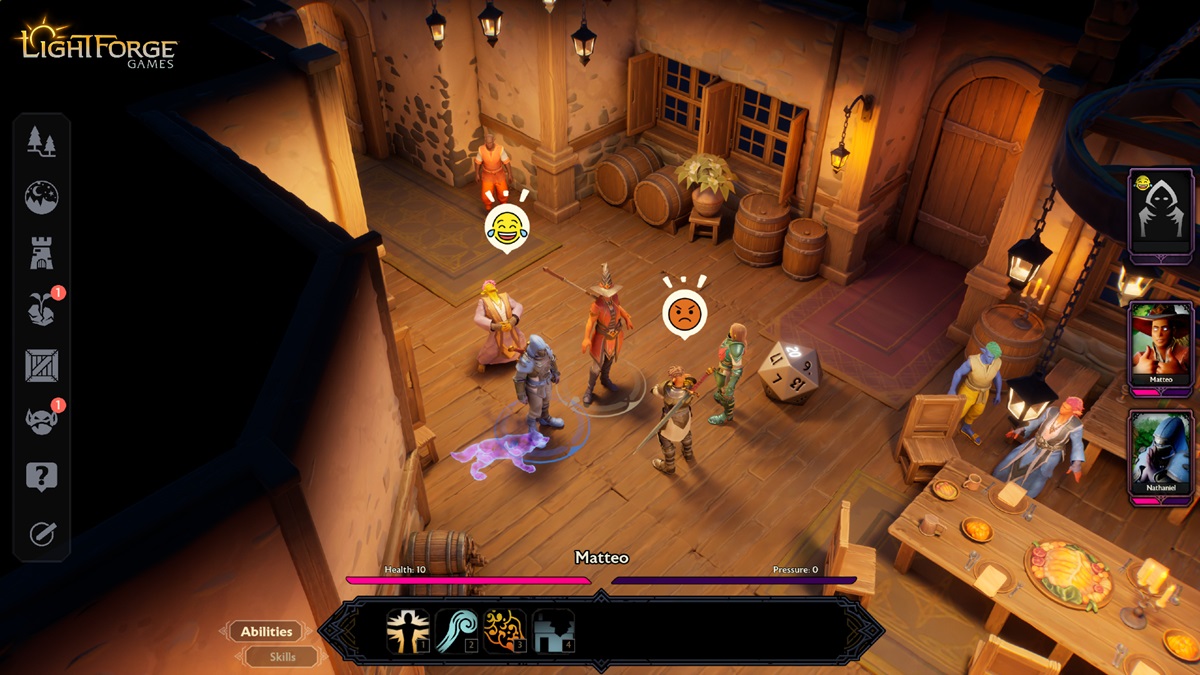
Step 3: Play the social layer as part of the mission Co-op stories die when conversation becomes a skip button. A companion laughing at the wrong toast, or glaring across the table, is terrain — jealousy, a leaked plan, an opening to ask who hired you.
"I don’t laugh with them. I ask Matteo who paid for the feast, who isn’t invited, and whether Nachosel is already selling us out."
Step 4: Continue across days without recapping the universe Open the same campaign later. Refer to prior events in shorthand. Persistent memory is the point: you should not have to paste a wiki of the prison layout or the party’s grudges into every message.
"Same campaign. It’s the next night. Mara’s wrist is still wrapped. Leo still has the second key. Don’t reset the NPCs or the other player’s secrets."
Step 5: Steer difficulty when the table needs it If the GM is too generous, say so. If you want inventory, clocks, or fail-forward injuries, add them as table rules. One of you remains a player; either of you can also be the producer.
"Be a strict GM. Track noise, suspicion, and who is carrying the tools. If we split and one of us is caught, play the interrogation — don’t teleport us back together."
Results & Use Cases
🗝️ A two-person escape that is not a boxed ending
Scenario: You and a friend want A Way Out-style pressure — rain, towers, a pact that might be a lie — without buying a finite script you will finish in a weekend.
Traditional Approach: Play Hazelight’s authored co-op, love it, and then have no more prison, no more partner puzzle, no more story that is yours.
Roleplay Game Master: One brief sets the yard, the fence, and the first disagreement. If one of you cuts a deal with a guard, the other person has to live in that world.
- Asymmetrical roles without requiring split-screen engineering
- Failure stays in the campaign instead of reloading a checkpoint
- Replay means a different betrayal, not a New Game plus costume
🗺️ A tavern party that actually behaves like a party
Scenario: You want a fantasy job with a full table — the face, the muscle, the person already stealing from the kitchen — and you do not have four humans free.
Traditional Approach: Solo a CRPG and pretend the companions are friends, or cancel the session when two people drop.
The AI game master: You play one seat. It plays the rest as people with tempers, health, and private motives. For a tighter, darker cousin of group investigation, The Mansion turns the same “who do I trust in this room?” instinct inward.
- Distinct companion behavior instead of a chorus of yes-men
- Social tells (a laugh, a glare) as playable information
- A job you cannot wiki-spoil because it did not exist until you sat down
📱 Co-op on a commute, not a couch
Scenario: Your co-op partner is in another city. You have a bus ride and a half-finished harbor heist on your phone.
Traditional Approach: Console co-op that needs two living rooms, or mobile titles that replace story with energy timers.
Roleplay Game Master: Full feature parity on iOS and Android, plus speech-to-text if you would rather talk the scene than type it. Send one voice line — “I take the alley, you take the door” — and read the fallout before your stop.
- Session memory means the commute is a chapter, not a reset
- No party of five required
- Easy to keep a second, lighter campaign for late nights
🎯 Prototype the co-op story you actually want to ship
Scenario: You are designing a two-player mission — boost over the fence, or talk the innkeeper down — and you need to feel where the decision actually sits before you write a design doc.
Traditional Approach: Spec both golden paths, guess at griefing, and discover in playtest that nobody uses the line you wrote.
Game Designer Assistant, used after a live session, turns what just happened at the table into systems notes: flags, fail states, and why that split worked. You play the co-op beat first, then specify it — instead of speccing in a vacuum.
- Find the interesting disagreement by playing it
- Capture flags (who was seen, who was told, who still has the key)
- Translate a good improvisation into a design doc
FAQ
What is a multiplayer story game?
A multiplayer story game is a cooperative narrative with a shared objective: there is a job, opposition, and a world that changes when more than one person acts. Unlike a linear film, the mission can fail, reroute, or grow extra objectives because of someone else at the table. Unlike a pure sandbox chat, the story keeps an objective in view so scenes add up to a campaign instead of two people riffing in a void.
Is Roleplay Game Master free?
Yes. You can start on the free tier with all core features and limited monthly usage — no credit card required. If you run long co-op campaigns every day, paid plans raise the usage ceiling (Plus starts at $20/month for 30× free usage). Usage resets on your billing date, with no daily drip caps.
How is an AI multiplayer story game different from A Way Out or It Takes Two?
Hazelight-style games are authored co-op: beautiful, replayable, and bounded. An AI game master does not ship a complete graph. It simulates a table. You can attempt actions the writer never listed, continue past a credits moment, and bring a third personality into a story that was “two-player only” on the box. The tradeoff is production polish — you get range and memory, not pre-acted cutscenes.
Can I play a multiplayer story game with a real friend?
Yes. Brief both characters, take turns in the same campaign, and let the GM hold the world so neither of you has to narrate omnisciently. One of you can play the face while the other plays the lockpick; the AI plays guards, patrons, and fallout. If your friend is not available, it can fill the other seats so the story still has a party.
Does a multiplayer story game work on mobile?
Yes. Play on the web, iPhone, or Android with the same campaign memory and settings. Speech-to-text is available if you want to play hands-free. A prison-yard whisper or a tavern argument is well suited to short mobile sessions because a single reply can be a full move.
Do our choices actually change the shared story?
They should, and you can instruct the GM to be strict about it. Ask for status blocks, clocks, and irreversible flags (“Mara knows Leo cut a deal”). If a scene reconverges too neatly, say so in table talk: “Do not protect the plot. If one of us runs, the other is left in the yard.” That instruction is part of play.
Conclusion
Most multiplayer story games still ask you to perform togetherness inside someone else’s flowchart — or to wait three weeks for a human GM. The form people actually want is simpler and harder: a job, a party that keeps score, and NPCs who remember which of you lied after the cutscene would have ended.
Roleplay Game Master is built for that loop — persistent memory, open actions, and campaigns you can pick up on a phone or at a desk. Whether you want a rain-soaked two-person escape, a tavern crew with real tempers, or a long co-op job that cannot be wiki-spoiled, you can start with one brief and play until the consequences land.
Try Roleplay Game Master now. Explore more at Jenova.
For Developers: Roleplay Game Master is available programmatically via the Jenova API — integrate adaptive multiplayer story games into your application with a single API call. Full documentation →