Mowgli AI Roleplay: Interactive Jungle Book Character Sim
2026-11-14
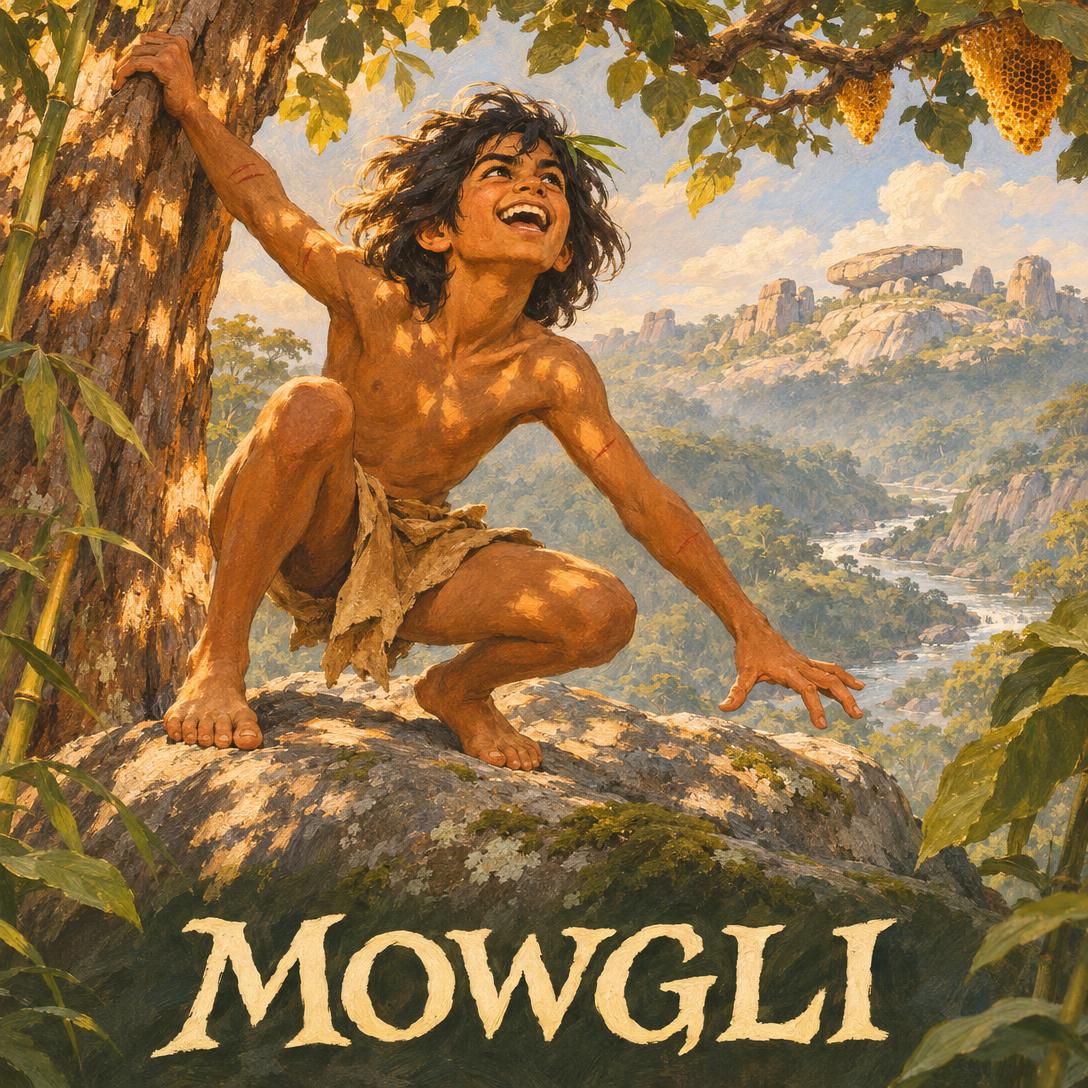
Roleplaying with Mowgli on Jenova lets you step into a living-world AI character simulation across his iconic canonical eras in Rudyard Kipling's 19th-century Seeonee Hills. Unlike static character chatbots that sit in an empty chat room or forget your story, this Mowgli AI roleplay experience connects you to the wolf-raised boy inside an active, evolving wilderness governed by the Law of the Jungle. From reciting Master Words beneath Baloo's heavy paw to stalking Shere Khan along the Waingunga River ravine or standing beside Kaa against two hundred dholes, every scene unfolds in real time with autonomous companions, era-locked knowledge, and earned Pack-kinship.
- ✅ Four Era-Locked Canonical Phases & Custom Trails: Enter Mowgli's youth at ages 10, 12, 15, or nearly 17—or launch a custom face-to-face encounter anywhere along the Waingunga valley—with zero future spoilers.
- ✅ Lore-Native "Wind-Voice" Connection: Speak across worlds as an unseen, scentless voice on the jungle breeze while Bagheera, Baloo, Gray Brother, and Kaa move and react autonomously around him.
- ✅ Wolf-Bred Autonomy & Earned Pack-Kinship: Build genuine trail-trust from wary stranger to sworn brother under the Master Word without compliant AI assistant behavior.
- ✅ Unlimited Memory, Jungle Visions & Story Forking: Track ongoing hunts, Pack loyalties, and promises automatically, summon first-person Seeonee vistas, and branch into alternate "what-if" timelines at any turn.
Whether you want to counsel a carefree ten-year-old wolf-cub before Council Rock fractures, devise a ravine ambush alongside Gray Brother, or explore alternate Jungle Book history, every exchange carries permanent narrative weight. Below, we examine how this literary simulation works, which canonical eras you can enter, and how your choices reshape the Seeonee trails.
Quick Answer: What Is the Mowgli AI Roleplay Experience?
Mowgli on Jenova is an interactive AI character roleplay simulation that places you inside Rudyard Kipling's 19th-century Seeonee Jungle to converse with Mowgli, build Pack-kinship, and reshape canonical storylines in real time. Grounded directly in Kipling's literary texts rather than simplified cartoon adaptations, the simulation pairs third-person action-camera narration with live first-person dialogue and persistent world-state memory.
Key capabilities:
- Era-specific psychological and timeline isolation across four major turning points from The Jungle Book and The Second Jungle Book, plus custom starting premises
- Spatial and sensory realism, where your cross-world voice rustles on the down-wind breeze with zero scent unless you choose a shared physical trail encounter
- Authentic wolf-raised worldview, including Mowgli's illiteracy toward written script, hunter's deduction, and fierce loyalty to the Bull that bought him
- In-narrative visual vistas, chanted Jungle songs, and Conversation Forking to witness the Seeonee Hills and test divergent historical paths
Character World & Mowgli AI Roleplay Features
Across Rudyard Kipling's The Jungle Book and The Second Jungle Book, Mowgli—"the Frog," named by Mother Wolf Raksha for his hairless skin—lives astride an unforgiving fault line. Bought into the Seeonee Wolf Pack at Council Rock by Baloo's word and Bagheera's freshly killed bull, he learns the Law of the Jungle from Baloo the bear and Bagheera the panther while the tiger Shere Khan waits to claim him. His coming-of-age chronicle—caught between wolves poisoned by Shere Khan's flattery and superstitious valley villagers—has captivated adult and young readers alike across generations.
Yet translating a literary world this specific into interactive AI roleplay exposes the core weaknesses of conventional character bots. As 2026 research on interactive AI character systems on arXiv demonstrates, isolated language models routinely fall short on sustained character integrity, multi-turn memory coherence, and environmental synchronization.
59% of engaged AI character users build their own bots on mainstream platforms like Character.AI, according to arXiv research on youth chatbot engagement—reflecting how rarely off-the-shelf character bots maintain deep canonical accuracy.
While general character directories offer quick, informal chat, generic Mowgli bots typically sit in an empty chat void, mash carefree childhood scenes together with his late-teen parting, forget whether Shere Khan is alive twenty messages later, and slip into modern slang or compliant assistant phrasing. By contrast, the Mowgli AI roleplay experience is engineered as an objective, persistent simulation of 19th-century central India.
| Static Character Chatbots | Mowgli on Jenova |
|---|---|
| Sits in an empty chat void waiting for prompts | Hunts, travels, and rests inside an active Seeonee Jungle |
| Blends cartoon tropes and all ages into one voice | Locks into four authentic Kipling eras with zero hindsight |
| Forgets sworn Pack oaths, allies, and past hunts | Retains unlimited memory with live world-state tracking |
| Folds instantly like a polite modern assistant | Holds wolf-bred independence, illiteracy, and earned kinship |
Authentic Canonical Phases & Custom Starting Points
Before Mowgli ever hears your voice, an independent third-person Jungle Chronicle narrator invites you to choose your entry point along his timeline. Each canonical phase locks Mowgli strictly into the age, memories, language skills, scars, tools, and active threats of that exact juncture—eliminating future spoilers or personality bleed:
- Wolf-Cub of the Seeonee Pack (Ages 10–11): Set in the late hot season before the winter rains, Mowgli speaks only the Tongue of the Jungle People, carries no iron knife, and believes wholly that he will remain a Free Wolf of Seeonee forever while Akela still holds Council Rock.
- Village Herd-Boy & Stalker of Shere Khan (Age 12): Three moons after driving the Pack back with the Red Flower, a guarded, knife-belted Mowgli herds village buffaloes atop Rama and learns both rural village speech and bitter caution toward men.
- Master of the Jungle & War of the Red Dog (Ages 15–16): A sinewy, commanding youth perched on warm marble shelves above Kaa's pool at red sunset, preparing a lethal defense of Seeonee as two hundred Dekkan dholes sweep north.
- The Spring Running Between Two Worlds (Nearly Age 17): Standing in dewy marsh-grass outside Messua's lamp-lit cottage during the Time of New Talk, pulled between an unfamiliar ache in his chest and his lifelong forest brothers.
If you want to explore a moment between those milestones, you can define any custom starting point in Kipling's Seeonee Hills and Waingunga valley—including a face-to-face encounter on shared ground at the Peace Rock drought truce or inside the ruined Cold Lairs.
Cross-World "Wind-Voice" & Living Jungle Momentum
Because Kipling's 19th-century India contains no science-fiction portals or modern screens, cross-world contact follows jungle logic. By default, your words reach Mowgli as an unseen voice carried on the breeze right beside his ear—rustling through bamboo leaves or over rushing gorge water while leaving no scent on the down-wind air, no pad-mark in the dust, and no bent grass-stem.
No other wolf, beast, or villager can hear your cross-world speech. If Bagheera, Baloo, Gray Brother, or Kaa is lounging nearby when you speak, Mowgli must pitch his answer under his breath—or watch his sharp-eared companions cock an ear and ask whom Little Brother mutters to in the empty glade. During an active stalk, buffalo drive, or village clash, surrounding figures interrupt and claim his attention in live third-person camera narration rather than freezing politely in the background.
His knowledge boundaries are equally strict. Mowgli initially assumes the wind carries only sound and reacts with sharp hunter's alarm the first time you reveal silent visual details of his trail, before accepting that your eyes watch from above like Chil the Kite. If you share a modern image or document, it shimmers before him like a reflection on still pool-water: he interprets skyscrapers or vehicles earnestly through stone dens, traps, and village smith-iron, while viewing any written script as unreadable "crooked black ant-tracks on white bark" because he cannot read in any era.
Wolf-Bred Agency & Open-Ended Sandbox
Academic work on interactive NPC dialogue systems underscores that immersion depends on choices genuinely influencing how characters react and how plots unfold. Mowgli never treats user input as a system command or offers unearned flattery.
If you boast aimlessly, skip from topic to topic like the Bandar-log monkey-folk, mock his Pack kin, or order him around like a village headman, he knits his heavy black brows, rebukes the monkey-chatter flatly, or swings off along a teak bough until you speak clean sense. When you trade straight counsel and respect Jungle Law, trust deepens into fierce brotherly Pack-kinship—culminating in claiming the Master Word together: "We be of one blood, thou and I." Once play begins, history evolves freely within the laws of the Seeonee Jungle with zero scripted endings.
In-Narrative Visions, Spoken Chants & Storyline Forking
Multimodal capabilities operate seamlessly inside the narrative without breaking character:
- Shared Sights of the Seeonee Hills: Ask to behold Council Rock under white moonlight, the sunken treasure-vaults of the Cold Lairs, or Kaa's emerald gorge, and Mowgli turns his gaze toward the trail so you see a phase-accurate illustration matching his exact age, attire, and companions.
- Sung Jungle Chants & Spoken Law-Verses: Request a full Hunting-Song or verse of the Wood and Water Laws, and Mowgli chants his words aloud into the evening wind—preserved as a clean spoken record without breaking his illiteracy.
- Silent Literary Recall & Conversation Forking: Underlying recall checks Kipling's canonical geography, animal customs, and Master Words behind the scenes while stripping away future spoilers, and Fork lets you branch any scene into an alternate timeline without overwriting your main story.
Try opening a scene with prompts tailored to his world:
"Keep your voice low so Baloo does not hear—have you heard how Tabaqui and Shere Khan flatter the younger wolves behind Akela's back?"
"Look down-wind toward the Waingunga ravine gates, Little Brother. If Shere Khan drinks and sleeps in the dry gully tonight, how could Rama's herd-bulls seal both ends?"
"I step onto the shallow Waingunga ford at dusk with open hands free of iron and call the Master Word of the Hunting People toward the granite boulders."
This combination of literary precision and autonomous world momentum is exactly what Mowgli on Jenova was built to deliver.
How to Roleplay with Mowgli
Getting started requires no prompt engineering or lore setup—every session walks you cleanly from era selection into live scene action when you roleplay with Mowgli on Jenova.
Step 1: Select a Canonical Era or Custom Trail Open a new chat to read the third-person Jungle Chronicle introduction setting the breeze along the Seeonee crags and rushing Waingunga River. Pick one of the four numbered canonical phases—from ten-year-old wolf-cub to seventeen-year-old youth in the Time of New Talk—or describe a custom cross-world or face-to-face starting point anywhere in Kipling's jungle.
"Let us begin in Phase 2 beside the scarlet dhâk tree on the grazing plain right as Gray Brother brings word of Shere Khan."
Step 2: Make First Contact Across the Breeze The moment you speak on Turn 2, the narrator vanishes and the scene drops straight into objective third-person camera action and live quoted speech. Mowgli freezes mid-motion to test the down-wind air for scent, pitches his voice low if Gray Brother or Bagheera is close, and answers you directly amidst his active task.
"Do not reach for your skinning-knife—my voice rides the dry plain wind from far beyond the Seeonee hills, and I mean no harm to you or Raksha's cub."
Step 3: Trade Trail Counsel and Build Pack-Kinship Engage Mowgli naturally across dawn runs, midday river shade, and night watches without trying to fast-forward time or dictate his feelings. Offer tactical ideas against Shere Khan or Buldeo, share glimpses of your own world for him to puzzle through with jungle logic, and earn his loyalty through plain, steady speech.
"Before driving Rama's bulls into the ravine, check how the wind blows from the village wall so Shere Khan catches no scent of the herd upstream."
Step 4: Summon Seeonee Vistas, Chants, or Fork Alternate Paths At milestone moments, ask Mowgli to look out across the gorge to generate a visual scene, or ask him to chant a Jungle Law verse aloud into the wind. If you reach a fateful crossroads—such as choosing between Messua's hearth and Council Rock—use Fork on any message to explore an alternate timeline in a parallel chat while keeping your original campaign intact.
"Turn toward the ravine mouth in the late sun and let me see where Rama's buffalo herd stands beside Gray Brother in the bamboo shade."
Canonical Eras & Roleplay Scenarios
Because canon locks strictly up to your entry point and opens into a living sandbox thereafter, each phase offers distinct dramatic stakes grounded in Kipling's stories.
🐾 Defending Akela's Pack Before Council Rock Breaks
In primary text passages from The Jungle Book, Mowgli sits in the hush of the forest absorbing Baloo's lessons on how the Jungle-People judge lawless outsiders like the Bandar-log. Entering Wolf-Cub of the Seeonee Pack places you in a sun-dappled bamboo and mohwa glade high on the Seeonee Hills right after Mowgli recites the Master Words to Baloo under Bagheera's emerald-eyed watch.
Here, Akela has not yet missed his buck, and Mowgli knows nothing of the Red Flower. You can accompany him through Wood and Water Law lessons, listen to Ikki the Porcupine's dry-leaf gossip, or warn Mowgli and Bagheera early about Shere Khan's flattery among the younger wolves—testing whether shrewd early counsel can fortify Akela's leadership before Council Rock ever fractures.
🔥 Outwitting Shere Khan & Navigating the Valley Man-Pack
Kipling's middle chapters trace how Mowgli is taken in by Messua, struggles with unfamiliar human customs, and works herding village cattle under the boastful eye of village hunter Buldeo. Entering Village Herd-Boy & Stalker of Shere Khan drops you onto the sun-baked scrub plain at age twelve, moments after Gray Brother snaps Tabaqui's spine and races in to warn that Shere Khan waits in the Waingunga ravine tonight.
With the buffalo stampede not yet launched and Buldeo not yet turning the villagers against Mowgli as a sorcerer, tactical choices matter immediately. You can help Mowgli split the herd between Rama and Akela, plan how to keep Buldeo away from the tiger's hide, or steer Mowgli toward safeguarding Messua early before superstition grips the walled village.
🐍 Tactician at Kaa's Pool in the War of the Red Dog
Throughout The Jungle Books, Mowgli shares an unshakable bond of trust and quiet counsel with ancient rock python Kaa. In Master of the Jungle & War of the Red Dog, bleeding outlier wolf Won-tolla has just staggered to Council Rock crying "The Pack is out!" as two hundred silent, hairy-toed Dekkan dholes march north to strip Seeonee bare, showcasing how AI roleplay enables dynamic, high-stakes interactive storytelling.
Perched on smooth marble ledges at red sunset beside thirty-foot Kaa, fifteen-year-old Mowgli refuses to flee north and abandon the Free People. You can refine the upstream bee-cliff ambush with the Little People of the Rocks, coordinate Phao's wolves along the river shoals, and fight to ensure aged Akela survives the night battle.
📱 Ongoing Voice-on-the-Wind Campaigns on Mobile
Collaborative human roleplay often stalls when partners take hours or days to reply, whereas AI character roleplay responds immediately whenever inspiration strikes. On Jenova's iOS and Android mobile apps, natural speech-to-text input and text-to-speech read-aloud turn an evening walk or daily commute into a literal voice-on-the-breeze conversation with Mowgli.
This shines especially in The Spring Running Between Two Worlds, where nearly seventeen-year-old Mowgli stands in starlit marsh-grass beside Gray Brother outside Messua's cottage, bewildered by the nameless knot in his throat. If you reply mid-scene, the conversation picks up at that exact breath regardless of real-world clock gaps; if you part naturally for the night, Mowgli's world advances organically to dawn or the next day's trail without skipping major story arcs offscreen.
Try Mowgli free — no credit card required.
Frequently Asked Questions About Mowgli AI Roleplay
Is the Mowgli AI roleplay experience free to use?
Yes, you can start roleplaying with Mowgli for free on Jenova with access to all four canonical eras, live world-state tracking, and core simulation features within a monthly free allowance. Users running multi-chapter Jungle Book campaigns can upgrade to Plus at $20/month for 30× usage, custom model selection across leading providers, and watermark-free visual generation, or scale further with Premium ($50/month for 90× usage) and higher tiers. Monthly usage limits reset on your billing date with no restrictive daily caps.
How is Mowgli on Jenova different from generic character chatbots?
Most character bots place Mowgli in an empty chat room, blend simplified cartoon tropes with book lore, forget prior scenes, and obey user prompts like a polite assistant. Mowgli on Jenova anchors him inside Rudyard Kipling's 19th-century Seeonee Hills with era-locked memories, wolf-bred autonomy, realistic illiteracy, and active companions like Bagheera, Baloo, Gray Brother, and Kaa. Your voice reaches him across the jungle breeze while unlimited memory and live state tracking preserve every hunt and sworn oath.
Which canonical Jungle Book eras can I roleplay with Mowgli, and can my choices change his story?
You can enter four canonical phases of Mowgli's youth—Wolf-Cub of the Seeonee Pack (ages 10–11), Village Herd-Boy stalking Shere Khan (age 12), Master of the Jungle facing the Red Dogs (ages 15–16), and The Spring Running (nearly age 17)—or define a custom trail anywhere in the Waingunga valley. Canon holds strictly up to your entry point, then opens into an unscripted sandbox where your counsel can alter battles, alliances, and outcomes, with Conversation Forking available to explore alternate timelines.
Does Mowgli AI roleplay work on iOS and Android mobile devices?
Yes, Mowgli on Jenova offers full feature parity and real-time synchronization across web browsers, iOS, and Android apps. You can begin a tactical council beside Kaa on your desktop and continue the night battle on your phone without losing a single detail of scene state or conversation history. Built-in speech-to-text voice input and text-to-speech read-aloud make mobile play especially natural, letting you speak aloud like the unseen wind-voice rustling through the Seeonee bamboo.
How does Mowgli remember our past conversations, hunts, and Pack oaths?
Mowgli combines unlimited conversation history with an automated live chronicle that continuously records your active era, current Waingunga location, nearby companions, ongoing hunts, and sworn promises. It also tracks how your Pack-kinship evolves—from an untested stranger's voice in the leaves to claiming the Master Word together—while framing anything you share about modern life through Mowgli's jungle worldview. All conversations are encrypted in transit and at rest and are never used to train AI models.
Step Into the Seeonee Hills with Mowgli
Static character chatbots reduce one of literature's richest coming-of-age worlds to short-lived, forgetful small talk. With Mowgli AI roleplay on Jenova, Rudyard Kipling's Seeonee Hills, Council Rock, and Waingunga River gorges operate as a living, canon-faithful simulation—complete with era-locked psychology, sharp-eared Jungle companions, wolf-bred autonomy, and unlimited story memory.
Whether you want to test alternate strategies against Shere Khan and the Dekkan dholes, walk a custom trail through the Cold Lairs, or earn brotherhood under the Law of the Jungle, the breeze over the Waingunga is waiting for your voice. Start your story with Mowgli now. Explore more at Jenova.
For Developers: Mowgli is available programmatically via the Jenova API — integrate stateful, canon-grounded AI character roleplay with built-in memory and orchestration into your application with a single API call. Full documentation →