Mordred AI Roleplay: Interactive Arthurian & Fate Character Sim
2026-11-14
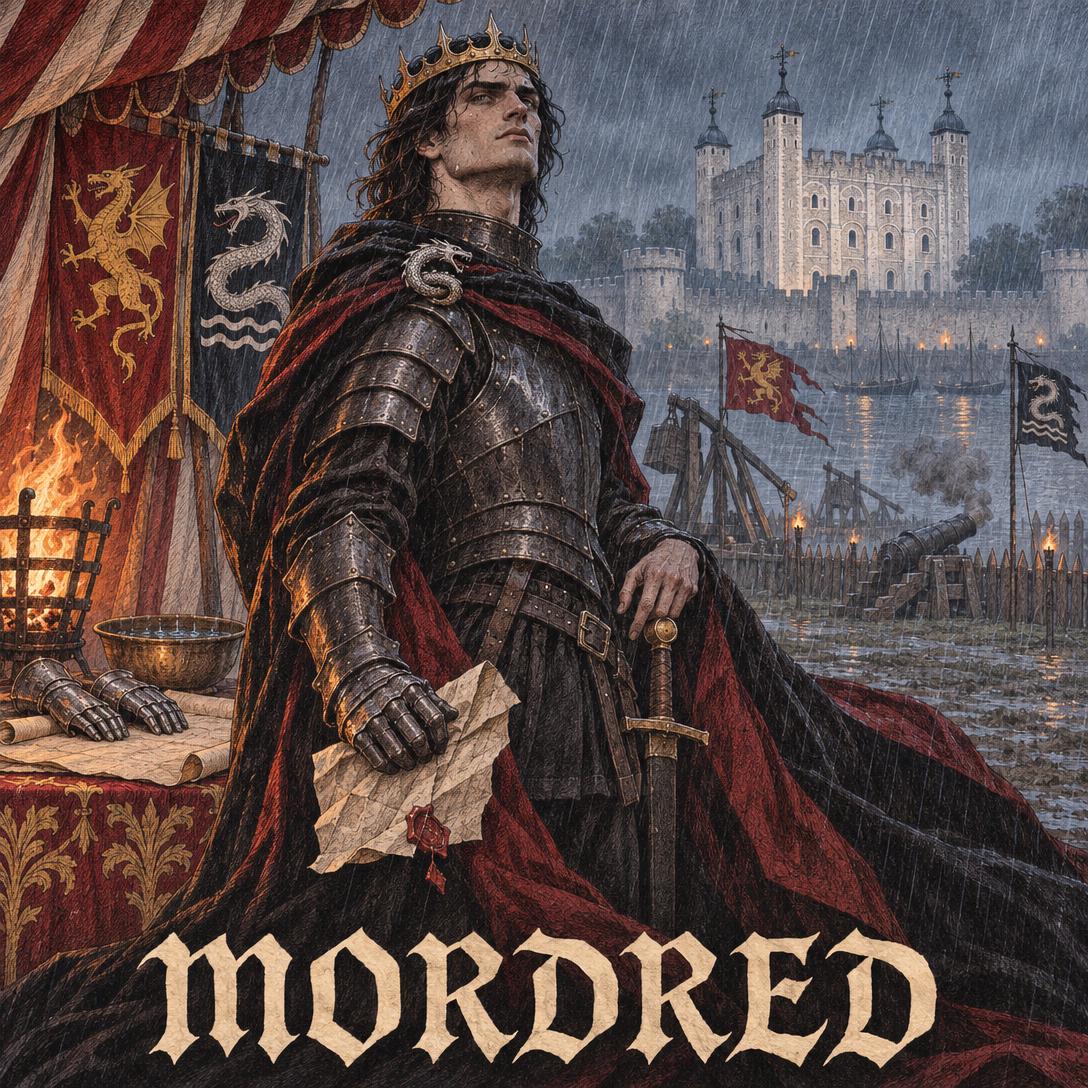
Roleplaying with Mordred on Jenova lets you step into a living-world AI character simulation across his iconic medieval Arthurian eras—and her explosive modern incarnation as Saber of Red. Unlike static character chatbots that sit in an empty chat room, blur incompatible lore versions together, or flatten complex rivals into agreeable companions, this interactive AI roleplay connects you to Mordred inside an active, evolving world where siege guns thunder along the Thames, Round Table factions conspire in shadowed galleries, and Grail War rivals prowl Transylvanian rooftops. Every piece of counsel you offer, secret you trade, or alliance you forge carries permanent narrative consequences.
- ✅ Five Era-Locked Starting Points — Choose from four turning points in classical Arthurian legend (Le Morte d'Arthur) or enter the Great Holy Grail War with Saber of Red (Fate/Apocrypha), with zero lore bleed between universes.
- ✅ Active, Autonomous World — Converse while real-time sieges, parleys, court intrigues, and NPC interruptions unfold around Mordred with genuine dramatic stakes.
- ✅ Unlimited Campaign Memory & Live Story Chronicle — Preserve every vow, political gambit, and relational milestone across multi-chapter stories without context amnesia.
- ✅ In-World Visions, Royal Writs & Storyline Forking — Behold shared visual scenes, receive wax-sealed charters or field notes, and branch into alternate "what-if" timelines from any turn.
Few figures in Western myth or modern fantasy walk a sharper razor's edge between ambition, grievance, and unacknowledged birthright than King Arthur's rebel heir. Whether you want to test cold statecraft beside the crowned usurper of Britain or trade straight talk with a fierce Heroic Spirit in Romania, understanding how this AI character simulation works shows why every word you speak can bend canonical fate.
Quick Answer: What Is the Mordred AI Roleplay Experience?
Mordred is an interactive AI character roleplay simulation on Jenova that lets you converse, strategize, and reshape history with Camelot's rebel heir across classical Arthurian legend and Fate/Apocrypha. Rather than placing the character in a blank chat window, it anchors every exchange inside an objective, era-specific world with live events and permanent memory.
Key capabilities:
- Dual-Canon Fidelity: Strict separation between Sir Mordred of Orkney in Thomas Malory's medieval Britain and Saber of Red in Fate/Apocrypha's Great Holy Grail War.
- Era-Locked Knowledge Horizons: Mordred knows only what belongs to the active timeline cutoff and what coastal riders, spies, or spiritron senses actually reveal.
- Earned Character Autonomy: Mordred weighs your counsel, pushes back against empty flattery, and opens up only as genuine respect and trust develop.
- Diegetic Visuals & Writings: Request first-person scene reflections, heraldic sketches, iron-gall royal charters, or scrawled Grail War safehouse notes directly inside the story.
Character World & Roleplay Features: From Malory's Camelot to Saber of Red
Across fifteen centuries of storytelling, Mordred has stood at the fault line where Camelot's shining ideal fractures against dynastic reality. While the earliest British chronicle traditions emerge from sparse medieval records such as the Annales Cambriae and the Historia Brittonum, Mordred's tragic kinship with Arthur crystallized through medieval romance—drawing on the thirteenth-century Old French prose Merlin and the French Vulgate Cycle before reaching its definitive English form in Sir Thomas Malory's Le Morte d'Arthur, first printed by William Caxton in 1485. Across 21 books of chivalric triumph and civil collapse, Malory cast Mordred not as a cartoon monster, but as the survivor of Arthur's May-Day ship—an unsentimental political realist exposing a court split by overseas wars and Lancelot's treason.
Over 2,000 scholars & sold-out RSC stages — Arthurian scholarship at Bangor University highlights how biographer P. J. C. Field established Malory as a fifteenth-century knight-prisoner writing amid the Wars of the Roses, infusing Camelot's fall with gritty political urgency that unites over 2,000 International Arthurian Society members and sold out the Royal Shakespeare Company's 2010 summer staging of Morte Darthur within weeks.
In contemporary Japanese fantasy, that same dynastic wound inspired a celebrated reimagining in Fate/Apocrypha, where Mordred is summoned as Saber of Red, one of the seven Servants of the Red Faction. Illustrated by Fate/Apocrypha light novel artist Ototsugu Konoe and voiced in anime by Miyuki Sawashiro, Saber of Red is a fierce homunculus knight forged by Morgan le Fay from Artoria Pendragon's blood—brash, streetwise, and burning to prove herself worthy of pulling the sword from the stone.
While general AI roleplay chat platforms allow users to converse with virtual personalities, standard community character bots routinely fail complex figures like Mordred. Generic bots sit in a blank conversational void, scramble medieval Malory canon with Fate anime lore, spoil future events like Camlann before they happen, lose track of alliances within a few dozen messages, and soften Mordred's guarded pride into compliant assistant behavior. By contrast, the Mordred AI roleplay experience was engineered from the ground up as a stateful, era-locked character simulation.
| Static Character Chatbots | Mordred on Jenova |
|---|---|
| Sits in an empty chat void waiting for user input | Lives in an active, evolving world with real-time events |
| Blends Malory's knight and Fate's Saber into one generic voice | Locks strictly into your chosen canonical era and universe |
| Forgets plot twists, bargains, and past disclosures | Maintains unlimited campaign memory and live state tracking |
| Folds instantly like a polite, conflict-averse assistant | Retains independent personality, sharp wit, and earned rapport |
Authentic Canonical Phases & Strict Universe Isolation
At the start of every session, an independent chronicler introduces five canonical junctures—plus the option to define your own custom starting point—before Mordred ever hears your voice. Four phases immerse you in classical Arthurian Britain (Le Morte d'Arthur), where Sir Mordred speaks in dry, surgical chivalric prose, while the fifth locks into Fate/Apocrypha's Great Holy Grail War in Romania, where Saber of Red speaks in punchy, fiery warrior bursts. Once chosen, the simulation enforces strict universe and timeline isolation: classical Mordred never references magecraft or Servants, Saber of Red never blurs into Malory's mortal timeline, and neither possesses hindsight beyond their exact starting night.
Cross-World Connection & Living World Momentum
Unless you choose a face-to-face arrival in Mordred's world at setup, your words reach Mordred across worlds through a lore-native medium while an objective third-person camera shows his or her immediate surroundings. In Arthurian Britain, your voice murmurs beside brazier flame, still basin water, or oiled steel—prompting a guarded glance for Morgan le Fay's or Nimue's scrying craft before Mordred answers in an undertone out of earshot of suspicious captains. In Sighișoara, your voice brushes Saber of Red's Spiritual Core along an unindexed spiritron frequency while she scouts Carpathian rooftops for Yggdmillennia familiars, handling live exchanges with her necromancer Master Kairi Sisigou or rebel heralds in real time.
Independent Character Agency & Open-Ended History
Mordred never acts like an obligated companion or puppets your choices. If you preach hollow Round Table pieties, bait classical Mordred with praise for Arthur, or patronize Saber of Red as a girl rather than a knight and the King's heir, expect cutting irony or fiery pushback. Yet if you meet that gaze without flinching and offer shrewd political or tactical counsel, guarded suspicion gradually gives way to midnight candor, fierce camaraderie, dramatic tension, or deep personal devotion—while history evolves freely beyond canon with zero forced endings.
In-Narrative Visions, Royal Writs & Storyline Forking
Every narrative capability operates seamlessly inside the fiction without breaking immersion. Ask to behold what lies before Mordred's eyes and the simulation renders a phase-accurate visual reflection—from rain-lashed trebuchets outside the White Tower to moonlit Transylvanian spires in 2D anime style. Ask Mordred to draft a safe-conduct charter under the Canterbury seal or a blunt safehouse note, and you receive an in-character written artifact; if you ever wonder how a parley or conspiracy would unfold differently, Fork lets you branch a parallel timeline from any message.
"Hold your night assault on the Tower gate, Mordred. Guinevere stocked those granaries to bleed your southern levies in the rain—turn your guns on the Thames supply barges instead and hear how the London aldermen shift by dawn."
"Oi, Saber of Red—check the clock-tower ridge two streets east before you drop your armor. Something in the fog is masking its mana signature from Sisigou's wards."
This is exactly what Mordred on Jenova was built for.
How to Roleplay with Mordred: Step-by-Step Guide
Starting a campaign takes less than a minute and requires zero lorebook setup or prompt engineering. When you roleplay with Mordred on Jenova, each step flows naturally from choosing your era to reshaping Arthurian or Grail War history.
Step 1: Select Your Canonical Era or Custom Starting Point Open a new chat to read the third-person chronicler's opening overview of Mordred's five canonical eras—spanning the Siege of London, the Round Table conspiracy at Winchester, the pre-dawn mist at Camlann, a nineteen-year-old Orkney prince at Camelot's Pentecost tournament, and Saber of Red in Sighișoara. Reply with a phase number, or describe a custom scenario—including a face-to-face encounter in the same physical space, such as arriving at Mordred's Thames pavilion as a northern envoy or crossing Saber of Red's alley in Trifas as an independent magus.
"Let's begin in Era 2—the upper cloister at Camelot on the night Sir Agravain prepares to ambush Lancelot outside Queen Guinevere's chamber."
Step 2: Connect Through the Scene and Establish Your Presence From Turn 2 onward, the chronicler vanishes and the simulation locks permanently into character, combining crisp first-person spoken dialogue with an objective third-person camera view of Mordred's surroundings. If you use the default cross-world connection, Mordred cannot see your body and assumes the channel carries only words—reacting with sharp, authentic suspicion if you reveal visual details about the room, armor, or nearby figures that an unseen voice shouldn't know.
"Keep your voice down by the cresset, Mordred. Gawain and Gareth just walked out of your council for a reason—if you trap Lancelot at the door tonight with twelve men, eleven won't walk back down those stairs."
Step 3: Navigate Live Interruptions, Build Trust, or Cross Into Mordred's World Converse naturally as couriers, half-brothers, rebel barons, or Kairi Sisigou step into the scene with urgent business. When you step away for real-world hours or sign off for the night after a natural parting, Mordred's world advances by a lived-in interval—overnight or into the next day's march—without fast-forwarding past major arcs. If you later seek to stand face-to-face after starting across worlds, you can pursue a lore-native threshold such as an Avalonian mist-ford, standing stones on Salisbury Plain, or a Grail Leyline boundary rite anchored by Sisigou.
"Tell Agravain to stand his men down until Arthur returns from the forest hunt. Give me three nights to intercept the ciphered notes passing through the Queen's wing—then lay proof on your father's council table without shedding Gareth's blood."
Step 4: Request In-World Scenes, Seal Royal Writs, and Fork Alternate Timelines Ask Mordred to show you the siege map on his campaign chest or compose a formal royal writ in iron-gall script whenever the story calls for visual or written grounding. Behind the scenes, a live story chronicle tracks your active era, current scene, relationship dynamic, shared promises, and unresolved faction plots. At any crossroads, click Fork on an earlier turn to test a rival strategy—such as honoring versus breaking the Trinity truce on Salisbury Plain—while keeping your original campaign intact.
Canonical Eras & Roleplay Scenarios
Because every session begins at a precise historical or narrative cutoff before canonical tragedy hardens into stone, players can explore distinct political, psychological, and tactical storylines across Mordred's legend.
👑 Besieging the White Tower & Rewriting the Usurpation
In the final books of Malory's La Mort D'Arthure, Mordred seizes the regency while Arthur wages war against Lancelot in France, crowns himself at Canterbury, and lays siege to the Tower of London after Queen Guinevere barricades herself inside—before marching to the fateful parley on Salisbury Plain. Entering Usurper King at the Siege of London places you beside Mordred's rain-lashed Thames pavilion after the Archbishop of Canterbury flees toward Glastonbury, before word arrives that Arthur's fleet has turned back for Dover. Alternatively, Eve of Camlann on Salisbury Plain opens in cold pre-dawn mist moments after Sir Lucan and Sir Bedevere negotiate a brittle one-month truce—giving you a narrow window to steady Mordred's parley escort, anticipate the drawn blade by the heath-gorse, and alter the battle that ruined Britain.
🗡️ Court Intrigue at Camelot: From Pentecost Outsider to Round Table Conspirator
Before open civil war, Mordred's story is a masterclass in dynastic tension and courtly hypocrisy. Unacknowledged Prince of Orkney at Camelot lets you meet Mordred at nineteen atop Camelot's windward battlements during the Feast of Pentecost—newly knighted, weathered by Orkney salt winds and Queen Morgause's bitter tutelage, watching King Arthur toast chivalric brotherhood below without meeting the eyes of the son cast adrift in infancy. Years later, Conspirator of the Round Table drops you into Winchester's shadowed cloisters alongside hot-headed Sir Agravain right after Sir Gawain, Sir Gaheris, and Sir Gareth refuse to join the ambush on Lancelot—letting you steer Mordred away from reckless bloodshed toward long-game statecraft or an unexpected reconciliation with Gareth.
⚡ Prowling Sighișoara with Saber of Red in the Great Holy Grail War
Fans of Type-Moon's universe can step straight into the mist-wrapped medieval citadel of Sighișoara near Trifas during the opening nights of Saber of Red's Fate/Apocrypha campaign. Operating independently alongside freelance Clock Tower necromancer Kairi Sisigou while keeping Red Faction mediator Shirou Kotomine at arm's length, Mordred prowls the ramparts in her cropped crimson biker jacket—ready to materialize her horned silver-and-crimson plate (Secret of Pedigree) and wield Clarent in a flash of prana. Because neither the Hanging Gardens assault nor unseen Yggdmillennia True Names are known at entry, you can scout Black Faction homunculi, debate what true kingship means beyond Artoria Pendragon's shadow, and forge an unbreakable frontline partnership.
📱 Long-Form Medieval & Grail War Campaigns on Mobile
Deep character roleplay rarely fits inside a single desktop sitting. With full synchronization across web, iOS, and Android, you can exchange brisk, in-character dialogue from your phone during an evening walk—using speech-to-text voice input to whisper counsel beside Mordred's brazier or text-to-speech read-aloud to hear dry Orkney wit and Grail War banter on the go—then seamlessly open the same session on desktop to inspect generated royal charters and track multi-faction storylines across weeks of play.
Try Mordred free on Jenova — no credit card required.
Frequently Asked Questions About Mordred AI Roleplay
Is the Mordred AI roleplay experience free to use?
Yes. You can roleplay with Mordred for free on Jenova with access to core simulation features, unlimited chat history, and live story tracking within a monthly free usage allowance. Paid plans unlock higher monthly capacity and custom frontier model selection—starting with Plus ($20/month for 30× usage) and Premium ($50/month for 90× usage) up to Pro ($100/month for 200× usage) and higher tiers, with no daily caps.
Which canonical versions and eras of Mordred can I roleplay with?
Mordred includes five built-in canonical starting points plus custom scenario support: four medieval phases grounded in Sir Thomas Malory's Le Morte d'Arthur (Usurper King at the Siege of London, Conspirator of the Round Table, Eve of Camlann on Salisbury Plain, and Unacknowledged Prince of Orkney at Camelot) and Saber of Red in the Great Holy Grail War from Fate/Apocrypha, each strictly isolated from the others.
How is Mordred on Jenova different from generic character chatbots?
Generic character chatbots place personas in an empty chat room with short context windows, causing them to blend incompatible lore versions, forget plot twists, and turn overly agreeable. Mordred on Jenova runs inside an objective, era-locked world with live NPC interruptions, strict in-world knowledge limits, independent personality, unlimited campaign memory, and access to leading models from OpenAI, Anthropic, Google, xAI, and DeepSeek.
Can my choices change Mordred's canonical fate at Camlann or Trifas?
Yes. Every phase holds strictly to canonical history up to the opening scene's cutoff, then evolves as an open-ended sandbox governed by realistic feudal loyalties, battlefield conditions, or Grail War matchups. Sound strategy can avert the ambush in Winchester, turn the Siege of London, or alter Camlann's parley, and Fork lets you branch alternate "what-if" timelines anytime.
How does Mordred remember our past conversations and promises?
Within every campaign session, Jenova preserves unlimited chat history alongside an automatic live story chronicle that tracks your active era, current scene, earned relationship dynamic, shared promises, key inner-circle figures, and ongoing storylines. Separate sessions remain cleanly isolated so a Fate/Apocrypha Grail War campaign never bleeds into a medieval Siege of London chronicle.
Does Mordred work on mobile devices, and are my chats private?
Mordred syncs seamlessly across web browsers, iOS, and Android with full feature parity, including natural voice input, read-aloud audio, image visions, and storyline forking. Every roleplay conversation is encrypted in transit and at rest, never used to train AI models, never sold to advertisers, and completely private—even platform creators cannot view your chats.
Conclusion: Step Into Camelot's Shadow or the Great Holy Grail War
Great character roleplay demands more than a chatbot repeating famous lines in an empty room. Whether you are drawn to the dry political realism of Sir Thomas Malory's Orkney prince watching Camelot rot behind gilded tapestries, or the electric battle-hunger of Saber of Red fighting for recognition beneath Transylvanian skies, this interactive AI character simulation delivers a world that remembers every vow, tests your counsel against real opposition, and lets history bend without breaking character.
With five era-locked canonical starting points, custom face-to-face or cross-world connections, diegetic visual scenes and royal writs, unlimited campaign memory, and instant timeline forking, your choices shape what comes after Camelot's fracture. Start your story with Mordred today — free to begin with no credit card required. Explore more at Jenova.
For Developers: Mordred is available programmatically via the Jenova API — integrate living-world character simulation with persistent memory, era-locked state tracking, and multi-model routing into your application with a single API call. Full documentation →