AI Monster Generator: Custom Creatures for D&D & TTRPGs
2026-09-04
Jenova helps you design original tabletop monsters by turning a creature concept into stats, ecology, tactics, and encounter framing in one conversation. While Dungeon Masters still spend hours reverse-engineering Armor Class, Challenge Rating, and lair actions from the Dungeon Master's Guide, this AI monster generator produces complete, campaign-ready creatures you can drop into tonight's session. In September 2026, that matters more than ever: players know the Monster Manual by heart, and the unknown is what actually scares them.
- ✅ Full creature packages — combat stats, traits, legendary actions, and lore in a single pass
- ✅ Built for Dungeons & Dragons, Pathfinder, and other TTRPG systems
- ✅ Names, ecology, tactics, and player-facing handouts without switching tools
- ✅ Works on web, iOS, and Android so you can prep between sessions
To understand why this matters, look at what custom monster design actually demands at the table — and why random generators and manual homebrew so often fall short.
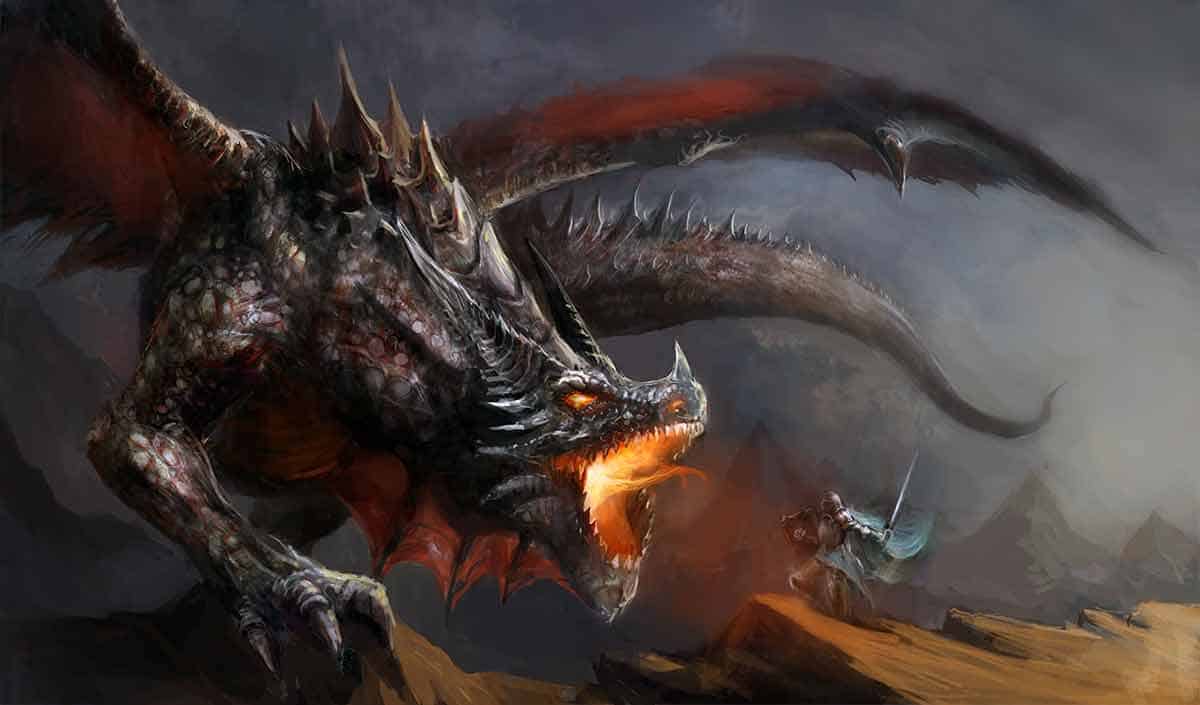
Quick Answer: What Is an AI Monster Generator?
An AI monster generator is a tool that turns a creature concept into table-ready stats, lore, and encounter design so Game Masters can field original monsters without hours of homebrew math. Jenova does this through specialized agents rather than a single random table.
Key capabilities:
- Stat blocks with Challenge Rating, Armor Class, hit points, actions, and legendary options
- Ecology, motives, lair actions, and regional effects that make the creature feel native to your world
- Names, languages, and cultural flavor via the Name Generator
- Systems analysis and concept art through the Game Designer Assistant
- Immediate playtesting in character with the Roleplay Game Master
Why Custom Monsters Are So Hard to Build
Tabletop role-playing is a large, growing hobby. The global TTRPG market is projected at $2.41 billion in 2026, on a path toward $6.59 billion by 2035. Fantasy titles still dominate, holding 52% of the category. In the United States alone, the National Endowment for the Arts reported that 3.4 million adults participated in tabletop role-playing games in 2023.
That audience is hungry for original threats. Veteran groups have fought beholders, trolls, and adult dragons for years. As D&D Beyond's monster design workshop notes, a fresh creature adds something claws cannot: fear of the unknown.
But accessing that surprise is frustratingly difficult:
- Official bestiaries are overexposed; experienced players recognize tactics from the stat block's first line
- Challenge Rating, action economy, and legendary actions require careful math
- Ecology, personality, and lair design take as long as the numbers
- Art, handouts, and names are usually bolted on at midnight
- Most groups play often enough that prep time never catches up
Players Already Know the Manual
Once a table has faced an adult black dragon, the next one is a logistics puzzle, not a mystery. They know acid breath recharges on 5–6, Frightful Presence hits at 120 feet, and legendary actions punish clustering. Original monsters restore uncertainty — which is the entire point of a boss fight. Designers writing for revised 5E monster creation still start with a concept and a name for this reason: if the fiction is generic, the fight will be too.
Stat Blocks Are a Design Discipline, Not a Template
A complete 5e creature is not a name plus hit points. James Introcaso's D&D Beyond workshop walks through story, size, type, alignment, Challenge Rating, six ability scores, Armor Class, hit points, speeds, saves, skills, resistances, senses, languages, traits, actions, reactions, legendary actions, and lair effects. Skip the CR target and you get a "medium" fight that drops a character in round one. Inflate Armor Class toward the tarrasque's 25 and players stop having fun because they cannot land a hit.
20+ discrete design fields — what a from-scratch D&D monster actually requires
Random generators fill some of those fields. They rarely justify why the creature has three resistances, a 40-foot swim speed, and a recharge breath — so the numbers feel arbitrary at the table.
Lore Is Half the Monster
A CR 10 ooze with no hunger, no origin, and no lair is a bag of hit points. The same CR 10 ooze that steals memories and hunts in red mist becomes a campaign villain. Writing that fiction by hand — physiology, story hooks, regional effects — is the work homebrew guides treat as a separate craft from the stat block. Most GMs finish the numbers and skip the rest.
Prep Calendars Do Not Match Session Calendars
Industry surveys of D&D players have found that 58% play on a weekly basis. Weekly tables cannot spend a full design workshop on every original foe. Sly Flourish's quick-build guidance exists because even experienced GMs need a monster in minutes, not a weekend. Meanwhile 42% of new players already bounce off complex rules and expensive kits — so a homebrew that is both slow to make and fiddly to run helps no one.
This is exactly what Jenova was built for.
The Jenova Solution
Jenova is not a dice roller glued to a name list. It is an AI monster generator that treats the creature as a complete design problem: combat role, fiction, name, visuals, and how it will actually play. You describe the threat you need. Specialized agents handle systems, prose, naming, and art so you leave with something you can print or paste into your VTT.
Research on writers who use AI in sustained practice finds that these tools shorten ideation and editing loops without replacing the human's creative direction. Studies of fiction co-creation similarly show that human–AI collaboration outperforms either side working alone on idea abundance. Monster design is the same shape of work: you hold the campaign vision; the model fills the fields.
| Traditional Approach | Jenova |
|---|---|
| 20+ manual fields from the DMG or D&D Beyond | One conversation that covers stats, lore, and tactics |
| Reskin a Monster Manual entry players already know | Original abilities tied to a specific ecology |
| CR math after the fact, then a painful rewrite | Design toward a target Challenge Rating from the first prompt |
| Lore and art as Sunday-night afterthoughts | Names, fiction, and visuals in the same workflow |
| No cheap way to playtest the fight | Run the encounter in character before session night |
Combat Stats, Challenge Rating, and Abilities
The Game Designer Assistant is the systems brain of this workflow. Ask for a CR 8 ambush predator, a legendary swamp horror, or a minion pack that supports a boss without stealing the spotlight. It reasons about action economy, damage budgets, legendary actions, and special movement the way a designer would — then you tune what does not fit your table.
"Build a CR 6 amphibious ambusher for 5e. It should grapple, drag prey underwater, and have a lair action that floods a 20-foot radius. Include a full stat block and three tactical behaviors."
Because it also handles documentation and concept art, you can request a one-page creature sheet instead of a wall of chat.
Ecology, Lore, and Narrative Hooks
Numbers without motive produce boring fights. The Creative Fiction Writer writes origin, diet, social structure, and the rumor a barkeep would actually say. Pair it with Deep Research when you want the creature grounded in real folklore — aswang, tarasque, nuckelavee — rather than a generic "shadow beast." Duke's creative writing faculty has argued that AI is most defensible when it helps generate ideas and polish work you already direct. That is the right posture here: you decide what the monster means in your campaign; the prose gets you to a draft fast.
Names, Languages, and Identity
A great stat block with a forgettable name dies in the recap. The Name Generator produces culturally fluent names for the creature, its species, its lair, and the cult that worships it. Ask for Draconic-sounding compounds, swamp-folk epithets, or a title the villagers whisper. Language lists and naming patterns make the monster feel like it belongs to a place, not a spreadsheet.
Visuals and Player-Facing Handouts
Players remember what they see. Comic Creator and Manga Creator turn the creature into sequential art — a reveal splash, a lair establishing shot, a wound that telegraphs the next legendary action. Poster Maker builds a one-sheet wanted poster or temple mural you can slide across the table. Webtoon Creator is useful when you want a vertical "legend of the beast" handout players can read on their phones between sessions.
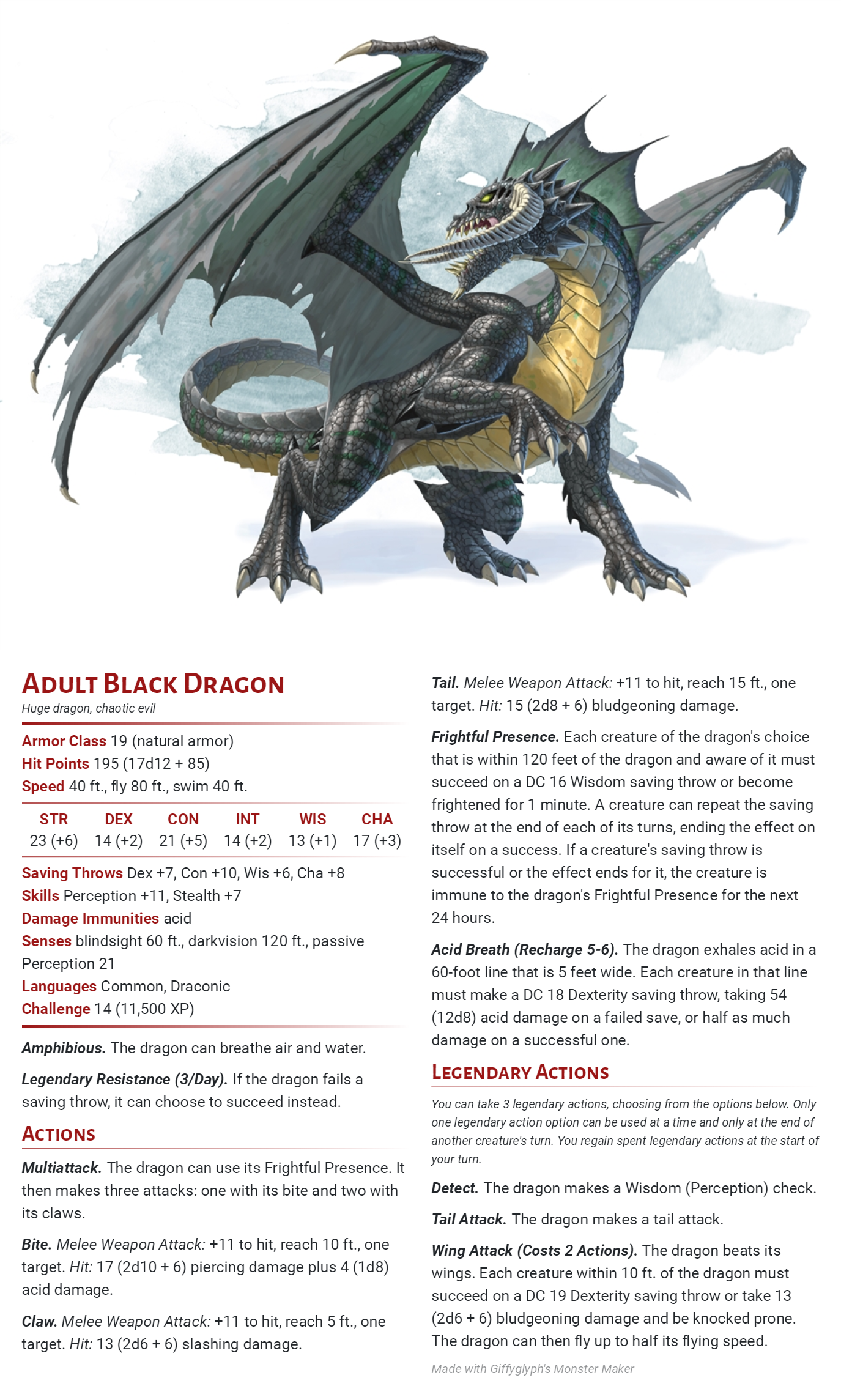
A finished official stat block — Armor Class, hit points, traits, legendary actions — is the completeness bar. An AI monster generator should get your homebrew that close, then let you edit.
Staging and Playtesting the Fight
The Roleplay Game Master will run the creature against you before your players ever see it. Unlimited memory keeps the monster's tactics consistent across a multi-session hunt. If you want the fight to feel cinematic rather than purely mechanical, the Film Screenwriter can beat out the encounter as a scene: entrance, turning point, desperate reversal. Music Composition Assistant can sketch a motif or battle ostinato if you use music at the table.
Try Jenova free — no credit card required.
Specialized AI Agents for Monster Generation
These agents are the ones a GM or worldbuilder would actually open in the next month of campaign prep.
Game Designer Assistant
Your systems partner for the creature as a game object. It brainstorms roles (controller, brute, lurker, artillery), checks whether the action economy will bully a level 5 party, and documents the result as a usable stat block plus designer notes.
- Challenge Rating targeting and damage-budget sanity checks
- Traits, reactions, legendary and lair actions that match the fiction
- Concept art direction and one-page documentation for your binder or VTT
Roleplay Game Master
Once the monster exists on paper, this agent plays it. Perfect character consistency means the dragon who bargained last session still remembers the oath — and still cheats. Use it to playtest, to run a solo rehearsal, or to improvise the creature's voice when you are tired at 11 p.m.
- Unlimited memory across a multi-session villain arc
- Tactical play that respects the stat block you already generated
- Any system or tone, from grimdark 5e to rules-light one-shots
Creative Fiction Writer
This is the ecology and rumor mill. It writes the paragraph at the top of a bestiary entry, the hunter's journal, and the three story hooks that get the party onto the creature's trail.
- Origin myths, physiology, and cultural role in your setting
- Read-aloud text that sounds like a person, not a wiki
- Editorial passes so the lore matches the stats you already locked
Name Generator
Names are load-bearing. This agent treats them as linguistic design, not random syllables.
- Species names, individual names, lair names, and cult titles
- Language-family consistency (Draconic, Undercommon, invented phonology)
- Epithets players will actually repeat in recaps
Comic Creator
When a description is not enough, sequential art sells the scare. A two-page reveal of the creature bursting the chapel roof does more than another paragraph of scales and teeth.
- Splash pages and encounter establishing shots
- Consistent creature design across multiple panels
- Handouts you can print or share in the campaign Discord
Deep Research
For GMs who want the monster to feel researched rather than random. Point it at a myth, a biome, or a historical military unit and it returns cited material you can metabolize into traits.
- Folklore and natural-history grounding for original creatures
- Inline sources you can keep in your design notes
- Useful when a player asks "is this based on anything real?"
How to Generate a Custom Monster
Step 1: State the Role, System, and Scare Open Jenova and say what the creature must do in play, not just what it looks like. Name the system, the party level, and the emotion you want at the table.
"5e, party of five at level 7. I need a legendary lurker in a flooded cathedral. It should feel tragic, not just evil. Target CR 9."
Step 2: Generate the Stat Block Toward a Challenge Rating Hand the brief to the Game Designer Assistant. Ask it to design to the CR first, then fill ability scores, Armor Class, hit points, and actions. Request a weakness — a save the party can actually target — so the fight is tense rather than a brick wall.
"Give me the full stat block, one vulnerability tied to its backstory, and a note on how it spends legendary actions across three rounds."
Step 3: Write Ecology, Name, and Hooks Move the draft to the Creative Fiction Writer and Name Generator. Lock a name, a rumor, and two ways the party can learn about the creature before they kick in the door.
"Name this creature in a decaying liturgical register. Write 120 words of bestiary lore and three adventure hooks that do not require a random encounter roll."
Step 4: Make Something Players Can See Use Comic Creator or Poster Maker for a reveal image, a stained-glass "saint" that is secretly the monster, or a bounty notice. Visuals change how carefully the table listens to your read-aloud.
Step 5: Playtest Before Session Night Run a five-round fight against yourself with the Roleplay Game Master. If the creature dies in round two or the controller never gets a turn, fix the action economy now, not in front of your players.
"You are this stat block. I am a level 7 moon druid and a champion fighter. Play to win, then tell me which of your actions never fired."
Results & Use Cases
🐉 Weekly Boss That Nobody Has Memorized
Scenario: Your Saturday 5e table has been together two years. They quote adult dragon legendary actions from memory. You need a unique CR 10–12 closer for the flooded keep.
Traditional Approach: Reskin a dragon, pray they do not notice, spend Sunday rewriting lair actions after the fact.
Jenova: You generate an original amphibious legendary with a new breath pattern, a name, and a stained-glass handout. The Game Designer Assistant holds the CR; the Creative Fiction Writer writes the keep's curse.
- Players cannot meta the resistances
- Lair actions match the map you already drew
- Recap stories use your monster's name, not "it was basically a black dragon"
📖 Homebrew Setting Bestiary
Scenario: You are writing a 12-creature pamphlet for a desert campaign: three minions, six set-piece threats, three legendary regional powers.
Traditional Approach: Weeks of DMG table work, inconsistent voice across entries, art commissioned last or never.
Jenova: Batch the roster by role, then pass each entry through naming, lore, and Manga Creator or Comic Creator for a unified look.
- Consistent Challenge Rating ladder from 1 to 14
- Shared ecology so the desert feels like a system, not a zoo
- Pages you can export into a VTT journal
🎬 One-Shot With a Cinematic Climax
Scenario: A four-hour convention slot. You need one unforgettable creature, not a dungeon crawl.
Traditional Approach: Borrow a Monster Manual boss and narrate hard to hide how familiar it is.
Jenova: The Film Screenwriter beats the climax; the monster generator fills the stat block to match the scene, not the other way around. Music Composition Assistant gives you a 90-second motif for the reveal.
- The fight has an entrance, a reversal, and a desperate choice
- Mechanics serve the scene
- You walk into the slot with a one-page packet
📱 Commute Prep on Your Phone
Scenario: Session is tonight. You are on the train. You need a wilderness random encounter that is not "2d4 wolves."
Traditional Approach: Open a generator site, get a stat block with no personality, wing the rest at the table.
Jenova (iOS or Android): Dictate a prompt, get stats plus a rumor the ranger could have heard, and a name. Full feature parity with web means you are not staring at a stripped-down mobile afterthought.
- Voice-to-text for prompts when your hands are full
- History persists, so you can refine at lunch
- Paste into your VTT notes before you sit down
FAQ
What is an AI monster generator?
An AI monster generator is software that converts a natural-language creature brief into game material — typically a stat block, ecology, and encounter notes. On Jenova, that work is split across specialists: systems design, fiction, naming, and art, so the output is a usable monster rather than a random row of numbers.
Is Jenova free to use as a monster generator?
Yes. Jenova has a free tier with all core features and limited monthly usage. Paid plans increase usage and unlock extras such as custom model selection. You can generate creatures without a credit card; heavier campaign bestiaries may want a paid tier.
Can this AI monster generator make D&D 5e stat blocks?
Yes. Specify 5th edition (2014 or 2024), Pathfinder, or a rules-light system in the prompt. Ask the Game Designer Assistant for Armor Class, hit points, actions, legendary actions, and a target Challenge Rating. Always playtest: generated math is a strong draft, not a substitute for knowing your table.
How is this different from a random monster generator?
Random tools shuffle existing tables. They are fast and often flavor-blind. Jenova designs toward your brief — party level, biome, emotional tone, and the hole in this week's session. You also get lore, names, visuals, and a way to playtest with the Roleplay Game Master, which a name-plus-HP roller does not provide.
Does an AI monster generator work on mobile?
Jenova runs with full feature parity on web, iOS, and Android. You can dictate a creature brief on a commute, generate the stat block, and share it to your group's chat before you arrive. Speech-to-text is built in; settings sync across devices.
Will the stats be balanced for my party?
Treat every generated creature as a draft aimed at a Challenge Rating, then verify against your group. Optimized tables punch above CR; new tables punch below. The D&D Beyond design process still recommends comparing your monster to published creatures of the same CR — do that, run a short playtest, and adjust hit points or damage before session.
Build Your Next Encounter With an AI Monster Generator
Original monsters are how a campaign stops feeling like a greatest-hits album of the Monster Manual. The bottleneck has never been imagination; it has been the hours between a cool idea and a legal, named, illustrated, playable creature. An AI monster generator collapses that gap.
Use Jenova to design the threat, the Game Designer Assistant to lock the numbers, the Creative Fiction Writer to give it a reason to exist, and the Roleplay Game Master to see if it actually scares you. Then put it on the table while it is still unknown.
Explore the full agent library at Jenova.
For Developers: Creature generation, stat-block drafting, and encounter design are available programmatically via the Jenova API — integrate an AI monster generator into your VTT or campaign tool with a single API call. Full documentation →