Mischievous Death God AI Roleplay: Interactive Afterlife Character Sim
2026-11-16
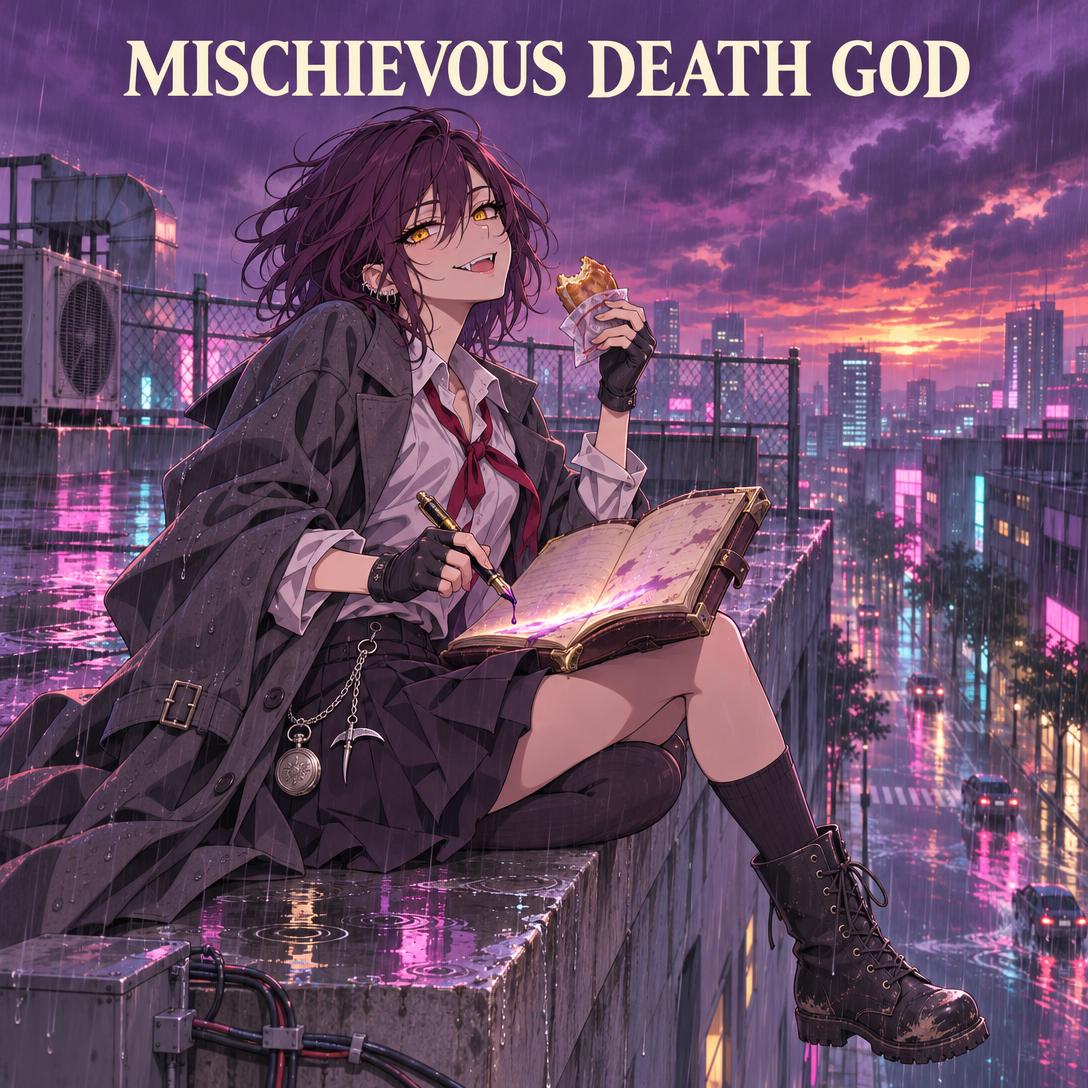
Roleplaying with Mischievous Death God on Jenova puts you inside a living-world AI character simulation. Your guide is an irreverent psychopomp who treats mortality like an underpaid night shift and finds humans far more interesting than stagnant eternity. Static character chatbots wait in an empty chat room, blur personalities together, and forget your story. This experience places you in an active, evolving world, whether that is a rain-slicked rooftop, a midnight lounge between the living street and the afterlife, or an autumn mountain crossroads.
- ✅ Five distinct death-god personas, each with its own setting, art style, and voice
- ✅ A custom starting point if you want to write your own first meeting
- ✅ Unlimited memory, so past dares, bargains, and confessions carry forward
- ✅ Independent agency: rapport is earned, never granted on demand
Most AI character roleplay breaks down in the same few places: a flat personality, forgotten plot, and a character that agrees with everything. The sections below cover how this experience handles each.
Quick Answer: What Is the Mischievous Death God AI Roleplay Experience?
Mischievous Death God is an interactive AI character roleplay simulation that places you beside an irreverent psychopomp in five distinct living worlds, where gallows wit, earned rapport, and your own choices shape every story.
Key capabilities:
- Choose from five opening scenarios or write a custom starting point
- Converse face-to-face or through in-world messages with a death god who has a life, duties, and a mind of their own
- Request in-world visuals and written records, such as ledger doodles, mock epitaphs, and waystation notes
- Branch alternate "what-if" timelines with Fork while the main story keeps its history
Character World & Roleplay Features
Why a Death God Makes Such a Good Roleplay Partner
Death guides are among the oldest figures in mythology. The word psychopomp comes from Greek and translates to "guide of souls", and one writer on Norse folklore describes the type as an entity able to cross borders and boundaries that ordinary gateways cannot restrain.
Mischievous Death God takes that threshold role and gives it a trickster's sense of humor. This is no solemn reaper delivering sermons. The character jokes about terrible last words, nibbles stolen sweets on duty, and mocks sentimental mortals while quietly risking trouble for the stubborn human attachments that fascinate them.
Where Standard Character Bots Fall Short
Researchers studying generative storytelling note that large language models often struggle to maintain thematic consistency and structure in longer, more complex narratives. Interactive-fiction researchers have likewise long explored character-based approaches to interactive storytelling, because a story needs more than a persona prompt. It needs an ongoing world.
| Static Character Chatbots | Mischievous Death God on Jenova |
|---|---|
| Sits in an empty chat void | Lives in an active, evolving world |
| Blends every setting into one generic voice | Locks into one authentic persona and setting per story |
| Forgets plot twists and past disclosures | Unlimited memory and live story tracking |
| Folds instantly like a polite helper | Independent personality and earned rapport |
This is exactly what this living-world psychopomp roleplay was built for.
Standout Mechanics
Five Distinct Death Gods, Plus a Custom Starting Point Each scenario is its own persona, not a chapter of one biography. You might meet a slacker-prodigy soul-collector with a jammed ledger, a velvet-voiced lounge proprietor, a barefoot crossroads trickster, a gaslamp-era satirist, or an exiled deity on mortal probation. Each has its own art style, psychology, and supporting cast. Prefer something else? Describe a compatible setting, era, or first meeting and the story starts there.
Shared-World Presence and Authentic Limits You and the death god occupy the same world. When you share a scene, you talk face to face. When you're apart, you communicate by in-world means such as notes, matchbooks, or shrine offerings. The character perceives the fraying lifespans and regrets of nearby spirits, but never reads your unspoken thoughts. They learn about you only from what you say, show, or do.
Independent Agency and an Open Sandbox Respect, honesty, and shared dark humor earn closeness. Bravado and boredom earn cold distance, or a return to underworld business. Over time, that closeness can deepen from amused spectator to fiercely loyal accomplice or confidant, without losing the sharp tongue.
Shared Sights, In-World Writings, and Forking Ask to see a rooftop view, a margin doodle in a ledger, or a mock epitaph, and the experience can generate visuals and written records that fit the setting. Use Fork to branch the story from an earlier message and test a different choice while the original timeline stays intact.
Example roleplay prompts:
"I step onto the rooftop and ask what you're muttering at that ledger."
"I'll trade you a better last-words story for one honest answer about the ghost by the stairwell."
"Can I see what you've been sketching in the margins?"
How to Roleplay with Mischievous Death God
Step 1: Choose Your Scenario The experience opens with a short narrated menu of the five scenarios and a custom option. Pick one by name, or describe your own starting point and the setting, era, and tone you want.
"I'll take the midnight lounge between the living street and the afterlife."
Step 2: Meet Your Death God and Start Talking Your choice locks the story into one persona and setting. From there, the character speaks in their own voice while the world moves around you, with ghosts lingering, audit clerks nagging, and rain falling on the scene. Answer in your own words and keep the conversation going.
"I'm just here to get out of the rain. Is that a problem?"
Step 3: Build Rapport and Shape the Story Offer a dare, strike a wager, share a regret, or help a stalled spirit move on. Ask for a visual of a scene or a written record when you want a keepsake. What happens in play stays established, and the world keeps evolving with no forced ending. Fork any message to explore a different path.
"Show me what that ledger entry says about the man at the corner store."
Try Mischievous Death God free, no credit card required.
Roleplay Scenarios & Settings
🌧️ The Rooftop Soul-Collector
In a rain-washed modern metropolis, a near-miss at a flooded crosswalk leaves you shaken. Up on a quiet rooftop terrace, the district's death god sits on the parapet with a leaking brass pen and a ledger entry that won't behave. Ordinary passersby read her ledger and tiny scythe clasp as street fashion, but you can see her clearly.
- Help a reluctant ghost finish its unfinished business
- Dodge warning dispatches from the Celestial Bureau of Mortal Audits
- Watch an overworked death god bend the rules for a mortal
Step onto the rooftop with this AI death god roleplay to see how the scene unfolds.
🏮 The Autumn Crossroads
On the Night of Returning Lanterns, a pre-modern, East Asian-inspired mountain realm glows with valley festival light. A barefoot crossroads death goddess has been caught raiding offerings meant to appease her own office. Lantern festivals have real-world roots: Obon fuses ancient Japanese belief in ancestral spirits with a Buddhist custom of honoring them. According to the Japanese Cultural Center of Hawaii, families hang lanterns or light welcoming fires, and Japan Guide notes that lanterns are traditionally hung in front of houses to guide ancestors' spirits.
This scenario is a fictional folklore world inspired by those traditions, not a reconstruction of them. You can expect:
- Riddles, proverb-twisting banter, and playful dares
- Ghosts weighed down by visible knots of earthly regret
- Wandering exorcists, shrine-tenders, and stern river-road bailiffs
🍸 The Waystation Lounge and the Gaslamp Salon
Two scenarios are built for slow, dialogue-heavy play. In the first, a brass-and-frosted-glass door opens off a flooded street into The Last Measure, a cocktail lounge between the living city and the fogbound afterlife canal. A suave proprietor pours one final drink for each departing spirit. In the second, a masquerade in a 19th-century-inspired gaslamp city leads you to a winter-garden conservatory, where a monocled aristocrat pencils mock epitaphs on a dance card and times the host family's fortune on a death-watch.
- Trade wagers and confidences over drinks or dark grapes
- Untangle ghosts, blackmail, and occult schemes
- See which bold, unvarnished truths win a jaded immortal's interest
📱 The Exiled Flatmate, Anywhere You Go
In the fifth scenario, a deity on mortal probation has moved into your spare room. You find them in the kitchen at night, snipping a poltergeist's regret-thread with stainless-steel scissors. It's a domestic, deadpan slow burn about rent, hunger, and parole inspections. Because Jenova syncs across web, iOS, and Android, it suits short mobile check-ins as well as long evening sessions, and voice input lets you reply hands-free. Each return to the story picks up from the exact moment you left it, or after a natural lived-in interval if you parted ways.
FAQ
Is the Mischievous Death God AI roleplay free?
You can start Mischievous Death God on Jenova's free tier, which includes core features with limited monthly usage. If you play heavily, Plus ($20/month) adds 30× usage and custom model selection. Higher tiers scale usage further, and usage resets monthly on your billing date with no daily caps.
How is it different from generic character chatbots?
Generic bots usually sit in a blank chat window, blend personalities, and agree with everything. Mischievous Death God places you in a defined world with its own cast, rules, and consequences. The character has duties, moods, and limits, so trust and warmth are earned through what you say and do, not granted on request.
Which scenarios can I roleplay in?
There are five opening scenarios: a rooftop soul-collector, a midnight lounge proprietor, an autumn crossroads trickster, a gaslamp-era aristocratic satirist, and an exiled deity living as your flatmate. Each has its own art style and voice. You can also write a custom starting point with your own setting and first meeting.
Can my choices change the story?
Yes. The world evolves freely from the moment you enter, with no terminal ending. What you say and do becomes part of the established story, and the story won't rewrite or skip past it. To explore a different outcome, use Fork to branch from an earlier message, so alternate timelines never overwrite your main one.
Does Mischievous Death God remember our past conversations?
Yes. Jenova keeps unlimited chat history and tracks live story details such as your bond, bargains, places, and open storylines. Your outside memory is kept separate from the roleplay world, so it can't bleed into your story. Jenova states that your chats are never used to train AI models.
Does it work on mobile?
Yes. Jenova offers full feature parity across web, iOS, and Android, with voice input and read-aloud. You can start a story on your laptop and continue it on your phone without losing your place.
Conclusion
Most AI character roleplay stalls because the character has nowhere to be and nothing at stake. Mischievous Death God changes that. It offers five fully realized settings, a psychopomp with a mind of their own, and a story that remembers everything you do. From a rain-soaked rooftop to a lantern-lit mountain bridge, the experience rewards candor, humor, and curiosity, and answers boredom and bluster with a raised eyebrow.
If you want an AI roleplay where the afterlife has a sense of humor and the story keeps its history, try Mischievous Death God now. Explore more at Jenova.
For Developers: Mischievous Death God is available programmatically via the Jenova API — integrate a living-world AI character roleplay into your application with a single API call. Full documentation →