AI Merchant RPG: Trade, Haggle & Build Empires With AI Agents
2026-10-17
An AI merchant RPG puts you behind the counter, or at the head of a caravan, in a world where every customer, rival guild, and harbormaster responds to what you actually say. Jenova makes this playable now. It offers AI game agents, character builders, and design tools that turn haggling, price speculation, and trade politics into open-ended roleplay.
Most trading games still use fixed price tables and shopkeepers with three lines of dialogue. Jenova's agents remember your ledger, your debts, and the noble you cheated three sessions ago. As of October 2026, it is one of the most flexible ways to play, run, or design a merchant-focused RPG, whether you play solo, run a tabletop group, or play on your phone.
- ✅ Open-ended negotiation: Barter, bluff, and bribe in plain language instead of picking from dialogue menus
- ✅ Persistent memory: Inventory, gold, reputation, and rivalries carry across sessions
- ✅ Specialized agents: Separate tools for playing, building characters, designing economies, and developing full games
- ✅ Multi-model access: Models from OpenAI, Anthropic, Google, and more, on web, iOS, and Android
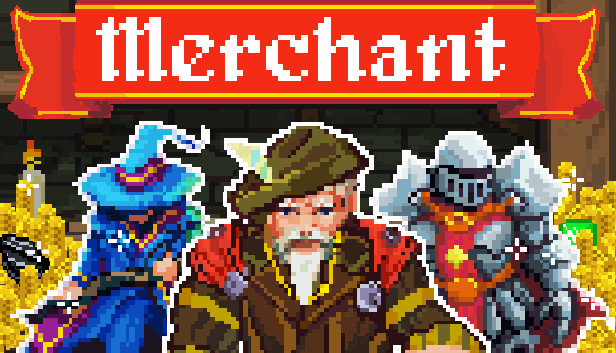
The merchant has been a fantasy archetype for decades, from the shopkeeper in classic RPGs to the indie titles built entirely around buying low and selling high. The fantasy has always promised more than the games delivered, though. To see why AI changes that, it helps to look at where traditional merchant games fall short.
Quick Answer: What Is an AI Merchant RPG?
An AI merchant RPG is a role-playing game where an AI acts as game master and plays every trader, rival, and customer. You buy, sell, haggle, and build a trade empire through open conversation instead of fixed menus. Traditional RPGs are games where players assume and act out the roles of characters in a fictional setting. An AI merchant RPG makes commerce the main way you play that role.
Key capabilities:
- Negotiation that reacts to your arguments, your reputation, and the market around you
- Economies with prices that shift with scarcity, events, and your own trading
- Persistent world state that tracks inventory, contracts, debts, and grudges
- Custom campaigns built from your own price lists, maps, and lore
Why Merchant RPGs Still Feel Static
AI is already changing how games are made and played. Development studios are adopting it quickly, and players increasingly expect worlds that react to them.
**$2.21 billion** — [Projected 2026 value of the generative AI in gaming market, up from $1.79 billion in 2025](https://finance.yahoo.com/technology/ai/articles/generative-ai-gaming-market-report-102800984.html)
89% — Share of surveyed game developers who say AI is changing what players expect from games
$5.09 billion by 2030 — Forecast market size, with growth driven by real-time character behavior modeling, adaptive gameplay mechanics, and dynamic content personalization
But getting a merchant experience that actually feels alive is still hard:
- Shopkeepers are scripted, and haggling is usually a dice roll or a fixed discount
- Economies ignore your actions, so prices barely move when you corner a market
- Handcrafted content is expensive, which limits how many goods, towns, and traders a world can have
- Tabletop trade sessions get bogged down in bookkeeping and price math
- Players distrust AI when it is hidden in games instead of offered openly
Shopkeepers Are Still Vending Machines
NPCs have traditionally been scripted with limited dialogue and actions, often leading to a reputation for being "dumb". The same analysis notes that smart NPCs matter most in simulation games and games with non-linear storylines, and merchant RPGs are exactly that kind of game.
When you cannot argue that the harvest failed, mention that you know the guildmaster, or threaten to take your silk to the rival port, haggling is just a menu.
Economies Don't Respond to You
Most trading games use static price tables with small random changes. If you buy every barrel of saffron in a city, the next merchant still sells it at the listed price.
A real merchant fantasy depends on consequences. Scarcity should raise prices, a flooded market should drop them, and rival traders should react when you take over their routes.
Handcrafted Worlds Cost Too Much to Scale
Content volume is the hidden limit on every trading game.
$100 million and 5 years — Reported budget and timeline for a 100-person team to build Skyrim, with an estimated 10,000–20,000 assets including 600 apparel items and 300 weapons
Every tradeable good, regional variant, and named merchant has to be written, priced, and balanced by hand. That is why most games offer a small set of goods and a handful of towns.
Tabletop Trade Sessions Drown in Bookkeeping
Game masters running trade campaigns in D&D, Pathfinder, or homebrew systems face a different problem: the math. Tracking cargo weight, regional price differences, tariffs, and spoilage across several players can turn a fun market day into an accounting session. Many GMs avoid commerce-heavy arcs for this reason.
Players Are Wary of Hidden AI
How AI shows up in a game matters as much as whether it does. In 2025, after AI-made placeholder textures were found in Clair Obscur: Expedition 33, the Indie Game Awards rescinded two awards for the game. Players reacted badly to AI they had not been told about.
The lesson for merchant RPG fans is that AI works best as an engine you choose to play with openly, not as undisclosed filler inside a finished product. That is the model Jenova uses.
This is exactly what Jenova was built for.
The Jenova Solution for AI Merchant RPGs
Jenova treats the AI as the game itself: a game master who voices the market, tracks the ledger, and keeps rivals plotting between sessions. You choose your level of involvement. You can play a ready-made game, build your own trading campaign, or design a commercial merchant game from scratch.
| Traditional Approach | Jenova |
|---|---|
| Scripted shopkeepers with fixed dialogue | Traders who respond to persuasion, threats, and reputation |
| Static price tables | Economies that react to scarcity, events, and your trades |
| Spreadsheets for tabletop cargo and gold | Persistent memory that tracks inventory and contracts for you |
| Months of handcrafting goods and NPCs | Characters, goods, and lore generated on demand |
| Locked into one game's ruleset | Custom agents built from your own rules and price lists |
Play: Living Worlds That Trade Back
Civilization lets you choose an era, rule a nation, and steer it toward commerce instead of conquest. Rivals pursue their own goals, alliances shift, and the world keeps moving. That makes it a good fit for players who want the trade-empire side of merchant fiction: securing routes, negotiating trade pacts, and outmaneuvering competing powers.
Build Your Merchant and Their Rivals
Character Creator builds detailed characters for roleplay and fiction, with quick or guided creation and portraits across genres. You can use it for your protagonist, a scheming rival trading house, or a whole bazaar of named vendors with their own motives.
Run a Believable Economy
Pricing Strategist is built for real-world pricing decisions: tiers, anchoring, and value capture. Those same principles make fictional economies feel believable. Use it to design shop pricing logic, guild fee structures, or the premium a rare-goods dealer would plausibly charge.
Design Your Own Merchant Game
Game Designer Assistant covers brainstorming, systems analysis, documentation, and concept art across genres and platforms. For anyone building a shop simulator or trading RPG, it helps with the core loop: supply chains, upgrade curves, and economic balance.
Platform Capabilities That Matter for Trade Campaigns
- Persistent memory: Unlimited chat history and memory across sessions, so a contract signed in week one can be enforced in week six
- Custom agents: Create your own merchant RPG agent in minutes with custom instructions, a preferred model, and a private knowledge base
- Multi-model access: Switch between models from OpenAI, Anthropic, Google, DeepSeek, xAI, and more to find the narrative voice you like
- Grounded campaigns: Attach documents such as homebrew price lists, maps, or faction lore so responses follow your setting
Specialized AI Agents for Merchant RPG Players
Beyond the core tools, several agents support specific parts of a merchant campaign, from guild politics to historical accuracy.
Strategy and Intrigue
Machiavelli Mentor is a strategic advisor focused on power dynamics. It is useful for planning the political side of a merchant campaign. Guild rivalries, bribery networks, and trade monopolies all involve the power mapping and incentive analysis it is built for.
- Power mapping for factions, guilds, and noble houses
- Incentive analysis to work out what each rival actually wants
- Multi-move campaign planning for long-term trade schemes
Research and Authenticity
Deep Research searches many sources and writes cited reports on any topic. Use it to base a campaign on real trading history, such as Silk Road caravans, Hanseatic League ports, or Venetian spice monopolies.
- Thorough reports on historical trade routes and goods
- Inline citations so you can check the details
- Usable briefs for building believable regional economies
Antique Expert covers identification, valuation, and historical context for antiques. It helps when your merchant deals in relics, heirlooms, or counterfeit goods.
- Realistic provenance and condition details for valuable items
- Fake-detection techniques that can become in-game appraisal mechanics
- Historical context that adds depth to rare goods
Game Design Extensions
Trading Card Game Creator is a full TCG design studio covering mechanics, lore, card art, and balance. It is a natural next step for designers who want to turn a merchant world into a deck-building trading game.
- Card mechanics built around commerce, contracts, and market cards
- Lore and art that match your campaign world
- Balance testing from first concept to playable set
More Emergent Narrative Games
If you like the reactive storytelling of AI RPGs, Vesper Court offers dark-romance intrigue in a hidden vampire court. College Life is an open-world social game where relationships develop from your choices. Both show the same emergent-narrative approach in different genres.
- Choices with consequences that build over time
- Characters with their own goals and loyalties that change
- Story arcs that are not limited to scripted branches
You can start free on Jenova and begin your first trading campaign right away.
How to Start an AI Merchant RPG
Step 1: Choose Your Mode of Play
Decide whether you want a ready-made world or your own campaign. Ready-made strategy games let you start immediately. A custom agent lets you define the setting, tone, and rules yourself.
"You are the game master of a merchant RPG set in a desert trade city. I'm a young spice trader with 200 gold and one camel. Track my inventory and gold, and make traders haggle realistically."
Step 2: Create Your Merchant
Give your character a backstory, a specialty, and a weakness rivals can exploit. Character Creator can turn a short idea into a full profile with a portrait.
"Create a disgraced former guild accountant turned smuggler: sharp with numbers, terrible at lying, with a debt to a powerful trading house."
Step 3: Define Your Economy
Upload a homebrew price list or regional goods table to your agent's knowledge base so prices stay consistent. For realistic markups and tiers, ask Pricing Strategist to explain how a luxury dealer would price rare goods differently from a bulk grain seller.
"How would a merchant price rare dyes for nobles versus common cloth for townsfolk? Give me a tiered pricing structure I can use in my campaign."
Step 4: Trade, Haggle, and Scheme
Play the way you would talk at a real market stall. Make offers, bluff about competing buyers, and bribe the customs officer. The AI responds based on the character's motives, the market, and your reputation.
"I tell the silk merchant that the caravan from the east was just raided, so prices will spike. I offer 40 gold for the whole bolt before word spreads."
Step 5: Return Anytime and Pick Up Where You Left Off
Persistent memory keeps your ledger, contracts, and rivalries intact between sessions. Start a negotiation on your laptop and finish it on your phone. Settings and history sync across web, iOS, and Android.
Results & Use Cases
📜 Solo Spice-Trade Campaign
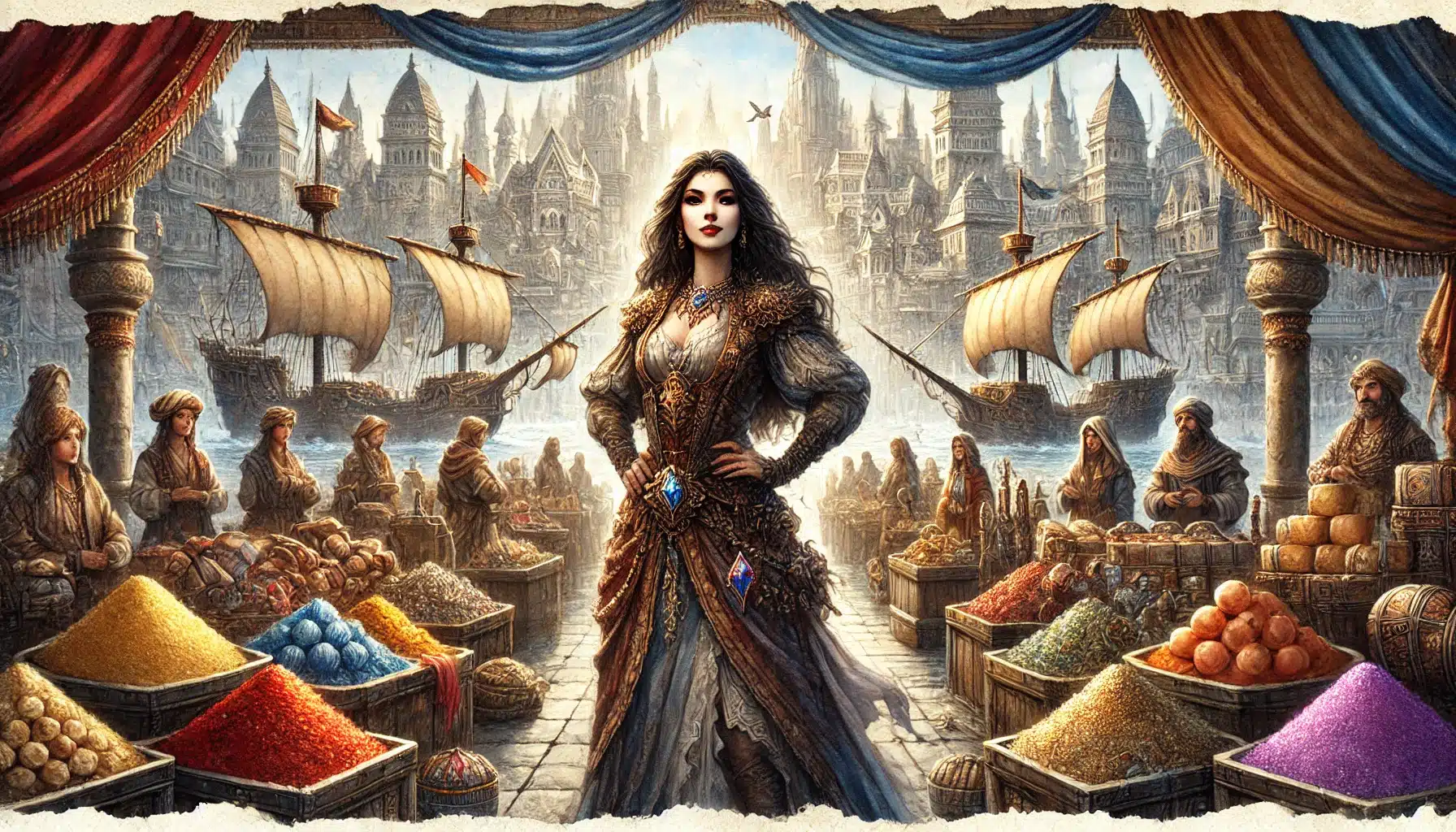
Scenario: A player wants a long-running campaign as the heir to a struggling harbor trading house, competing with rival families over spice routes.
Traditional Approach: Look for a commercial game that happens to match the fantasy, then accept its fixed goods list, scripted rivals, and pricing that ignores your choices.
Jenova: A custom merchant agent built on Jenova runs the harbor, the rival families, and the shifting spice market, and remembers every deal across weeks of play.
- Rivals respond to your market moves instead of following a script
- Harbor taxes, storms, and blockades change prices
- The campaign continues over many sessions with no lost context
🎲 Tabletop GM Preparing a Market Day
Scenario: A GM wants a market-day session for their D&D group, with historically flavored goods, distinct vendors, and haggling that does not stop the table.
Traditional Approach: An evening of prep writing vendor notes, building price tables, and planning reactions to whatever the players try.
Jenova: Deep Research produces a cited brief on real medieval market practices. A custom agent then voices vendors live at the table and tracks what each player buys.
- Grounded in real trading history instead of generic fantasy
- Vendor voices handled during play
- Purchases and gold tracked without spreadsheets
🛠️ Indie Developer Prototyping a Shop-Sim Economy
Scenario: A solo developer is building a pixel-art merchant RPG and needs an economy that stays interesting for 20 hours without inflation breaking it.
Traditional Approach: Weeks of spreadsheet modeling and playtesting to find where gold becomes meaningless.
Jenova: Game Designer Assistant reviews the core loop, flags inflation risks, and drafts design documentation for upgrade curves and gold sinks.
- Systems analysis before any code is written
- Documentation ready to share with collaborators
- Concept art to explore the game's visual identity
📱 Building a Trade Empire on Your Commute
Scenario: A player has 20 minutes each way on the train and wants a strategy game with real depth that fits short sessions.
Traditional Approach: Mobile trading games built around energy timers and in-app purchases, with little strategic depth.
Jenova: Civilization runs on the mobile app with the same features as the web version. You can negotiate a trade pact on the morning train and handle the rival's response on the way home.
- Full feature parity on iOS and Android
- Speech-to-text for hands-free negotiation
- Progress synced across all devices
Frequently Asked Questions
Is there a free AI merchant RPG?
Yes. Jenova has a free tier with all core features and limited monthly usage, so you can play AI game agents or build a custom merchant campaign at no cost. Heavier players can move to Plus at $20/month for 30× the free usage, custom model selection, and no watermarks. Usage resets monthly on your billing date, with no daily caps.
How is an AI merchant RPG different from a traditional trading game?
Traditional trading games rely on fixed price tables, scripted dialogue, and a set list of goods. An AI merchant RPG generates responses in real time, so traders react to your arguments, prices respond to your actions, and new goods, towns, and rivals appear as the story needs them. You negotiate in plain language instead of choosing from menus.
Can the AI remember my gold, inventory, and reputation between sessions?
Yes. Jenova includes unlimited chat history and persistent memory across sessions, so your agent can track inventory, gold, outstanding contracts, and who you have wronged. For stricter consistency, attach a document with your current ledger or campaign rules to the agent's knowledge base.
Can I use AI to run merchant encounters in D&D or other tabletop RPGs?
Yes. Many GMs use AI to voice vendors, generate stock lists, and handle haggling live. For high-value items such as relics or heirlooms, Antique Expert can add realistic provenance, condition details, and appraisal ideas that make rare goods feel authentic. You keep control as the GM and decide what the AI's output means at your table.
Does an AI merchant RPG work on mobile?
Yes. Jenova has full feature parity across web, iOS, and Android, including speech-to-text for spoken negotiation. Settings, chat history, and campaign memory sync across devices, so you can start a trade deal on your desktop and finish it on your phone without losing context.
Will AI replace human game masters?
Unlikely. AI handles bookkeeping, vendor voices, and on-the-spot content well, but shaping a story your players care about still takes human judgment. Even developers who expect AI to improve note that past a certain point, AI can't take you there yet. The most effective approach is AI as a co-GM: it handles the ledger while you focus on the story.
Conclusion
Merchant RPGs have always promised a world where wealth, cunning, and reputation are your weapons. Static shopkeepers, fixed prices, and the cost of handcrafted content kept most games from delivering on that.
An AI merchant RPG addresses those limits. Traders negotiate, markets react, and your ledger persists across sessions. Whether you want to play a trade-first strategy campaign, design your own shop-sim economy, or build tiered pricing for a fantasy bazaar, AI-powered trading games now have room for the depth the genre needs.
Your first deal can start with a single message. Explore the full agent library at Jenova.
For Developers: Every agent in this article is available programmatically via the Jenova API. You can build AI-powered NPCs, trading systems, and game-master features into your own game with a single integration. Full documentation →