AI Manga Layout: Create Professional Panel Compositions with Consistent Characters and Authentic Visual Flow
2026-02-20
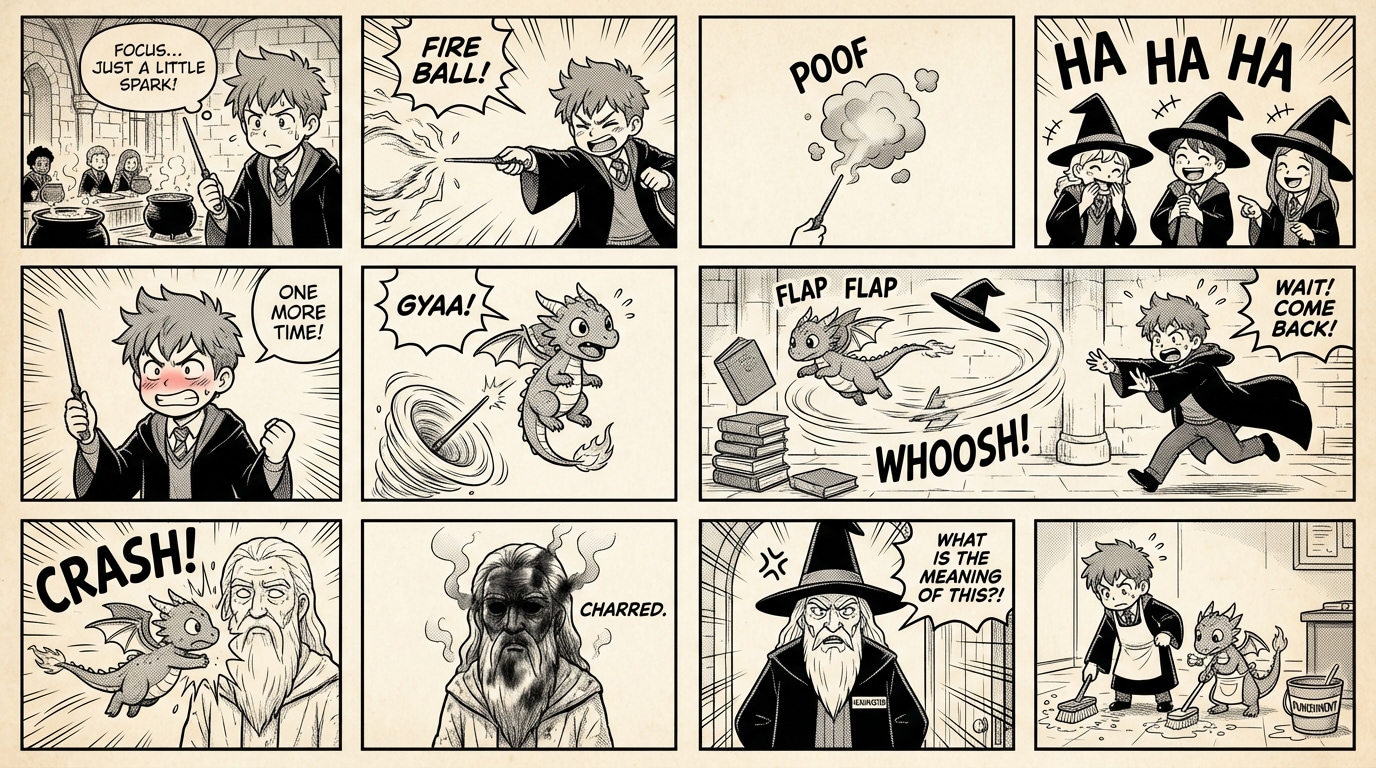
The global manga market is projected to grow from USD 19.35 billion in 2025 to USD 56.38 billion by 2031—a remarkable 19.52% CAGR—while AI manga layout tools are transforming how creators participate in this explosion. Jenova's Manga Creator solves the most persistent challenge in manga production: maintaining proper panel flow and visual pacing across hundreds of pages while ensuring every layout advances your narrative with authentic Japanese storytelling conventions.
What makes AI manga layout viable in 2026:
- ✅ Panel flow optimization following right-to-left reading conventions
- ✅ Five professional art style templates (Shonen, Shoujo, Seinen, Slice-of-Life, Chibi)
- ✅ Character reference systems that lock appearances across entire projects
- ✅ Access to frontier AI models including GPT-5.2, Claude Opus 4.5, Gemini 3 Pro, and Grok 4.1
Whether you're developing a 30-page one-shot or a 200+ page serialized epic, an AI manga layout tool maintains perfect visual continuity while you focus on what matters most: your story.
Quick Answer: What Is AI Manga Layout?
AI manga layout refers to specialized tools that automate the arrangement of panels, gutters, and visual elements on manga pages while maintaining proper storytelling flow and visual hierarchy following Japanese sequential art conventions.
Unlike generic image generators that produce disconnected illustrations, specialized AI manga layout tools understand manga-specific elements:
- Right-to-left reading flow optimized for traditional manga conventions
- Panel composition theory — establishing shots, action progression, emotional beats
- Visual pacing control — mixing close-ups, medium shots, and wide shots for narrative rhythm
- Gutter spacing — proper margins and borders following manga industry standards
- Screentone integration — halftone patterns, gradients, and textures for mood and atmosphere
The Problem: Why Traditional Manga Layout Remains So Difficult
Despite the booming market, aspiring creators face significant barriers when it comes to panel composition and page design.
💰 The Prohibitive Cost Barrier
Professional manga layout and illustration remains prohibitively expensive for independent creators:
$50-$300 per page — Average cost for black-and-white manga illustration from professional artists
$150-$600 per page — Cost for full-color manga pages with detailed backgrounds
For a 100-page manga, that translates to $5,000-$30,000 in illustration costs alone—before printing, marketing, or distribution.
⏱️ The Layout Learning Curve
Creating effective manga layouts requires mastery across multiple disciplines simultaneously:
Visual Composition Skills Required:
- Panel arrangement theory (rows vs. columns, regular vs. irregular grids)
- Camera angle selection for each panel
- Visual hierarchy and focal point placement
- Page-turn reveals and cliffhanger positioning
Sequential Storytelling Skills Required:
- Establishing shot placement for scene context
- Action progression without confusing jumps
- Leading lines that guide reading flow
- Emotional beat visualization through panel size and shape
According to Clip Studio's professional guide to comic and manga layouts, "one of the most overlooked tools in storytelling is the panel or frame, and its silent partner, the gutter." The panel's job is to contain an illustration that puts forth an idea, shows action, or moves the story forward—and mastering this requires understanding complex systems of visual pacing.
🎭 The Visual Pacing Challenge
Perhaps the most challenging aspect of manga layout is maintaining proper visual pacing. According to Oreate AI's analysis of manga panel composition:
"At its core, manga layout follows specific conventions that help convey action, emotion, and pacing effectively. The typical structure consists of a 2 x 4 grid with varying panel sizes across six to eight frames per page."
Key layout principles:
- Establishing shots open new scenes with wide angles showing context
- Action progression shows clear cause-and-effect between panels
- Visual variety mixes close-ups, medium shots, and wide shots
- Splash pages create maximum impact for climactic moments
Professional studios solve this through extensive training and style guides—resources that solo creators rarely have time to develop.
The Jenova Solution: AI-Powered Manga Layout
| Traditional Approach | AI Manga Layout |
|---|---|
| Years learning layout theory | Guided creation with composition templates |
| Manual panel arrangement | Automatic visual pacing optimization |
| Trial-and-error composition | AI-recommended camera angles per panel |
| Inconsistent visual rhythm | Systematic shot type variation |
| $50-$300 per page | Unlimited page generation |
🎴 Professional Methodology, AI Execution
The Manga Creator doesn't just generate images—it implements the same structured approach used by professional manga studios:
Panel Planning Engine: For each page, the AI breaks your story into discrete panels with scene descriptions, character positions, camera angles, mood, lighting, and dialogue placement—all following manga storytelling conventions.
Composition Rules: The system encodes professional layout principles including establishing shots for scene openings, action progression without confusing jumps, visual variety through mixed framing, and leading lines that guide reading flow.
Quality Gates: Each generated page undergoes automatic review against criteria including panel clarity, narrative coherence, visual pacing, and style adherence.
🎨 Five Professional Art Style Templates
Choose from templates matched to major manga traditions:
| Template | Best For | Visual Signature |
|---|---|---|
| Shonen Action | Battle manga, sports, adventure | Bold linework, speed lines, dynamic poses |
| Shoujo Romance | Romance, drama, coming-of-age | Soft lines, floral effects, emotional close-ups |
| Seinen Dramatic | Thriller, psychological, horror | Detailed anatomy, heavy shading, cinematic composition |
| Slice-of-Life | Comedy, daily life, food manga | Clean lines, warm expressions, cozy atmosphere |
| Chibi/Comedy | Pure comedy, parody | Super-deformed proportions, exaggerated reactions |
Specialized AI Agents for Manga Layout
Manga Creator
Your personal mangaka for creating complete stories. Master visual storytelling, panel flow, and consistent art style—from one-shots to 200+ page serialized epics.
Key Features:
- Dynamic panel layout generation optimized for Japanese manga conventions
- Automatic camera angle selection based on narrative rhythm
- Persistent project state tracking across sessions
- Quality gates that catch composition issues automatically
Comic Creator
Personal comic book artist for crafting complete stories with sequential art, dynamic layouts, and bold visual styles—from single issues to epic graphic novel sagas. Ideal for Western comic aesthetics and superhero-style storytelling with left-to-right reading flow.
Webtoon Creator
Personal webtoon artist for mobile-first storytelling with vertical scroll rhythm, episode hooks, and full-color consistency. According to Mordor Intelligence, webtoons are projected to expand at a 35.62% CAGR through 2031, driven by snackable story arcs and social-sharing hooks.
Creative Fiction Writer
Storytelling partner for deep research, editorial insight, and polished prose—perfect for developing your manga's plot, character arcs, and dialogue before visual generation.
Film Screenwriter
World-class screenwriting partner for concept development, scene-by-scene breakdowns, and visual storytelling structure—ideal for planning manga narratives with cinematic pacing.
How It Works: From Story to Finished Layout
Step 1: Story Input and Scene Breakdown
Begin by describing your story concept. The AI analyzes your narrative and breaks it into discrete panels, each with:
- Scene description (setting, environment, props)
- Characters present and their positions
- Action or moment being captured
- Camera angle and framing
- Mood and lighting
- Dialogue or caption text
Example prompt:
"I'm creating a shonen action manga called 'Spirit Blade' about a teenage swordsman who can see spirits. Scene: Kenji faces his first major opponent in an abandoned temple at night. The tension builds as he realizes his enemy can also see spirits."
Step 2: Layout Pattern Selection
Choose from professional layout templates. The AI manga layout tool explains how each affects pacing and recommends options based on your genre:
- Action sequences: Irregular layouts with varied panel sizes for dynamic energy
- Dialogue scenes: Regular grids for steady conversational rhythm
- Dramatic reveals: Full-page or two-page spreads for maximum impact
- Transitions: Combinational layouts for complex scene changes
Step 3: Panel Composition Generation
For each panel, the AI applies professional composition rules:
- Establishing shots open new scenes with wide angles showing context
- Medium shots carry dialogue and character interaction
- Close-ups emphasize emotion and important details
- Action panels use dynamic angles and motion lines
- Reaction shots capture character responses
The system automatically varies shot types to maintain visual interest while supporting your narrative.
Step 4: Visual Pacing Optimization
The AI ensures proper pacing by:
- Placing page-turn reveals at strategic moments
- Balancing panel density across pages
- Creating visual breathing room after intense sequences
- Positioning cliffhangers at natural break points
According to Clip Studio's professional guide, "the gutter's job is to be the space between ideas. Basically, this gives the reader time to absorb the contents of the first panel before moving on. Gutters control the pacing of your story."
Step 5: Iteration and Refinement
Request adjustments to any page layout. The Manga Creator maintains awareness of your project state, ensuring changes propagate correctly through subsequent pages. Panel arrangements can be modified while maintaining character consistency and narrative flow.
Results & Use Cases
📊 One-Shot Manga Projects
Scenario: Creating a 30-page standalone manga story
Traditional Approach: 3-6 months learning layout theory plus $1,500-$9,000 in illustration costs
With AI manga layout:
- Automatic panel composition following industry conventions
- Camera angle recommendations for each scene
- Visual pacing optimization across the entire project
- Professional gutter spacing and page margins
💼 Serialized Long-Form Projects
Scenario: Developing a 200+ page ongoing series
Traditional Approach: Requires extensive storyboarding, layout planning, and months of production per volume
With the Manga Creator:
- Consistent layout patterns across chapters
- Automatic scene transition handling
- Page-turn reveal optimization
- Visual rhythm maintenance throughout
📱 Webtoon and Digital-First Content
Scenario: Creating vertical-scroll manga for digital platforms
According to Mordor Intelligence, digital formats now account for 72.12% of manga consumption, with online platforms commanding 67.90% of revenue share in 2025.
With the Webtoon Creator:
- Vertical scroll rhythm optimization
- Mobile-friendly panel sizing
- Episode hook placement
- Thumb-stop moment creation
🎯 Amazon KDP Self-Publishing
Scenario: Publishing a complete manga volume on Amazon KDP
According to Anifusion's 2026 AI manga generator comparison, print-optimized exports and character consistency tools are essential for creators building multi-page projects for commercial publishing.
With AI manga layout:
- Generate print-ready pages at proper resolution
- Maintain consistency across the entire volume
- Export in formats compatible with KDP specifications
- Iterate based on print preview feedback
2026 Market Context: Why AI Manga Layout Has Arrived
📈 A Booming Industry Hungry for New Voices
The global manga market has reached unprecedented scale:
The market is expected to grow from USD 19.35 billion in 2025 to USD 23.12 billion in 2026 and is forecast to reach USD 56.38 billion by 2031 at a 19.52% CAGR.
Key market dynamics:
- Digital formats account for 72.12% of consumption
- Online channels command 67.90% of sales
- Asia-Pacific contributes 62.20% of revenue, but South America is growing at 20.85% CAGR
- Shonen titles lead with 39.10% market share, while webtoons expand at 35.62% CAGR
🤖 The AI-Assisted Creation Revolution
According to Research and Markets, the AI manga generator market is experiencing explosive growth:
The AI Manga Generator Market was valued at USD 25.0 million in 2024, and is projected to reach USD 102.1 million by 2030, rising at a CAGR of 27.50%.
Key trends driving AI manga layout generation:
- Text-to-image AI models dominate with over 50% market share
- Cloud-based deployment leads adoption for accessibility
- Individual creators represent the largest end-user segment
- Entertainment and publishing drives primary application demand
🎨 Layout Automation Is Finally Solved
According to Storyboard Hero's comprehensive guide to manga storyboarding, several innovations have converged:
Panel Composition Automation: "The layout of panels is a critical aspect of manga storytelling. Consider the size, shape, and arrangement of panels on each page to control the pacing and emphasize important moments."
Pacing and Flow Intelligence: AI systems now understand how to control pacing through panel arrangement and size, ensuring alignment with the narrative's emotional beats.
Text Placement Optimization: Modern tools balance text and images, planning where dialogue, captions, and sound effects will go within each panel to complement visual elements without overwhelming the page.
🌍 Industry Transformation
According to Creative Bloq's analysis of digital art trends for 2026, AI is transforming creative workflows:
"Making a living as an artist got harder in 2025... Some artists are leaving their chosen industry entirely, but others are hanging in there and boosting their options by learning new tools and art styles."
The same source notes that "2D artists are starting to learn 3D and looking at creative sectors like AR and VR"—demonstrating how AI tools are enabling artists to expand their capabilities rather than replace them.
According to Medium's predictions for AI design in 2026, "2026 is the year that this all changes—great design will be at the core of every successful AI startup and a new era of industry design standards will be established."
Frequently Asked Questions
Is AI manga layout free to use?
The Manga Creator is available through Jenova's platform with free access to core features and limited usage. For extended creation sessions and higher usage limits, paid plans start at $20/month. Visit www.jenova.ai for specific pricing details.
How does AI determine the best panel layout for my manga?
The system analyzes your story content and applies professional manga layout principles. It identifies scene changes requiring establishing shots, dialogue sequences needing consistent framing, action moments benefiting from dynamic compositions, and dramatic reveals warranting splash pages or varied panel sizes—all following right-to-left reading conventions.
What AI models power the manga layout generation?
Jenova provides unified access to frontier AI models including GPT-5.2, Claude Opus 4.5, Gemini 3 Pro, and Grok 4.1—all available through a single platform with no vendor lock-in.
Can I customize the layout patterns?
Yes. The Manga Creator supports multiple layout templates including regular grids, irregular row patterns, column-based layouts, and combinational approaches. You can also request specific panel arrangements or modify AI-generated layouts to match your vision.
Does AI manga layout work for different manga genres?
Yes. All major manga genres are supported through the five style templates. Action/adventure, romance, slice-of-life, horror, fantasy, and sci-fi projects all benefit from the structured workflow. The Chibi template can be mixed into any project for comedic relief panels.
How do I maintain character consistency across pages?
The system uses a reference image architecture. Before generating story pages, you create character reference sheets showing each character in neutral poses. These references are loaded with every subsequent page generation, ensuring visual consistency across your entire project.
Transform Your Stories Into Professional Manga Today
The manga industry is experiencing unprecedented growth, with the global market projected to reach USD 56.38 billion by 2031 at a 19.52% CAGR. Digital platforms have democratized distribution—with 72.12% of consumption now digital—and AI tools are democratizing creation itself.
AI manga layout brings professional panel composition methodology to anyone with a story to tell. No years learning layout theory required. No thousands of dollars in illustration costs. Just your creativity, guided by AI that understands the craft of Japanese visual storytelling.
Whether you're creating a standalone one-shot or developing a serialized epic, discover how the Manga Creator transforms your stories into professional manga pages—one panel at a time.
Your layouts will follow industry conventions. Your panels will guide the reader's eye. Your visual pacing will support your narrative.
Get started with Jenova and bring your visual stories to life.