AI Manga Character Sheet Generator: Consistent Turnaround Views
2026-09-14
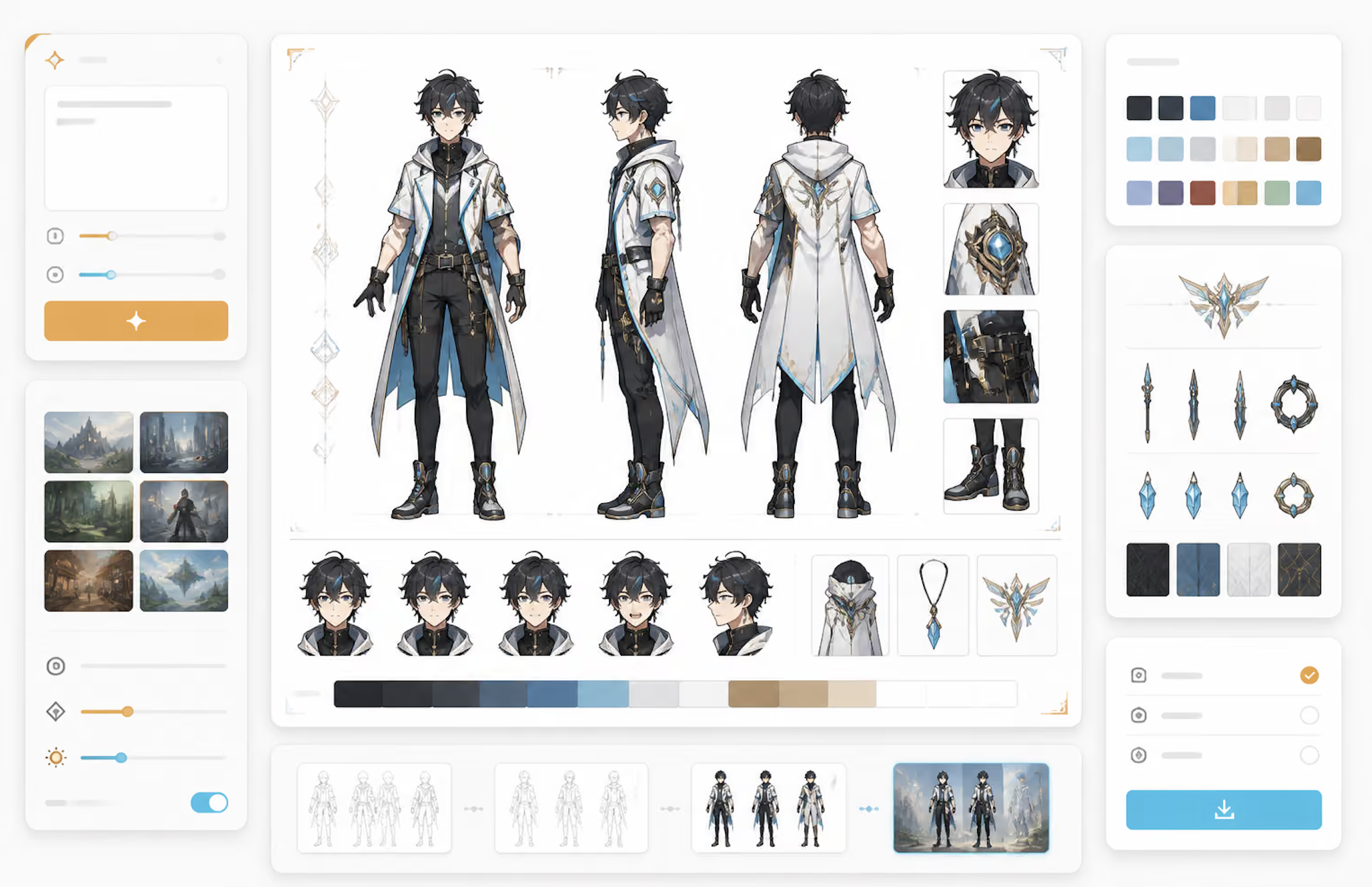
Manga Creator helps you generate a production-ready manga character sheet by locking face, body, costume, and props across front, side, and back views. While generic image tools redraw the same hero differently every prompt, this AI keeps turnaround views, expression sets, and accessory callouts in one visual bible you can reuse for every chapter.
✅ Produce orthographic turnarounds from a single character brief ✅ Keep hair, eyes, and costume language identical across angles ✅ Add expression sheets, color keys, and weapon close-ups in the same session ✅ Hand the sheet to collaborators or later pages without redrawing from memory
In September 2026, indie mangaka, webtoon teams, and game masters still lose days to model sheets that used to require a specialist. To understand why a dedicated manga character sheet generator matters, let's examine the bottlenecks sitting in front of page one.
Quick Answer: What Is a Manga Character Sheet Generator?
Manga Creator is an AI manga character sheet generator that turns a written character brief into turnaround views, expression sets, and costume references so you can lock a cast before you draw chapter one. It is built for sequential manga, not one-off portraits.
Key capabilities:
- Front, side, back, and three-quarter orthographic views
- Expression sheets and injured / shouting / smirk variants
- Costume, weapon, and accessory callouts on one board
- Conversational revisions until proportions and inks match the series
Why Manga Character Sheets Are So Hard to Produce
Global demand for the medium is not the bottleneck. The manga market was valued at about $10.2 billion in 2025 and is projected at $11.9 billion in 2026, with a separate industry tally putting 2025 nearer $10.37 billion. That growth still lands on a small group of people who have to invent a face, then draw it hundreds of times without drift.
But locking a cast before serialization is frustratingly slow:
- A usable sheet needs front, side, back, and often a T-pose — not a single heroic standing pose
- Hairline, eye shape, emblems, and seam lines must survive every camera cut
- Generic image models treat each angle as a new character
- Weekly and monthly schedules leave almost no time for a proper settei pass
¥300,000–¥400,000 per month — income cited for a serial artist still grinding through weekly production under editor pressure
That figure is not a trivia note. Japan Today’s reporting on Spa describes a labor market of only four to five thousand full-time manga artists carrying unflagging deadlines, irregular sleep, and the professional risk of falling behind. Character sheets are unpaid infrastructure. They do not show up as a splash page. They are the reason the splash page still looks like the same person.
Turnarounds Are a Drafting Job, Not a Poster Job
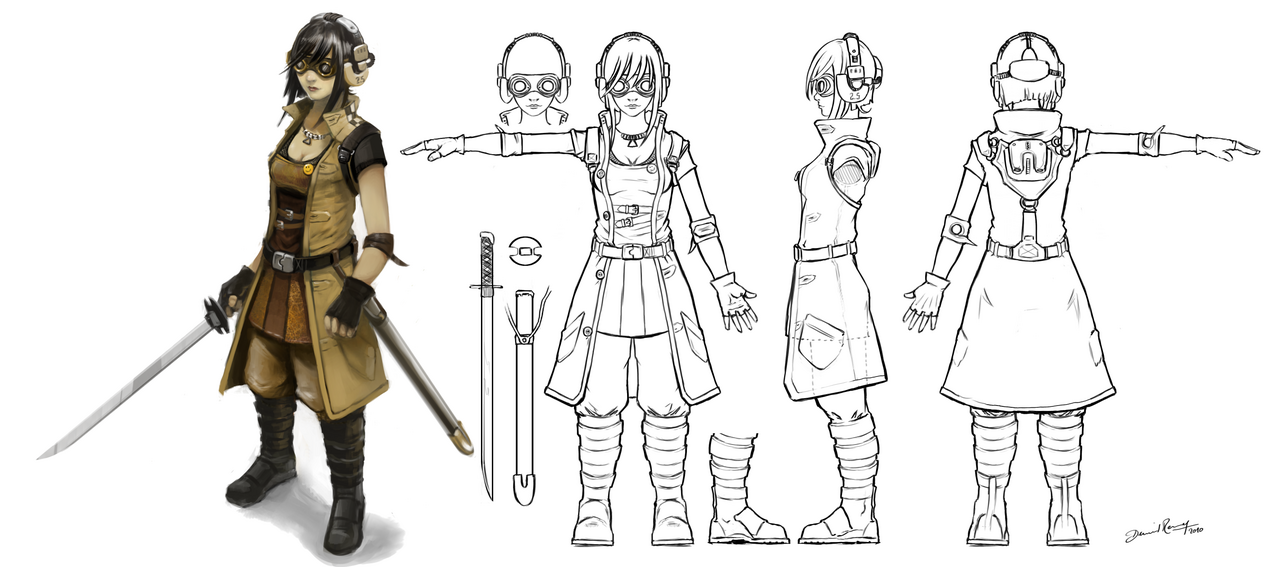
A manga character sheet is closer to industrial design than to fan art. Editors, assistants, and later-you need to know how the coat hangs from behind, where the belt sits at the hip, and how long the blade is relative to the spine. One three-quarter beauty shot hides every seam that will break in a running cycle. If the back view invents a new hood, the fight scene two chapters later will not cut.
Generic AI Tools Redraw the Hero Every Angle
Creators using general generators report the same failure mode: hair, emblems, and faces drift the moment the camera moves. In the OpenAI developer community, builders described restating full character specs on every panel or watching likeness collapse.
flag the same issue with popular image models — outfits will not hold across a sequence. A character sheet that cannot survive a side view is not a sheet. It is a pile of cousins.The Sheet Is Due Before the Pages That Pay
Weekly serialization does not wait for a perfect bible. Coverage of Japanese production culture has long noted that one person often absorbs the workload of an entire team, and contract roles in anime and manga production stack tight deadlines on fluctuating volume. Indie and doujin teams feel a compressed version of the same squeeze: the model sheet is the first thing a collaborator asks for and the last thing a solo creator has hours to finish.
This is exactly what Manga Creator was built for.
Why Manga Creator
Manga Creator is a dedicated mangaka for complete stories — panel flow, visual continuity, and a consistent art style from one-shots through long serials. For character sheets, that means you brief the cast the way you would brief an assistant: age, silhouette, costume rules, and which views belong on the board.
It is not a generic image box with an “anime” filter. You stay on the same person. You correct the ear height, restore the scar, flatten a wrinkle that only exists on the back view, or add a weapon callout without rolling a new stranger.
| Traditional Approach | Manga Creator |
|---|---|
| Commission a model sheet and wait days | Generate turnarounds in the same sitting |
| Beauty poses that hide construction | Front, side, back, and T-pose on one brief |
| Generic models drift face and costume per angle | Iterate until hair, eyes, and seams match |
| Separate files for expressions and props | Expression sets and accessory close-ups in one chat |
| Revisions billed per round | Conversational restaging of the same cast |
Orthographic Views That Assistants Can Actually Use
A sheet earns its keep when someone else can draw the character without asking you. Specify front, side, back, and a three-quarter, plus a small proportion note (head-to-body ratio, inseam, coat length). Ask for line art with screentone, or a painted color key plus a clean ink turnaround. The goal is construction, not a poster.
"Character sheet, original shonen swordsman, 17, messy black hair, thin scar over left brow, white haori over black gi, wrap belt, front / side / back / three-quarter, consistent proportions, manga ink with light screentone, no background clutter"
Expression Sheets, Color Keys, and Costume Variants
Readers forgive a slightly off splash. They do not forgive a heroine whose eyes change shape when she shouts. Build a nine-grid of neutral, smile, glare, shout, cry, blush, injured, exhausted, and determined — same lighting, same hair rules. Then run a second pass for winter coat, school uniform, or damaged armor so chapter eight does not invent a new wardrobe.
"Same character as the turnaround. Expression sheet: neutral, smirk, battle shout, gritted pain, quiet sad. Keep the scar, eye shape, and haori. Add a small color key: ink black, paper white, one accent red on the wrap belt."
Lock Likeness in Conversation, Not in a Lottery
The highest-value move is not the first generate. It is the fifth. “Lower the back of the hood.” “The side view is a different nose — match the front.” “Same boots, no extra buckles.” That revision loop is how professional settei actually get made. Keep a short trait list in the chat and paste it into every new angle so the sheet can sit on page one of the art bible.
Related Agents You'll Also Find Useful
If the character sheet is one artifact in a larger series, these tools sit naturally next to a manga character sheet generator.
Comic Creator — When the same cast needs a Western-style model sheet, splash grammar, or a full-color cover treatment, this is the sequential-art specialist. Use it after the manga turnaround is locked if you are pitching a crossover format or a graphic-novel edition.
- Dynamic layouts once the face is already consistent
- Superhero, noir, and indie ink treatments on the same cast
- Better fit for issues and pitch decks that are not right-to-left
Webtoon Creator — Full-color vertical series need a different sheet: flatter lighting, taller crops, and costume colors that survive a phone screen. Generate the manga ink bible first, then restage the color key for episode one.
- Mobile-first color continuity across long episode runs
- Hook-panel faces that still match the model sheet
- Full-color costume variants without abandoning the original silhouette
Name Generator — A sheet is unfinished if the header is “girl 2.” This naming partner handles linguistic register, cultural fit, and series-level naming systems so the bible, the credits, and the dialogue all use the same names.
- Character, series, and place names with linguistic rationale
- Avoids accidental clones of existing published names
- Useful before you letter chapter one or file a pitch
Try Manga Creator free — no credit card required.
How to Generate a Manga Character Sheet
Step 1: Brief Silhouette, Age, and Costume Rules Name the original character, the genre register (shonen, shojo, seinen, josei, gekiga), and the three traits that must never drift. A good brief is a costume department memo, not a novel. If two artists could not draw the same person from your paragraph, the paragraph is not done.
"Original seinen investigator, early 30s, undercut, round glasses, long charcoal coat, always a cigarette behind the ear, tired eyes, slim build, 7.5 heads tall"
Step 2: Specify the Board Layout Say which views you need: front, side, back, T-pose, three-quarter, expression grid, weapon deconstruction, color chips. “One cool standing pose” will not survive a running cycle. Put format in the brief so you are not cropping a poster into a sheet later.
"Model sheet layout: color hero pose on the left; ink front, side, back T-pose in the center; katana and scabbard ortho on the right; small color palette under the feet; white background, production-bible clean"
Step 3: Generate, Then Correct Construction — Not Vibes Treat the first image as a layout pass. Fix the ear that migrated, the sleeve length that changed on the back view, the extra belt that did not exist on the front. Keep costume language identical across revisions so the board can be the law of the series.
Step 4: Freeze the Bible, Then Make Pages Save the locked sheet in the same project. When chapter three needs a new angle, paste the trait list and point at the sheet instead of rewriting the character from scratch. If the same cast later needs a Western issue or a vertical color episode, hand the frozen rules to Comic Creator or Webtoon Creator rather than starting a new face.
Results & Use Cases
📊 Indie One-Shot Cast Bible Before Inking Page One
- Scenario: You are two weekends from a doujin deadline. The lead and the rival still exist only as thumbnail faces, and your assistant asked for a turnaround yesterday.
- Traditional Approach: Sketch a front view at 1 a.m., skip the back view, and discover in panel 40 that the coat has no construction. Serial production culture leaves almost no slack for unpaid prep.
- Manga Creator: You generate front / side / back, add a four-face expression strip, and send the board before the inking shift starts.
- Orthographic views an assistant can follow
- Same scar, hair, and seam language on every angle
- A bible you can reuse if the one-shot becomes a serial
💼 Editor Pitch With Professional Settei, Not Mood Boards
- Scenario: You have ten pages of script and need to prove the cast is design-complete, not a Pinterest folder.
- Traditional Approach: Commission sheets you cannot afford to throw away if the editor asks for a younger lead, or show beauty illustrations that hide every back-view problem.
- The AI mangaka: Produce a two-character bible — hero turnaround, rival turnaround, shared palette — then restyle one board as a cover illustration without changing bone structure.
- Pitch-ready construction, not just vibe
- Fast restyle if the magazine wants a cleaner line
- Assets you can crop for a one-sheet and a social teaser
📱 Expression Sheet on a Commute
- Scenario: You have twenty minutes on the train and tomorrow’s chapter needs the heroine to cry without looking like a different person.
- Traditional Approach: Desktop-only files and a single “sad” sketch that does not match the established eye shape.
- Manga Creator on mobile: Open the same project, paste the locked trait list, and generate a six-face strip you can check at phone scale before you get home.
- Faces that still match the model sheet at thumbnail size
- Fast restage if the cry reads as anger
- Continuity into the next inking session instead of a one-off doodle
🎯 Color Webtoon Variant Without Abandoning the Ink Bible
- Scenario: The manga is in black-and-white, but a vertical color teaser is due for social, and the costume has to survive RGB on a small screen.
- Traditional Approach: Recolor in a separate tool until the coat is a different garment, or skip the teaser.
- Webtoon Creator after the sheet is frozen: Restage the same silhouette in full color with flatter lighting, then keep episode one on that color key.
- One silhouette across print manga and phone color
- Palette decisions documented on the sheet, not guessed per episode
- A teaser that does not poison later continuity
FAQ: Manga Character Sheet Generator
What is a manga character sheet generator?
A manga character sheet generator is a visual-development tool that turns a written character into production references — turnaround views, expression grids, color keys, and costume callouts — so the same person can be drawn on every page. Manga Creator is built for that job: you describe silhouette, costume rules, and board layout, then revise until construction holds. It is aimed at one-shots, serials, and pitches, not decorative OC portraits.
Is Manga Creator free?
Yes. A free tier includes core features with limited monthly usage, so you can generate a first turnaround before paying. Paid plans start at $20 per month for substantially more usage, with higher tiers if you are producing full chapters. Usage resets each billing cycle with no daily cap, which matters when you are iterating a single sheet many times in one sitting.
How is a dedicated manga character sheet generator different from Midjourney or DALL·E?
General image models can produce a striking standing pose, but creators report they
. A manga-first agent is briefed on orthographic views, expression grids, and costume law, then stays in conversation so you correct construction instead of rolling a new random poster. You still need to lock descriptions and review continuity — no model is magic — but the workflow is settei, not prompt lottery.Can it keep characters consistent across views and later chapters?
Consistency is the hard problem in AI comics, and builders using custom comic GPTs have documented how quickly likeness collapses without restated traits. The practical method is to freeze hair, eyes, scars, and costume rules on the sheet, generate, then revise rather than regenerating from a blank prompt. Keep a short character paragraph in the chat and paste it into every new angle. Treat likeness as an editorial pass, the same way a human assistant would.
Does Manga Creator work on mobile?
Yes. You can brief a turnaround, generate, and correct ear height from a phone or tablet with the same project context as desktop. That is the difference between a tool you open at the desk and one you can use to approve an expression strip on the commute. Pair full-color vertical episodes with Webtoon Creator when the same cast must survive a phone screen in RGB.
Can I generate original expression sheets and costume variants?
Yes. Specify the emotion grid, seasonal outfits, damaged armor, or weapon deconstruction on top of the locked turnaround. Original casts and original costume language are the right brief; do not use the generator to reproduce copyrighted heroes from existing publishers. If you still need names for the header of the bible, Name Generator can lock linguistic register before you letter.
Lock the Cast Before You Draw Chapter One
Character sheets are where a series either becomes drawable or quietly dies in a folder of mismatched faces. The market for manga keeps expanding, but the people responsible for those faces are still short on time, pay, and a pipeline that can hold a hairstyle from the side view to the knockout. A focused manga character sheet generator closes that gap: you write the silhouette, demand real orthographics, and keep restaging until the bible is law.
Manga Creator gives you turnaround views, expression sets, and costume references without parking the chapter in a freelancer queue. Brief the character, lock the seams, and put a usable settei on the board.
Explore more at Jenova.
For Developers: Manga Creator is available programmatically via the Jenova API — integrate manga character sheet generation into your application with a single API call. Full documentation →