AI Manga Character Generator: Consistent Characters Across Hundreds of Pages (March 2026)
2026-03-25
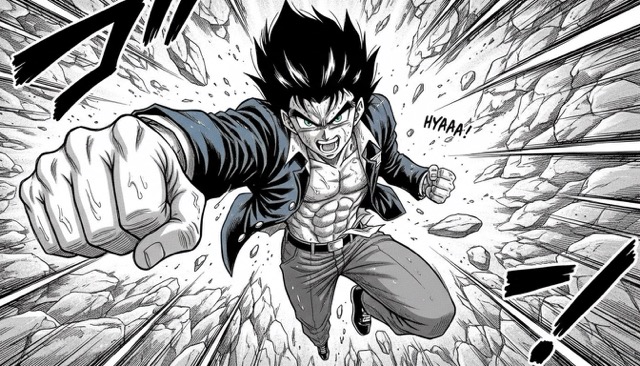
The AI manga character generator has solved the single hardest problem in AI-assisted manga creation in 2026: character consistency. The AI manga generator market was valued at USD 25.0 million in 2024 and is projected to reach USD 102.1 million by 2030, growing at a 27.50% CAGR (Research and Markets). Meanwhile, the broader manga market is expected to grow from USD 19.35 billion in 2025 to USD 56.38 billion by 2031 — a 19.52% CAGR (Mordor Intelligence).
For years, the biggest frustration with AI image generation was simple: you couldn't get the same character to look consistent across multiple images. Hair color shifted, facial features morphed, clothing changed randomly. This "character drift" destroyed narrative immersion and was the primary criticism of early AI manga tools. As AI Magicx's 2026 guide put it: "The challenge is not generating a single good panel. It is generating dozens or hundreds of panels that look like they belong to the same comic — with consistent characters, consistent style, and appropriate compositions for the story being told."
In 2026, that problem is largely solved — and the proof is commercial. In January 2026, a fully AI-generated manga titled My Dear Wife, Will You Be My Lover? claimed the #1 spot on Japan's largest digital bookstore, Comic C'moA, outperforming established titles like Kingdom (CBR).
Jenova's Manga Creator is the AI manga character generator built for this moment: a dedicated mangaka agent that handles the complete character design and production workflow — with five professional art style templates, a character reference sheet system for visual consistency, expression and costume sheets, and a plot memory engine that tracks character states and visual evolution across sessions.
Quick Answer: What Is an AI Manga Character Generator?
An AI manga character generator is a specialized tool that creates professional manga-style characters with consistent designs, authentic anime aesthetics, and the ability to maintain visual identity across multiple panels, poses, expressions, and scenes — without requiring drawing skills.
- Character reference systems that lock appearances across entire projects — Manga Creator handles this conversationally
- Identity embedding creating mathematical "fingerprints" of characters from reference images
- Five professional art style templates covering Shonen, Shoujo, Seinen, Slice-of-Life, and Chibi aesthetics
- Multi-character consistency handling entire casts simultaneously across hundreds of pages
The Problem: Why Manga Character Design Has Remained Out of Reach
Despite explosive global demand — the manga market is projected to nearly triple by 2031 (Mordor Intelligence) — aspiring creators face barriers that have historically excluded independent voices from the medium. Character design sits at the heart of every challenge.
💰 The Prohibitive Cost of Professional Character Design
Professional manga character design remains financially out of reach for most independent creators:
Character design rates range from $300 to $1,000 for 2D character design per character. For a manga with 5–10 main characters, professional character design costs $1,500–$10,000 — before a single story panel is drawn. Full manga illustration then adds $50–$300 per page on top of character design costs. — AI Magicx
For a 200-page graphic novel with a cast of eight characters, total costs can reach $14,000–$70,000 — prohibitive for independent creators testing story concepts or building audiences.
🎭 The Character Consistency Nightmare
Maintaining identical character appearances across hundreds of panels is manga's greatest technical challenge. According to Anifusion's 2026 comparison: "Character consistency is absolutely critical for manga. Readers need to instantly recognize your characters across hundreds of pages and various scenes. This is where specialized manga tools vastly outperform general AI art generators."
Early AI image generators produced beautiful standalone illustrations but failed catastrophically at consistency. General tools like Midjourney have "no built-in character consistency (each panel generates different-looking characters), no panel layout tools, no speech bubbles or text integration" (Anifusion).
🎨 The Multi-Skill Burden
Professional manga character design demands simultaneous mastery of anatomy, facial structure, costume design, expression range, silhouette recognition, and style consistency — skills that take years to develop individually. A single manga page can take a professional artist 4 to 10 hours (AI Magicx), and much of that time is spent ensuring characters remain recognizable.
This is exactly what the Manga Creator was built for.
Why Manga Creator Is the AI Manga Character Generator You Need
While general image generators like Midjourney produce stunning individual character illustrations, they lack every feature necessary for consistent manga character production. The Manga Creator implements the same structured methodology used by professional manga studios, powered by AI execution.
| Feature | General Image Generator (e.g., Midjourney) | Manga Creator |
|---|---|---|
| Character consistency | ❌ Each image generates different-looking characters | ✅ Reference sheet system across 200+ pages |
| Expression sheets | ❌ None | ✅ Key emotional states per character |
| Costume references | ❌ None | ✅ Detailed outfit views and accessories |
| Art style templates | ⚠️ Prompt-dependent, inconsistent | ✅ Five professional manga styles |
| Multi-character scenes | ❌ Extremely difficult | ✅ Entire casts maintained simultaneously |
| Character evolution tracking | ❌ None | ✅ Versioned reference sheets (scars, aging, power-ups) |
| Cost | $10–$60/month (characters only) | Free to start |
How It Solves Each Pain Point
The Cost Barrier → Subscription Access. Instead of per-character design fees, Jenova provides access to frontier AI models including GPT-5.4, Claude Opus 4.6, and Gemini 3.1 Pro Preview. Create entire character casts, generate reference sheets, and iterate freely without per-character costs.
The Character Consistency Problem → Reference Sheet Architecture. Before generating any story panels, you create character reference sheets showing each character in neutral poses with labeled features. These references load with every subsequent generation, ensuring visual consistency across your entire project — even across 200+ pages. According to AI Magicx's 2026 guide, the primary solutions in 2026 include LoRA-based character models, IP-Adapter reference systems, and platform-built-in character systems — the Manga Creator integrates these approaches into a conversational workflow.
The Multi-Skill Burden → Specialized AI Agents. The Manga Creator handles visual execution while you focus on storytelling. For narrative development, the Creative Fiction Writer helps craft compelling character backstories, personality traits, and dialogue patterns before visual production begins.
Character Evolution → Versioned Reference Sheets. Characters evolve across long-form stories — new scars, costume changes, aging, power-ups. The Manga Creator tracks these evolutions with versioned reference sheets, ensuring your character at chapter 50 reflects their journey from chapter 1.
Competitor Context
While tools like Dashtoon offer strong character consistency and a built-in publishing pipeline, they primarily lock free creators into publishing exclusively on their platform and are not optimized for traditional print manga (Anifusion). Midjourney produces the highest quality standalone illustrations but has zero manga-specific features — no character sheets, no expression libraries, no story tracking, no multi-character management. Jenova's Manga Creator provides format specialization with multi-model access and no platform lock-in.
Related Agents You'll Also Like
Comic Creator — Western Comic Character Design
For creators working in Western styles with different character conventions:
- Bold Visual Style Templates: Superhero, Noir, Indie, Franco-Belgian, Cartoon, Realistic
- Character Reference Sheets for visual consistency across entire projects
- Dynamic character poses for action-oriented compositions
Webtoon Creator — Mobile-First Character Design
For creators publishing on LINE Webtoon, Tapas, or Lezhin:
- Full-color character designs matching webtoon aesthetic standards
- Episode consistency across 100+ installments
- Vertical scroll optimization for character reveals and emotional beats
Creative Fiction Writer — Character Development Partner
Develop your character foundation before visual production begins:
- Deep research integration for authentic character backgrounds
- Personality trait development and dialogue patterns
- Character arc planning and relationship mapping
Try the Manga Creator free — no credit card required.
How It Works: From Character Concept to Consistent Manga Pages
Step 1: Define Your Character Before Generating
Consistency starts before you generate any images. The first step is to clearly define your character in detail — creating a mini "character bible" or profile with the Manga Creator.
"I'm creating a seinen thriller called 'Echo Chamber' about a forensic psychologist who can reconstruct crime scenes by touching objects at the location. My protagonist, Dr. Rei Kurosawa, is in her early 30s — long black hair tied back, sharp analytical eyes behind thin-framed glasses, always wears a dark blazer over a turtleneck. She has a small mole below her left eye and a habit of pushing her glasses up when thinking. Her personality is methodical but haunted."
Key elements to include:
- Physical attributes (body shape, facial features, hairstyle)
- Clothing or costume details with specific colors
- Personality traits and default mood
- 2–3 "always" accessories (glasses, watch, earring)
- 2 "never" rules (e.g., "never change hair color; never remove the mole")
For complex narratives, use the Creative Fiction Writer to develop full character profiles, backstories, and relationship dynamics before visual production.
Step 2: Select Your Style Template
Choose from five professional art style templates matched to major manga traditions:
| Template | Best For | Visual Signature |
|---|---|---|
| Shonen Action | Battle manga, sports, adventure | Bold linework, speed lines, dynamic poses |
| Shoujo Romance | Romance, drama, coming-of-age | Soft lines, floral effects, emotional close-ups |
| Seinen Dramatic | Thriller, psychological, horror | Detailed anatomy, heavy shading, cinematic composition |
| Slice-of-Life | Comedy, daily life, food manga | Clean lines, warm expressions, cozy atmosphere |
| Chibi/Comedy | Pure comedy, parody | Super-deformed proportions, exaggerated reactions |
You can mix styles within a project — switching to chibi for comedic relief panels, then returning to seinen for dramatic sequences.
Step 3: Generate Character Reference Sheets
Before any story panels are created, the AI manga character generator produces essential reference materials:
- Character Turnaround — Front, side, and three-quarter views with consistent proportions
- Expression Sheet — Key emotional states (happy, sad, angry, surprised, determined)
- Costume Reference — Detailed views of signature outfits and accessories
- Pose Library — Common action poses maintaining character identity
"Show Rei in five expressions: focused analysis, shock of a psychometric vision, sardonic humor, quiet empathy, and cold determination. Include her signature thin-framed glasses, the small mole below her left eye, and her habit of pushing her glasses up when thinking."
These references anchor every subsequent generation, preventing the character inconsistency that typically plagues AI art projects. The system uses identity embedding to create a mathematical "fingerprint" of each character, capturing facial structure, body proportions, distinctive characteristics, and clothing.
Step 4: Generate Characters While Preserving Identity
For each page, the AI:
- Loads your character reference sheets
- Scripts the page based on your story direction
- Breaks content into panel-by-panel beats (typically 5–10 panels for manga)
- Generates the page with all relevant character references loaded
- Reviews output against consistency criteria before presenting
"Chapter 3, Page 12: Rei confronts the suspect in a dimly lit izakaya. Close-up on her eyes narrowing behind her glasses. She slides a photograph across the table. The suspect's hand trembles. Wide shot showing the tension between them — Rei calm and controlled, the suspect sweating. Final panel: Rei whispers, 'You were there. The objects remember.'"
Step 5: Track Character Evolution
Characters evolve across long-form stories. The Manga Creator maintains awareness of your project state, ensuring changes propagate correctly through subsequent pages. Character evolutions — new scars, costume changes, aging, power-ups — are tracked with versioned reference sheets.
Results & Use Cases
📚 The Aspiring Mangaka Without Drawing Skills
Scenario: Writer with a 200-chapter shonen epic planned but no artistic collaborator.
Traditional Approach: Search for artist partners (months), negotiate revenue splits, risk project abandonment when collaborators leave. Commission character sheets for $300–$1,000 per character.
With the Manga Creator: Create entire character casts with consistent designs. Maintain visual identity across your entire series. The plot memory engine tracks character arcs and visual evolution. No dependency on external collaborators. No per-character fees.
🎮 Indie Game Developers and Visual Novel Creators
Scenario: Indie game developer needs consistent character art for a visual novel or RPG.
Traditional Approach: Commission character sheets for $300–$1,000 per character, wait weeks for delivery, pay additional fees for expression variations.
With the AI manga character generator: Create entire character casts with consistent designs in hours. Generate expression variations, CG illustrations, and scene panels on-demand. The reference sheet system ensures your characters maintain their visual identity across every scene in the game.
📱 Social Media and Content Creators
Scenario: You want manga-style character content for social media, merchandise, or marketing.
Traditional Approach: Commission artists for each piece at $50–$300 per illustration, wait weeks for delivery.
With the Manga Creator: Generate consistent character art, reaction images, and short comic strips on-demand. The reference sheet system ensures your brand characters look identical across every piece of content. According to AI Magicx's 2026 guide: "AI comic and manga creation in 2026 has reached the point where a person with no drawing ability can produce a professional-looking comic — if they invest in storytelling, character consistency, and production quality."
📖 Novelists Visualizing Their Characters
Scenario: You've written a novel and want to create manga-style character art for adaptation, marketing, or fan engagement.
Traditional Approach: Pitch to publishers, hope for adaptation rights, lose creative control over character designs.
With AI manga character generation: Adapt your own work using the Creative Fiction Writer for character profile development and the Manga Creator for visual production. Maintain complete creative ownership. The growing acceptance of AI manga — demonstrated by My Dear Wife, Will You Be My Lover? topping Japan's largest digital bookstore (CBR) — validates this path.
🌍 International Creators Entering the Manga Market
Scenario: A non-Japanese creator wanting to participate in the global manga boom.
The manga market is projected to reach USD 56.38 billion by 2031 (Mordor Intelligence), with digital formats accounting for over 72% of consumption. North America is expected to grow at over 23% CAGR from 2026 to 2033 (Jenova Research). With AI tools eliminating the traditional barriers of artistic training and production budgets, creators worldwide can participate in this explosive growth. Neon Genesis Evangelion creator Hideaki Anno stated that the industry has "no choice but to accept" AI technology, as it is too convenient to ignore (CBR).
FAQ
Do I need drawing skills to use an AI manga character generator?
No. AI manga character generators are specifically designed for creators who have stories to tell but lack traditional artistic training. The Manga Creator is story-first — you direct the visual output through detailed text descriptions and iterative refinement; the AI handles all visual execution. As AI Magicx's 2026 guide confirmed: "The barrier to entry for visual storytelling has never been lower. If you have a story to tell, the tools exist today to tell it in comic form."
How does the AI maintain character consistency across hundreds of pages?
The Manga Creator uses a reference sheet architecture. Before generating story panels, you create character reference sheets showing each character in neutral poses and key expressions. These references load with every subsequent panel generation, ensuring visual consistency. According to AI Magicx's 2026 guide, the primary consistency techniques in 2026 include LoRA-based character models (most consistent), IP-Adapter reference image systems (good consistency), and platform-built-in character systems (easiest). The Manga Creator integrates these approaches into a conversational workflow.
What manga character styles can the AI create?
The Manga Creator supports five professional art style templates: Shonen Action (bold lines, dynamic action, speed lines), Shoujo Romance (soft lines, floral effects, emotional close-ups), Seinen Dramatic (detailed anatomy, heavy shading, cinematic composition), Slice-of-Life (clean lines, warm expressions, cozy atmosphere), and Chibi/Comedy (super-deformed proportions, exaggerated reactions). You can mix styles within a project for different sequences.
How many characters can I maintain consistently?
The system supports entire casts of characters. Each character gets their own reference sheet, and the AI loads relevant references when generating scenes featuring multiple characters. This enables consistent ensemble scenes with your full cast — protagonists, supporting characters, antagonists, and recurring background characters all maintaining their unique appearances.
Can I upload my own character designs as references?
Yes. You can upload your own character designs, style references, or inspiration images. The AI incorporates these into its generation process alongside system-generated references, giving you full control over your visual direction.
Is AI-generated manga character art accepted by readers?
Growing evidence suggests increasing acceptance. In January 2026, an AI-generated manga titled My Dear Wife, Will You Be My Lover? topped Japan's largest digital bookstore rankings, outperforming established titles. Mob Psycho 100 editor Kazuaki Ishibashi observed that "readers don't seem to care whether the artist is AI or not" and predicted AI manga would "explode in popularity" in 2026. However, the U.S. Supreme Court has declined to consider whether AI alone can create copyrightable works (Morgan Lewis), and copyright protection for AI-assisted content requires that AI be used "solely as a subordinate tool" (Taylor Wessing). Always verify the terms of service for your target distribution platform.
What AI models power character generation on Jenova?
Jenova provides unified access to frontier AI models including GPT-5.4 (OpenAI), Claude Opus 4.6 (Anthropic), and Gemini 3.1 Pro Preview (Google) — plus models from xAI and DeepSeek. No vendor lock-in; switch between models based on your task or preference.
Conclusion
Character consistency has historically been manga's most frustrating technical challenge — and the primary failure point for AI-assisted creation. The 2026 breakthrough in identity embedding, reference systems, and multi-subject consistency has transformed AI manga character tools from experimental curiosities into production-ready creative partners.
The manga market's trajectory — from USD 19.35 billion in 2025 to a projected USD 56.38 billion by 2031 (Mordor Intelligence) — represents one of the fastest-growing content markets in the world. What once required $300–$1,000 per character in professional design costs and years of artistic training is now accessible to anyone with a story to tell.
Your protagonist will be recognizable in every panel. Your cast will maintain their visual identities across chapters. Your character evolution will be tracked and versioned. The only remaining challenge is the creative one: What characters do you want to bring to life?
Start with the Manga Creator for Japanese-style character design and visual storytelling. Expand to the Comic Creator for Western formats or the Webtoon Creator for mobile-first vertical comics. Develop your characters' stories with the Creative Fiction Writer before visual production begins.
Explore the full agent library at Jenova.