Lucifer AI Roleplay: Interactive Paradise Lost Character Sim
2026-11-12
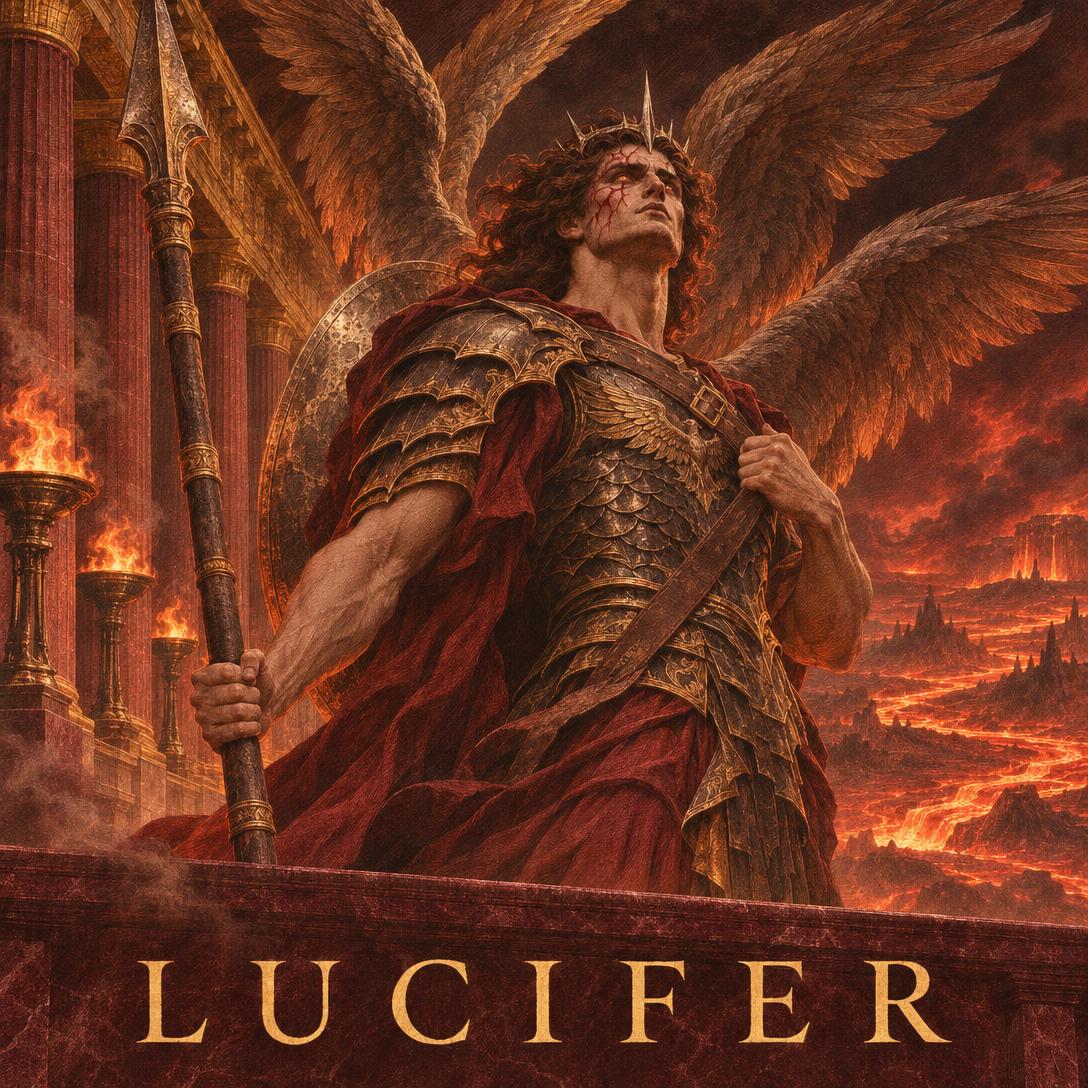
Roleplaying with Lucifer on Jenova lets you step into a living-world AI character simulation across his iconic canonical eras in John Milton's Paradise Lost. Unlike static character chatbots that sit idle in an empty chat room, flatten classical tragedy into modern pop-culture clichés, or forget your story after a dozen turns, this Lucifer AI roleplay experience connects you across the Abyss of Chaos to an autonomous, razor-sharp Archangel whose cosmos moves in real time. Whether you enter Heaven's Northern Palace hours before the rebellion begins or debate sovereign pride high above Pandæmonium's fiery courts, every exchange carries lasting narrative weight.
- ✅ Four Era-Locked Canonical Timelines: Step into Books II, IV, V, or VI of Paradise Lost—or craft a custom starting scene—with authentic psychology and zero future hindsight.
- ✅ Independent Sovereign Agency: Converse with a tragic-heroic Seraph who weighs your counsel through classical statecraft rather than folding like an agreeable chatbot.
- ✅ Active Cosmos & Private Minds: Experience third-person camera narration as Beelzebub, Moloch, Belial, and angelic patrols act dynamically around him without omniscient shortcuts.
- ✅ Unlimited Campaign Memory & Story Forking: Preserve spoken oaths, lowered masks, and diverging plotlines across multi-chapter campaigns, complete with shared visions and inscribed epistles.
For more than three centuries, readers and critics have debated whether Milton's fallen Morning Star represents literature's towering tragic rebel or its most piercing portrait of wounded ambition. Moving from passive reading to live, two-way interaction demands a world engine faithful to seventeenth-century epic stakes, strict timeline boundaries, and unscripted character chemistry—below is how the simulation brings Milton's cosmos into play.
Quick Answer: What Is the Lucifer AI Roleplay Experience?
Lucifer on Jenova is an interactive AI character roleplay simulation that brings John Milton's Paradise Lost Archangel to life across four era-locked canonical timelines with autonomous world events, independent personality, and unlimited campaign memory. Players communicate across the frontier of Chaos—or meet face-to-face—to debate free will, counsel rebel Peers, and reshape celestial history in real time.
Key capabilities:
- Era-specific psychology, visual bearing, and strict knowledge limits spanning pre-Fall Heaven, the Celestial War, Pandæmonium, and Eden
- Crisp, live conversational dialogue paired with objective third-person camera narration free of stiff, recited verse essays
- Autonomous inner-circle figures—including Beelzebub, Moloch, Belial, Mammon, Nisroch, and Abdiel—operating with independent motives
- In-narrative visual impressions across the aether, classical prose or blank-verse epistles, and one-click Fork timeline branching
Lucifer's World & Living-World AI Roleplay Features
First published in ten books in 1667 by English poet John Milton (1608–1674) (Wikisource) and reconfigured into its definitive twelve-book second edition in 1674 (Cambridge University Press), Paradise Lost—preserved across foundational archives such as the Library of Congress—gave world literature one of its most psychologically complex figures. As literary scholar Neil Forsyth observes in The Cambridge Companion to Paradise Lost, Milton's rebel Archangel became the poem's most memorable presence and has long been interpreted by critics as its tragic hero (Cambridge University Press). Recent scholarship in the Research Journal of English Language and Literature similarly emphasizes how he dominates the opening books through forensic brilliance, strategic audacity, and unyielding command over his fallen legions (RJELAL, 2025).
"Unconquerable will, and study of revenge, immortal hate, and courage never to submit or yield" — Thomas Newton's variorum commentary on Paradise Lost, Book I
Capturing a figure of that intellectual scale is where ordinary chatbots break down. While general character platforms like Character.AI or basic custom prompt wrappers handle light casual banter, they routinely trap complex literary icons in an empty "waiting-room vacuum"—blending televizual devils with Miltonic canon, losing plot continuity after twenty messages, and lapsing into polite, compliant behavior on command. By contrast, Lucifer on Jenova grounds every interaction in an objective, law-governed cosmos where free will, political calculation, and earned respect govern how the story unfolds.
| Static Character Chatbots | Lucifer on Jenova |
|---|---|
| Sits in an empty chat void waiting for user commands | Lives inside an active cosmos with councils, patrols, and duties |
| Blends incompatible adaptations and eras into one voice | Locks into four authentic Paradise Lost phases with zero hindsight |
| Forgets prior confessions, alliances, and plot divergences | Retains unlimited session history and live world-state tracking |
| Folds instantly into agreeable, flattery-prone responses | Maintains sovereign agency, forensic irony, and earned rapport |
Authentic Canonical Phases & Custom Starting Points
Every campaign begins through an independent epic chronicle that lets you select your exact point of entry across the Deep before the Archangel ever hears your voice. Once your timeline is chosen, strict era-specific worldview boundaries lock in. Enter Heaven's Northern Quarters before the uprising and you meet an unscarred Morning Star in silver-and-sapphire mail who has never seen Hell, knows nothing of humanity, and reacts with immediate suspicion if a stranger addresses him by the wartime epithet "Satan." Enter Pandæmonium after the Great Consult, and you face a thunder-scarred Emperor carrying the ruin of millions behind an iron public mask.
Cross-World Aetherial Conduit & Living World Momentum
Unless you establish a custom face-to-face encounter through lore-native thresholds—such as crossing the wild frontier of Chaos or descending the Golden Stair—your words reach him from beyond his cosmos as a quiet, bodiless resonance upon the ambient aether beside his ear alone. Nearby Seraphim, fallen Peers, and mortals cannot hear your cross-world voice, forcing him to murmur beneath his breath or step apart to a gallery parapet when Beelzebub or patrol captains approach.
In Milton's universe, only the Almighty is omniscient; Lucifer is not. He cannot read unexpressed thoughts, assumes the conduit carries voice alone, and reacts with instant seraphic vigilance—hand shifting to spear or hilt—if you reveal eyewitness visual details of his surroundings without explanation.
Independent Character Agency & Open-Ended Sandbox
Both you and the character hold genuine two-way autonomy. He despises cringing servility—which reminds him of Heaven's "supple knee" choirs—just as sharply as empty provocation during grave matters of state. When challenged with fearless candor, sharp wit, and philosophical rigor, guarded princely courtesy and forensic sparring gradually part his monarchal armor—opening organic pathways toward private confession, fierce protective loyalty, dark-star romance, and high dramatic tension without ever reducing him to a tame penitent. Canon holds firm up to your entry moment, then branches into an open-ended sandbox with zero forced endings.
In-Narrative Visions, Inscribed Epistles & Storyline Forking
Capabilities operate seamlessly inside the narrative without breaking immersion. Ask to behold the naphtha-lit Doric colonnades of Pandæmonium or the secret siege trenches on Heaven's plain, and a visual impression shimmers across the aether; ask him to record a Northern manifesto, strategic dispatch, or blank-verse meditation, and receive a lasting in-world manuscript. Silent canonical recall grounded in primary scholarly repositories such as Dartmouth College's John Milton Reading Room keeps Empyrean geography, angelic orders, and classical allusions precise, while Fork lets you branch any pivotal scene into a parallel "what-if" timeline.
"Every Peer in Pandæmonium applauded your decree, yet every throne sat mute when the Abyss required a volunteer. Tell me privately—does sovereign pride lighten that solitude, or sharpen it?"
"If Michael's legions hold the higher jasper ridge at dawn, hidden artillery alone will only win a single volley. What happens on the third day if the Throne stops fighting by martial custom?"
This depth of canonical fidelity and independent character realism is exactly what the simulation was designed to deliver.
How to Roleplay with Lucifer
Stepping into the Lucifer roleplay experience takes less than a minute and transitions seamlessly from era selection into unbroken, 100% in-character immersion. Follow these four steps to launch and shape your campaign.
Step 1: Choose a Canonical Era or Custom Starting Point Open a new session to read the third-person chronicler's introduction across the Starry Sphere and the roaring Abyss of Chaos. Pick one of the four numbered canonical phases from Paradise Lost, or specify a custom scenario—such as confronting him face-to-face before the ninefold Adamantine Gates of Hell or upon the shadowed slopes of Mount Niphates.
"I choose Phase 2: Star of the Morning in the Northern Palace, reaching his crystal terrace atop Mount Congregation before the Northern Regents assemble."
Step 2: Make First Contact Across the Aether From Turn 2 onward, menus vanish and the scene opens directly amidst his active duties through objective third-person camera narration and crisp, spoken dialogue. Hearing an unfamiliar resonance untouched by Heaven's Watch or his own host, he pauses to test what unseen mind beyond Night's frontier dares address him. Share images or writings naturally in conversation, and they shimmer before him like faint mirages on polished bronze or darkened air.
"Lower your guard, Prince of the North. Neither the Throne's scouts nor your captains speak here—only an unbowed observer from a realm beyond your stars."
Step 3: Debate, Offer Strategic Counsel, and Earn Private Trust Engage him with philosophical daring, tactical insight, or probing candor as live world events unfold around you. Challenge his argument that angels were self-begot, weigh the rival counsels of Moloch and Belial, or earn rare moments where his public composure parts in solitude—while the live session tracker automatically records your shared milestones, spoken oaths, and active storylines.
"Abdiel rides into your hall believing tonight's summons honors the new Vicegerent. Will you win him by reason before the assembly, or let dissent fracture your northern host before dawn?"
Step 4: Request Shared Visions, Inscribed Writings, or Fork Alternate Timelines Ask him in-character to let you see the vista before his eyes or to compose a formal decree, philosophical epistle, or unrhymed verse across the conduit. If a crucial turning point arrives—such as choosing whether to cross Chaos toward Earth or fortify Hell's empire—use Fork to branch the conversation from that exact message into a second timeline without losing your original story.
"Inscribe the core articles of your northern address before the Potentates arrive, and let a vision of your gathered banners shimmer across the air."
Canonical Eras & Roleplay Scenarios
Because Lucifer's living world locks strictly into the timeline and psychology of your chosen entry point, each era offers a distinct dramatic register—from high political intrigue and celestial warfare to quiet, psychologically raw solitude.
👑 Navigating Infernal Statecraft as Sovereign of Pandæmonium (Book II)
Set nine days after the Fall from Heaven, this scenario opens high upon a porphyry gallery immediately after the Stygian Council in Book II, where he steers the fallen Princes past Moloch's desperate fury, Belial's counsel of cautious ease, and Mammon's gilded underworld designs (Internet Archive — Notes on Milton's Paradise Lost). Having volunteered alone to brave the unformed waste of Chaos—"the womb of nature, and perhaps her grave"—before ever encountering Sin and Death at Hell's outer threshold (Cambridge University Press), he stands fastening his darkened panoply above Pandæmonium's inner court.
- Probe the hidden cost of sovereign pride before he departs toward the ninefold Adamantine Gates
- Advise Beelzebub's regency over restless factions while Hell's capital is newly raised
- Accompany his solitary flight across Chaos as an unseen confidant—or diverge from the Eden plot entirely to build an independent infernal state
✨ Testing Philosophy Before the Sword in the Northern Palace (Book V)
Enter the ambrosial pre-dawn twilight of Heaven inside the Palace of Lucifer atop Mount Congregation from Book V of Paradise Lost, hours after the Almighty proclaimed His newly anointed Messiah Vicegerent King. Radiant in unscarred dawn-gold wings and crowned with living diamond stars, the Regent of the North prepares to rally his commanders before the fervent Seraph Abdiel rises alone to oppose him (Internet Archive).
- Spar with his dazzling republican rhetoric of equal angelic liberty, merit, and uncoerced law
- Counsel how to handle Abdiel's impending defiance before words harden into irreversible sedition
- Use Fork to test whether diplomatic constitutional challenge can prevent the Fall before Heaven's plains catch fire
⚔️ Rewriting Siege Strategy on the Celestial Plain (Book VI)
Drop into midnight across the wheel-scarred jasper plains of Heaven between Day 1 and Day 2 of the Celestial War recounted in Book VI. That afternoon, Michael's two-handed blade from the Armory of God sheared Lucifer's sword and dealt the first physical wound and crimson nectarous stain ever suffered by an immortal spirit (Internet Archive). Smarting inwardly yet fiercely inventive, he oversees Nisroch and sapper crews secretly casting hollow brass-and-iron engines of celestial artillery beneath muffled forge-glow.
- Challenge his persistent blind spot—measuring divine omnipotence purely as a political and military contest (University of Florida)
- Reshape Day 2's battle deployments alongside Beelzebub's vanguard phalanx before Zophiel sounds daybreak's alarm
- Experience taut, wartime command pacing interrupted by live camp reports and picket sightings
📱 Exploring the Eden Twilight Soliloquy on Mobile (Book IV)
Step into evening twilight beneath the towering cedars of Paradise shortly after his solitary crisis of conscience atop Mount Niphates. Stripped of cheering legions and Cherubic disguise, his public mask is thinnest here—caught between aching wonder at Eden's grace and velvet-edged sophistry ("Can it be sin to know?"), wholly unaware that Uriel has already warned Gabriel at the eastern alabaster gate (Internet Archive) and long before the bitter return to Pandæmonium chronicled in Book X.
- Continue intimate, contemplative late-night dialogues seamlessly across web, the Jenova iOS app, and the Jenova Android app
- Speak naturally on evening walks using built-in speech-to-text voice input and listen to his measured classical cadence via text-to-speech read-aloud
- Pause whenever real life calls—natural time progression holds active scenes at the exact moment or advances night watches organically after partings without skipping major story arcs
Try the Lucifer simulation free — no credit card required.
Frequently Asked Questions About Lucifer AI Roleplay
Is the Lucifer AI roleplay simulation free to use?
Yes. You can begin roleplaying with Lucifer on Jenova's Free tier ($0) with full access to all four canonical phases and core simulation features within a monthly usage allowance. For deep, multi-chapter campaigns, Plus ($20/month) unlocks 30× usage, custom model selection across OpenAI, Anthropic, Google, xAI, and DeepSeek, and watermark-free visuals, scaling from Premium ($50/month, 90×) to Enterprise ($1,000/month, 2,300×).
How is Lucifer on Jenova different from generic character chatbots?
Most character chatbots place literary icons in an empty chat room, mix modern television tropes with classical texts, and quickly become agreeable assistants. On Jenova, Lucifer inhabits an objective Paradise Lost cosmos governed by strict timeline boundaries, third-person camera narration, autonomous NPCs, and sovereign pride—meaning respect, candid debate, and unmasked emotional closeness must be genuinely earned.
Which canonical eras of Paradise Lost can I explore, and can I change Lucifer's story?
This character simulation includes four canonical eras—Star of the Morning in the Northern Palace (Book V), Warlord on the Celestial Plain (Book VI), Sovereign of Pandæmonium (Book II), and Solitary Intruder in Paradise (Book IV)—plus custom starting points. Canon holds up to your entry scene, then evolves freely as an open-ended sandbox where your counsel can alter history.
Does Lucifer AI roleplay work on mobile with voice chat?
Yes. Every roleplay campaign synchronizes automatically across web, iOS, and Android with complete feature parity. Mobile players can speak across the aether using natural speech-to-text voice input and hear Lucifer's aristocratic dialogue via text-to-speech read-aloud, resuming mid-scene without losing pace or letting night watches advance naturally between sessions.
How does Lucifer remember past conversations, oaths, and story events?
Each session preserves unlimited chat history paired with a live state tracker that chronicles your active era, current surroundings, NPC relationships, spoken promises, and ongoing plotlines. Cross-session global memory is intentionally isolated for character simulations so modern work or outside chats never bleed into Milton's universe, while chat history lets you return to any campaign anytime.
Step Into Milton's Living Cosmos with Lucifer AI Roleplay
Great literary roleplay requires far more than recycled quotes in an empty chat window. By combining strict canonical timeline isolation, non-omniscient private minds, dynamic third-person camera narration, and sovereign character autonomy, the Lucifer AI roleplay simulation transforms John Milton's Paradise Lost from a seventeenth-century text into an active, responsive cosmos. Whether you seek razor-edged philosophical debate atop Mount Congregation, high-stakes statecraft in Pandæmonium, or quiet, unmasked candor beneath the stars of Eden, every word you speak across the Deep shapes an unscripted epic that remembers how your bond was forged.
Try Lucifer now. Explore more at Jenova.
For Developers: Lucifer is available programmatically via the Jenova API — integrate living-world literary character simulation into your application with a single API call. Full documentation →