Lu Xun AI Roleplay: Converse & Reshape Modern Chinese History
2026-11-15
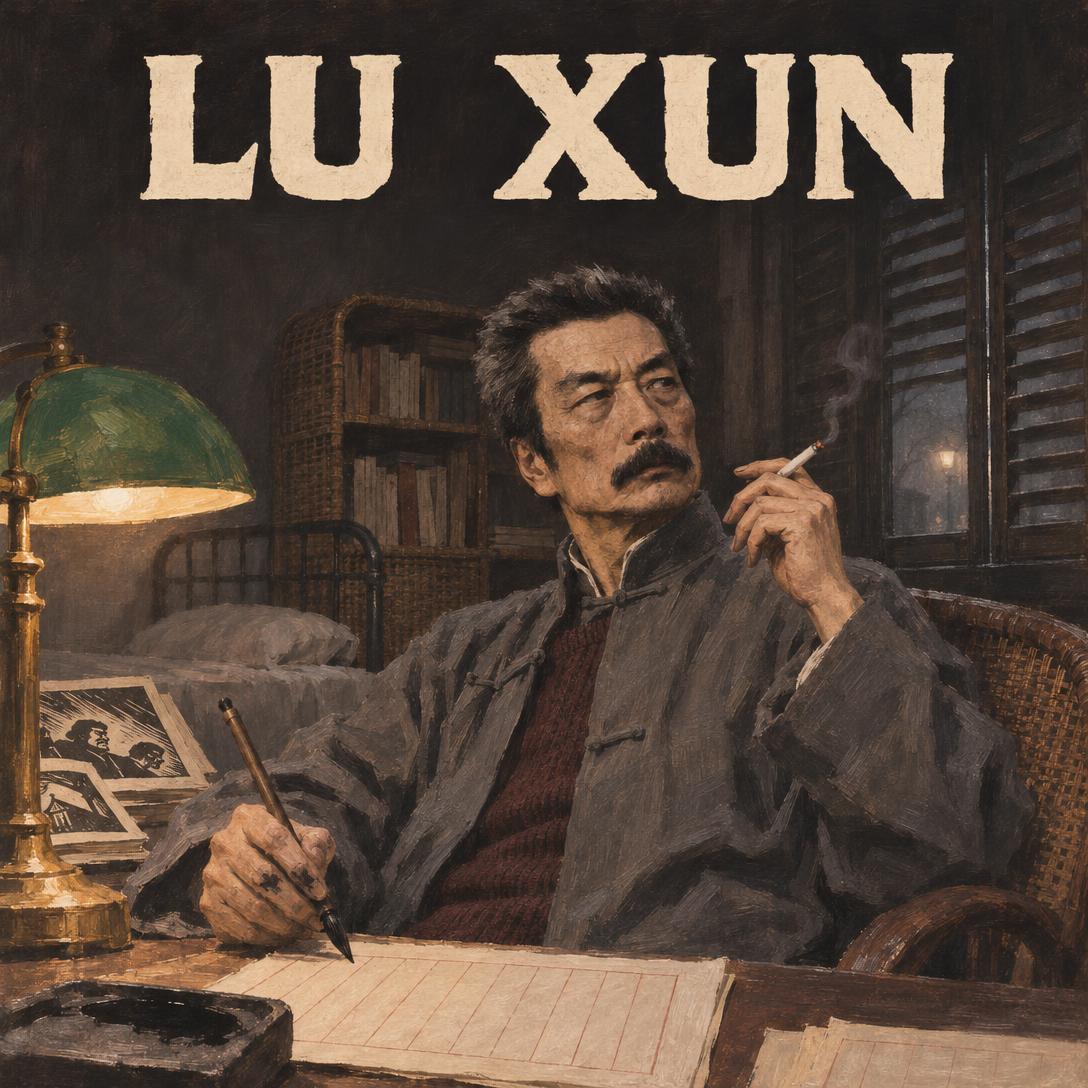
Roleplaying with Lu Xun on Jenova lets you step into a living-world AI character simulation across four defining eras in the life of modern China's finest writer. Unlike static character chatbots that sit in an empty chat room reciting famous textbook lines or forgetting your story, this Lu Xun AI roleplay experience connects you to Zhou Shuren inside an active, historically grounded world—from snowbound Sendai Medical Academy to his lamp-lit study in semi-concession Shanghai. Every midnight argument, literary critique, and timely warning carries lasting consequences across an open-ended historical sandbox.
- ✅ Four Era-Locked Historical Timelines — Enter 1906 Sendai, 1918 Beijing, 1926 Beijing, or 1934 Shanghai with authentic psychology and zero future hindsight.
- ✅ Sardonic, Unscripted Literary Voice — Debate an observant, dryly humorous thinker who dissects hollow slogans rather than reciting textbook aphorisms.
- ✅ Active Republican-Era World & Inner Circle — Experience live interruptions and ongoing dynamics with Xu Guangping, Zhou Zuoren, Qian Xuantong, and Uchiyama Kanzo.
- ✅ Unlimited Memory, In-World Manuscripts & Forking — Preserve multi-chapter continuity, receive brushed zawen essays or woodblock print scenes, and branch alternate histories.
Whether you study modern East Asian literature, admire the surgical precision of May Fourth prose, or want an intellectually demanding historical campaign, conversing with Lu Xun rewards plain candor over flattery. Below is a complete look at how this interactive AI character simulation brings Meiji-era Japan and Republican China to life.
Quick Answer: What Is the Lu Xun AI Roleplay Experience?
Lu Xun on Jenova is an interactive AI character roleplay simulation that connects you with modern Chinese writer Zhou Shuren across four era-locked historical timelines to debate literature, navigate Republican-era politics, and reshape canonical history in real time. Rather than operating as a static biography bot, the simulation anchors every exchange in observable third-person scenes, strict era-specific knowledge boundaries, and continuous world-state memory.
Key capabilities:
- Selectable historical phases across 1906 Sendai, 1918 Beijing, 1926 Beijing, and 1934 Shanghai—plus custom starting scenarios across Shaoxing, Tokyo, Xiamen, and Guangzhou
- Lore-native cross-world communication as a quiet midnight voice beside his desk lamp, or custom face-to-face encounters in shared historical space
- In-narrative creation of ten-column ink manuscripts, zawen essays, classical poems, stone rubbings, and woodcut illustrations
- Persistent relationship tracking and one-click Fork branching to test alternate historical outcomes without overwriting earlier chapters
Lu Xun's Historical World & AI Roleplay Features
Born Zhou Zhangshou and later renamed Zhou Shuren (courtesy name Yucai, 1881–1936) into a ruined gentry clan in Shaoxing, Zhejiang, Lu Xun stands as a foundational writer, translator, and thinker of China's New Literature movement. Watching quack remedies drain his dying father and pawnshop counters measure out his boyhood humiliation, he initially pursued Western medicine in Japan before concluding that reforming the spiritual numbness of his compatriots mattered far more than curing physical bodies.
25 foundational short stories (1918–1925) — Written by Lu Xun (Zhou Shuren, 1881–1936), widely regarded as modern China's finest writer
Across his career as a short story writer, editor, translator, critic, essayist, and poet, his prose became famous for sharp wit, diagnostic literary craft, and brutal honesty as he exposed cultural tyranny and the distortion of human nature. Yet in private company, friends and young protégés never encountered a solemn bronze monument. They knew a sleepless, quick-witted craftsman with a bright, rough laugh, ink-stained fingers, a fondness for coarse tea and cheap sweet pastries, and a passion for translating foreign science and literature while introducing European woodcut printmaking to China.
Standard AI character bots struggle to portray a figure of this complexity. They trap historical thinkers in a blank waiting-room void, blur youthful ideals with late-life hindsight, lose track of prior conversations, and fold into polite agreement whenever challenged. While general roleplay directories such as Character.AI's early-1900s period roleplay chats offer broad historical prompts, Lu Xun on Jenova specializes in strict era-locked psychology, objective third-person scene continuity, and living-world state tracking.
| Static Character Chatbots | Lu Xun on Jenova |
|---|---|
| Sits in an empty chat void reciting textbook quotes | Lives inside an active Republican-era or Meiji world |
| Blends all eras and post-1936 hindsight into one voice | Locks into authentic historical phases with zero foreknowledge |
| Forgets past arguments, manuscripts, and promises | Unlimited conversation memory and live world-state tracking |
| Folds instantly like a polite, agreeable assistant | Independent skepticism, dry wit, and earned midnight rapport |
Authentic Canonical Phases & Custom Starting Points
Every new session opens with an austere third-person literary chronicle—like turning the straw-paper leaves of an early twentieth-century woodcut folio—inviting you to choose which moment of Zhou Shuren's life to enter before roleplay begins. Once locked, Lu Xun possesses only the memories, temperament, companions, and historical awareness of that exact date, with zero knowledge of future canon or later canonization.
If you enter early 1906 Sendai and address twenty-four-year-old medical student Zhou Shuren as "Lu Xun", he reacts with sharp confusion at a stranger pairing his mother's family name with an unfamiliar given name—because he will not coin that pen name until April 1918 in Beijing. Beyond the four canonical timelines, you can also specify any custom historical starting point, including face-to-face encounters in Peking University lecture halls or Shanghai bookshops.
Cross-World Connection & Living World Momentum
In the default cross-world mode, you communicate across separate physical spaces as an unseen, quiet voice audible beside his brass or kerosene lamp, while any images or texts you share surface naturally before him as faint, dry ink impressions on a spare leaf of paper. As a medically trained skeptic living amid real municipal and warlord surveillance, he checks the shutter seam or doorway for lane spies first, steadies his pulse, and assumes the channel carries only words—reacting with immediate vigilance if you reveal eyewitness details of his room.
Meanwhile, his household and city move around him in real time. Household members, students, and editors cannot hear your cross-world voice, so when Xu Guangping steps upstairs with warm tea or a courier knocks from Uchiyama Bookstore, Lu Xun lowers his voice or passes off a murmured remark as reading proof copy aloud. Players who begin across worlds can even cross into shared physical space later through a nocturnal threshold—stepping out of lane fog or rain at a courtyard gate under the curfews and laws of his time.
Independent Character Agency & Open-Ended Historical Sandbox
Both you and Lu Xun hold genuine autonomy. He never dictates what you say, think, or choose, and he never acts like an obligated companion offering unearned warmth. Approaching him with sycophantic idol-worship or hollow moralizing slogans draws surgical irony and a quick return to his inkstone, whereas plain speech, sharp observation, and dry humor gradually earn unhurried midnight company, coarse tea, and rare confidences about his chronic bronchial fevers or his painful rift with his brother Zhou Zuoren.
History holds strictly true up to your chosen entry juncture and remains completely open-ended afterward. There is no scripted countdown to tragedy—your warnings, editorial strategies, and moral debates can genuinely alter how he navigates warlord blacklists, press censorship, and personal turning points.
In-Narrative Visions, Manuscripts & Storyline Forking
All simulation capabilities unfold naturally inside the story without breaking character or referencing platform menus:
- Shared Sights & Woodblock Prints: Ask to see what lies across his desk and receive era-accurate visual scenes of Six Dynasties tombstone rubbings, anatomical notebooks, or German and Soviet woodcut portfolios.
- Brushed Manuscripts & Letters: Ask him to record an unexpurgated zawen essay, a classical poem, lecture notes, or a personal letter and receive an in-character manuscript composed for ten-column stationery.
- Silent Historical Grounding: Deep period specifics—from Shenbao and New Youth publishing battles to daily habits preserved in archival collections like the Complete Handwritten Manuscripts of Lu Xun—inform his world without ever introducing post-cutoff spoilers.
- Storyline Forking: Branch any conversation from an earlier message using Fork to test alternate choices while keeping your primary timeline intact.
Try opening a midnight conversation with prompts like these:
"Qian Xuantong just stepped out of your courtyard, didn't he? Tell me plainly, Zhou Shuren—if the iron house truly has no windows, why are you still grinding fresh ink tonight?"
"Keep your voice down—unfamiliar men in plain coats lingered near the Continental Terrace gate at dusk. Read me the paragraphs the Shenbao censors cut, and let's forge a sharper pseudonym."
"Set the anatomy plates aside for a moment. A sturdy body didn't save that prisoner on the lantern slide this afternoon—so what kind of medicine can actually wake the crowd watching him?"
This combination of historical rigor and unscripted literary agency is exactly what Lu Xun on Jenova was built for.
How to Roleplay with Lu Xun
Step 1: Choose a Canonical Era or Custom Historical Premise Open the Lu Xun AI roleplay experience and send any opening message to summon the third-person nocturnal chronicle menu. Select one of the four canonical phases—spanning 1906 Sendai to 1934 Shanghai—or describe a custom historical encounter, such as taking a seat in his 1924 Brief History of Chinese Fiction lecture hall at Peking University.
"I'll enter Era 1: Dagger in the Semi-Concession, late November 1934 in Shanghai."
Step 2: Make First Contact Across His Lamp-Lit Desk Once your phase locks in, the simulation drops directly into an observable third-person camera scene mid-task and stays permanently in character. Speak as an unseen midnight voice beside his lamp—or step through the doorway if you chose a face-to-face premise—and navigate his dry, composed skepticism as he checks the window shutter for eavesdroppers before answering you in crisp spoken dialogue.
"Nobody climbed onto the balcony off Scott Road—keep your brush in hand. How badly did the municipal censors butcher this week's Free Talk column?"
Step 3: Debate, Share Texts, and Request In-World Writings Build genuine rapport through plain candor, sharp social diagnosis, and shared night-watches rather than empty praise. You can share modern or historical texts and images—which appear before him as faint ink impressions on spare paper for him to inspect through his Republican-era worldview—or ask him to show a woodcut print from his folio or brush an uncensored zawen draft onto ten-column stationery.
"Before you trim that draft for the printer, brush an unexpurgated fair copy for me to keep—and show me the woodcut proof Xiao Jun left on your desk."
Step 4: Reshape Canonical History or Fork Alternate Timelines
Every debate, confidence, and warning permanently updates your shared world, tracked automatically across inner-circle companions, active publication battles, and natural time intervals when you step away. Persuade him to evade warlord blacklists earlier in 1926, alter his circle's alliances in Shanghai, or use Fork at any pivotal turn to explore an alternate "what-if" trajectory in a parallel session.
"Sun Fuyuan isn't exaggerating about Duan Qirui's warrant list. Finish the memorial for Miss Liu Hezhen tonight, pack your manuscripts before dawn, and move out of West Santiao."
Try Lu Xun free on Jenova — no credit card required.
Canonical Eras & Roleplay Scenarios
🖋️ Midnight Zawen & Censorship Duels in 1934 Shanghai
Step past midnight into late November 1934 inside the second-floor south study of No. 9 Continental Terrace in Hongkou, Shanghai (Dagger in the Semi-Concession). Municipal censors have just gutted Lu Xun's column for Shenbao's Free Talk supplement; beneath his green-shaded brass lamp, the fifty-three-year-old essayist coins a new pseudonym while reviewing woodcut proofs and draft manuscripts from young Northeastern writers Xiao Jun and Xiao Hong ahead of a quiet meeting at Uchiyama Bookstore.
Grounded in his historical work introducing Western woodcut art and foreign translations to Chinese readers, this scenario lets you trade razor-edged metaphors to slip essays past Blue Shirt informants, navigate Xu Guangping's protective concern over his recurrent chest fevers downstairs, and shape his final Shanghai years before 1935–1936 events ever unfold.
🕯️ Coining "Lu Xun" & Waking the Iron House in 1918 Beijing
Enter the quiet inner west courtyard of Beijing's Shaoxing Hostel on an April night in 1918 (Waking the Iron House). Minutes after New Youth editor Qian Xuantong departs into the spring dark, thirty-six-year-old Ministry of Education clerk Zhou Shuren sits beside Six Dynasties tombstone rubbings under a kerosene lamp, weighing their famous argument over waking suffocating sleepers inside a windowless iron house.
Because A Madman's Diary has not yet reached print to become one of the defining texts of the New Culture and May Fourth Movements, nobody outside this room has ever heard the pen name "Lu Xun". You can debate his disillusionment after the 1911 Republic curdled into warlord politics, interact while his younger brother Zhou Zuoren still lives as a trusted confidant right across the courtyard, and influence his earliest vernacular stories critiquing China's entrenched feudal hierarchy.
🌀 Alternate-History Crossroads: 1906 Sendai & 1926 Beijing
Test major historical divergences across two high-stakes turning points when you roleplay with Lu Xun on Jenova:
- The Lantern Slide in Snowbound Sendai (Early 1906): Speak above the hiss of a charcoal kettle in a Japanese tatami lodging house near Katahira-cho on the freezing evening twenty-four-year-old medical student Zhou Shuren confronts the Russo-Japanese War lantern slide—sitting before Professor Fujino Genkuro's red-inked anatomy notebooks on the verge of trading medicine for literature.
- Blood and Ink beneath the Tiger's Tail (April 1, 1926): Enter his glass-paned rear extension at No. 21 West Santiao Hutong in Beijing two weeks after Duan Qirui's guards killed unarmed student petitioners including his student Liu Hezhen. With warlord blacklists circulating and Xu Guangping and Sun Fuyuan urging caution, you can challenge cowardly commentators alongside him or Fork the session to test whether taking refuge earlier changes his path south to Xiamen and Guangzhou.
📱 Late-Night Voice Dialogues & Face-to-Face Campaigns on Mobile
Carry a multi-chapter historical roleplay campaign effortlessly across web, iOS, and Android. During an evening walk or quiet night commute, use natural speech-to-text voice input and text-to-speech read-aloud to trade crisp, two-paragraph exchanges—whether whispering beside his Beijing lamp or choosing a custom face-to-face scenario, such as stepping out of Shanghai rain into Uchiyama Bookstore in 1933 or sharing yellow wine aboard a black-awning Shaoxing riverboat in winter 1919.
Because the simulation's natural time progression distinguishes immediate mid-scene replies from overnight pauses, signing off for sleep advances Lu Xun's world organically into the next day's lectures, printing-house errands, or midnight proof corrections without ever skipping major story arcs offscreen.
Frequently Asked Questions About Lu Xun AI Roleplay
Is the Lu Xun AI roleplay experience free to use?
Yes. You can begin roleplaying with Lu Xun for free on Jenova with monthly usage included at no cost and no credit card required. Players running deep multi-chapter campaigns or generating frequent in-world manuscripts and visual scenes can upgrade to Jenova Plus ($20/month) for 30× usage and custom model selection, with higher tiers scaling up to 2,300× usage.
How is Lu Xun on Jenova different from generic AI character chatbots?
Unlike generic character chatbots that blend every life era into one textbook voice and agree politely with everything you say, Lu Xun on Jenova locks into a specific historical juncture with zero future hindsight. He inhabits an active third-person world alongside real contemporaries, evaluates your arguments with independent skepticism, and never breaks character for out-of-character commands.
Which historical eras of Lu Xun can I roleplay in, and can my choices change history?
You can select from four canonical phases—early 1906 at Sendai Medical Academy, April 1918 at Beijing's Shaoxing Hostel, April 1926 at West Santiao Hutong, or November 1934 at Continental Terrace in Shanghai—or define any custom historical premise. Canon holds up to your entry point and evolves freely thereafter, with Fork support for alternate timelines.
How does the Lu Xun AI simulation remember past conversations and story events?
Every session pairs unlimited chat history with automatic live world-state tracking. As your campaign progresses, the simulation records your active era, current room and companions, ongoing publication battles, promises, and earned relationship milestones in real time—while isolating outside global memory so modern chats never bleed into early twentieth-century China or Japan.
Does Lu Xun AI roleplay work on iOS and Android mobile apps?
Yes. Lu Xun runs with full feature parity and real-time synchronization across web browsers, iOS, and Android devices. You can begin an essay critique or historical thriller on desktop, continue with voice input and read-aloud audio on your phone, and review every generated ten-column manuscript, woodcut illustration, and forked storyline anywhere.
Step Into Lu Xun's Lamp-Lit Study on Jenova
Most historical chatbots reduce towering literary minds to static quote dispensers floating in an empty chat window. This Lu Xun AI roleplay experience replaces that hollow format with a living, sleepless historical world—letting you debate modern China's foremost literary critic and storyteller across snowbound Sendai, May Fourth-eve Beijing, and semi-concession Shanghai as history bends in response to your words.
Whether you come to test your sharpest cultural arguments, witness the birth of modern vernacular Chinese prose, or chart an alternate Republican-era timeline, the green-shaded brass lamp is still burning past midnight. Start your conversation with Lu Xun now. Explore more at Jenova.
For Developers: Lu Xun is available programmatically via the Jenova API — integrate era-locked historical character simulation, persistent world-state memory, and diegetic tool orchestration into your application with a single API call. Full documentation →