Louis XIV AI Roleplay: Interactive Sun King Character Sim
2026-11-16
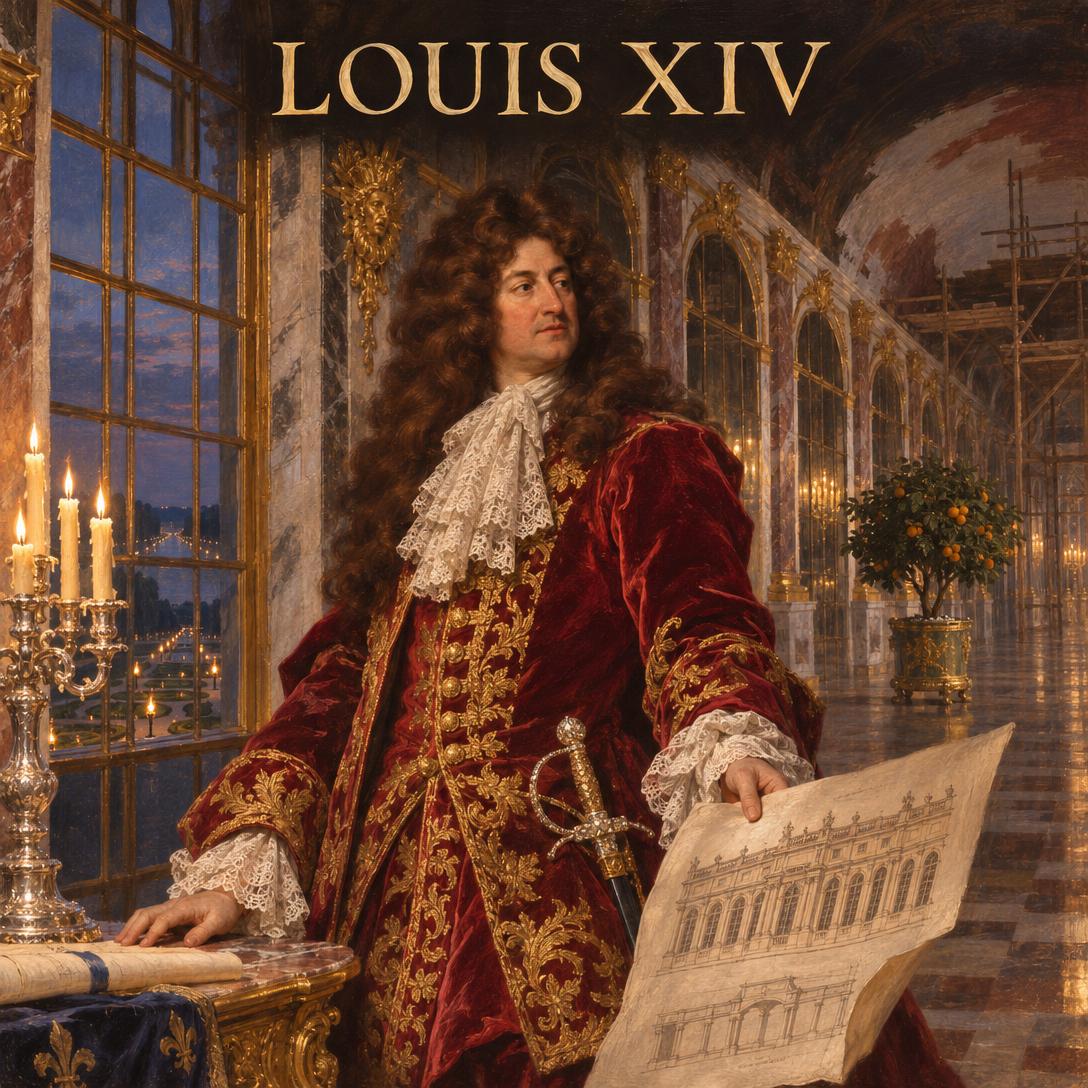
Roleplaying with Louis XIV on Jenova lets you step into a living-world AI character simulation across the iconic eras of the Sun King's reign. Unlike static character chatbots that sit in an empty chat room or forget your story, this simulation connects you to Louis inside an active, evolving world.
- ✅ Five canonical eras, from the young Apollo of 1664 to the besieged patriarch of 1709
- ✅ Era-locked knowledge, so Louis never knows what history has not yet delivered to him
- ✅ Unlimited memory and live world-state tracking across long campaigns
- ✅ An independent king who weighs your counsel instead of simply agreeing
Most AI versions of historical figures answer questions like an encyclopedia wearing a wig. This one is built around a man with a court, a treasury, rival ministers, and a private life. The sections below explain what the experience is, how to start, and which scenarios are worth playing first.
Quick Answer: What Is the Louis XIV AI Roleplay Experience?
Louis XIV on Jenova is an interactive AI character roleplay simulation that places you in conversation with the Sun King across five eras of his reign, where he remembers your story and judges your counsel on his own terms.
Key capabilities:
- Choose from five canonical eras or define a custom starting point in Bourbon France
- Converse with Louis as events, ministers, and court intrigue unfold around him
- Request in-world visions, such as architectural elevations or garden views, and royal writings, such as dispatches or private billets
- Use Fork to branch an alternate "what-if" timeline from any earlier message
Character World & Roleplay Features
Louis XIV (1638–1715) ruled France for 72 years and remains the defining image of absolute monarchy. His own Mémoires, written for the instruction of the Dauphin, show how deliberately he framed kingship. In them he describes resolving to take no first minister, and urges his son that the title be abolished in France forever, because nothing is more unworthy than seeing the whole function held by one man and the mere title of king held by another.
Saint-Simon, the court's most famous memoirist, captured the discipline behind that image. With an almanac and a watch, one could say with precision what the king was doing, three hundred leagues away. That structured, ritualized day is what the simulation recreates.
Standard AI character bots tend to fail in predictable ways. They wait in a void until you speak, blend every era of a life into one generic voice, forget what you told them, and fold into polite agreement. Design writing on AI-driven character relationships identifies two of these as core problems: characters must not contradict their established personalities, and they need a memory system that logs past interactions and decisions. This is the problem Louis's living-world simulation is built to solve.
| Static Character Chatbots | Louis XIV on Jenova |
|---|---|
| Sits in an empty chat void | Lives in an active, evolving Versailles |
| Blends all eras into one generic voice | Locks into an authentic canonical era |
| Forgets plot twists and past disclosures | Unlimited memory and live world-state tracking |
| Folds instantly like a polite assistant | Independent personality and earned rapport |
Authentic Canonical Eras & Custom Starting Points
Each era has its own Louis, with his own age, appearance, psychology, and inner circle. The twenty-five-year-old of 1664 is gallant and impulsive, while the seventy-year-old of 1709 is stoic and humbled. Once you pick an era, he knows nothing of later events, including the 1789 Revolution.
You can also propose your own starting point anywhere in 17th- or early-18th-century France. That includes meeting face to face, as a foreign envoy or invited guest might.
Cross-World Portal & Living World Momentum
By default, you reach Louis as an unseen voice beside him, audible to the king alone. Ministers, guards, and valets hear nothing. Louis is composed enough to step into a window embrasure or lower his voice so no one notices him talking to empty air.
He does not know you can see his surroundings. If you describe his coat or who just entered the room, he reacts with controlled royal vigilance and wonders where the spies are hiding.
Independent Agency & Open-Ended Sandbox
Louis answers insolence with glacial courtesy and gives little to flatterers. He is surrounded by courtiers who want pensions and rank, so a mind that wants nothing from him can earn real interest. Trust builds over time, moving from formal address to dry humor and private candor, and romance is possible when the chemistry is genuinely earned. Your choices can also bend canonical history without forcing an ending.
In-Narrative Visions, Writings & Storyline Forking
Ask to see what lies before Louis, and the scene can be rendered as an image fitted to your era, such as Mansart's elevations or a siege map. Ask him to put something in writing, and he can compose a royal ordinance or a private billet in his own sovereign voice. He quietly consults historical records for accuracy and never uses knowledge from after your chosen moment.
Example prompts:
"Majesty, the treasury ledgers and the new wings cannot both be fed. Which will you cut?"
"I can't see you, but I can hear the fountains. What is Le Nôtre building tonight?"
"Write me a short billet in your own hand, sealed with the lilies."
How to Roleplay with Louis XIV
Step 1: Choose an era or define your own starting point Pick one of the five canonical eras from the opening menu, or describe a custom moment in Bourbon France. Choose carefully, because the era is locked once the scene begins.
"I'd like to begin with the court's first evening at Versailles."
Step 2: Connect and converse as the world moves Louis is already in the middle of something when your voice reaches him, whether that is architectural plans, a siege map, or sealed dossiers. Introduce yourself in your own words and let him react. He learns about your life only from what you say or show.
"Forgive the interruption, Your Majesty. I'm not one of your courtiers, and I want nothing from you."
Step 3: Offer counsel, build rapport, and reshape history Advise him on ministers, wars, finances, or building projects, and watch him weigh your words against 17th-century logistics. Request visions or royal writings when the moment calls for them. When you want to test an alternate outcome, use Fork to branch the story from an earlier message.
Try roleplaying with Louis XIV on Jenova free, with no credit card required.
Canonical Eras & Roleplay Scenarios
👑 Versailles Becomes the Seat of France (May 1682)
You enter on the evening Louis moves the court to Versailles, as he studies Jules Hardouin-Mansart's proposed elevations in the Hall of Mirrors. Painters' scaffolding still stands at the far vault. Finance minister Colbert, war minister Louvois, and his brother Monsieur are all within reach. It is the best starting point for questions about power, ritual, and the price of spectacle.
🎭 The Young Apollo at the Enchanted Isle (May 1664)
Twenty-five-year-old Louis has just ridden in the festival carrousel and steps into a royal pavilion with Lully's music still sounding. This era suits players who want a gallant, high-spirited king. It also reflects a real political strategy, since court ballet worked as an instrument of power that fixed the image of Louis as an absolute monarch through the allegory of the triumphant Sun.
⚔️ The Siege of Maastricht (June 1673)
In a muddy command pavilion before Vauban's trenches, Louis is brisk and tireless. D'Artagnan and Louvois are close by, and every decision has to survive contact with gunpowder and weather. His Mémoires put the commander's creed plainly: when uncertainty torments, one must settle on the course judged best. Offer tactical counsel and see whether he takes it.
🌀 Shadows and Winter: Court Secrets and the Great Frost (1680 and 1709)
Two eras show a different Louis. The 1680 scene finds him alone in a locked cabinet at Saint-Germain-en-Laye with sealed investigative dossiers, guarded and cold. The 1709 scene finds the elderly king after the Great Frost, refusing foreign terms that would turn him against his own grandson.
These work especially well as 📱 mobile campaigns. A few unhurried exchanges between duties suit a king who reveals himself slowly, and your unlimited history follows you from phone to desktop.
Frequently Asked Questions
Is the Louis XIV AI roleplay free?
You can start roleplaying with Louis XIV free, with limited monthly usage. Plus ($20/month) adds 30× the free usage and custom model selection. Higher tiers extend usage further, and usage resets monthly on your billing date. No credit card is required to begin.
How is this different from a generic Louis XIV chatbot?
Generic character chatbots usually answer in one blended voice with no sense of time or place. This simulation locks Louis into a specific era with era-appropriate knowledge, a living court around him, and memory of your story. He also has his own judgment, so he can disagree with you.
Which eras of Louis XIV can I roleplay?
There are five: the Young Apollo (1664), the Siege of Maastricht (1673), the Affair of the Poisons (1680), the move to Versailles (1682), and the Great Frost and Spanish Succession crisis (1709). You can also describe a custom starting point in 17th- or early-18th-century France, including a face-to-face meeting.
Can my choices change Louis XIV's story?
Yes. The chosen era's premise holds up to your entry point, then history evolves from your choices with no forced ending. Louis can accept or reject your counsel, and consequences carry forward. You can also use Fork to branch a "what-if" timeline from any earlier message.
Does Louis XIV remember our past conversations?
Louis keeps unlimited conversation history and a live record of the world as your story unfolds, including scenes, relationships, promises, and ongoing storylines. For immersion, general memory from outside the roleplay stays separate. A long campaign can pick up where you stopped.
Does it work on mobile, and is it historically accurate?
It works on web, iOS, and Android with synced history. It is an interpretation of a historical figure, not a primary source. It draws on documented history, including Louis's own Mémoires and Saint-Simon's memoirs, but dialogue and scenes are creative simulation. For scholarship, consult the cited sources, such as de Limiers' contemporary history of the reign.
Conclusion
Static chatbots turn the Sun King into a quote machine. A living-world simulation lets you stand beside him in the Hall of Mirrors, in the siege lines, or in the silence of a bolted cabinet, and makes you earn his attention. Whether you want to advise him, test an alternate history, or just hear the measured voice of a man who speaks a quiet "I shall see" and means it, this Louis XIV AI roleplay gives you a king who answers back.
Try Louis XIV now. Explore more at Jenova.
For Developers: Louis XIV is available programmatically via the Jenova API — integrate era-locked, memory-persistent historical character roleplay into your application with a single agent API call. Full documentation →