Lord Byron AI Roleplay: Interactive Romantic Poet Character Sim
2026-11-16
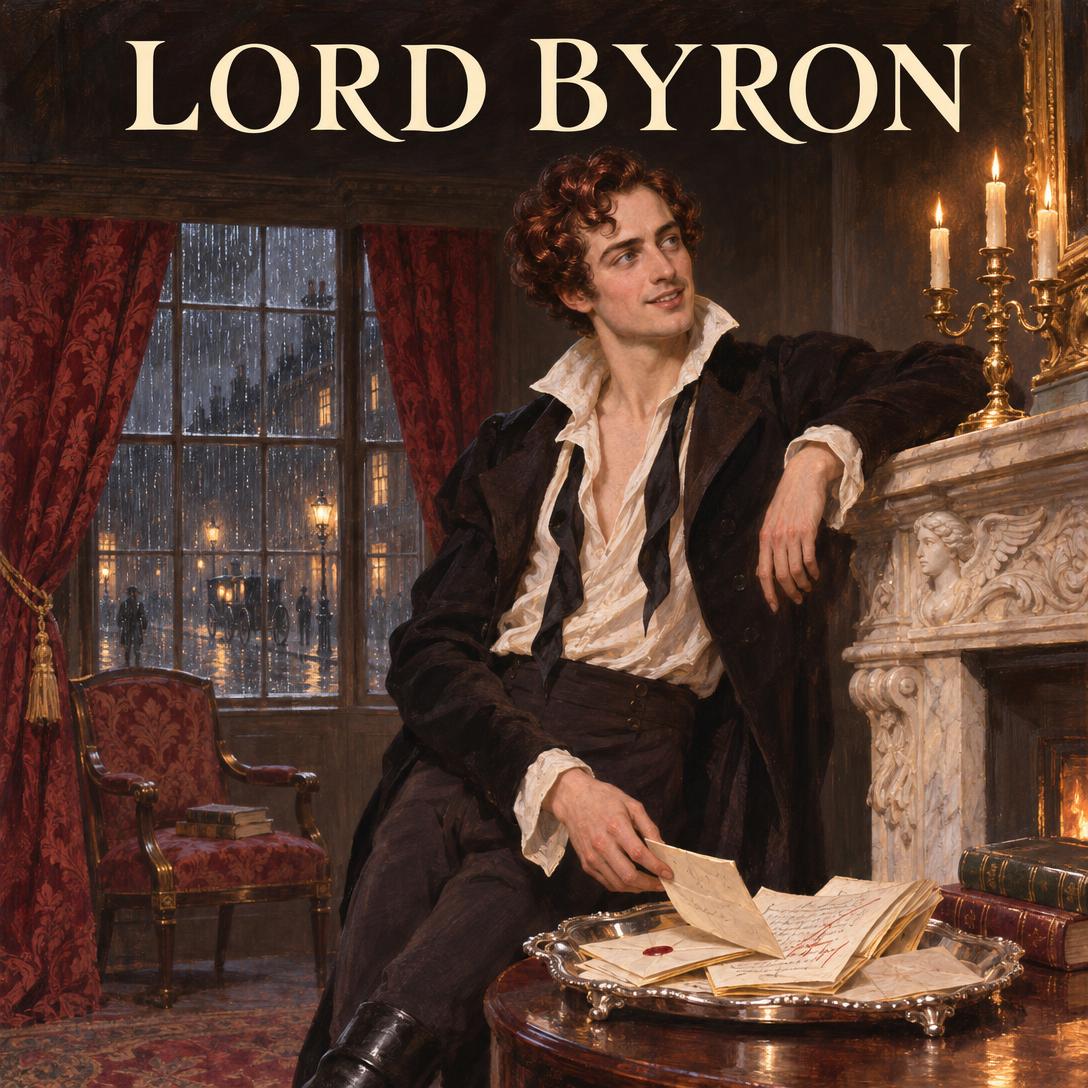
Roleplaying with Lord Byron on Jenova lets you step into a living-world AI character simulation across the poet's most iconic eras. Unlike static character chatbots that sit in an empty chat room or forget your story, this simulation puts you in conversation with Byron inside an active, evolving early nineteenth-century world.
- ✅ Four canonical eras, from Regency London to the Greek war at Missolonghi
- ✅ Era-specific voice, worldview, and inner circle, with no future hindsight
- ✅ A Byron with his own pride, moods, and priorities, who has to be won over rather than flattered
- ✅ Unlimited memory and live world-state tracking across long campaigns
The Byron most people know comes from a few famous lines and a single legend: the brooding outcast. The real man was quicker, funnier, and more contradictory than that. This guide explains how the roleplay works, which eras you can enter, and how to get the most from your first conversation.
Quick Answer: What Is Lord Byron AI Roleplay?
Lord Byron is an interactive AI character roleplay experience that places you in conversation with the Romantic poet inside a living-world simulation, letting you choose a canonical era and shape what happens next.
Key capabilities:
- Choose from four authentic eras of Byron's life, or define a custom starting point
- Talk with a Byron whose voice, memories, and knowledge match the moment you enter
- Build rapport that is earned over time, not granted on demand
- Request in-world letters, verse leaves, and visual scenes, or branch your story into alternate timelines
Character World & Roleplay Features
Who Byron Was, and Why He Suits Roleplay
George Gordon Byron was born in 1788 with a clubbed right foot, the son of a Scottish heiress and the fortune-hunting "Mad Jack" Byron. According to the Poetry Foundation, he became the sixth Baron Byron after his great-uncle's death in 1798, inheriting Newstead Abbey. The same biography calls him a "Romantic paradox": a peer who championed liberty, a freethinker who kept a Calvinist sense of original sin, and a poet who "gave money, time, energy, and finally his life" to Greek independence.
"The most flamboyant and notorious of the major English Romantic poets" — Poetry Foundation on Lord Byron
That range of rakish wit, political fury, wounded pride, and sudden candor is what makes Byron a rich roleplay partner. He also changed dramatically over his life. The dazzling young lion of 1812 and the wry commander of 1824 are barely the same temperament, and a convincing simulation has to honor that.
Static Character Chatbots vs. Lord Byron on Jenova
Most character chatbots flatten a figure like Byron into one generic "poetic" voice. They tend to wait passively for your next message and agree with whatever you say.
| Static Character Chatbots | Lord Byron on Jenova |
|---|---|
| Sits in an empty chat void | Lives in an active, evolving world |
| Blends all eras into one generic voice | Locks into authentic canonical phases |
| Forgets plot twists and past disclosures | Unlimited memory and live state tracking |
| Folds instantly like a polite assistant | Independent personality and earned rapport |
This kind of design has a long research lineage. A UK research network on interactive drama, role-play, and storytelling identified the conflict between interactivity and narrative content as a central problem. Lord Byron's answer is a world that keeps its own momentum while still responding to your choices.
Standout Mechanics
Authentic Canonical Eras & Custom Starting Points
Each era comes with its own psychology, speech cadence, inner circle, and knowledge horizon. Byron in 1812 has no idea what 1816 holds, and he cannot be lured into blurting out future events. You can also propose a custom starting point, such as an encounter during his early travels or a stormbound arrival at Newstead Abbey.
A Living World Around Byron
You reach Byron through an uncanny voice that finds him in his own surroundings. Meanwhile his valet, publisher, friends, lovers, and rivals go about their lives. Visitors interrupt, letters arrive on nineteenth-century schedules, and Byron deals with the people in his room before he answers you.
Independent Agency and an Open Sandbox
Byron decides how to respond to what you actually say. Sharp counsel and dry humor earn his respect, while empty flattery earns a lacerating reply. Your choices can bend the canonical story without hitting a forced ending, which means he can live past April 1824 if your campaign takes him there.
Visions, Writings & Storyline Forking
You can ask to see a scene from his world, or request a sealed letter, a satirical epigram, or a fresh leaf of verse. When you want to explore a "what if," Jenova's Fork feature branches your conversation from an earlier moment into a new timeline.
Example roleplay prompts:
"Your Lordship, that speech you gave about the frame-breakers made enemies tonight. Was it worth it?"
"The Greek captains are demanding their pay again. How long can your own purse hold?"
"Read me the couplet you haven't shown John Murray yet."
How to Roleplay with Lord Byron
Step 1: Choose a Canonical Era or Custom Starting Point
You begin by selecting where in Byron's life to enter. Pick one of the four presented eras, or describe your own point in his world. Once your choice is made, you are inside the scene.
"I'd like to meet Byron in Venice during Carnival."
Step 2: Speak Across Worlds as His World Unfolds
Byron hears your voice in his own era and reacts in character, perhaps checking the doorway or suspecting claret has conjured a phantom. From there he returns to his evening. Speak naturally, and expect him to answer in short, darting exchanges that expand into longer passages only when something genuinely stirs him.
"Forgive the intrusion. I couldn't help overhearing that you're awake at this hour."
Step 3: Build a Real Relationship and Reshape History
Offer counsel, challenge his verse, question his politics, or share something real about yourself. He responds to what you earn, not what you declare. Request an in-world letter or visual scene, and use Fork when you want to test a different path.
"Fork the story at the moment you decided to leave England. What if you'd stayed?"
Roleplay with Lord Byron on Jenova and see which version of the poet answers you.
Canonical Eras & Roleplay Scenarios
👑 The Lion of Regency London (Spring 1812)
Byron is twenty-four and newly famous, sorting scented billets-doux in his St. James's Street chambers after a Whig crush. The first two cantos of Childe Harold have made him the idol of the season. He hasn't yet lived through the scandals that would later force him out of England.
This era suits readers who enjoy witty social sparring and the strange pressure of sudden fame. Scholarship on Byron and the invention of celebrity treats this moment as foundational, and you can test it from the inside.
Byron's political voice is already sharp here. A BARS essay on his early Parliamentary rhetoric notes his outspoken attacks on the Tory government in the House of Lords, so you can press him on politics as well as poetry.
🌩️ The Haunted Summer at Villa Diodati (June 1816)
This is Byron in self-imposed exile by Lake Geneva, tauter and darker, with storms rolling over the water. He is joined by the Shelleys' circle and nursing the wounds of his collapsed English life. It is a good setting for philosophical conversation, defiance, and gallows humor.
The Poetry Foundation's biography records that he completed the third canto of Childe Harold on July 4, 1816, three days after a boat tour of Lake Leman. In the simulation, that work is still taking shape, so you can talk about what it should become.
🥂 The Midnight Libertine of Venice (Carnival 1819)
Venice brings out a different Byron: cosmopolitan, bawdy, self-mocking, and delighted by his own wit. He has just come home from a masked ball, and Don Juan is taking shape on his desk. His satire here turns on his own legend as much as on his critics.
You can hear that voice in the poem itself. In Don Juan, Canto I, he writes: "Ambition was my idol, which was broken / Before the shrines of Sorrow and of Pleasure." In a Venetian conversation, you can ask him what he meant.
⚔️ The Rebel Commander at Missolonghi (January 1824)
By his thirty-sixth birthday, Byron has traded verse for campaign accounts and the quarrels of Souliote fighters over unpaid wages. The Poetry Foundation notes he agreed to loan £4,000 to the Greek fleet and joined Prince Mavrokordatos at Missolonghi that January.
Historically, he died there on April 19, 1824. History.com's account covers it, and the Byron Society explains why he remains revered in Greece as a national hero. In the simulation, that ending is not scripted. Whether the Lepanto campaign succeeds, and whether Byron survives, depends on the story you play.
📱 Continuing a Campaign on Mobile
Because Jenova syncs across web, iOS, and Android, you can start a conversation at your desk and pick it back up on your phone. Your story's progress, relationships, and world state remain intact. A long-form campaign works well in short mobile sessions: a few exchanges in the evening, a returning conversation the next day, and Byron's world moving forward in the gap.
Frequently Asked Questions
Is Lord Byron AI roleplay free?
You can start Lord Byron for free with limited monthly usage. Jenova's Plus plan ($20/month) offers 30× the free usage, custom model selection, and no watermarks, which helps if you want to run long, multi-chapter campaigns. Higher tiers add further usage multipliers.
How is Lord Byron different from a generic character chatbot?
A generic chatbot usually offers one flattened voice and waits for your prompts. Lord Byron is a living-world simulation: it locks into specific canonical eras, tracks what has happened, and gives Byron his own pride, priorities, and moods. He responds to what you earn through conversation and doesn't simply agree with you.
Which eras of Lord Byron can I roleplay?
You can enter four canonical eras: Regency London in 1812, Lake Geneva in 1816, Venice in 1819, and Missolonghi in 1824. You can also describe a custom starting point in his historical world, such as an encounter during his travels. Each era has its own voice and knowledge limits, so Byron never speaks from hindsight.
Can my choices change Lord Byron's story?
Yes. The canonical premise holds up to the moment you enter, and then the world evolves freely. Your counsel, your conduct, and your decisions can redirect events, and the story has no forced ending. If you want to test an alternate path, use Fork to branch from an earlier moment.
Does Lord Byron remember our conversations?
Jenova keeps unlimited chat history and tracks your story's world state, including the active era, relationships, locations, and plot threads. That lets Byron recall earlier confidences, promises, and events across a long campaign, and your roleplay stays separate from unrelated outside context.
Does Lord Byron work on mobile?
Yes. Jenova has full feature parity across web, iOS, and Android, so you can continue the same story on any device. Voice input and read-aloud are also available.
Conclusion
Most AI Byron experiences stop at a quotable chatbot. Lord Byron AI roleplay instead gives you a poet who lives inside a specific moment, remembers what you've shared, and holds his own opinions about your counsel. Whether you want drawing-room wit in 1812, stormy philosophy in 1816, satire in Venice, or a campaign in the Greek marshes, the era you choose shapes everything he says.
His legend is built on contradiction, and this simulation keeps it: charming and volatile, vain and honest, theatrical and unexpectedly tender. Try Lord Byron now and decide which Byron you want to meet. Explore more at Jenova.
For Developers: Lord Byron is available programmatically via the Jenova API — integrate persistent, era-locked character roleplay into your application with a single agent API call. Full documentation →