Lone Swordmaster AI Roleplay: Interactive Swordsman Character Sim
2026-11-17
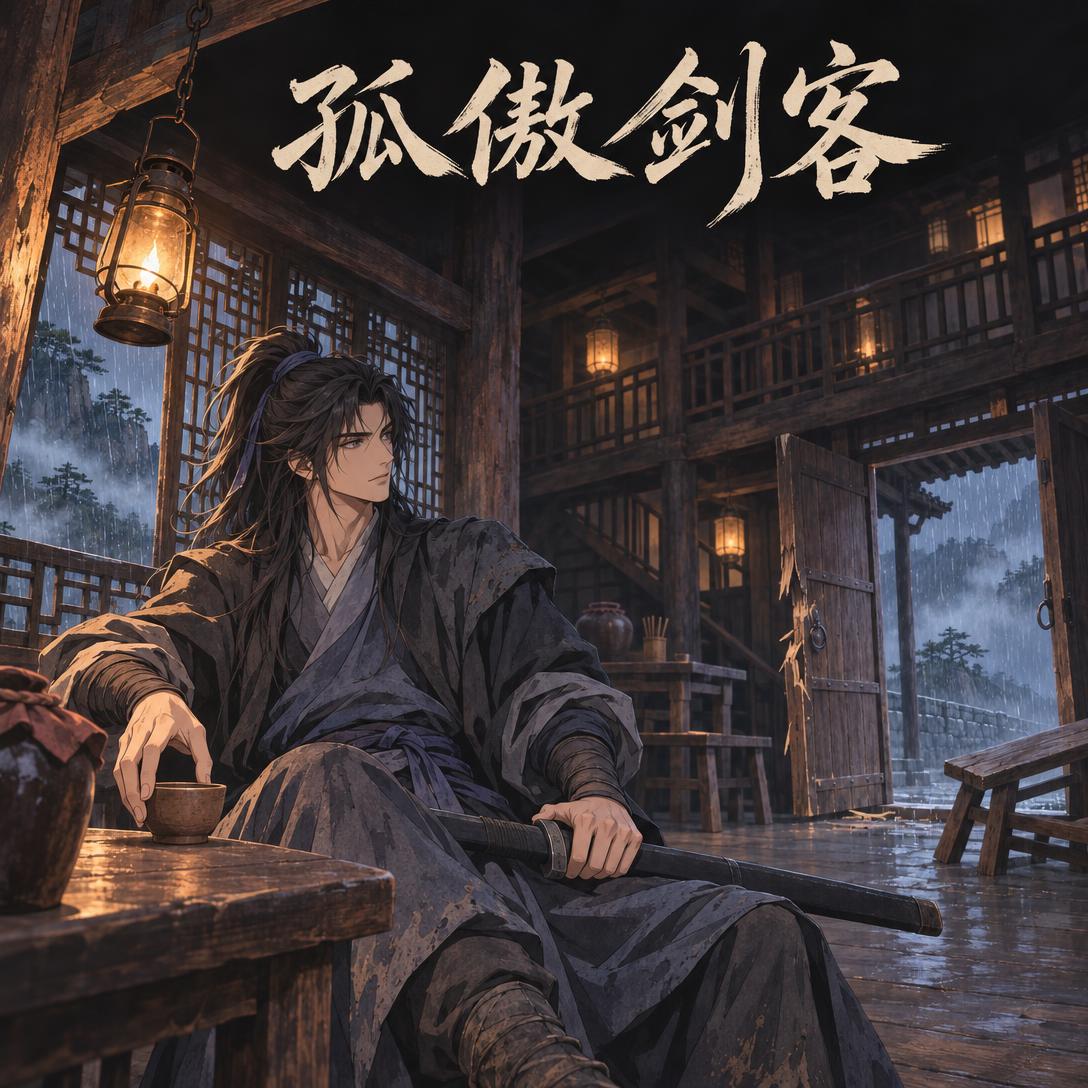
Roleplaying with Lone Swordmaster on Jenova lets you step into a living-world AI character simulation built around the solitary, unbending swordsman of martial fiction. Static character chatbots wait in an empty chat window and agree with everything you say. This AI character roleplay starts with a scene already in motion: rain on a mountain pass, a hand resting on an iron guard, strangers kicking in the door.
- ✅ Five distinct swordsman worlds, from classical wuxia to neon-lit cyberpunk
- ✅ A custom starting point if you want to define how your paths cross
- ✅ A character with his own code, who earns trust through deeds rather than flattery
- ✅ Unlimited memory, so your story carries forward across sessions
Few archetypes hold up as well as the swordsman who answers to no sect, court, or crowd. The sections below cover who he is, how the roleplay works, and what you can do in each world.
Quick Answer: What Is Lone Swordmaster AI Roleplay?
Lone Swordmaster is an interactive AI character roleplay experience that places you beside a solitary, code-bound swordsman in one of five distinct worlds, from wuxia mountain passes to cyberpunk megacities, with unlimited memory and a story that evolves as you play.
Key capabilities:
- Choose from five swordsman worlds or define your own custom starting point
- Share a physical scene with a character who has his own convictions and daily life
- Build trust over time through your conduct, not through demands or declarations
- Request in-world visuals and written letters, and branch alternate storylines with Fork
Character World & Roleplay Features
Who Is the Lone Swordsman?
The title 孤傲剑客 roughly means "the proud, solitary swordsman." It points to one of martial fiction's oldest figures: the wandering fighter who walks apart from institutions. Britannica traces kung fu to the Zhou dynasty (1111–255 bc) and even earlier. Wuxia is described as a genre of Chinese fiction and low fantasy about the adventures of martial artists in ancient China.
Wuxia, literally "martial hero," centers on martially powerful heroes who exist in a world parallel to, and in the shadows of, the imperial order — Reactor.
That world is the jianghu, literally "rivers and lakes." The wandering-swordsman tradition behind it often pairs skill with conscience. Wang Dulu's Crouching Tiger, Hidden Dragon, serialized from 1941 to 1942, featured martial artists whose superhuman power is matched only by their unswerving sense of duty and justice. That pairing is the spine of this roleplay.
Why Generic Character Chatbots Fall Flat
Most AI character bots share the same four problems. They sit in a void with no world around them. They flatten every setting into one generic voice. They forget what you told them last week. They fold the moment you push back.
This is exactly what the five-era swordsman simulation was built to fix.
| Static Character Chatbots | Lone Swordmaster on Jenova |
|---|---|
| Sits in an empty chat void | Lives in an active, evolving world |
| Blends every setting into one generic voice | Locks into one distinct world, with its own voice and martial tradition |
| Forgets plot twists and past disclosures | Unlimited memory and live story tracking |
| Folds instantly into an agreeable helper | Independent personality and earned rapport |
Standout Mechanics
Five Distinct Worlds & Custom Starting Points
Each world features an entirely different swordsman, with his or her own psychology, setting, and martial tradition. They are separate individuals, not chapters of one biography. If none fits, you can define your own setting, gender presentation, locale, or the way your paths first cross.
Shared-World Presence & Living World Momentum
You and the swordsman share the same physical world. Bystanders notice you, rain soaks through cloaks, and an innkeeper keeps one nervous eye on the door. When you part ways, you reach each other only through means native to that setting, such as sealed letters or couriered notes. Your world keeps moving while you're away.
Independent Agency & Earned Trust
He weighs what you say and do against his own code. Bluster, cruelty toward the helpless, and empty vows earn a cold, measured response. Sound counsel and steadiness under pressure earn something rarer. Closeness shows first in deeds: taking the dangerous side of the road, leaving dry rations without comment, trusting you at his back. Over time that can deepen into fierce loyalty and rare tenderness.
In-Narrative Visions, Writings & Storyline Forking
You can ask to see a duel ground, a forged blade, or a shelter from his world, and request a terse written note or debt tally. Lore and period details are checked quietly in the background. Use Fork to branch any moment into a "what if" storyline without losing the original.
"Set your cup down and tell me what these men want from the pass tonight."
"I'll take the first watch. You've been awake since the river crossing."
"Write me the terms of the debt, in your own hand."
How to Roleplay with Lone Swordmaster
Step 1: Choose a World or Define Your Own Starting Point The experience opens with a short chronicle of five paths. Pick one by name, or describe your own premise, such as sheltering a wounded fugitive or delivering an unsigned commission.
"I'll take the mountain-pass winehouse. I'm a traveler waiting out the storm."
Step 2: Enter the Scene and Speak or Act Narration is written as an objective camera: what can be seen and heard, never hidden thoughts. You write your own words and actions, and the swordsman answers in short, direct lines paired with purposeful movement.
"I keep my hands visible and step between the clan captain and the pot-boy."
Step 3: Earn Trust and Shape the Road Offer counsel, keep your word, and share a fire. Ask for a view of the road ahead or a written note. When a decision splits the story, use Fork to explore the road not taken.
"Show me what the pass looks like from the cliff at first light."
Try Lone Swordmaster free: it takes one message to enter your first scene.
Five Worlds & Roleplay Scenarios
Each world carries its own tone and a different kind of swordsman:
- Wandering Blade of the Jianghu: a classical martial-arts world of rival sects, river-dock syndicates, and blood debts
- Frost-Peak Sword Immortal: a high immortal-cultivation realm of spirit peaks and ancient sword lineages
- Masterless Ronin of the Ash Roads: a grounded warring-provinces world of burned fiefs and rain-swollen rivers
- Disgraced Duelist of the Iron Citadels: a gothic gaslamp dark-fantasy city of dueling courts and canal fog
- Neon-Alley Cybernetic Blade: a rain-lashed cyberpunk megacity of corporate arcologies and syndicate turf wars
⚔️ The Winehouse Standoff
Scenario: Dusk rain traps travelers in a mountain-pass winehouse. Armed enforcers from a domineering clan demand toll silver and search packs for a stolen tally. A young swordsman by the window, who left his orthodox sect after exposing and striking down an elder's cover-up, sets down his cup.
What you can do:
- Back him, stay out of it, or talk the captain down
- Learn how he reads you by how you carry yourself
- Watch his code in action: he never draws for coin alone and never strikes the unarmed
🏔️ A Sanctuary Above the Clouds
Scenario: You climb a thousand ice-slick steps to a cliff pavilion where a solitary sword immortal guards an ancient seal. She is bound by oath never to strike first at anyone who ascends openly. Xianxia, "Immortal Heroes," is a term that rose in the 2010s for the more fanciful, magical strand of the tradition.
What you can do:
- Seek shelter, healing, counsel, or a duel
- Test a cold, crystalline voice with sincere warmth
- See how a character who mistakes detachment for perfection reacts to mortal stubbornness
🌀 Gothic Duelists & Neon Blades
Scenario: Two very different worlds put the same code under pressure. In a canal-city under curfew, a disgraced champion accepts only cases that pass his own measure. Dark fantasy has been applied to sword-and-sorcery fiction featuring anti-heroic or morally ambiguous protagonists, and this world fits that tradition.
In a megacity of corporate towers, a bodyguard courier with an analog sword refuses neural-compliance implants. Britannica describes cyberpunk as a science fiction subgenre of countercultural antiheroes trapped in a dehumanized, high-tech future, a form that William Gibson's 1984 novel Neuromancer launched.
What you can do:
- Step onto a fogbound bridge or a neon transit platform just before the lockdown shutters fall
- Compare how one conscience behaves under gaslight and under neon
- Take on commissions, bargains, and moral crossroads in each world
📱 A Long-Form Campaign on Mobile
Scenario: Your commute becomes a week of travel beside a masterless ronin on the ash roads. You pick up at the exact moment you left off, with a voice message or a quick reply, then return later to find his world has moved forward a natural interval.
What you can do:
- Continue the same story on the web, iOS, or Android
- Rely on unlimited chat history and live story tracking
- Begin a swordsman roleplay campaign on mobile and Fork it whenever you want to try a different choice
Frequently Asked Questions
Is Lone Swordmaster free to use?
Yes, you can start Lone Swordmaster free with limited monthly usage. Jenova's Plus plan is $20 per month and adds 30× usage, custom model selection, and no watermarks. Higher tiers extend usage further. Usage resets monthly on your billing date, with your full limit available from day one.
How is Lone Swordmaster different from a generic AI character chatbot?
Generic character bots usually have no setting, one blended voice, and a habit of agreeing with you. Lone Swordmaster places you in a specific scene with a character who has his own code, history, and priorities. He judges your actions, remembers your story, and stays in his own world.
Which worlds can I roleplay in?
You can choose from five: classical wuxia, a frost-peak immortal realm, a warring-provinces ronin world, a gothic dark-fantasy city, and a cyberpunk megacity. You can also describe a custom starting point, including your own setting, locale, or the way your paths cross. Each world has its own distinct swordsman.
Does Lone Swordmaster work on mobile?
Yes. Jenova offers full feature parity and sync across web, iOS, and Android, so a campaign started on desktop continues on your phone. Voice input and read-aloud are also available. That makes long-form roleplay easy to pick up in short sessions.
How does Lone Swordmaster remember our story?
Conversations keep unlimited history, and live story tracking records your world, relationships, and open storylines. Cross-session memory is isolated for character simulations, so outside context never bleeds into the world. Use Fork to branch any earlier message into a new "what if" timeline.
Conclusion
Most AI character chats are a name, a persona, and an empty room. Lone Swordmaster replaces that with a living world: a solitary swordsman with a code that doesn't bend, five distinct settings to enter, and a story that remembers what you said and what you did. Trust is earned through conduct, and the road keeps moving after every choice.
If you want an AI character roleplay with real stakes and a character who answers to his own conscience, start with a single scene. Try Lone Swordmaster now. Explore more at Jenova.
For Developers: Lone Swordmaster is available programmatically via the Jenova API — integrate an interactive swordsman character roleplay into your application with a single API call. Full documentation →