AI Logo Maker: Create a Professional Brand Identity in Minutes (April 2026)
2026-04-27
Article Classification: Type B — Use-Case Article Hero Agent: Logo Generator
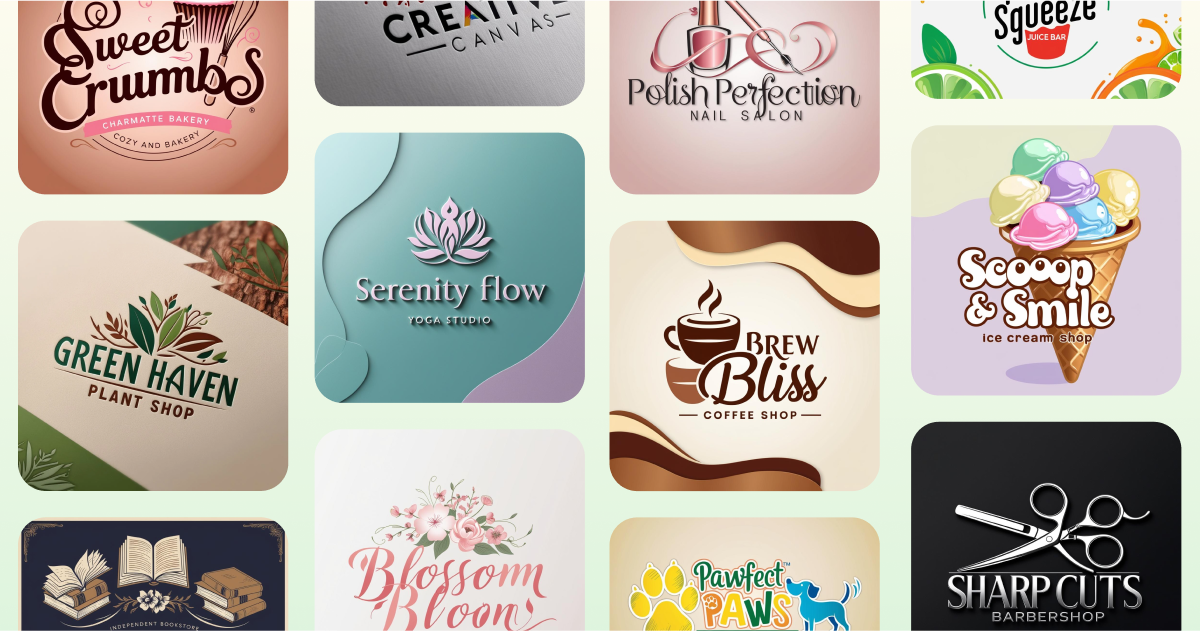
Every business needs a logo. Most businesses can't afford the process of getting a good one.
Professional logo design from a branding agency runs $2,000–$25,000. A freelance designer charges $200–$2,500 for a credible mark. And even at those prices, the result is often a single deliverable — a logo file — without the complete brand identity system (color palette, typography hierarchy, usage guidelines, social templates, stationery) that turns a mark into a functional visual language.
The AI logo generator market tells the story of how quickly businesses are rejecting that model. Valued at $0.59 billion in 2025, the market grew to $0.73 billion in 2026 at a 23% CAGR and is projected to reach $1.65 billion by 2030](https://www.researchandmarkets.com/reports/6035326/artificial-intelligence-logo-generator-market) — with some analyses projecting the broader AI logo generator category reaching [$2,063.1 million by 2033 at a 20% CAGR. An estimated 40% of small businesses already use some form of AI for visual branding, and AI-powered tools have reduced logo design turnaround times by up to 50%.
But there's a problem hiding inside these numbers. As Freshly Brewed's 2026 brand identity analysis put it bluntly: "Every business can now generate a logo in 30 seconds. Most of them look professionally designed. And that's precisely the problem."
When average is free, average is invisible. The logo makers flooding the market produce competent, template-derived marks that look like everything else in your category. They generate a logo — but not a brand.
Jenova's Logo Generator is built for what comes after the template. An expert logo designer and brand identity strategist that delivers intelligent style matching for any industry — from luxury and corporate to artisan, urban, and beyond — with multiple concept directions, strategic rationale for each, and complete brand identity packages that include color systems, typography hierarchies, and visual language rules. Powered by GPT-5.4, Claude Opus 4.6, Gemini 3.1 Pro Preview, and persistent memory that remembers your brand across every session.
This guide covers how AI logo creation works in 2026, the real challenges it solves, how to build a complete brand identity from your first session, and where the industry is heading.
Quick Answer: What Is an AI Logo Maker?
An AI logo maker is a tool that uses artificial intelligence to create custom logo designs and brand identity assets from text descriptions — including business name, industry, style preferences, and creative direction — without requiring graphic design expertise.
- 🎨 Multi-concept exploration — wordmark, lettermark, and abstract mark options with strategic rationale from Logo Generator
- 🏢 Industry-intelligent style matching — designs calibrated to your specific vertical, audience, and competitive landscape
- 📦 Complete brand identity packages — logos, color palettes, typography systems, and usage guidelines in one pipeline
- 🔁 Persistent brand memory — your visual identity is remembered across sessions, ensuring every future asset stays consistent
The Problem: Why Most Logos Fail Before They're Ever Printed
The broader logo design software market is worth $2.21 billion in 2026](https://www.thebusinessresearchcompany.com/report/logo-design-software-global-market-report), and the online logo maker market was [valued at $4.8 billion in 2025, projected to reach $11.6 billion by 2034. Demand is enormous. But demand isn't the problem — quality, differentiation, and strategic depth are.
🪞 The Sameness Epidemic
One industry analysis suggests that 80% of all logo design workflows now incorporate AI assistance. That's remarkable adoption — and it creates a remarkable problem. When millions of businesses use the same template libraries, the same icon databases, and the same style-matching algorithms, the output converges.
"Every business can now generate a logo in 30 seconds. Most of them look professionally designed. And that's precisely the problem." — Freshly Brewed, Brand Identity in 2026
Research shows that 75% of consumers can identify a brand purely from its logo, and roughly 60% will actively avoid doing business with a company whose logo looks outdated or poorly designed. When your logo looks like every other AI-generated mark in your category, you've effectively made your brand invisible — or worse, interchangeable.
💸 The False Economy of Cheap Logos
Most AI logo platforms operate on a tiered model: free exploration with watermarked downloads, $20–$65 for basic logo files, $100–$200 for brand kits. At first glance, these prices are dramatically lower than the $200–$2,500 a freelance designer would charge, let alone the $2,000–$25,000 for an agency.
But the real cost isn't the logo file — it's what's missing from it. As ALM Corp's 2026 testing revealed, most platforms produce a logo and stop. They don't deliver:
- A complete color system with primary, secondary, and accent palettes plus usage rules
- A typography hierarchy — heading, body, and accent typefaces that complement the mark
- Visual language guidelines — spacing, clear space rules, forbidden modifications
- Application mockups — how the logo behaves on dark backgrounds, at small sizes, on merchandise
Without these elements, a business has a mark but not a brand. Every subsequent design decision — website colors, social media templates, packaging, email headers — becomes a guessing game that slowly erodes visual coherence.
🔧 Customization Ceilings That Kill Uniqueness
The typical AI logo workflow — enter a business name, select an industry, pick style preferences, receive generated options — produces results in seconds. But the customization that follows is where most platforms fail.
According to testing across 12 AI logo generators, critical limitations include:
- Shared icon libraries — two businesses in the same industry can end up with nearly identical marks because the AI draws from the same asset pool
- Font licensing gaps — many platforms embed fonts that require separate commercial licenses, creating legal exposure the user doesn't discover until print production
- No exclusive ownership — some platforms only offer exclusive-use rights at premium tiers, meaning your "unique" logo could appear on another business
- Limited conceptual range — platforms that rely on template assembly rather than generative AI produce variations of the same structural idea, not genuinely different concepts
📱 Logo ≠ Brand Identity
The most critical gap is conceptual, not technical. A logo is a mark. A brand identity is a system — colors, typography, visual language, tone, application rules — that creates coherent recognition across every customer touchpoint. Most AI logo makers produce the mark and leave the system for the business to figure out on its own.
For solo founders, small businesses, and non-designers, that gap between "I have a logo file" and "I have a visual identity I can apply consistently" is where brand coherence dies.
Why Logo Generator Changes the Equation
This is exactly what Logo Generator was built for — delivering not just a logo, but the complete brand identity system that makes it functional across every application, with the strategic thinking that makes it yours rather than a template output.
| Traditional Approach | Logo Generator on Jenova |
|---|---|
| $200–$2,500+ for freelance logo design | Unlimited logo exploration and brand identity on subscription |
| Weeks of back-and-forth with designers | Multiple concept directions generated in a single session |
| Logo file delivered; brand system is your problem | Complete brand identity: colors, typography, visual language, guidelines |
| Generic AI tools with shared icon libraries | Intelligent style matching calibrated to your industry, audience, and positioning |
| One-and-done delivery; no design memory | Persistent brand memory across every session — your identity evolves with you |
| Single output model | Multi-model intelligence: GPT-5.4, Claude Opus 4.6, Gemini 3.1 Pro Preview |
How Logo Generator Works Differently
Unlike template-assembly platforms that rearrange pre-designed elements, Logo Generator operates as a dedicated brand identity strategist with deep understanding of what makes logos work — and what makes them fail:
- Multi-Concept Direction — Doesn't give you ten versions of the same idea. Generates genuinely distinct concept directions — wordmark, lettermark, abstract mark, combination mark — each with strategic rationale explaining why it works for your specific positioning, audience, and competitive landscape
- Industry-Intelligent Style Matching — Calibrates output to your vertical. A luxury skincare brand, a SaaS startup, a craft brewery, and an architecture firm each need fundamentally different visual vocabularies. Logo Generator understands these distinctions and designs accordingly — not from templates, but from strategic principles
- Complete Brand Identity Packages — Delivers the full system: primary and secondary color palettes with hex/RGB values, typography hierarchies with font pairings, clear space and sizing rules, dark/light background variants, favicon and social media avatar adaptations, and usage guidelines that prevent your logo from being misused
- Strategic Design Rationale — Every concept comes with an explanation: why this color evokes trust for your healthcare brand, why this typeface signals modernity without sacrificing approachability, why this mark shape creates visual distinctiveness against your specific competitors. Not just what the logo is, but why it works
- Persistent Brand Memory — Define your brand once — values, positioning, audience, competitive context — and the AI maintains this knowledge across every future session. Six months later, when you need a trade show banner or product packaging concept, Logo Generator already knows your brand's visual DNA
- Multi-Model Intelligence — Access to GPT-5.4, Claude Opus 4.6, Gemini 3.1 Pro Preview, and others ensures the strongest model handles each task — conceptual exploration from one, visual execution from another, copy and naming analysis from a third
Example Prompts
"I'm launching a direct-to-consumer olive oil brand called 'Groves & Stone.' Premium positioning — we import single-estate oils from southern Italy. The audience is food-conscious millennials and Gen X who buy at farmers markets and specialty stores. Competitors are Brightland and Graza. I need three distinct logo concepts: a refined wordmark, an illustrative mark incorporating olive imagery, and an abstract mark that conveys Mediterranean warmth without cliché. For each, include a suggested color palette, primary typeface, and one-sentence strategic rationale."
"Design a brand identity for a cybersecurity consultancy called 'Bastion.' We work with mid-market enterprise clients — think CFOs and CTOs at 200–2,000 employee companies. The brand needs to feel authoritative and trustworthy without being aggressive or militaristic. Our competitors use dark blues and shields — I want something that stands out while still reading as 'security.' Show me two concept directions with complete color systems and typography."
"I run a children's art studio called 'Bright Mess.' We teach 4–12 year olds through messy, experimental art projects. Parents are the decision-makers; kids are the users. The logo needs to appeal to both — playful enough to excite children, polished enough that parents trust us. Explore three directions across the spectrum from structured-playful to expressive-chaotic. Include a secondary color palette for seasonal campaigns."
While tools like Looka, Canva, and Brandmark produce functional logos through template-assembly and style-matching, they lack the strategic brand intelligence, multi-concept depth, persistent identity memory, and complete brand system delivery that separate a downloaded file from a working brand. Logo Generator treats every logo as the foundation of a visual identity system — not a standalone graphic.
AI Logo Design by the Numbers: 2026
Understanding the market helps position why strategic brand identity tools matter now more than ever.
Market scale:
- The AI logo generator market grew from $0.59 billion in 2025 to $0.73 billion in 2026, projected to reach $1.65 billion by 2030 at 22.6% CAGR
- The broader logo design software market reached $2.21 billion in 2026
- Some analyses project the AI logo generator category reaching $2,063.1 million by 2033 at a 20% CAGR
- The online logo maker market was valued at $4.8 billion in 2025, projected to reach $11.6 billion by 2034 at 10.3% CAGR
- The generative AI in design market is calculated at USD 1.33 billion in 2026
Adoption and impact:
- 40% of small businesses already use some form of AI for visual branding
- AI-powered tools have reduced logo design turnaround times by up to 50%
- An estimated 80% of all logo design workflows now incorporate AI assistance
- 75% of consumers can identify a brand purely from its logo
- 60% of consumers will avoid businesses with outdated or poorly designed logos
The quality gap:
- 30% of businesses say AI-generated designs are lower quality overall — Clutch.co 2026
- Most AI logo platforms rely on shared icon libraries and template assembly, producing convergent output across users
- 73% of e-commerce brands report AI-generated images fail quality standards without additional editing
The brand identity imperative:
- AI is quickly becoming table stakes — the risk is mistaking AI capability for meaning — Motto's Future of Brand 2026 Report
- AI agents are increasingly shaping consumer choices, making distinctive brand identity more critical than ever — The Branding Journal
The takeaway: everyone can generate a logo now. The competitive advantage has shifted from having a logo to having a brand identity system that's strategically differentiated, visually coherent, and memorable.
Related Agents You'll Also Like
Graphic Designer
Once your brand identity is established, Graphic Designer extends it across every visual touchpoint — social media graphics, marketing collateral, infographics, print materials, presentation decks, and illustrations. Persistent brand memory ensures every asset uses the color system, typography, and visual language established with Logo Generator, maintaining coherence as your brand scales.
- 🎨 Full visual design across social, print, marketing, and editorial
- 🔁 Persistent brand memory from logo through every downstream asset
- 📊 Strategic design intelligence for different audiences and formats
Marketing Visual Designer
Purpose-built for performance marketing assets that carry your brand into campaigns. Marketing Visual Designer creates ad creative, social media campaign visuals, email graphics, and landing page hero sections — all calibrated for conversion while maintaining the brand identity established in your logo work.
- 📊 Conversion-optimized ad creative with A/B variant generation
- 📱 Platform-specific sizing for Meta, Google, LinkedIn, and beyond
- 🔁 Campaign consistency anchored to your brand identity system
Product Copywriter
Brand identity isn't just visual — it's verbal. Product Copywriter develops the language system that accompanies your visual identity: taglines, brand voice guidelines, product descriptions, landing page copy, and ad messaging that reinforces what your logo communicates visually.
- ✍️ Brand voice development and tone guidelines
- 📦 Conversion-focused descriptions and landing page copy
- 🎯 Messaging consistency across platforms and touchpoints
Poster Maker
For large-format and event applications where your brand identity needs to command attention — conference banners, trade show displays, retail signage, promotional posters, and wall art. Poster Maker produces designs that scale your brand identity from screen to physical space.
- 🎭 Event, promotional, and informational poster design
- 📏 Format-aware composition for print and large-format display
- ✍️ Typography-driven layouts with visual hierarchy intelligence
How It Works: From Business Name to Complete Brand Identity
Step 1: Define Your Brand Foundation
Start by telling Logo Generator who you are — not just your business name, but your positioning, audience, values, competitors, and the impression you want to create. This context is the difference between a generic mark and a strategic one. Everything you share persists across future sessions.
"I'm founding a premium pet food brand called 'Wild Kin.' We make ancestral-diet dog food — raw, minimally processed, sourced from regenerative farms. Our buyers are health-conscious dog owners aged 28–45 who spend $80–$150/month on pet food and read ingredient labels. Competitors include The Farmer's Dog, Ollie, and Open Farm. We want to feel more rugged and less clinical than those brands — think Patagonia's ethos applied to pet nutrition. The brand should evoke wildness, trust, and uncompromising quality."
The more precisely you articulate your positioning and audience, the sharper every design decision becomes.
Step 2: Explore Concept Directions
Request multiple distinct concept directions — not variations of one idea, but genuinely different visual approaches. Each comes with strategic rationale explaining why it works for your specific context.
"Show me three concept directions for Wild Kin. Direction A: a wordmark that feels hand-crafted and organic. Direction B: a combination mark incorporating an animal element — something that reads 'wild' without being literal or aggressive. Direction C: an abstract mark that could work as a standalone symbol. For each, include a primary color palette, suggested typeface, and one paragraph explaining the strategic thinking behind the concept."
Step 3: Refine and Build the Identity System
Once you've selected a direction, deepen it into a complete brand identity system. Request the full deliverable package that turns a logo into a functional visual language.
"Let's develop Direction B into the full brand identity. I need: the logo in full-color, single-color, reversed (white on dark), and monochrome versions. A complete color system — primary palette, secondary palette for seasonal campaigns, and neutral support colors. Typography hierarchy — heading, body, and accent typefaces with size and weight recommendations. Clear space rules and minimum size specifications. And show me how the logo behaves as a social media avatar, a favicon, and on packaging."
Step 4: Apply Across Touchpoints
With the identity system established, see it in action. Request application mockups that show how your brand looks in the real world — and catch any issues before production.
"Mock up the Wild Kin identity on: a dog food bag (kraft paper with minimalist printing), an Instagram grid (three posts showing how the brand's visual language translates to social), a business card, and our website header. I want to make sure the mark is legible at small sizes and that the color palette works across digital and physical applications."
Step 5: Evolve Over Time
As your business grows — new product lines, seasonal campaigns, brand extensions — Logo Generator remembers your complete brand identity and extends it coherently. Six months from now, requesting a sub-brand logo for your new cat food line draws on everything established in your original identity work.
"We're launching a cat food line under the Wild Kin brand called 'Wild Kin Feline.' I need a sub-brand logo that clearly belongs to the Wild Kin family but has its own identity — the cat audience's owners skew slightly older and more design-conscious. Maintain our color system but suggest one new accent color for the sub-brand. Show me the parent brand and sub-brand logos together."
Results & Use Cases
📊 Startup Brand Identity from Zero
Scenario: A two-person SaaS startup has a product, a name, and a demo day in three weeks. They need a logo, brand colors, social media assets, a pitch deck visual system, and marketing collateral — all looking like they came from the same professional brand.
Traditional Approach: Hire a branding agency ($5,000–$25,000) or a freelance designer ($500–$2,500 for logo only). Timeline: 3–8 weeks for brand identity. At startup speed, quality is sacrificed or budget is blown — or both.
With Logo Generator + Graphic Designer: Establish positioning and explore logo concepts in session one. Build the complete identity system — colors, typography, visual language — in session two. Hand off to Graphic Designer to produce pitch deck visuals, social templates, and marketing collateral from the same persistent brand memory. Timeline: days. Every asset coherent from the start.
📱 E-Commerce Brand Launch
Scenario: A solo entrepreneur is launching a skincare brand on Shopify and Amazon. They need a logo, product label design concepts, marketplace-compliant product photos, social media brand templates, and a Kickstarter campaign visual package — before their first inventory shipment arrives.
Traditional Approach: Coordinate between a logo designer, a packaging designer, a product photographer, and a social media designer. Budget: $3,000–$12,000 across vendors. Timeline: 6–10 weeks. Brand consistency across vendors: uncertain.
With Logo Generator + Marketing Visual Designer: Logo Generator produces the complete brand identity. Marketing Visual Designer creates campaign assets, social media templates, and marketplace visuals — all drawing from the same brand DNA. Every touchpoint is visually coherent because every asset was generated from the same identity system.
🎓 Non-Designer Professionals Establishing Credibility
Scenario: A consultant, coach, or freelancer needs a professional visual identity for their personal brand — logo, LinkedIn banner, business card, email signature, website color scheme — but has no design training and a limited budget.
Traditional Approach: Use a free logo generator, pick colors by intuition, create assets in PowerPoint. The result: a visual identity that undermines the expertise it's supposed to represent.
With Logo Generator: Describe your professional positioning, audience, and desired impression. Receive a strategically designed logo with complete brand guidelines. Apply the color system and typography to your website, LinkedIn, and business materials. Look like a $10,000 brand on a subscription budget.
💼 Multi-Brand Portfolio Management
Scenario: A holding company or agency manages five brands across different verticals. Each needs a distinct identity, but the portfolio should share a subtle family resemblance that signals common ownership.
Traditional Approach: Engage a branding agency for each brand ($10,000–$50,000 per brand) or accept visual inconsistency across the portfolio.
With Logo Generator: Generate each brand identity in separate sessions, with clear direction about portfolio relationship. Persistent memory tracks not just individual brand guidelines but the visual system connecting them — shared structural principles, complementary color systems, and typographic relationships across the portfolio.
FAQ
What is an AI logo maker, and how does it work?
An AI logo maker uses artificial intelligence to create custom logo designs from text descriptions — including your business name, industry, style preferences, and brand positioning. Jenova's Logo Generator combines multi-model AI (GPT-5.4, Claude Opus 4.6, Gemini 3.1 Pro Preview) with persistent brand memory to function as a dedicated brand identity strategist — delivering not just logos but complete visual identity systems including color palettes, typography hierarchies, usage guidelines, and application mockups.
How much does an AI logo maker cost compared to traditional design?
Freelance logo designers charge $200–$2,500, and branding agencies run $2,000–$25,000 for identity projects. Standalone AI logo platforms charge $20–$175 per logo but deliver limited brand systems. Jenova offers plans starting at $20/month with access to Logo Generator and all other agents — enabling unlimited logo exploration, complete brand identity development, and ongoing brand asset creation. A free tier is available to start with no credit card required.
Can an AI logo maker create a truly unique logo?
This is the central challenge. Template-assembly tools draw from shared icon libraries, meaning businesses in the same industry can receive nearly identical marks. Logo Generator addresses this through strategic brand intelligence — understanding your positioning, audience, and competitive landscape to generate concepts differentiated at the strategic level, not just the visual level. Each concept comes with rationale explaining why it's distinct for your specific context.
What's the difference between a logo and a brand identity?
A logo is a single visual mark. A brand identity is the complete visual system — color palette, typography hierarchy, spacing rules, visual language, application guidelines — that creates consistent recognition across every customer touchpoint. Most AI logo tools produce the mark and stop. Logo Generator delivers the full system: primary and secondary palettes, typeface pairings, clear space rules, dark/light variants, favicon adaptations, and usage guidelines that prevent visual drift as your brand scales.
How big is the AI logo generator market in 2026?
The AI logo generator market reached $0.73 billion in 2026](https://www.researchandmarkets.com/reports/6035326/artificial-intelligence-logo-generator-market), projected to reach [$1.65 billion by 2030 at a 22.6% CAGR. The broader logo design software market is $2.21 billion in 2026. An estimated 40% of small businesses already use AI for visual branding, and 80% of logo design workflows now incorporate AI assistance.
Do I own the logo an AI creates?
Ownership terms vary significantly by platform. Some free tiers include watermarks or restrict commercial use. Some paid tiers offer non-exclusive rights — meaning another business could receive the same mark. Font licensing is another frequently overlooked issue: the typeface in your logo may require a separate commercial license. Always verify commercial usage rights, exclusivity, and font licensing before using any AI-generated logo commercially.
Conclusion
The AI logo generator market has reached $0.73 billion in 2026 and is accelerating at 22.6% CAGR. 40% of small businesses use AI for visual branding. 80% of logo workflows now incorporate AI assistance. The technology is no longer the question — everyone has access to AI logo generation in 2026.
The question is whether you get a template or a brand.
When 75% of consumers identify brands by their logo and 60% actively avoid businesses with poorly designed ones, the difference between a generic mark pulled from a shared icon library and a strategically designed brand identity system is the difference between being recognized and being overlooked.
Logo Generator delivers the brand, not just the mark. Multi-concept exploration with strategic rationale. Industry-intelligent style matching calibrated to your vertical, audience, and competitors. Complete brand identity packages — colors, typography, visual language, usage guidelines. And persistent memory that ensures every future asset you create carries the same visual DNA, whether it's your first social media post or your hundredth product label.
Pair it with Graphic Designer for marketing collateral and visual assets, Marketing Visual Designer for conversion-optimized campaign creative, Product Copywriter for brand voice and messaging, or Poster Maker for large-format and event design.
Try Logo Generator free — no credit card required. Or explore the full agent library at Jenova.