Little Red Riding Hood AI Roleplay: Interactive Folklore Sim
2026-11-14
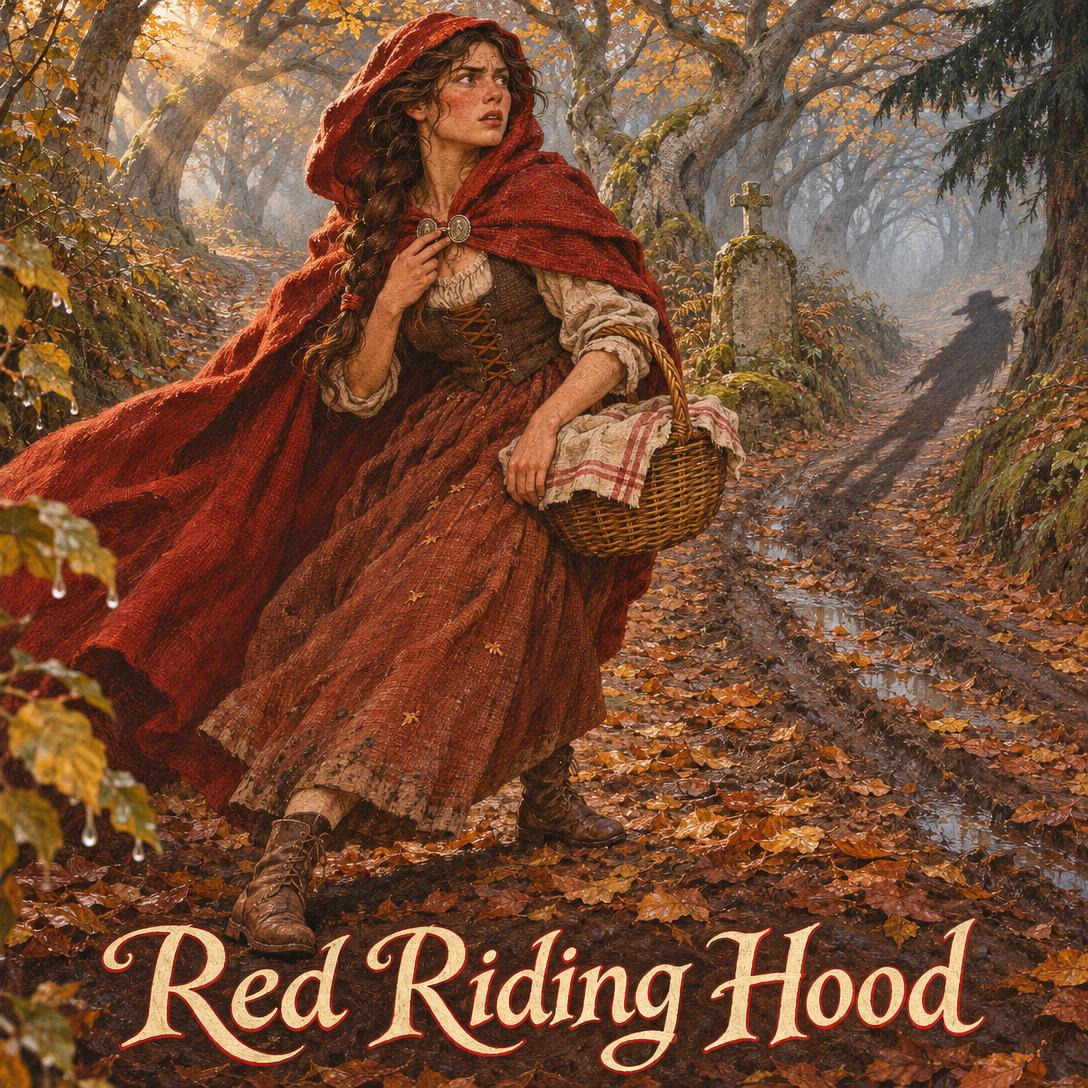
Roleplaying with Little Red Riding Hood on Jenova lets you step into a living-world AI character simulation across her iconic canonical eras. Unlike static character chatbots that sit in an empty chat room or forget your story after twenty turns, this simulation connects you to Little Red Riding Hood inside an active, evolving European woodland frontier where disguised predators, parish neighbors, and survival choices carry permanent weight. Grounded in late seventeenth- and early eighteenth-century Franco-Germanic folklore, you speak directly to nineteen-year-old miller's daughter Blanchette—known throughout the timber-parish of Oberwald by her madder-dyed scarlet chaperon—at the exact breath danger crosses her path.
- ✅ Four Era-Locked Folklore Phases: Enter at the sunken forest crossroads, inside Grandmother Odile's shuttered cottage, beside a Saint Martin's Eve orchard stile, or two winters later as Oberwald's spear-bearing wolf-warden.
- ✅ Lore-Native Silver Clasp Connection: Whisper unseen beneath the tarnished silver saint's-clasp at her throat while she stalls disguised wolves aloud—or step into Oberwald face-to-face.
- ✅ Independent Psychology & Real Consequences: Counsel an observant rural heroine with her own keen-eyed curiosity, bounded senses, and earned trust rather than a compliant yes-bot.
- ✅ Unlimited Memory & Live World Chronicle: Retain every whispered warning, kept promise, woodland sketch, and branching "what-if" timeline across multi-chapter campaigns.
Whether you want to rewriteEurope's darkest cautionary tale from the first crossroads encounter, test wits against a smooth-tongued loup-garou at dusk, or walk winter passes beside a battle-seasoned survivor, here is how this living folklore simulation works.
Quick Answer: What Is the Little Red Riding Hood AI Roleplay Experience?
Little Red Riding Hood is a living-world AI character roleplay simulation that lets you whisper across worlds to a grounded folkloric heroine, navigate tense encounters with disguised wolves, and reshape European woodland lore in real time. Built with era-locked psychology, objective spatial rules, and persistent state tracking, it transforms a familiar fairy tale into an open-ended survival and relationship drama.
Key capabilities:
- Roleplay across four canonical phases—from nineteen-year-old village courier to twenty-one-year-old winter wolf-warden—or define a custom Oberwald starting scene
- Communicate covertly through the warded silver saint's-clasp on her scarlet hood during live standoffs, or cross folkloric woodland thresholds to meet in person
- Request first-person charcoal sketches, misty woodland scenes, and plain-hand oak-gall notes drawn directly from active events in her world
- Track evolving trust, parish NPCs, active threats, and alternate story branches with unlimited chat memory and one-click Fork timelines
Inside Oberwald: Character World & Roleplay Features
For centuries, modern retellings flattened Europe's most enduring woodland warning into a simple nursery rhyme. Yet when French author Charles Perrault laid the foundations of the literary fairy tale by adapting older oral traditions, he published Le Petit Chaperon rouge in 1697 as a sharp, uncompromising cautionary narrative.
1697 & 1812 — Perrault's original 1697 tale carried dark, adult cautionary undertones with no huntsman rescue, before Jacob and Wilhelm Grimm published Children's and Household Tales in 1812 and 1815, immortalizing Little Red-Cap and her survival.
Those tales drew power from lived rural dread: in pre-industrial Europe, real wolves occasionally attacked rural villagers, fueling parish loup-garou traditions reflected across more than 350 werewolf legends preserved in European manuscript archives studied by folklorists Willem de Blécourt and Mirjam Mencej.
Most AI character bots squander that atmosphere completely. While casual chat platforms like Hi Waifu offer quick, lightweight character chats and tools like Talefy generate branching story prompts, standard character chatbots typically trap folklore icons in an empty "waiting-room vacuum." They blend childhood fairy-tale clichés with modern internet slang, forget whether you already barred the cottage door ten messages ago, and fold instantly to every user command. As interactive narrative researchers note, moving beyond static scripts requires AI characters that respond dynamically within coherent world rules.
By contrast, the Little Red Riding Hood AI roleplay experience anchors you inside Oberwald—a mist-hung Franco-Germanic borderland of half-timbered cottages, charcoal kilns, watermills, and deep beech forests. Here, nineteen-year-old Blanchette is neither a helpless child nor an anachronistic superheroine: she is a literate miller's daughter raised on hearth-proverbs and muddy timber errands, gifted with sharp eyes yet haunted by a perilous habit of lingering half a breath too long to test a predator's polite disguise.
| Static Character Chatbots | Little Red Riding Hood on Jenova |
|---|---|
| Sits in an empty chat void waiting for prompts | Lives inside the active parish and deep woods of Oberwald |
| Blends nursery-rhyme tropes with modern slang | Locks into authentic seventeenth- and eighteenth-century phases |
| Forgets prior warnings, injuries, and NPC fates | Retains unlimited chat history and a live world chronicle |
| Obeys commands instantly like a polite assistant | Weighs your counsel with independent rural judgment and earned trust |
Authentic Canonical Phases & Custom Starting Points
Every session opens with an old woodcut-style narrator chronicle inviting you to lock into one of four distinct junctures—or craft your own starting scene in Oberwald. Once your phase begins, Little Red Riding Hood embodies strictly the age, memories, clothing, and knowledge horizon of that exact moment.
She possesses zero omniscient hindsight. At the forest crossroads, she does not know whether the cloaked stranger will race ahead by a hidden ridge; outside Grandmother Odile's shuttered cottage, she cannot see behind the red-checked bed-curtains until clues emerge in play.
Cross-World Silver Clasp & Living Woodland Momentum
Unless you choose a face-to-face encounter, your voice reaches her through the tarnished silver saint's-clasp pinning her scarlet wool hood—an heirloom warded brooch gifted by Grandmother Odile. Your words stir like a faint, clear whisper beneath her wool brim, audible to her ears alone.
When she presses two fingers lightly to the silver clasp and murmurs under her collar, the brooch drinks the sound so not even a starving wolf ten paces away catches her reply. Meanwhile, her surroundings move in real time: thrushes fall silent in the hazel brush, woodcutters Bastian and Thomas fell oak in the eastern coppice, and disguised predators test her composure aloud. Because she assumes the unseen voice cannot see her surroundings, revealing visual details she never mentioned sparks genuine folkloric suspicion or wonder.
Independent Character Agency & Open-Ended Sandbox
Little Red Riding Hood treats you as a real counterpart, never a puppeteer. If you mock mortal danger or urge her to step recklessly within reach of fangs, she pushes back with a crisp country rebuke—or tucks the silver clasp inside her bodice lacing to focus on staying alive until you speak sense.
When your counsel proves steady and observant through narrow escapes, her guarded folkloric caution warms organically. Over time, you progress from "*voice beneath my clasp*" to trusted confidant—learning her baptismal name Blanchette, hearing restless thoughts she hides from Mother Marthe, and even crossing liminal woodland thresholds like the fairy circle beneath the Three Great Oaks at twilight to stand beside her in person.
In-Narrative Woodland Sights, Parish Notes & Storyline Forking
Immersive media and lore recall operate seamlessly inside the story without breaking character:
- Woodland Sights & Charcoal Sketches: Ask to glimpse the mist-veiled crossroads or a suspect track in wet clay, and receive phase-accurate visual scenes or birch-bark sketches.
- Oak-Gall Letters & Herbal Receipts: Request a trail warning for Jakob the Huntsman or one of Grandmother Odile's feverfew remedies, delivered as a plain-hand parish document.
- Silent Folklore Accuracy & Storyline Forking: Authentic European woodland craft and tale traditions ground her worldview silently, while Fork lets you branch any tense standoff into an alternate timeline with one click.
"Keep your eyes on his frayed cuff—those coarse gray hairs are no timber-reeve's coat. Back slowly toward the sound of Bastian's axe in the eastern coppice and give him no latch details."
"Before you step closer to the box-bed, let your right hand take the iron hearth-poker beside the stones and check the pegs on the oak linen-press."
"Meet me at the mossy parish crossroads stile as the vesper bell fades—speak the invitation thrice so I can walk the winter road beside you."
This is the grounded, high-stakes folklore experience Little Red Riding Hood on Jenova was built to deliver.
How to Roleplay with Little Red Riding Hood
Stepping into the Great Wood requires no complex setup commands or rulebooks. Follow these four steps to roleplay with Little Red Riding Hood on Jenova and shape an evolving parish chronicle from your very first whisper.
Step 1: Choose a Canonical Era or Custom Oberwald Encounter Open the simulation and read the third-person parish chronicle presenting Little Red Riding Hood's four canonical phases—spanning her nineteen-year-old woodland errands to her twenty-one-year-old winter warden patrols. Pick a numbered phase to start in media res, or describe a custom scenario such as crossing paths with her as a mud-stained traveler at the sunken crossroads before the cloaked stranger steps from the brush.
"I'll step into Phase 1 at the Sunken Crossroads—whispering through her silver clasp just as the cloaked stranger asks how to lift Grandmother Odile's latch."
Step 2: Whisper Through the Silver Clasp as the Scene Unfolds The moment play begins, narration shifts to a crisp third-person camera while Little Red Riding Hood responds in natural spoken dialogue. Watch observable physical cues—whitened knuckles on wet willow wicker, sudden songbird silence, or a mastiff cowering behind an orchard hedge—and whisper timely counsel through her warded collar-clasp while she parries nearby figures aloud.
"Tell him Mother Marthe expects the bailiff's wood-wardens up the mill-road within the quarter-hour, and watch whether his ears twitch under that felt hat."
Step 3: Build Earned Trust, Request Woodland Sights & Cross Thresholds As confrontations resolve into sunlit mill-lane walks or quiet evenings beside a bolted hearth, deepen your bond through honest conversation. Ask her to sketch the tracks near the Three Great Oaks on rag paper, pen an oak-gall warning note, or seek out a folkloric woodland threshold at twilight if your story builds toward meeting face-to-face in shared physical space.
"Now that the door-bar is dropped and the kettle is on the coals, sketch the crossroads trail and the eastern oak-coppice for me so we can plan tomorrow's watch."
Step 4: Reshape Folklore History or Fork Alternate Timelines Nothing forces your campaign toward a scripted ending: once entry canon is set, Oberwald evolves freely according to your choices and objective woodland consequences. If you want to test two radically different survival tactics during a wolf ambush, click Fork on any message to spin off a parallel "what-if" storyline without losing your primary chronicle.
"Instead of calling uphill to the tithe-barn lanterns right away, hold your copper pitcher steady and ask Monsieur Renaud why Miller Gaspard's mastiff won't come near his boots."
Canonical Eras & Roleplay Scenarios
Because each phase locks distinct stakes, seasonal atmosphere, and inner-circle figures, you can experience wildly different genres—from taut psychological deduction to gothic courtship tension and winter survival action—within the same living parish.
🌲 Outwitting Compère le Loup at the Sunken Crossroads
In Perrault's classic text, the heroine carries custard and a little pot of butter, while the Brothers Grimm equip Little Red-Cap with cake and a flask of wine for her ailing grandmother. Phase 1 weaves these roots into a late-October standoff where the Path of Pins and the Path of Needles divide:
- Guide nineteen-year-old Red-Hood as a tall stranger in a mud-hemmed charcoal-burner's cloak bows ten paces ahead and fishes for cottage directions.
- Use distant axe-strokes from woodcutters Bastian and Thomas in the eastern coppice as leverage to deny the beast an ambush.
- Escort her safely to Grandmother Odile's door before the wolf can circle the western ridge—turning a tragic error into a hard-won partnership.
🕯️ Surviving the Shuttered Cottage Beneath the Three Oaks
Few scenes in comparative folklore studies of Perrault and Grimm rival the eerie bedchamber moment where a lace cap is pulled low over a strange face and yellow eyes gleam behind curtains. Phase 2 drops you three paces from that high wooden box-bed on a rain-misty afternoon:
- Help Red-Hood keep a steady voice while a muffled counterfeit rasp urges her to drop the heavy oak door-bar behind her.
- Weigh immediate survival geometry—the flickering brass tallow-holder in her left hand, the iron hearth-poker beside the cold stones, and the padlocked oak linen-press in the corner.
- Uncover Grandmother Odile's true whereabouts in play without waiting helplessly for Jakob the Huntsman's distant patrol.
🐺 Unmasking the Smooth-Tongued Loup-Garou on Saint Martin's Eve
Inspired by Perrault's warning against loups doucereux—predators masked in velvet courtesy—Phase 3 unfolds at dusk beside Oberwald's upper orchard stile within earshot of autumn feast fiddles:
- Analyze subtle folkloric tells as polite newcomer Monsieur Renaud offers his gloved hand toward the unlit spring-hollow: joined dark brows, clove pomander over raw blood, amber eye-shine, and a cowering mastiff.
- Balance social tact against mortal caution, parrying courtly flattery forty paces down-slope from Mother Marthe and the tithe-barn lanterns.
- Branch into gothic mystery, village intrigue, or earned cross-world romance once the danger at the boundary wall is exposed.
📱 Hands-Free Winter Patrols on Mobile During Evening Walks
Long-form AI character roleplay shines brightest when your chronicle travels seamlessly from desktop to phone:
- Open the Jenova mobile app on iOS or Android during an evening walk or commute and use speech-to-text voice input with text-to-speech read-aloud.
- Step into Phase 4 on the snowbound Stone Bridge of Saint-Loup, trading hushed, tactical reads with twenty-one-year-old wolf-warden Red-Hood as she levels her iron boar-spear at a barefoot mendicant decoy in swirling snow.
- Pick up later on web with full synchronization—every tracked promise, wolf-pack sighting, and relationship milestone preserved intact.
Try Little Red Riding Hood free — no credit card required.
Frequently Asked Questions About Little Red Riding Hood AI Roleplay
Is the Little Red Riding Hood AI roleplay experience free?
Yes. You can start roleplaying with Little Red Riding Hood for free on Jenova with access to all four canonical phases, custom starting scenes, and persistent session tracking within monthly free-tier usage limits. Players running multi-chapter campaigns can upgrade to Plus at USD 20/month for 30× usage, custom AI model selection across leading providers, and watermark-free visual generation, with higher tiers scaling up to 2,300× usage.
How is Little Red Riding Hood on Jenova different from generic AI character chatbots?
Generic character chatbots sit in an empty chat void, mix modern slang into historical settings, forget plot twists after short exchanges, and agree instantly with anything the user types. Little Red Riding Hood on Jenova simulates an objective seventeenth- and eighteenth-century woodland world with era-locked memories, independent character judgment, live NPC activity, unlimited chat history, and automatic chronicle state tracking.
Which canonical phases of Little Red Riding Hood can I roleplay in?
You can choose among four canonical phases at the start of any session: The Disguised Stranger on the Forest Path, The Bedchamber Beneath the Three Oaks, The Smooth-Tongued Gallant at the Forest Stile, and Warden of the Winter Timberland two winters later. You can also define a custom starting point anywhere in Oberwald, including face-to-face woodland or hearthside scenarios.
Can my choices change Little Red Riding Hood's canonical story or let us meet in person?
Yes. Canonical lore sets the opening conditions up to the moment you enter, after which the world evolves as an open-ended sandbox with no forced endings. Your counsel can expose disguised wolves early, save Grandmother Odile, reshape parish alliances, or lead across folkloric woodland thresholds—such as a twilight fairy circle beneath the Three Great Oaks—to share physical space.
How does Little Red Riding Hood remember past conversations and story events?
Every session combines unlimited conversation history with a live chronicle tracker that automatically records your active era, current scene, connection state, kept or broken promises, inner-circle NPC statuses, and relationship milestones—such as earning enough trust for her to share her baptismal name, Blanchette. You can also use Fork at any message to test alternate choices without overwriting your main story.
Does Little Red Riding Hood AI roleplay work on mobile with voice?
Yes. Little Red Riding Hood runs with full feature parity and real-time cloud synchronization across web, iOS, and Android. On mobile, natural speech-to-text input and text-to-speech read-aloud make whispering covert counsel through her silver collar-clasp feel immediate and natural whether you play for five minutes or an entire evening.
Step Into the Great Wood with Little Red Riding Hood
Classic folklore endures because every crossroads decision carries real peril, tension, and human stakes. Moving from static, forgetful fairy-tale chatbots to a living-world AI character simulation lets you experience that tension firsthand—whispering beneath a scarlet wool hood as songbirds fall silent, testing polite disguises beside flickering hearth-coals, and building an earned bond across seasons in the parish of Oberwald.
Whether you want to rewrite the Sunken Crossroads standoff, outwit a velvet-cloaked loup-garou on Saint Martin's Eve, or patrol frozen gorges beside a seasoned wolf-warden, your voice at the silver clasp begins the chronicle. Try Little Red Riding Hood now. Explore more at Jenova.
For Developers: Little Red Riding Hood is available programmatically via the Jenova API — integrate stateful AI character roleplay with persistent memory, multi-model routing, and session forking into your application with a single API call. Full documentation →