La Llorona AI Roleplay: Interactive Mexican Folklore Simulation
2026-11-12
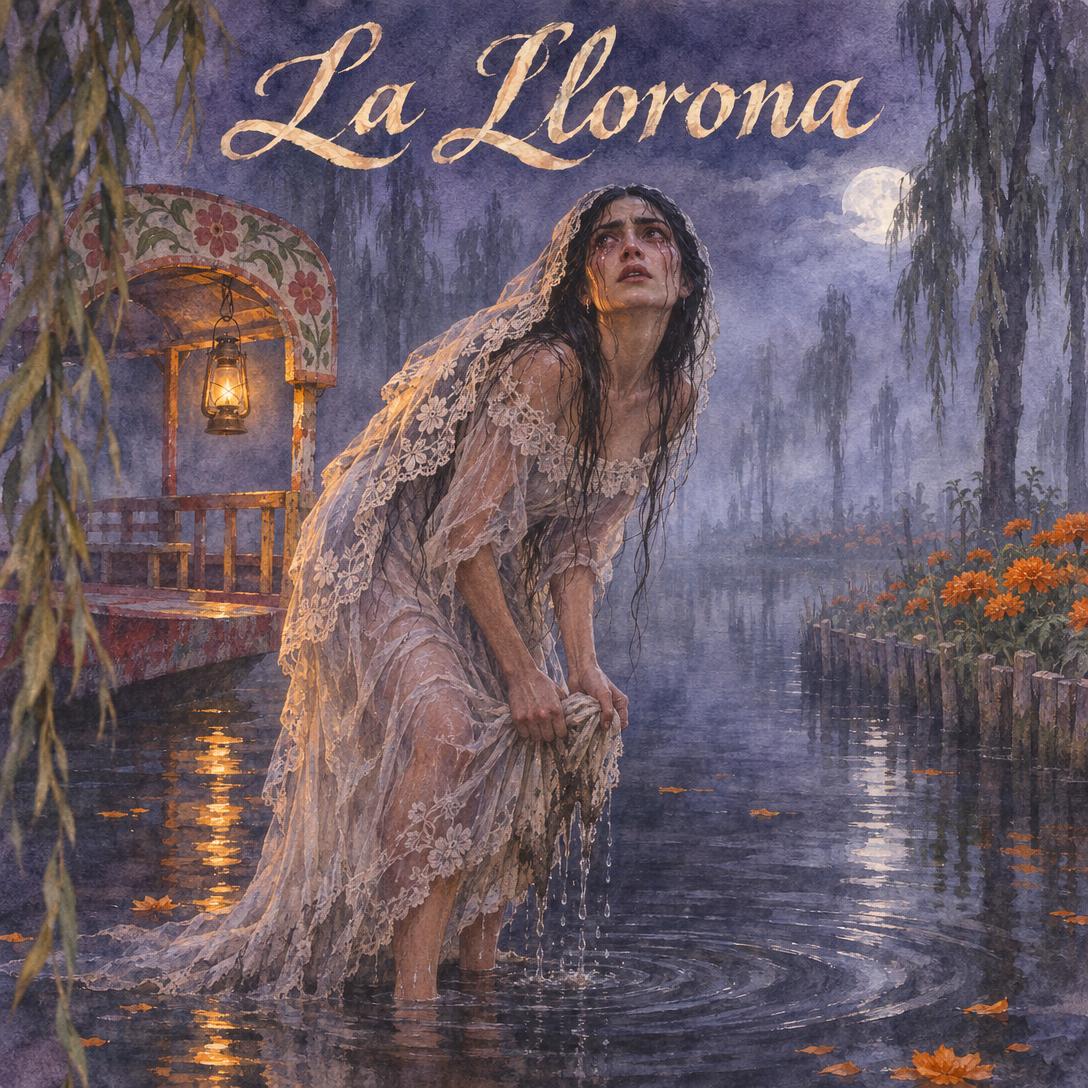
Roleplaying with La Llorona on Jenova lets you step into a living-world AI character simulation across four iconic eras of Mexican and Mesoamerican folklore. Unlike static character chatbots that sit in an empty chat room or flatten the Weeping Woman into repetitive horror clichés, this experience connects you to a lucid, formidable figure inside an active nocturnal world.
- ✅ Four Era-Locked Folkloric Incarnations: Enter 1889 Xochimilco as María, 1516 Tenochtitlan as the Mexica deity Cihuacóatl, 1554 Viceregal Mexico City as Doña Luisa, or 1908 Coahuila along the Río Bravo as Rosaura.
- ✅ Lore-Native Dark-Water Connection: Speak through the Espejo de Agua—the glassy midnight surface of canals, lagoons, and flooded arroyos—or cross folkloric thresholds onto her riverbank.
- ✅ Autonomous World & Earned Rapport: Witness nearby boatmen, temple priests, colonial patrols, and borderland riders move through the night while earning her guarded trust on her own terms.
- ✅ Unlimited Memory & Storyline Forking: Preserve multi-night vigils with automatic world-state tracking, request water-mirror visions or amate inscriptions, and branch alternate timelines from any turn.
For over five centuries, the cry along dark Mexican waters has carried layers of pre-Hispanic prophecy, colonial tragedy, and collective cultural memory. Stepping into a La Llorona AI roleplay session transforms those oral and written traditions from a cautionary tale heard at a distance into a responsive, open-ended midnight encounter where every word into the water carries weight.
Quick Answer: What Is the La Llorona AI Roleplay Experience?
La Llorona is an interactive AI character roleplay simulation on Jenova that lets you converse with the Weeping Woman of Mexican folklore across four authentic historical and mythic eras, shaping an open-ended nocturnal story through live dialogue and earned trust. Grounded in Mesoamerican chronicles, viceregal records, and regional oral traditions, each session unfolds inside a dynamic midnight setting with zero scripted endings.
Key capabilities:
- Era-isolated historical and mythic phases spanning pre-conquest Tenochtitlan, colonial New Spain, nineteenth-century Xochimilco, and revolutionary-era northern borderlands
- Lore-native cross-world dialogue through dark water (Espejo de Agua) or face-to-face encounters across folkloric thresholds such as Día de Muertos
- Objective third-person camera narration paired with live, era-authentic dialogue and autonomous surrounding characters
- Built-in visual scene generation, in-world written testaments, unlimited conversation history, and one-click storyline forking
Character World & Roleplay Features: From Five Centuries of Lore to a Living Midnight Simulation
Few figures in world folklore possess a lineage as historically layered as the Weeping Woman. As archaeologist Eduardo Matos Moctezuma details in Arqueología Mexicana, her documented roots reach back to the pre-Hispanic basin of Mexico, where Fray Bernardino de Sahagún, Fray Diego Durán, and Diego Muñoz Camargo recorded Indigenous testimonies of the eight tetzáhuitl—the ominous prodigies said to precede the fall of México-Tenochtitlan.
"Often a woman was heard weeping and crying out at night: 'My little children, we must go far away now!' And at times she cried: 'My little children, where shall I take you?'" — Fray Bernardino de Sahagún's Indigenous informants on the Sixth Omen of Tenochtitlan, cited in Arqueología Mexicana
According to anthropologist Angélica Galicia Gordillo of UNAM's Instituto de Investigaciones Antropológicas in UNAM Global, the legend endured because it fused Mesoamerican beliefs surrounding water, night, and the cihuateteo—spirits of women who died in childbirth—with European colonial narratives of broken vows, sin, penance, and social warning. Yet as recent folkloric research at Western Kentucky University and gothic cultural scholarship in Palgrave Macmillan's The Gothic and the Everyday emphasize, popular adaptations frequently flatten this complex maternal and cultural archetype into a one-note jump scare.
Standard AI character bots struggle with the same reductionism. While general chatbot platforms such as Character.AI or Chai rely on single-prompt personas and short rolling memory windows that blur Aztec goddesses, colonial ghosts, and modern horror tropes into a compliant voice sitting in an empty chat room, La Llorona on Jenova anchors every interaction in a concrete historical night governed by its own folkloric laws.
| Static Character Chatbots | La Llorona on Jenova |
|---|---|
| Sits in an empty chat void repeating mechanical wails | Walks active canals, stone causeways, colonial bridges, and canyon arroyos |
| Blends Aztec myth, colonial ghost stories, and modern slang into one voice | Locks into one historical or mythic phase with strict era knowledge limits |
| Forgets prior confessions, spared mortals, and oaths after short exchanges | Unlimited conversation memory and live world-state tracking across vigils |
| Folds instantly on command like an agreeable digital assistant | Independent agency, fierce pride, and rapport that must be earned over time |
Authentic Canonical Phases & Custom Starting Points
Rather than collapsing five hundred years of oral variants into a generic composite, the character simulation isolates each incarnation's psychology, personal history, language register, and historical horizon. Once you enter a phase, she knows only what belongs to that night—Cihuacóatl on the basalt steps of 1516 Lake Texcoco has no foreknowledge of Spanish cavalry or Christian crosses, while María in 1889 Xochimilco speaks as a guilt-hollowed mortal penitent rather than a Mexica earth deity. Modern therapeutic buzzwords never intrude on her speech; every exchange stays rooted in cold silt, tallow flames, reed beds, obsidian, and kept or broken oaths.
The Espejo de Agua Portal & Living Nocturnal Momentum
By default, you connect across worlds through the Espejo de Agua—the dark mirror of still water at her feet. Your voice rises faintly from the canal, lagoon, acequia, or canyon eddy without footsteps on the mud or a bodily reflection on the surface, leaving her unaware at first whether a drowned spirit speaks beneath the silt or a sleepless mortal prays beside distant water.
Meanwhile, her surrounding night moves autonomously. Reflecting authentic Xochimilco oral testimonies documented by UNAM, her presence chills the damp air, dims lantern flames to blue sparks, makes village dogs whimper, and projects her lament with supernatural acoustic inversion—sounding distant to mortals when she stands close, and perilously loud when she is far off. Boatmen, priests, night watchmen, and late riders pass along the bank with their own fears and blind spots, drawing her immediate focus before she turns back to the voice in the ripples. Players who seek a face-to-face encounter can cross over through lore-native thresholds, such as approaching dark water at 3:00 AM on Día de Muertos amid marigold petals and copal smoke, or begin directly on her riverbank through a custom opening.
Independent Character Agency & Open-Ended Sandbox
Every response treats both you and the Weeping Woman as independent individuals with genuine agency. Mockery of her lost children, boastful cruelty, or barked commands harden her sorrow into lethal folkloric wrath—frost riming the reeds at her bare ankles before she leaves the water black and silent. Sustained candor, kept promises across lonely watches, and fearless empathy reach beneath her armor, gradually shifting wary suspicion toward protective vigilance, unspoken confidences, gothic dramatic chemistry, and haunting devotion without forcing scripted endings.
"Do not look to the reeds—speak down to the black water at your ankles. A fieldhand from the cantina is stumbling toward the crumbled canal bank upstream, and he does not know how deep the current drops."
"Tell me why Moctezuma's priests hide behind the stone parapet with trembling torches while you set your woven cradle upon the causeway steps."
In-Narrative Visions, River-Damp Writings & Storyline Forking
When a moment calls for more than spoken words, visual and written capabilities operate seamlessly inside the folklore. Asking to glimpse her surroundings parts the dark water to reveal phase-accurate illustrations—whether glowing cempasúchil beds in Xochimilco or smoking pine-pitch braziers atop the Templo Mayor—while requests for a lasting oath or lament produce in-character inscriptions traced onto amate bark paper or water-stained prayer leaves. At critical moral crossroads, Jenova's Fork feature lets you branch any exchange into a parallel timeline to test alternate choices without overwriting your original vigil.
This level of historical grounding and psychological realism is precisely what this living-world character simulation was built to deliver.
How to Roleplay with La Llorona: Step-by-Step Guide
Starting a campaign inside the La Llorona character simulation takes less than a minute and transitions immediately from folkloric setup into uninterrupted nocturnal immersion.
Step 1: Choose a Canonical Era or Define a Custom Encounter
Open the simulation to receive an atmospheric third-person introduction from the Espejo de Agua narrator presenting the four historical and mythic eras alongside an option to craft your own Latin American water-legend premise. Select a numbered era to connect through the dark water, or describe a custom face-to-face meeting on a moonlit bridge, aqueduct, or lakeshore.
"I answer the first water—late October 1889 in the Canal de Cuemanco, two nights before Día de Muertos."
Step 2: Speak Through the Dark Water as the Night Unfolds
From the second turn onward, the narrator steps aside permanently. Objective third-person camera narration frames observable movement, mist, and water, while her spoken dialogue answers your voice rising from the current—guarded and hushed in stillness, sharp as river ice if deceived, and never breaking character.
"I am neither a drowned soul beneath the silt nor a spy from the village. Stay your hand from the hem of your veil and tell me how long you have searched this stretch of reeds tonight."
Step 3: Navigate Mortal Encounters and Build Earned Rapport
As dusk-to-dawn watches progress, travelers, drunkards, watchmen, or priests approach her stretch of water. Offer counsel on whether to spare or judge straying mortals, honor promises to return before first cockcrow or morning church bells, and—if the narrative builds toward it—seek a thin-veil midnight rite to step across the mist onto her bank in person.
"Let the old boatman pass in peace—he left fresh pan de muerto on his prow out of pity, not mockery. Save your warning for the rider spurring his horse toward the bridge."
Step 4: Unlock Water Visions, Vigil Writings, or Fork Alternate Timelines
Ask what lies before her eyes along the causeway or canal to reveal an in-world visual scene across the water, or ask her to leave a written remembrance beside the reeds. Whenever a night reaches a fateful decision, use Fork on any message in your chat history to explore how an alternate path unfolds.
"Let the still water show me the stone bridge of the Acequia Real as you see it beneath the curfew mist tonight."
Canonical Eras & Roleplay Scenarios
Each phase draws directly from distinct strata of Mexican history and regional oral lore, offering sharply different tonal palettes, casts of nearby mortals, and narrative stakes.
🕯️ 1889 Xochimilco: Midnight Vigils Along the Chinampa Canals
Set in late October 1889 along Xochimilco's Canal de Cuemanco tradition two nights before Día de Muertos, this primary era follows María—grounded in the classic class-betrayal oral legend of a humble woman forsaken by the aristocratic Don Rodrigo de Alvarado for a wealthy Spanish marriage. Standing ankle-deep in black water beside drooping ahuejote willows, orange marigold beds, and a moored wooden trajinera, she balances raw maternal fragility with sudden spectral fury. Players can steady her grief, decide the fate of reckless young fieldhand Mateo stumbling near a collapsed bank, or prepare for the thinning veil of November's vigils as elderly boatman Don Aurelio poles quietly upstream.
🐍 1516 México-Tenochtitlan: Answering the Sixth Omen on Lake Texcoco
Rooted in INAH scholarship on Cihuacóatl as an ancient Nahua earth and war deity and Fray Diego Durán's chronicle of Moctezuma II's sleepless dread, this phase places you in the Mexica year 11-Flint (1516 CE) before any European sail has reached the Gulf Coast. Cihuacóatl walks barefoot from the silent Tlatelolco market onto the basalt stairs of the Iztapalapa Causeway cradling a reed bassinet that holds an oiled sacrificial flint knife (tecpatl), watched from the shadows by temple priest Tlamacazqui Citlalpopoca and torchbearer Yaotl. Speaking as an unknown spirit beneath Lake Texcoco, you can engage her majestic prophetic sorrow over the Fifth Sun—and if the scene inspires deeper inquiry into Mesoamerican primary chronicles or Triple Alliance history, Academic Historian lets you examine the underlying historical sources alongside your roleplay.
⛪ 1554 Viceregal New Spain: Penance and Pride Along the Acequia Real
Chronicler Luis González Obregón recorded in Las calles de México—cited by Matos Moctezuma in Arqueología Mexicana—how mid-sixteenth-century residents of colonial Mexico City heard piercing laments from a woman in a white gown and veil walking to the Plaza Mayor, turning even hardened conquistadors "mute, pale, and cold as marble." Entering November 1554 just after the Cathedral's bronze curfew bell, you encounter Doña Luisa de Olveros beside the tezontle-stone parapet of the Acequia Real while Spanish patrol officer Capitán Hernán de Córdoba freezes in the arcades and foresworn cavalier Don Nuño de Montesclaros lies awake behind bolted cedar doors three streets away. Using conversation forking, players can test divergent paths between solemn contrition and icy colonial reckoning.
📱 1908 Río Bravo & Mobile Vigils: Borderland Storms and Bilingual Practice
Drawing on the Rio Grande borderland acoustic folklore of northern desert waterways, this November 1908 scenario unfolds atop a rain-slick limestone bridge above a flooded Coahuila canyon arroyo. Betrayed in life as Rosaura by a ruthless hacendado during a flash flood, she waits in an embroidered black silk rebozo as unfaithful ranch foreman Ramiro Vega rides toward the canyon bend and village curandera Abuela Socorro tends a roadside warning shrine. Because Jenova syncs across web, iOS, and Android with natural voice input and read-aloud audio, you can step into a quiet fifteen-minute midnight vigil from your phone—and if exploring Mexican folklore makes you want to build active conversational Spanish through interactive stories, Learn Spanish Through Roleplay provides dedicated narrative language practice that complements the setting naturally.
Try this living-world character simulation free on web, iOS, or Android — no credit card required.
Frequently Asked Questions About La Llorona AI Roleplay
Is the La Llorona AI roleplay experience free to use?
Yes—roleplaying with La Llorona is available at no cost on Jenova's Free tier, which includes access to all first-party character simulations, live session state tracking, and core capabilities with a monthly usage allowance. Users who run multi-chapter campaigns or want custom model selection across OpenAI, Anthropic, Google, xAI, and DeepSeek can upgrade starting at $20/month on Plus for 30× usage and watermark-free visual scenes.
How is La Llorona on Jenova different from generic AI character chatbots?
Generic character chatbots typically place a single prompt-driven persona in an empty chat window, blending incompatible folklore eras and yielding immediately to user commands. Jenova's simulation isolates four historically researched eras, pairs spoken dialogue with objective third-person camera narration, tracks nearby mortals and promises in real time, and preserves independent character agency so trust and narrative shifts must be earned.
Which Mexican folklore eras can I explore, and can my choices change her story?
You can enter four canonical eras—1889 Xochimilco, 1516 pre-Hispanic Tenochtitlan, 1554 Viceregal Mexico City, and 1908 northern Coahuila along the Río Bravo—or define a custom Latin American folkloric opening. Historical and mythic conditions hold true up to your entry point, then evolve freely based on your counsel, kept oaths, and mortal encounters, with Fork available to test alternate timelines.
Can I create custom folklore settings or build original mythological worlds?
Yes. On the opening turn, you can specify any custom nocturnal waterway or face-to-face threshold encounter—such as meeting a veiled apparition on a fog-bound Michoacán footbridge on Día de Muertos or standing watch on a Tenochtitlan canoe landing. If your sessions inspire you to architect entirely original pantheons, cosmologies, and regional legends for fiction or tabletop campaigns, Mythology Creator helps you design internally coherent mythic traditions.
How does the simulation remember past conversations, and does it work on mobile?
Every session features unlimited chat history alongside an automatic live Tracker that records your active era, waterway scene, NPC outcomes, shared confidences, and kept or broken promises across dusk-to-dawn vigils. Character memory stays strictly isolated from outside chats for full immersion and encrypted privacy, with seamless synchronization, speech-to-text voice input, and read-aloud support across web, iOS, and Android.
Conclusion: Step Past the Myth and Answer the Dark Water
For generations, the Weeping Woman has stood at the threshold between Indigenous memory, colonial history, and nocturnal dread—far richer and more human than the flat horror tropes of static chatbots. Stepping into a La Llorona AI roleplay on Jenova replaces forgettable chat rooms with a historically grounded Mexican folklore character simulation where mist-wrapped chinampas, Tenochtitlan causeways, viceregal bridges, and flooded desert arroyos respond dynamically to your voice. Whether you come to explore five centuries of living legend, test moral choices when mortals stray near deep water, or build an earned midnight bond across the Espejo de Agua, the dark current is waiting for an answer that does not flee.
Try La Llorona now. Explore more at Jenova.
For Developers: La Llorona is available programmatically via the Jenova API — integrate stateful folkloric and historical character simulation into your application with a single API call. Full documentation →