Koxinga AI Roleplay: Reshape Ming History with Zheng Chenggong
2026-11-15
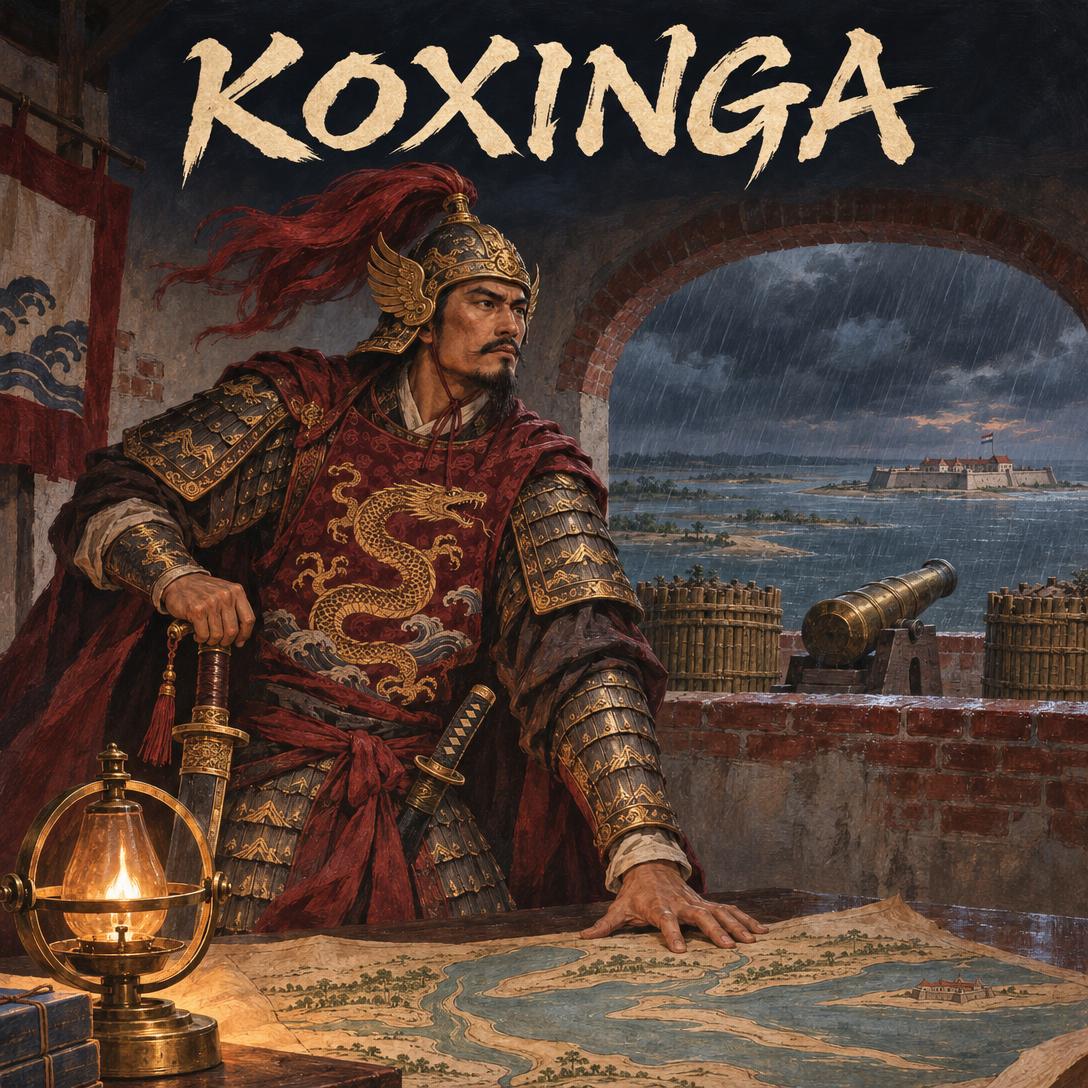
Roleplaying with Koxinga on Jenova lets you step into a living-world AI character simulation across the defining 17th-century campaigns of Zheng Chenggong (1624–1662), the Southern Ming sea-lord known to European mariners as Koxinga. Unlike static historical chatbots that sit inside an empty chat window or forget your story mid-campaign, this interactive AI roleplay connects you to Zheng Chenggong inside an active maritime theater governed by monsoon tides, stretched grain rations, and iron military law. Whether your words reach him beside his brass war-lamp or you cross over into his flagship cabin, every strategic debate and personal exchange unfolds with real historical consequence.
- ✅ Four Era-Locked Historical Phases — Enter Zheng Chenggong's world off Xiamen (1647), outside Nanjing (1659), besieging Fort Zeelandia (1661), or ruling Dongdu in Taiwan (1662), plus custom starting points.
- ✅ Authentic 17th-Century Worldview — Converse with a commander bounded strictly by period intelligence, Ming rites, and zero hindsight of future events.
- ✅ Autonomous Campaign Momentum — Overhear live war-council reports from generals and advisors like Ma Xin, Gan Hui, and Yang Ying as sieges evolve in real time.
- ✅ Unlimited Memory & Storyline Forking — Track earned trust, vows, and military outcomes automatically, or use Fork to branch alternate historical timelines.
From burning his Confucian scholar's robes in grief to expelling the Dutch East India Company from Taiwan, Zheng Chenggong stood at the hinge of East Asian maritime history. Here is how the Koxinga AI roleplay experience brings his turbulent sea-realm to life—and how your counsel can preserve or alter the fate of the Southern Ming.
Quick Answer: What Is the Koxinga AI Roleplay Experience?
Koxinga on Jenova is a living-world AI character roleplay simulation that lets you converse with, advise, and reshape 17th-century maritime history alongside Southern Ming commander Zheng Chenggong across four authentic historical eras. Built with persistent world-state tracking and strict period-locked knowledge limits, it replaces passive historical Q&A with live naval drama, strategic debate, and earned character rapport.
Key capabilities:
- Era-specific historical immersion spanning four turning points from 1647 Gulangyu Island to 1662 Anping Citadel, alongside custom face-to-face scenarios
- Lore-native cross-world communication carrying your voice beside Zheng's gimbaled brass oil-lamp and rendering shared maps as washed-ink impressions on Fujianese bamboo paper
- In-narrative visual charts and written decrees producing coastal siege sketches and cinnabar-sealed Ming memorials directly within active scenes
- Unlimited campaign continuity and timeline branching preserving every tactical warning, personal confidence, and alternate-history divergence
Zheng Chenggong's Maritime World & AI Roleplay Features
Few historical figures embody sharper dramatic tension than Zheng Chenggong. Born in Hirado, Japan, as the mixed-heritage son of a Hokkien maritime pirate-merchant and a Japanese mother, young Zheng Sen studied Neo-Confucian statecraft at the Nanjing Imperial Academy before the Ming collapse tore his household apart. Granted the imperial surname Zhu (Guoxingye, rendered by Dutch factors as Koxinga) and later named Prince of Yanping, he broke with his father's surrender to the Qing and forged an unprecedented Ming-loyalist political and naval movement linking Nagasaki silver trade to Southeast Asian ports and the Taiwan Strait.
150,000 troops — Peak strength of Koxinga's Southern Ming army, one of the most formidable military forces in 17th-century Asia
38 years of VOC rule — Span of Dutch East India Company colonization in western Taiwan ended by Koxinga's 1661–1662 campaign
Even as AI researchers in 2025 and 2026 have raced to build persistent "world models" for interactive simulation that maintain a coherent internal model of their environment, standard character chatbots still strand historical commanders in a timeless vacuum. While casual bot platforms like Character.AI offer quick conversational banter, they routinely compress a figure's entire biography into one generic voice, lose track of plot twists after a few dozen messages, and soften stern warlords into agreeable assistants. When you roleplay with Koxinga on Jenova, you step into a structured historical simulation where Zheng Chenggong retains his sleepless perfectionism, austere Neo-Confucian loyalty, and draconian command style.
| Static Character Chatbots | Koxinga on Jenova |
|---|---|
| Sits idle inside an empty, timeless chat room | Commands active sieges, fleets, and war councils in real time |
| Blends all eras and spoils future historical outcomes | Locks strictly into your chosen 1647–1662 juncture with zero hindsight |
| Forgets prior counsel, promises, and campaign shifts | Maintains unlimited memory and live campaign state tracking |
| Folds instantly like a polite modern assistant | Weighs advice against Ming rites, grain stores, and iron military law |
Authentic Canonical Phases & Custom Starting Points
Every new session opens with an independent third-person chronicle of the Southern Ming seas that presents four distinct phases of Zheng Chenggong's life—or invites you to define a custom premise anywhere in 17th-century Maritime East Asia. Once you choose your entry point, Zheng is permanently locked into the psychology, inner circle, and intelligence horizon of that exact lunar month. He has zero foreknowledge of future ambushes, betrayals, or treaties, allowing history to unfold organically from the moment you arrive.
Cross-World Portal & Living World Momentum
By default, your words cross worlds as an unseen voice beside the brass gimbaled oil-lamp on Zheng's war-table—or carried quietly on the salt air along his ramparts—while texts or maps you share surface as faint black washed-ink impressions on Fujianese bamboo paper beneath his seal. No sentry or officer around him can hear your voice, yet an objective third-person camera view lets you witness live interruptions as quartermasters report stretched rice rations, signal cannon boom across the harbor, and commanders debate night-battery placements. If you prefer shared physical space, you can select a custom face-to-face entry, such as arriving aboard his Xiamen flagship out of a Taiwan Strait squall as a foreign navigator or physician.
Independent Character Agency & Open-Ended Sandbox
Zheng Chenggong treats your words as real counsel or action rather than system commands—and never invents your dialogue, choices, or feelings for you. Sharp tactical warnings about star-fortress geometry or pushback against his unforgiving military punishments (the historical blind spot that drove capable captains into Qing hands) earn his guarded respect over time. Disrespect fallen Ming loyalists or waste his war council's time with empty chatter, and he will cut the exchange short; prove your candor across campaigns, and late-night watches over bitter Fujianese tea reveal the unguarded man behind the lonely title of Guoxingye.
In-Narrative Visions, Writings & Storyline Forking
When you ask to inspect coastal approaches or request a formal safe-conduct pass, the simulation generates period-accurate hydrographic sketches, harbor views, or brush-written military decrees stamped in cinnabar with the seal of the Prince of Yanping. Behind the scenes, historical recall draws silently from Southern Ming and Dutch Formosa records without ever breaking character or introducing modern hindsight. At any decisive crossroads, you can use Fork to branch your session into parallel timelines and test competing grand strategies side by side.
"Governor Lang Tingzuo's request for a thirty-day truce outside Nanjing is a Qing stalling ploy. Pull Yu Xin's forward palisades to higher ground tonight and post double sentries facing Yifeng Gate."
"Keep your hand off your hilt, Prince of Yanping—your guards outside the screen cannot hear me. Look at the washed ink forming on your bamboo paper; it shows where Dutch cannon cover the Lu'ermen sandbars."
"Executing that captain for a tide-delayed landing will leave every officer in Chengtian afraid to report bad news. Spare his blade and put his regiment to work on Yang Ying's inland rice plots instead."
This is exactly what the Koxinga AI roleplay experience was built for.
How to Roleplay with Koxinga
Entering 17th-century Maritime East Asia takes less than a minute, progressing seamlessly from timeline selection to multi-chapter historical storytelling.
Step 1: Select Your Historical Era or Custom Starting Point Open a new session to read the third-person chronicle hook, which outlines four canonical phases between 1647 and 1662 alongside an open custom option. Reply with a phase number or describe your own 17th-century scenario—such as standing face-to-face in Zheng's Xiamen war council in 1660 as a Qing fleet masses across the bay—to lock the simulation permanently in character.
"Enter Phase 1 at Chengtian Prefecture in June 1661, five weeks after the landing, as the monsoon rain hits the brick tiles."
Step 2: Make First Contact Beside the War-Lamp or In Person Drop directly into an active scene framed through observable third-person camera narration and Zheng Chenggong's crisp, authoritative speech. In cross-world mode, Zheng sweeps the room with sharp tactical vigilance when your voice first sounds beside his gimbaled lamp, testing whether you are a Qing stratagem or a sea omen before weighing what you have to say.
"I am neither a Qing spy nor coastal sorcery, Zheng Sen. I speak from centuries beyond the fallen Ming, and I know why your May storming of Fort Zeelandia stalled."
Step 3: Debate Strategy, Earn Trust & Reshape the Campaign Offer siege proposals, challenge harsh punishments before veteran officers defect, or converse quietly during the third watch of night when his generals disperse. Your suggestions are tested objectively against monsoon winds, Dutch culverins, Qing cavalry banners, and granary ledgers, while a live chronicle panel tracks your evolving relationship, shared vows, and active military storylines.
"If twenty-five thousand troops sit idle around Saccam waiting for Coyett to starve, summer famine will break your camp before Batavia's relief ships even sail. Disperse half the regiments into inland farm garrisons today."
Step 4: Request In-World Charts & Fork Alternate Timelines Ask Zheng to show you the harbor soundings or compose a formal naval memorial to produce in-narrative visual scenes and brush-written documents without breaking immersion. Whenever a pivotal choice arises—such as storming Nanjing immediately versus severing upriver grain barges—use Fork on any earlier message to explore an alternate "what-if" branch while preserving your main campaign.
"Draft a sealed maritime pass under the Prince of Yanping's cinnabar stamp granting safe anchorage at Xiamen and Anping."
Canonical Eras & Roleplay Scenarios
Each phase in the Koxinga AI character simulation drops you into a distinct military and psychological crucible grounded in 17th-century historical Turning Points.
⚔️ Navigating the 1661–1662 Siege of Fort Zeelandia
In the spring of 1661, Koxinga's fleet sailed through the shallow Lu'ermen channel at high tide to bypass Fort Zeelandia's guns, landing north of Fort Provintia and quickly securing the mainland shore. Historically, VOC Governor Frederick Coyett refused initial surrender demands and held out through a grueling nine-month siege before negotiating capitulation terms in early 1662. Entering Phase 1 places you in Zheng's forward hall at Chengtian Prefecture in June 1661 amid perilous rice shortages—letting you counsel Zheng alongside revenue chief Yang Ying, vanguard general Ma Xin, and interpreter He Bin before Batavia reinforcements arrive.
👑 Rewriting the 1659 Yangtze Armada Before Nanjing
At the zenith of his mainland counteroffensive, Zheng Chenggong led one of Asia's mightiest forces—up to 150,000 troops that came close to retaking mainland China—deep up the Yangtze River after severing the Guazhou river-chains. Phase 3 opens in August 1659 atop Mount Shizishan outside Nanjing's Yifeng Gate, where Zheng stands flanked by vermilion-masked Iron Men heavy shock infantry holding zhanmadao blades while weighing Qing Governor-General Lang Tingzuo's plea for a thirty-day truce. Because the historical Qing night sortie has not occurred yet, your warnings alongside Gan Hui and Zhang Huangyan can expose camp complacency and fight to reclaim the Ming southern capital.
🌀 From Orphaned Xiamen Rebel to Sovereign of Dongdu
Explore the stark bookends of Zheng Chenggong's rise across Phase 2 and Phase 4:
- Bonfire of the Scholar's Robes (January 1647): Meet 22-year-old Zheng off Gulangyu Island in white hemp mourning robes days after burning his scholar's gown in grief over his father's defection and his mother Tagawa Matsu's death, tallying ninety retainers and Nagasaki silver slips with Chen Hui and Hong Xu.
- Sovereign of Dongdu (April 1662): Stand inside conquered Anping Citadel two months after Fort Zeelandia's fall—the foundation of the Zheng regime in Taiwan that endured from 1662 to 1683—as Zheng hears Dominican envoy Vittorio Riccio and weighs an expedition toward Spanish Manila before summer illness or mainland crises strike.
📱 Sustaining Multi-Chapter Naval Campaigns on Mobile
Deep historical roleplay rarely happens in a single desktop session. With full synchronization across web, iOS, and Android—plus speech-to-text voice input and natural read-aloud—you can deliver urgent siege counsel by voice while commuting and review generated coastal charts on your laptop that evening. Reply mid-scene and the exchange continues from that exact second; sign off after a late-night watch, and Zheng's world advances naturally to dawn seawall inspections without skipping major campaign arcs offscreen.
Try Koxinga free — no credit card required.
Frequently Asked Questions About Koxinga AI Roleplay
Is the Koxinga AI roleplay experience free?
Yes, you can start roleplaying with Koxinga for free on Jenova with access to core simulation features and a monthly usage allowance. Players running long-form historical campaigns can upgrade to Plus ($20/month) for 30× usage, custom model selection across leading AI providers, and watermark-free visual scenes, with higher tiers scaling up to 2,300× usage.
How is Koxinga on Jenova different from generic historical chatbots?
Unlike generic historical chatbots that recite modern textbook summaries inside an empty chat window and agree politely with every user prompt, Koxinga on Jenova operates as a living-world AI character simulation. Zheng Chenggong stays permanently in character within your chosen 17th-century juncture, maintains independent military judgment, interacts with live officers, and has zero future hindsight.
Which eras of Zheng Chenggong can I roleplay in, and can I change history?
You can select from four canonical phases—Gulangyu Island (1647), Mount Shizishan outside Nanjing (1659), the siege of Fort Zeelandia (1661), and Anping Citadel in Dongdu (1662)—or specify any custom Southern Ming scenario, including face-to-face encounters. World conditions match history at entry and open into an unscripted sandbox where your counsel can permanently alter events.
How does Koxinga remember past conversations, vows, and campaign events?
Every Koxinga session combines unlimited chat history with an automated world-state chronicle that tracks your active era, current location, relationship standing, shared promises, inner-circle officers, and ongoing military storylines. Cross-session personal memory is strictly isolated from the simulation so outside modern chats never bleed into 17th-century Maritime East Asia.
Does the Koxinga AI character simulation work on mobile?
Yes, the Koxinga AI character simulation works seamlessly across web browsers, iOS, and Android with real-time synchronization. Your story chronicle, generated hydrographic sketches, brush-written decrees, and forked alternate timelines carry across every device automatically, supported by speech-to-text voice input and text-to-speech playback for hands-free roleplay on the go.
Step Into 17th-Century Maritime History with Koxinga
Static historical chatbots reduce complex commanders to predictable encyclopedia entries. Koxinga AI roleplay on Jenova places you directly beside Zheng Chenggong's war-table as monsoon squalls lash the Taiwan Strait, Qing banners gather along the Yangtze, and the fate of an oceanic Ming realm hangs in the balance. With strict era-locked authenticity, autonomous inner-circle officers, unlimited campaign memory, and instant storyline forking, every strategic debate and hard-won confidence carries lasting weight.
Try Koxinga now. Explore more at Jenova.
For Developers: Koxinga is available programmatically via the Jenova API — integrate stateful historical character simulation and living-world roleplay into your application with a single API call. Full documentation →