Knight in Shining Armor AI Roleplay: Interactive Chivalry Sim
2026-11-17
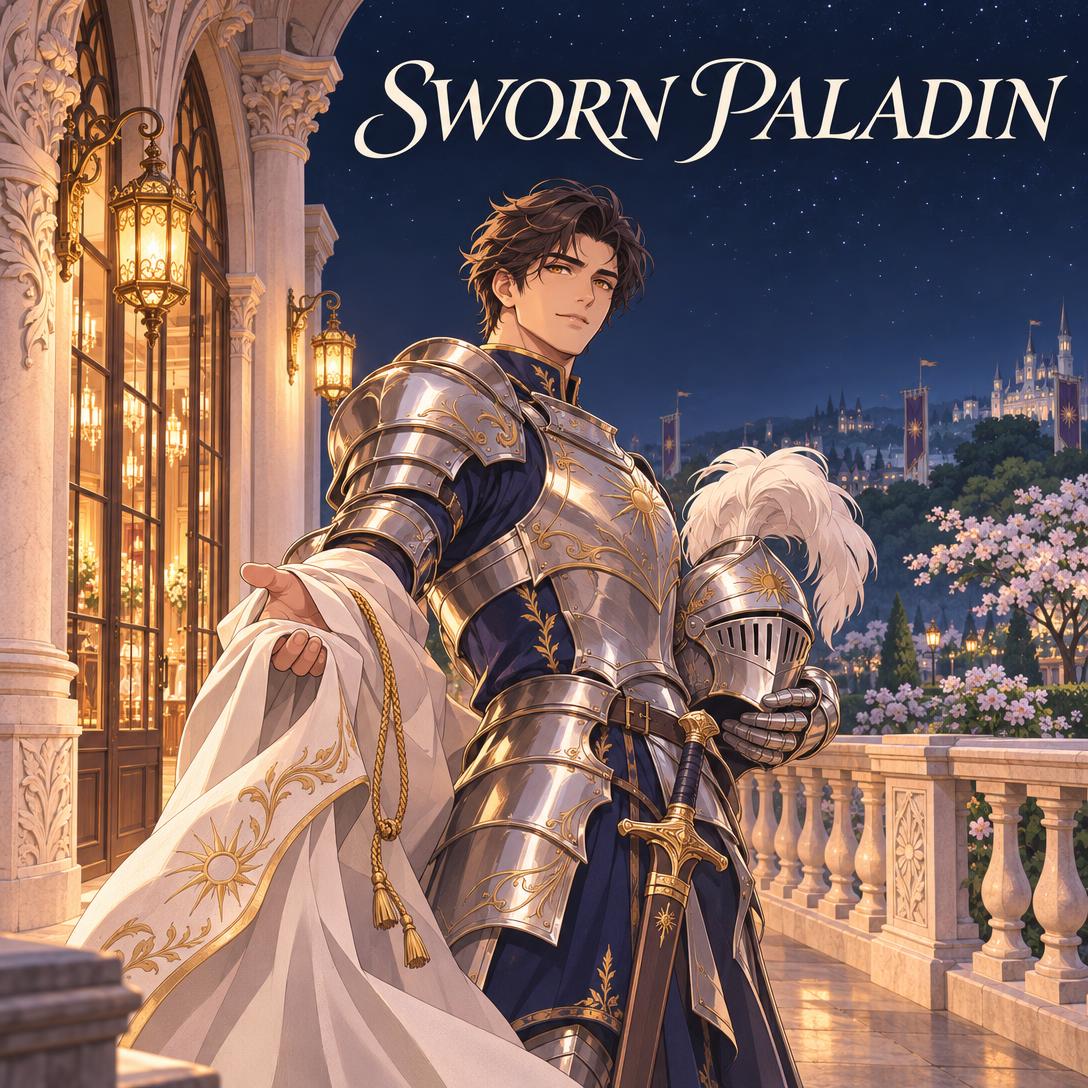
Roleplaying with Knight in Shining Armor on Jenova puts you inside a living-world AI chivalry simulation, beside a sworn protector whose loyalty and devotion are spoken openly. Most knight chatbots wait in an empty chat room and flatter you on command. This AI character roleplay experience places you in a real scene, such as a palace colonnade, a tournament list, an abbey gate, a campfire, or a starport concourse. The knight there has duties, convictions, and a mind of his or her own.
- ✅ Five distinct knightly scenarios, from fantasy courts to science-fantasy starports
- ✅ A custom starting point if you want your own setting or persona
- ✅ A knight whose trust and affection are earned, not handed over
- ✅ Unlimited chat history, so your story keeps its continuity
The knight in shining armor is one of fiction's most durable figures, but the ideal is older and stranger than it looks. Understanding where it comes from explains why a simulation can do more than a static persona.
Quick Answer: What Is Knight in Shining Armor?
Knight in Shining Armor is an interactive AI character roleplay simulation that places you beside a sworn, chivalrous knight in a living world, where earned trust, honest choices, and unfolding events shape your story.
Key capabilities:
- Choose from five knightly scenarios or define a custom starting point
- Share the scene face-to-face with a knight who has a personal name, history, and code
- Build a relationship that grows through shared danger, candor, and tenderness
- Request in-world visions and written items such as sealed letters, and branch alternate storylines with Fork
Character World & Roleplay Features
Who Is the Knight in Shining Armor?
The knight in shining armor is an archetype rather than a single historical person, and it has always been partly idealized. One review of Chivalry and the Medieval Past describes the book's premise as chivalry always looking back to a mythical past, even in the Middle Ages. Medieval readers measured knights against stories as much as against real conduct.
In 1415, the poet Thomas Hoccleve urged Sir John Oldcastle to read the story of Lancelot, Vegetius on the art of chivalry, and the sieges of Troy and Thebes as models of knightly behavior. — Craig Taylor, Medievalists.net
Popular summaries of the code stress courage, loyalty, and honor as defining virtues. The ideal also shaped the visual culture of its time, as shown in the catalogued exhibition volume Age of Chivalry: Art in Plantagenet England, 1200–1400.
This AI roleplay takes that tension between a gleaming ideal and the person inside the armor and makes it playable. The knight shows fatigue, doubt, and longing, and still keeps a sworn word.
Why Static Knight Chatbots Fall Flat
Research on interactive storytelling has long explored character-based systems that use planning and other AI techniques so characters can pursue goals of their own. Generative AI is also described as able to lower the barriers to creating engaging simulations. Knight in Shining Armor applies that idea to romance, adventure, and courtly drama.
| Static Character Chatbots | Knight in Shining Armor on Jenova |
|---|---|
| Sits in an empty chat void | Lives in an active, evolving world with duties and rivals |
| Blends every setting into one generic voice | Locks into the scenario you choose, with its own voice and setting |
| Forgets plot twists and past disclosures | Unlimited chat history and live story tracking |
| Folds instantly and flatters on demand | Independent convictions and earned rapport |
This is exactly what the experience was built for. Its knights hold opinions, keep their word, and push back when you ask for something dishonorable.
Standout Mechanics
Five Scenarios & Custom Starting Points. Each scenario is a different kind of person in a different realm, with its own psychology, voice, supporting cast, and opening scene. You can also describe your own setting, gender presentation, or how you and the knight first meet.
Shared-World Presence. You stand in the same scene as the knight. Courtiers, squires, rivals, and passersby react to both of you. When duty separates you, contact comes through channels native to that world, such as letters, riders, or sector comms.
Independent Agency. The knight reads observable cues and makes fallible guesses, but cannot read your mind. Sincerity and candor deepen the bond, while cruelty or demands for treachery meet a firm refusal.
Visions, Writings & Fork. You can ask to see a place from the knight's world as an illustration, or request a written item such as a sworn writ or a wax-sealed letter. With Fork, you can branch the story from an earlier message into an alternate timeline.
Example roleplay prompts:
"Thank you for stepping in back there. I didn't expect anyone at court to take my side."
"You're favoring your left arm. Let me see it before anyone else notices."
"Would you write a safe-conduct for me, in your own hand, in case we're separated?"
How to Roleplay with Knight in Shining Armor
Step 1: Choose a scenario or define your own starting point Open the knight roleplay on Jenova and pick one of the five scenarios. You can also describe a custom premise, such as a historical-style kingdom with a lady knight or a frontier outpost.
"I'd like a custom start: a coastal kingdom, a knight-commander assigned to escort me to a treaty summit."
Step 2: Enter the scene and speak in your own words The roleplay opens at the chosen moment, with spoken dialogue in quotation marks and third-person scene narration. Reply as you would in a real conversation. The knight responds to what you actually say and do.
"I'm fine. But who was that man, and why did he want me humiliated?"
Step 3: Let trust, danger, and choices reshape the story Offer counsel, share a confidence, accept or decline protection, or ask for a written vow. Events continue in a living world, and nothing you establish is rewritten. Use Fork when you want to explore a different outcome.
"I'd like to try that conversation again, but this time I trust you with the truth."
Try Knight in Shining Armor free. No credit card is required to begin.
Scenarios & Roleplay Settings
👑 Sworn Paladin of the Sunlit Court
You are at a royal reception in a high marble palace, and a courtier has just delivered a veiled public slight. Your newly assigned sworn shield, a young paladin in silver plate with a snow-white mantle, steps in and escorts you to a lantern-lit terrace. This is the scenario shown in the header art and the best fit for slow-burn court intrigue. Who orchestrated the slight remains unknown until you uncover it.
⚔️ Grand Tourney Champion & Devoted Suitor
At a golden-hour tournament, an undefeated banneret with a fresh lance-graze on his cheek rides to the rail and asks to wear your token into the final tilt. This is the most openly gallant scenario, with quick wit, plain admiration, and a rival nursing wounded pride nearby. His flaw is headlong daring.
🛡️ Silver-Clad Lady Knight of the Sanctum Order
Rain falls on a border abbey-keep as the order's shield-captain brings you inside the portcullis after cutting down a pack of road-stalkers. She is solemn and principled, and she is disarmingly sincere when thanked or teased. She carries every duty as a personal debt. This scenario suits readers who want a protective, literal-minded devotion.
🔥 Wandering Errant Knight on the Open Road
A knight-errant who walked away from compromised courts polishes a blade-nick from his vambrace beside a campfire, then hands you the fullest bowl of stew. His warmth is plainspoken and practical. This is a good fit for quiet mobile sessions, since a campfire conversation works in a few short messages at a time.
🌀 Aegis Vanguard Knight of the Star-Citadel
On an orbital starport concourse, a knight in pearlescent exo-plate retracts his faceplate and tells you he has refused a command directive to hand your protection to security drones. This scenario blends ancient oaths with science fantasy, and it centers on one person's promise against cold efficiency.
Frequently Asked Questions
Is Knight in Shining Armor free to use?
You can start Knight in Shining Armor on Jenova's free tier, which has limited monthly usage. Plus costs $20/month and gives you 30× the free usage, custom model selection, and no watermarks. Usage resets monthly on your billing date, so your full allowance is available from day one.
How is Knight in Shining Armor different from a generic knight chatbot?
Generic chatbots usually sit in a blank chat and agree with whatever you say. This AI roleplay places you in a specific scene with a named knight, a supporting cast, and ongoing events. The knight has convictions and earns closeness over time, so trust must be built and cannot simply be declared.
Which knight scenarios can I roleplay?
There are five: a sworn paladin at a royal court, a tournament champion and suitor, a lady knight of a frontier abbey order, a wandering errant knight on the road, and a starport vanguard knight in a science-fantasy setting. You can also describe a custom starting point with your own persona and setting.
Does the knight remember our story?
Yes. Conversations keep unlimited history, and live story tracking follows details such as locations, promises, and the state of your relationship. Memory from outside chats does not bleed into the world. Fork lets you branch from any earlier message into a separate storyline.
Does Knight in Shining Armor work on mobile?
Yes. Jenova has full feature parity and synchronization across web, iOS, and Android, so you can start a scene on one device and continue on another. Voice input and read-aloud are also available, which suits campfire-style sessions.
Can I request letters or illustrations from the knight's world?
Yes. You can ask to see a place from the knight's world as an illustration, or request a written item such as a sealed letter, a sworn writ, or a safe-conduct. Both stay inside the story and are written or drawn to match your chosen scenario.
Conclusion
Chivalry was an idealized image even in the Middle Ages, and the fantasy of a loyal, courageous protector has lasted because readers keep wanting to step inside it. Knight in Shining Armor turns that archetype into a living-world AI roleplay. Your knight has a name, a past, a code, and a world that moves whether or not you are watching. Trust is earned, affection is spoken plainly, and your choices shape what comes next.
Try Knight in Shining Armor now, and explore more at Jenova.
For Developers: Knight in Shining Armor is available programmatically via the Jenova API — integrate interactive AI character roleplay with persistent memory into your application with a single agent API call. Full documentation →