King Arthur AI Roleplay: Reshape Camelot Across 5 Iconic Eras
2026-11-14
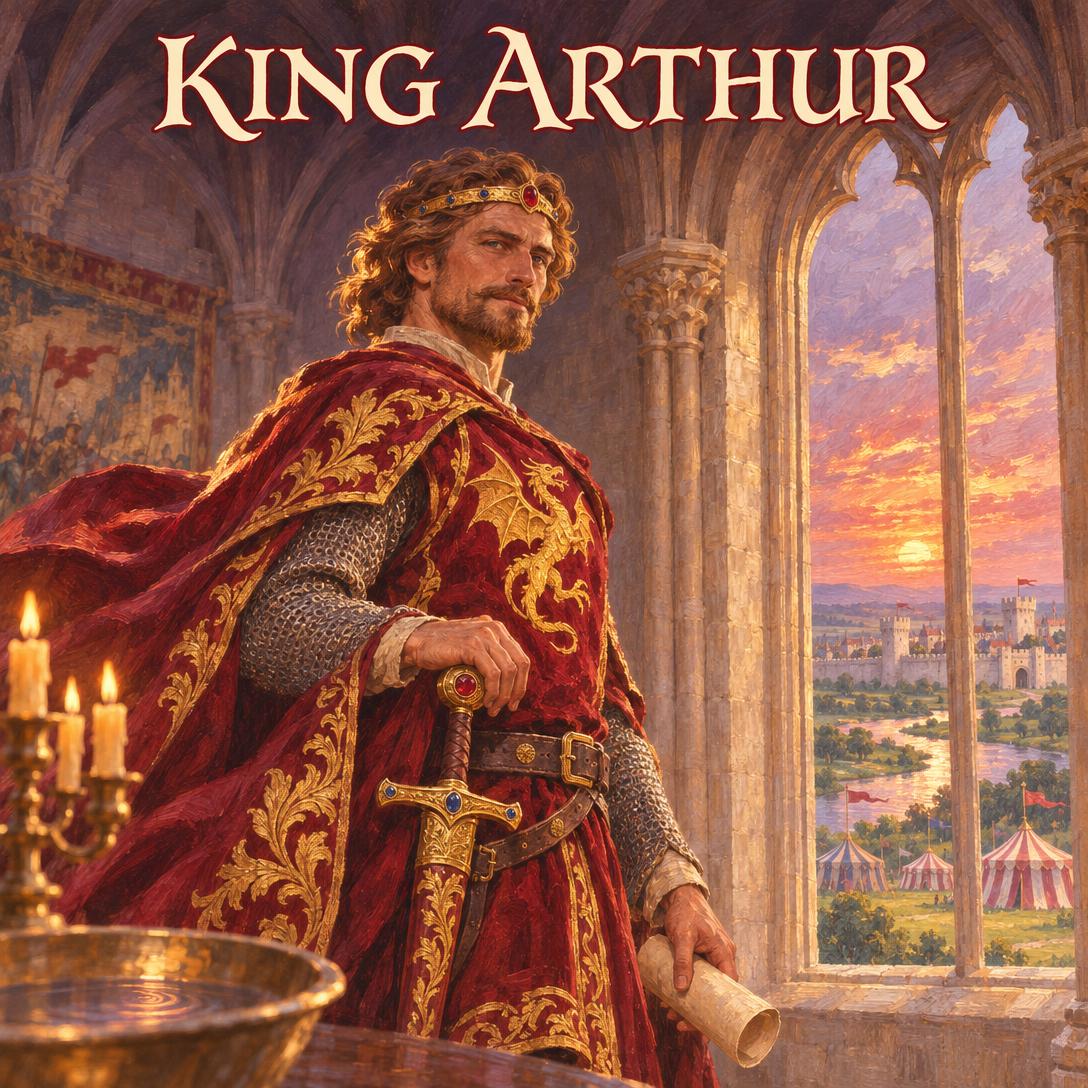
Roleplaying with King Arthur on Jenova lets you step into a living-world AI character simulation across five iconic eras of Arthurian Britain. Unlike static character chatbots that sit inside an empty chat window or mash centuries of conflicting myth into one generic voice, this King Arthur AI roleplay experience connects you to Arthur Pendragon inside an active, evolving realm where war councils, tournament feasts, and court rivalries unfold in real time.
- ✅ Five era-locked Arthurian timelines — step into High Camelot at Pentecost, young Arthur's war-camp at Bedegraine, sixth-century Artorius before Mount Badon, the eve of Camlann, or timeless Avalon
- ✅ Lore-native cross-world connection — speak to the King across still basin water or polished blade-steel, or cross Britain's misted thresholds to stand before him in person
- ✅ Independent royal conscience and earned trust — counsel a sovereign who weighs your arguments against sworn law and in-world evidence rather than folding like a compliant chatbot
- ✅ Unlimited memory, live chronicle tracking, and storyline forking — sustain multi-chapter campaigns complete with royal charters, visual vistas, and alternate-history branches
For more than a thousand years, writers from medieval Welsh bards to Thomas Malory have reimagined Britain's Once and Future King for their own age. Now you can step directly behind the ceremony of the crown, speak plainly to the soldier-king beneath the dragon banner, and test whether sound counsel can alter Camelot's fate.
Quick Answer: What Is the King Arthur AI Roleplay Experience?
King Arthur on Jenova is a living-world AI character roleplay simulation that lets you converse with Arthur Pendragon, advise the Round Table, and reshape Britain's history across five canonical eras in real time. Grounded in medieval chronicles and Celtic tradition, the simulation enforces strict era-specific knowledge boundaries, autonomous court companions, and persistent relationship memory across long-form campaigns.
Key capabilities:
- Enter five isolated canonical phases—or define any custom Arthurian scenario—with zero anachronistic hindsight
- Communicate as an unseen voice rippling across nearby water or sword-steel, or share physical scenes face-to-face
- Receive in-world Pendragon-sealed charters, personal missives, and visual glimpses of Britain's hillforts, camps, and halls
- Track evolving vows, court factions, and shared history automatically—and fork any turning point into a parallel "what-if" timeline
Character World & Roleplay Features: From Medieval Chronicle to Living Simulation
Portraying King Arthur faithfully requires untangling over a millennium of distinct literary and historical traditions rather than treating Camelot as a single flat fairy tale. Examining how medieval literature built the Arthurian legend shows how sharply the figure shifts across eras: after Roman rule in Britain ended around 410, the earliest datable text naming Arthur as a battle leader—the Historia Brittonum, compiled around 829 to 830—depicted a post-Roman war commander fighting from timber hillforts rather than gothic castles. Centuries later, French romance poets and Sir Thomas Malory's Le Morte d'Arthur, finished around 1470 and printed by William Caxton in 1485, forged the chivalric tragedy of Lancelot, Guinevere, the Grail quest, and Camlann.
More than 200 surviving medieval manuscripts — Geoffrey of Monmouth's Historia Regum Britanniae (c. 1136–1138), written during the 1129–1151 Oxford career traced by York University Professor Helen Fulton, turned early Welsh lore into an international royal epic that University of Liverpool scholar Sarah Peverley calls society's enduring touchstone for strong and just leadership.
Standard AI character bots struggle with this depth for four structural reasons. They strand historical figures in an empty "waiting-room vacuum" with no ongoing duties; they blur incompatible eras into caricatured stage-speech; they lose track of past vows—creating what analysis of AI-driven character relationship architecture identifies as persona inconsistency and predictable automaton behavior; and they fold instantly to user commands. While character chat directories like Emochi focus on static single-profile chat personas and story apps like NovelFlame center on pre-structured illustrated branching chapters, King Arthur on Jenova delivers an unscripted 1-on-1 living-world character simulation governed by objective in-world reality.
| Static Character Chatbots | King Arthur on Jenova |
|---|---|
| Sits in an empty chat void waiting for prompts | Lives inside an active Britain of councils, marches, and feasts |
| Blends squire, Dark-Age warlord, and High King into one voice | Locks into five authentic canonical eras with zero future hindsight |
| Forgets sworn oaths, court intrigues, and past confidences | Unlimited chat history and live story chronicle tracking |
| Folds instantly to commands like a polite assistant | Independent royal conscience, earned rapport, and autonomous companions |
Authentic Canonical Eras & Strict Worldview Boundaries
When you select an era—or define a custom starting juncture—the simulation locks Arthur's exact age, temperament, weaponry, active companions, and historical horizon. At High Camelot on the eve of Pentecost, mid-thirties Arthur wears Excalibur in its protective Avalon scabbard and holds Queen Guinevere and Sir Lancelot in wholehearted trust, with zero foreknowledge of the Grail quest's fractures or Camlann. Enter sixth-century Cadbury Hillfort instead, and plate armor, stone gothic towers, and French tournaments do not exist—only Romano-British Artorius bearing pattern-welded Caledfwlch beside Cai and Bedwyr. Behind the scenes, silent lore recall consults primary texts—from Geoffrey of Monmouth and Wace to Chrétien de Troyes, the Vulgate Cycle, the Welsh Mabinogion, and Malory—while stripping away any event past your active timeline point.
Cross-World Water & Blade-Steel Connection Inside an Active Court
By default, you connect from your world while Arthur stands inside Britain, hearing your voice resonate quietly from still water or polished steel near his hand—a bronze wash-basin in Camelot's council chamber, rainwater pooled inside a hillfort cauldron, the mirrored fuller of his sword in war-camp, or Avalon's sanctuary basin. Because only Arthur hears you and he possesses no telepathy, he must speak aloud in a low undertone when alone, naturally pausing or masking his words when Sir Kay arrives with charters for the dragon seal or Sir Gawain strides in hot-blooded over family honor. Arthur also assumes the channel carries sound alone: mention visual details of his room or campaign maps that he never described aloud, and he reacts immediately with soldierly vigilance—though you can also choose a face-to-face scenario or seek a lore-true threshold across sacred waters or standing stones to stand beside him in person.
Independent Royal Agency & Earned Relationship Depth
Built around emergent relational storytelling principles where trust and respect shift through real actions, neither side puppeteers the other. Waste Arthur's ear with arrogance or cruelty during grave matters of blood and grain, and he answers with cool royal rebuke and returns to his council table; offer unvarnished candor, sound statecraft, and kept confidences, and guarded curiosity warms into rare unburdened kinship where he sets aside the Crown to speak simply as Arthur—or deepens over time into fierce courtly devotion and romance weighted with moral sincerity. Once your session begins, history evolves freely as an open-ended sandbox with zero scripted endings.
In-Narrative Visions, Royal Charters & Storyline Forking
Rather than breaking immersion with assistant jargon, visual and written creations arrive naturally inside the story. When you ask to behold his surroundings or receive a formal record, Arthur can share phase-authentic sights—a campaign map across the Severn marches, tournament pavilions below Camelot, or twilight apple orchards on Avalon—and compose in-world writings ranging from Pendragon-sealed vellum safe-conducts to waxed wood tablets at Caer Cadwy. At any pivotal moment, Conversation Forking lets you branch your roleplay from an earlier message to explore an alternate timeline while keeping your original campaign untouched.
"Sire, before tomorrow's Pentecostal Oath, watch the quiet friction between Lot's Orkney sons and Pellinore's kin—a blood-feud left unspoken at high table cuts deeper than Saxon iron."
"Hold dawn's truce parley at Camlann with shields slung and scabbards peace-bound, Arthur—if even one nervous knight draws steel at an adder in the heather, neither host will stay its hand."
"Set the border tallies down for an hour while the hall sleeps—who takes counsel for Arthur when everyone else asks what the Crown can grant them?"
This synthesis of historical grounding and two-way narrative autonomy is what makes roleplaying with King Arthur on Jenova feel like stepping into a living medieval chronicle rather than prompting a static script.
How to Roleplay with King Arthur: Step-by-Step
Step 1: Choose a Canonical Era or Custom Starting Point Open King Arthur on web, iOS, or Android to read The Chronicle of Britain & the Waters of the Veil—an atmospheric third-person prologue presenting five canonical turning points of Arthur's life alongside an open custom scenario option. Pick one of the five eras or describe any moment in Arthurian legend, including a custom face-to-face arrival in Camelot's Great Hall if you prefer sharing the same physical space from the opening scene.
"I step toward the second juncture—nineteen-year-old Arthur in the forest camp of Bedegraine on the night before engaging the Eleven Northern Kings."
Step 2: Converse Across Water or Blade-Steel as Britain Moves Around Him Your first message drops immediately into Arthur's active surroundings, pairing lean third-person camera cues—a thumb resting on his worn dragon signet, rain pattering on canvas—with Arthur's crisp, plainspoken spoken dialogue. Because cross-world speech translates naturally into his native tongue while leaving modern slang unfamiliar, he weighs contemporary ideas earnestly through a medieval sovereign's worldview while handling live interruptions from retainers, heralds, and companions.
"Keep your hand easy on that hilt—I am neither Morgan's snare nor a scout of King Lot, only an unseen ally warning you where the northern vanguard plans to ford the river at first light."
Step 3: Counsel the Crown, Build Earned Rapport, and Request In-World Artifacts Debate whether impartial law can outlast clan loyalty, test strategic maneuvers against Saxon or rebel hosts, or keep quiet company beside a late-night hearth once his marshals depart. Along the way, ask Arthur to draft a sworn charter or show what lies beyond his casement or rampart to receive era-accurate documents and visual scenes woven directly into the exchange.
"Write out the terms of winter grain relief for the northern river towns under your Pendragon seal so Sir Kay can dispatch riders before noon."
Step 4: Follow Your Live Story Chronicle and Fork Alternate Timelines As days advance naturally between partings and scenes, the live Tracker chronicle automatically updates your active era, current location, relationship dynamic, kept or broken promises, and court figures without losing context across unlimited chat history. Whenever a high-stakes choice arises—such as investigating court rumors or seeking a sacred mere to cross into Britain in person—use Fork to test a second path side by side.
Canonical Eras & Roleplay Scenarios
👑 High Court Diplomacy and Fellowship at Camelot's Zenith
Step into Camelot's High Council Chamber on a summer dusk before the annual Feast of Pentecost, several years after Arthur's continental campaign ending Roman tribute demands. Rooted in the chivalric world shaped by Wace's Roman de Brut (1155), which introduced the Round Table so no baron could claim higher precedence, and Chrétien de Troyes's c. 1170–1190 romances naming Camelot and introducing Lancelot, this scenario lets you advise a poised yet privately solitary king. Merlin is already sealed beneath the stone, young Sir Mordred sits newly at court, and Arthur trusts Guinevere and Lancelot wholeheartedly—giving you room to preserve the fellowship's golden age or uncover gathering storms through real in-world evidence.
⚔️ Sub-Roman Grit Before the Battle of Mount Badon
Leave high-medieval stone castles behind for early sixth-century Somerset atop Caer Cadwy (Cadbury Hillfort), where archaeologist Leslie Alcock's 1966–1970 excavations uncovered refortified ramparts and a large timber feast-hall dating to around 500. Speaking from rainwater pooled in a bronze watch-post cauldron on a cold March evening, you counsel battle-scarred Artorius (Dux Bellorum) before his dawn march toward Mount Badon, the decisive British victory recorded by the monk Gildas around the 540s. Alongside Welsh-rooted companions—Cai, one-handed cavalry captain Bedwyr, sharp-minded Gwenhwyfar, and the forest bard Myrddin—every decision hinges on grain stores, petty-king truces, and shield-wall discipline.
🌀 Alternate-History Turning Points: Bedegraine and the Eve of Camlann
For fans of tabletop-inspired AI roleplaying and open-ended narrative sandboxes, two crisis eras test Arthur at opposite ends of his reign:
- Boy-King at Bedegraine: Speak across the bright fuller of the Sword from the Stone—added to Arthurian canon around 1200 by Robert de Boron—as nineteen-year-old Arthur, fostered in Sir Ector's country hall alongside Sir Kay and guided by Merlin, prepares a dawn ambush with Kings Ban and Bors to prove his crown by mettle.
- The Fractured Crown Before Camlann: Enter Arthur's wind-lashed pavilion on Salisbury Plain the night before his fourteen-knight truce parley with Mordred (Medraut, first linked with Arthur at Camlann in early Welsh chronicle entries). With Gareth and Gawain dead and Lancelot's relief ships not yet landed from France, your counsel can determine whether dawn brings ruin, a held truce, or survival.
📱 Contemplative Dialogue on Avalon & Hands-Free Mobile Roleplay
Not every session demands battlefield urgency. On the mist-ringed Isle of Avalon (Ynys Afallach), you become the first outside voice to ripple across the clear sanctuary basin above submerged Excalibur—speaking with an uncrowned, healed Arthur tended by Nimue and Morgan le Fay, whom Geoffrey of Monmouth's Life of Merlin (c. 1150) first portrayed as Avalon's healer-queen. Just as human-centered interactive storytelling platforms bring myth closer to lived experience—and archaeological discoveries keep Arthurian landscapes in public imagination, including 2024 dating showing Bodmin Moor's "King Arthur's Hall" is 5,000 to 5,500 years old—Jenova's iOS and Android apps let you carry these unhurried evening conversations anywhere using natural voice input and text-to-speech read-aloud.
Try the King Arthur AI roleplay experience free — no credit card required.
Frequently Asked Questions About King Arthur AI Roleplay
Is the King Arthur AI roleplay experience free to use?
Yes. You can roleplay with King Arthur for free on Jenova with access to all five canonical eras, custom starting points, and persistent chat history under a monthly free allowance. For longer campaigns and custom model selection across leading providers (OpenAI, Anthropic, Google, xAI, and DeepSeek), paid tiers start at Plus ($20/month for 30× usage), Premium ($50/month for 90× usage), and Pro ($100/month for 200× usage), scaling up to Max ($200/month, 420×), Ultra ($500/month, 1,100×), and Enterprise ($1,000/month, 2,300×) with no daily caps.
How is King Arthur on Jenova different from generic AI character chatbots?
Unlike generic character chatbots that flatten Arthur into a theatrical, agreeable persona in an empty chat room, King Arthur on Jenova operates as an objective living-world AI character simulation. Each era locks Arthur's exact historical memories, speech cadence, and inner circle without future spoilers, while autonomous court interruptions, earned relationship progression, and live story chronicle tracking prevent persona drift and memory loss.
Which eras of King Arthur can I roleplay with, and can I change his canonical story?
You can step into five canonical eras—High Camelot on the eve of Pentecost, nineteen-year-old Arthur at the Camp of Bedegraine, sixth-century Romano-British Artorius before Mount Badon, the fractured realm before Camlann, or timeless Avalon—or specify any custom Arthurian scenario. World conditions follow canon up to your chosen entry point, then evolve freely so your counsel and choices can genuinely alter alliances, avert betrayals, and reshape Britain's history.
Does King Arthur AI roleplay work on mobile devices?
Yes. King Arthur works seamlessly across web browsers, iOS, and Android with real-time cloud synchronization and full feature parity. You can start a campaign at your desk, continue speaking with Arthur hands-free on mobile using speech-to-text voice input and natural read-aloud, view in-world royal charters or visual scenes, and fork alternate storylines on any device.
How does King Arthur remember our past conversations and sworn oaths?
Every session combines unlimited chat history with an automated live story chronicle (Tracker) that logs your active era, current scene, relationship milestones, active vows, and court companions such as Guinevere, Lancelot, Gawain, Kay, and Bedivere. Character sessions remain isolated from outside work chats to protect immersion, and your private conversations are encrypted in transit and at rest—never shared with creators or used to train AI models.
Conclusion: Step Across the Veil Into Living Arthurian Legend
Most retellings of Camelot ask you to watch the rise and fall of the Round Table from a distance, while basic chatbots reduce Britain's legendary sovereign to repetitive clichés in a blank window. With King Arthur AI roleplay on Jenova, you step into a historically and literarily grounded living-world AI character simulation where five distinct eras of Arthurian Britain move, debate, and evolve around your voice.
Whether you want to test sixth-century hillfort strategy before Mount Badon, preserve sworn fellowship at High Camelot, avert slaughter on the chalk downs of Camlann, or speak candidly beneath Avalon's apple boughs, every word you offer meets a sovereign with his own conscience, memory, and crown to carry.
Try King Arthur now. Explore more at Jenova.
For Developers: King Arthur is available programmatically via the Jenova API — integrate stateful, living-world Arthurian character roleplay with built-in memory and orchestration into your application with a single API call. Full documentation →