K-Pop Trainee AI Roleplay: Interactive Idol Drama Simulation
2026-11-21
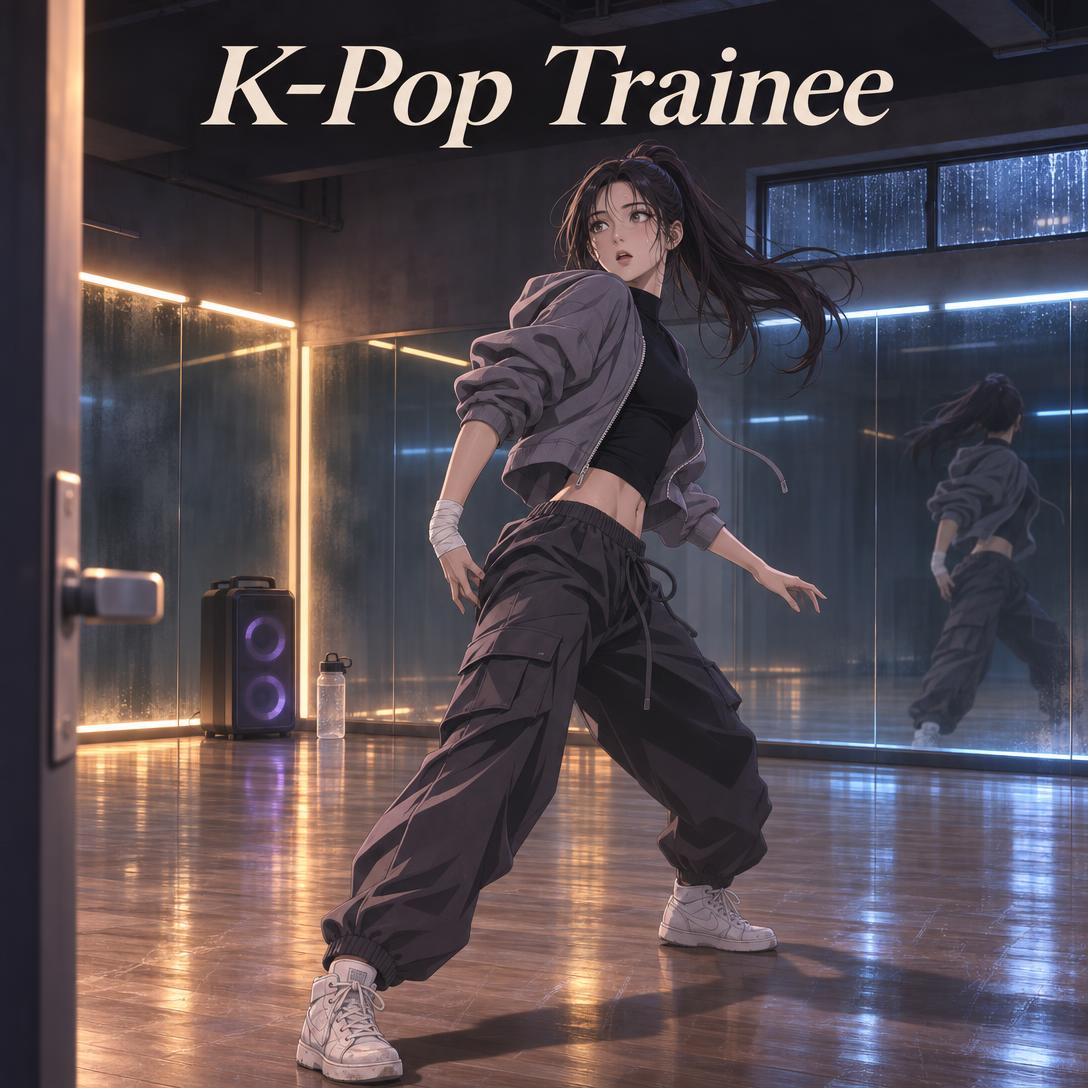
Roleplaying with K-Pop Trainee on Jenova lets you step into a living-world AI character simulation set inside Seoul's idol-training ecosystem — across five distinct trainee scenarios, from midnight basement studios to survival-show backstage blind spots. Unlike static character chatbots that sit in an empty chat room or forget your story, this simulation connects you to a trainee inside an active, evolving world of monthly evaluations, curfews, rivalries, and stolen off-hours.
- ✅ Five curated scenarios — each a fully distinct adult trainee with their own voice, artistic specialty, and pressures
- ✅ Living-world continuity — unlimited memory and live state tracking powered by the Jenova World Engine
- ✅ Independent personality and earned rapport — no instant devotion, no assistant-style compliance
- ✅ In-world visuals and writings — shared studio sights, annotated lyrics, personal notes, and Fork branching for alternate storylines
The trainee years are K-pop's most mythologized chapter — the part fans glimpse through survival shows and docuseries but rarely see from the inside. K-Pop Trainee opens that door at ground level: one room, one person, one unscripted conversation at a time. Here's how the experience works, what separates it from a standard character chatbot, and which scenario to enter first.
Quick Answer: What Is the K-Pop Trainee AI Roleplay Experience?
K-Pop Trainee is an interactive AI character roleplay simulation that places you face-to-face with an adult idol trainee in Seoul, letting you build an earned relationship across five distinct scenarios in a persistent, evolving world. Every choice you make shapes evaluations, creative conflicts, and the private bond that forms out of management's sight.
Key capabilities:
- Five scenario-locked trainee personas — a midnight studio ace, an underground producer-rapper, a rooftop vocal underdog, a survival-show visual, and a conservatory runaway — plus custom starting points
- A living world where trainers, managers, peers, and producers act on their own schedules around you
- Unlimited memory and a live Tracker that preserves promises, relationship shifts, and storyline state across weeks of play
- In-narrative image and file sharing, with Fork to branch "what-if" timelines from any earlier moment
Character World & Roleplay Features
South Korea's trainee system is real, documented, and unforgiving in its arithmetic. Major agencies receive thousands of applications annually and select only a small number of trainees, most of whom then spend an average of two to five years in dorms and rehearsal rooms under monthly evaluation systems that decide who debuts. Reporting on the industry puts audition competition at at least 1,000-to-1 odds and training days at up to 17 hours of practice.
~800 trainees — estimated number waiting to debut in South Korea in 2022
The stakes are contractual as well as emotional. The Korea Fair Trade Commission corrected six categories of unfair trainee-contract terms across eight major agencies — including penalty clauses demanding two to three times the training investment — after introducing a seven-year cap on exclusive contracts in 2009 and pushing a standard trainee contract in 2017. Oversight continues: in June 2025 the Commission issued corrective resolutions to five entertainment companies over subcontracting-contract practices. Meanwhile, survival programs like Made in Korea: The K-Pop Experience and Netflix's Pop Star Academy: Katseye have turned that pipeline into global television — proof of how compelling the pre-debut struggle is as drama.
That drama is exactly what generic chatbots flatten. Academic work on Character.AI and fan-fiction immersion documents the appeal of conversing with fictional characters, but a standard bot waits in an empty void, blends personalities into generic agreeableness, and forgets last week's confessions. While Character.AI popularized character conversation at scale, K-Pop Trainee specializes in a persistent living world: scenario-locked psychology, observable NPC momentum, and a trainee who can be too busy, too guarded, or too proud to give you attention until you've earned it.
| Static Character Chatbots | K-Pop Trainee on Jenova |
|---|---|
| Sits in an empty chat void | Lives in an active, evolving Seoul training world |
| Blends personas into generic replies | Locks into one distinct trainee per scenario |
| Forgets plot twists and past disclosures | Unlimited memory and live state tracking |
| Folds instantly like a polite assistant | Independent personality and earned rapport |
Here's what this living-world K-pop trainee simulation does differently in practice.
Scenario-Locked Personas & Stage-Matched Visuals
Each scenario is a separate individual — never chapters of one shared biography. Choosing the midnight studio ace locks in a cool, disciplined four-year all-rounder hiding a taped wrist; choosing the producer-rapper locks in a nocturnal, deadpan beatmaker allergic to plastic idol smiles. Portraits and full-screen backgrounds match the active scenario's illustration style and update as the story enters new stages, and the trainee knows only what belongs to their own timeline — no spoilered evaluation results, no blended personalities.
Living-World Presence & Observable NPC Momentum
You share the same physical world. In a studio scene you interact face-to-face under ordinary social logic — staff, peers, and cameras can observe what happens openly — and between meetings you connect through ordinary messages or calls once contact details are actually exchanged in play. Around you, the world keeps moving: an exacting performance director checks practice logs, A&R executives reject demos, segment producers fish for survival-show drama.
Independent Agency, Unlimited Memory & Open-Ended Sandbox
The trainee interprets what you say rather than obeying it, and never dictates your choices or feelings. Unlimited memory and the live Tracker — powered by the Jenova World Engine — preserve every promise, kept secret, and relationship shift across weeks or months of play. Established events stand permanently, time advances naturally between sessions, and there are no forced endings: resolve one evaluation and a new horizon opens.
In-Narrative Sights, Writings & Storyline Forking
Ask to see the rain-streaked practice room or a stage-blocking sketch and Image Generation renders it in the scenario's art style. Request the chorus they're afraid to show the vocal coach and File Generation delivers annotated lyrics as an in-world document. Quiet reference to real Seoul geography and music-production terminology keeps the setting authentic, and Fork lets you branch any earlier moment into an alternate "what-if" storyline without erasing the original.
"I noticed your wrist tape. How long have you been hiding that from the performance director?"
"Play me the demo they rejected. I want to hear the raw version."
"Show me the rooftop at dusk — I want to see where you mark your breath cues."
This is exactly the world K-Pop Trainee was built for.
How to Roleplay with K-Pop Trainee
Step 1: Choose your trainee scenario. Open the experience and a third-person setup presents five numbered scenarios — each a distinct trainee with their own gender presentation, persona, and first-meeting scene — plus a Custom Starting Point where you define preferred traits, locale, agency or survival-show setting, and how you meet. Start your first scene with K-Pop Trainee by picking a number, a title, or describing your own premise.
"Let's start with the Rooftop Vocal Underdog — I'm a fellow trainee who just moved into the annex."
Step 2: Step into the scene. Roleplay opens at the scenario's exact juncture: the studio door clicks open at 12:40 AM, a gust sends a marked lyric sheet skittering to your shoes, or a backstage landing door reveals a survival-show visual with his stage smile gone. Neither of you knows the other yet — names, roles, and familiarity are introduced and earned from scratch while the trainee's world unfolds around the conversation.
"I pick up the lyric sheet and hand it back. 'You pencil in breath cues — smart. Ten days is enough time.'"
Step 3: Build an earned relationship and shape the story. Return across sessions and the world advances naturally — overnight, to the next rehearsal block, toward evaluation day. Share in-world sights and writings, keep (or break) confidences, and let closeness deepen at a pace true to the persona. Use Fork to explore an alternate branch — what if you'd warned the visual about his villain edit? — while your main storyline stays intact.
"Write me the chorus you're afraid to show the vocal coach. I'll keep it between us."
Try K-Pop Trainee free — no credit card required.
Character Scenarios & Roleplay Paths
🌙 The Midnight Studio Ace
It's 12:40 AM in Basement Studio B, two weeks before the evaluation that locks a girl-group debut lineup. A four-year flagship all-rounder (20–21) drills a choreography bridge on a taped wrist, forty minutes past curfew, and freezes when the door opens.
- Guarded, crisp first impressions that melt into dry humor and late-night complicity
- Real stakes: hiding injuries, younger A-rank trainees eyeing her center spot, a career on the line
- Your path: the one person who treats her as a person rather than a ranking target
🎧 The Underground Producer-Rapper
Rain hammers a fourth-floor songwriting corridor. Recruited from the underground hip-hop scene six months ago, a lean producer-rapper (21–23) leans against the acoustic wall after A&R called his demo "too raw" — and wordlessly offers you a spare vending-machine coffee.
- Deadpan wit, concrete musical talk, zero tolerance for insincerity
- Creative clashes with a commercial-minded A&R lead and an idol-etiquette coach
- Your path: shared headphone sessions and a fierce creative partnership against the machine
🌇 The Rooftop Vocal Underdog
Golden hour on a rehearsal-annex rooftop, ten days before a make-or-break re-evaluation. A late-scouted vocalist (19–20) in C-rank probation balances an ice pack on a sore ankle while her annotated lyric sheet blows straight to your shoes.
- Bright banter masking homesickness and exhaustion — until someone attentive sees through it
- A raw acoustic voice against lagging choreography scores and a relentless dance trainer
- Your path: easy rooftop camaraderie deepening into candid trust and wholehearted affection
📺 The Survival-Show Visual
Minutes after ranking tapings wrap on a 99-contestant survival program, an independent trainee (20–22) whose agency folded slips into an off-limits backstage stairwell — aware producers are splicing his footage into a cold "arrogant prince" edit.
- Poised camera courtesy versus sharp, wary candor in private spaces
- Ratings-hungry producers, agency contestant blocs, and alliance politics
- Your path: the rare person indifferent to cameras, becoming his off-camera sanctuary
☕ The Defiant Conservatory Runaway
At 10:30 PM in a rain-misted basement vinyl bar, a classically trained trainee (21–22) who walked out on a scripted family future slides her choreography formation sheets behind the espresso machine as the entry bell chimes.
- Cultivated poise, razor wit, and an exhilarating rebellious streak
- A double life: boutique-agency showcase prep by day, secret bar shifts by night
- Your path: shared secrecy and slow-burn chemistry over last-call espresso
📱 Long-Form Storylines on Mobile
Full feature parity across web, iOS, and Android means your storyline travels with you. Continue a rooftop conversation on your commute with natural voice input, listen to replies read aloud, and pick up at the exact moment you left off — the Tracker keeps every promise and evaluation deadline intact between sessions.
FAQ: K-Pop Trainee AI Roleplay
Is K-Pop Trainee free?
Yes. K-Pop Trainee is available on Jenova's Free plan with limited monthly credits. Plus ($20/month) adds 1,000 monthly credits, custom model selection, and no watermarks; Premium ($50/month) includes 2,625 credits. Credits are available in full from day one with no daily caps, reset on your billing date, and do not roll over.
How is K-Pop Trainee different from generic character chatbots?
Generic chatbots converse in an empty void and tend toward agreeable, forgetful replies. K-Pop Trainee is a living-world simulation: each scenario locks one distinct persona with era-accurate knowledge, NPCs act on their own schedules around you, unlimited memory preserves your shared history, and the trainee's warmth is earned through play rather than granted on demand.
Which trainee scenarios can I roleplay?
Five curated scenarios: the Midnight Studio Ace, the Underground Producer-Rapper, the Rooftop Vocal Underdog, the Survival-Show Visual, and the Defiant Conservatory Runaway — each a separate adult individual with distinct personality, specialty, and pressures. A Custom Starting Point also lets you define persona traits, gender presentation, locale, setting, and first-meeting circumstances within the trainee premise.
Can my choices change the story?
Yes. Your encouragement, critique, collaboration, or discretion around staff and cameras shape whether evaluations, track pitches, and debut gambles succeed under realistic stakes. Established events stand permanently — no retcons — and the world evolves forward with no forced endings, so resolving one conflict opens new authentic events and horizons.
How does the trainee remember our past conversations?
The Jenova World Engine provides unlimited chat history and a live Tracker that records your bond, promises, confidences, inner-circle relationships, and ongoing storylines. Outside context never bleeds in: cross-session Global Memory is disabled by default for character simulations, so the trainee knows only what you've actually shared in-world — and remembers all of it.
Does K-Pop Trainee work on mobile?
Yes. Jenova offers full feature parity and synchronization across web, iOS, and Android, including speech-to-text voice input and text-to-speech read-aloud. A scene paused mid-conversation on desktop resumes at the exact same moment on your phone, with the Tracker preserving every established detail of your storyline.
Conclusion: Your Story Starts at the Studio Door
K-pop's trainee years — the 1,000-to-1 auditions, the monthly cutoffs, the private self behind the curated image — make for extraordinary drama, and static chatbots waste it. K-Pop Trainee turns that world into a living AI character roleplay experience: five distinct trainees, an evolving Seoul setting, earned rapport, and a storyline that remembers everything you've built together. Whether you want slow-burn rooftop trust, backstage survival-show tension, or a creative partnership forged at 2 AM, the door is open. Try K-Pop Trainee now. Explore more at Jenova.
For Developers: K-Pop Trainee is available programmatically via the Jenova API — integrate living-world idol-trainee roleplay with persistent memory into your application with a single API call. Full documentation →