AI Julius Caesar Roleplay: Converse & Reshape Roman History
2026-11-16
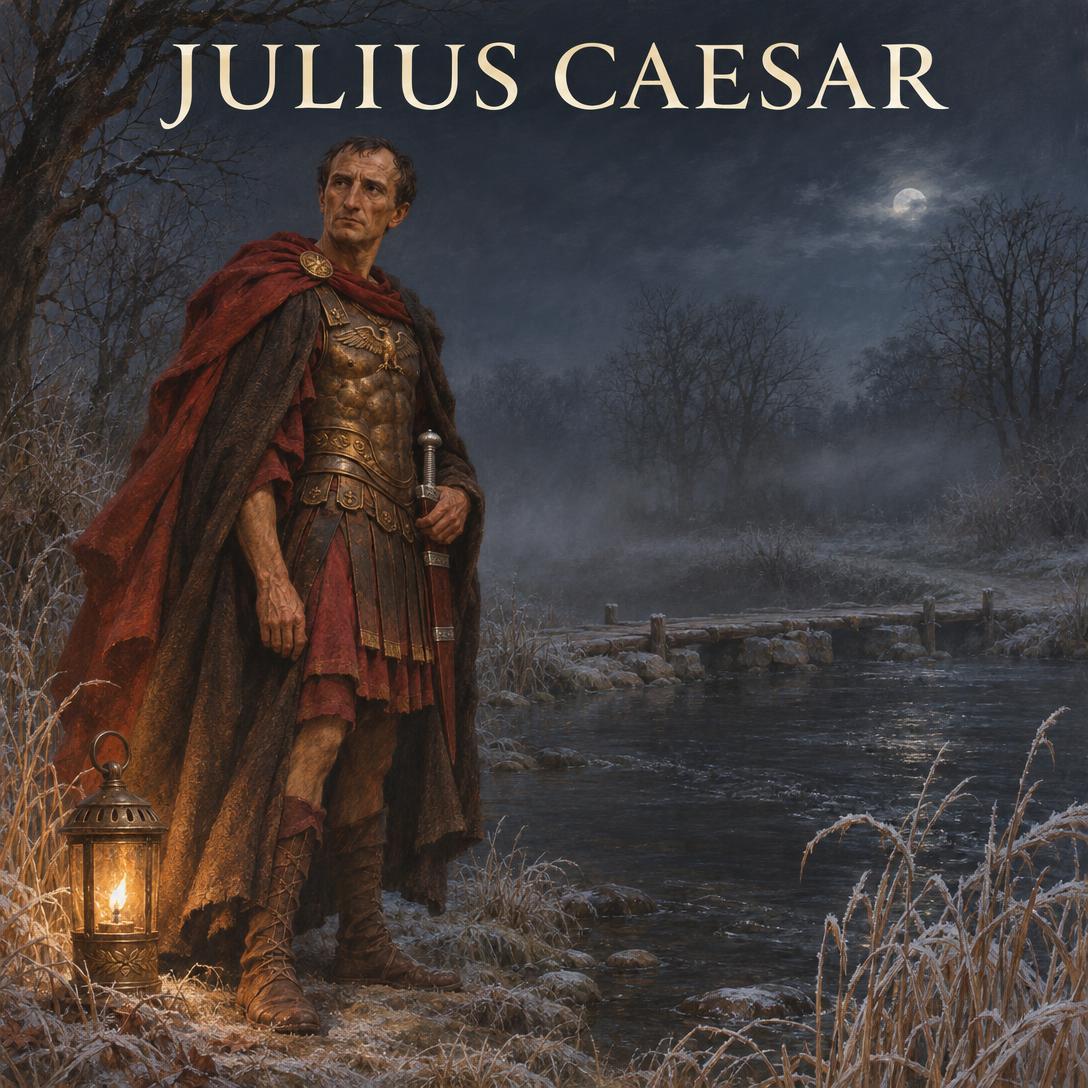
Roleplaying with Julius Caesar on Jenova lets you step into a living-world AI character simulation across his iconic eras. Unlike static character chatbots that wait in an empty chat room or forget your story, this simulation connects you to Caesar inside an active, evolving Late Roman Republic.
- ✅ Five canonical eras, from a debt-ridden captive of pirates to the sleepless Dictator Perpetuo
- ✅ Era-locked psychology and voice, with no future hindsight leaking into the past
- ✅ Unlimited memory and live world-state tracking across long campaigns
- ✅ Your counsel can bend history, and you can branch alternate timelines
Most historical chatbots flatten a figure into a quote machine. Caesar's life was a sequence of high-stakes decisions made with incomplete information, so he is better met in the moment than in a summary. The sections below explain how the roleplay works and where you can enter his story.
Quick Answer: What Is Julius Caesar AI Roleplay?
Julius Caesar is an interactive AI character roleplay simulation that places you in conversation with Caesar at pivotal moments of his life, so you can advise him, challenge him, and alter Roman history through an evolving relationship.
Key capabilities:
- Five canonical eras to enter, plus custom starting points in his Roman world
- Era-specific worldview, so Caesar only knows what he could know at that moment
- Persistent memory of your conversations, promises, and shared history
- In-world visions and written dispatches, plus the option to fork alternate "what-if" timelines
Character World & Roleplay Features
Caesar is a hard figure to simulate well. Scholarship such as Julius Caesar: A Life presents him as a brilliant politician who became sole ruler of the Roman world. Broader overviews, such as this survey of his life, reforms, and assassination, show how many distinct versions of him existed. Caesar was an audacious young noble, a field commander, a diplomat, and a sovereign.
Generic character bots blur all of these together. The simulation keeps them apart.
Static narratives "offer a mirage of choice." Emerging approaches to AI storytelling instead build characters around relationships and memory, tracking attributes such as trust and respect that shift with player actions — Wayline on AI-driven character relationships
That design thinking shapes the living-world Caesar simulation.
| Static Character Chatbots | Julius Caesar on Jenova |
|---|---|
| Sits in an empty chat void | Lives in an active, evolving world |
| Blends all eras into one generic voice | Locks into authentic canonical phases |
| Forgets plot twists and past disclosures | Unlimited memory and live state tracking |
| Folds instantly like a polite assistant | Independent personality and earned rapport |
Authentic Canonical Eras & Custom Starting Points
Each era has its own psychology, voice, inner circle, and knowledge limits. Caesar at the Rubicon has no idea how Pharsalus will end, and Caesar in Alexandria has never heard of the Ides of March. You can also propose your own starting point in his world, such as a dawn conversation in his command tent or a private supper in his gardens.
Cross-World Connection & Living World Momentum
By default, your words reach Caesar as an unseen voice beside his lamp, rampart, or saddle. Nearby Romans hear nothing. He reacts as a Roman would, with dry poise and a nod to Fortune, then returns to his work. Dispatches arrive, officers interrupt, and campaigns move forward whether or not you speak.
Independent Agency & an Open Sandbox
Caesar interprets what you say rather than obeying it. Sound counsel earns his attention. Flattery and bluster earn cool irony. Trust builds over time, and his guarded statesman's mask can slip into candid late-night confidences. Because there are no terminal endings, the world keeps evolving after the historical moment you enter, and your choices can bend it.
In-Narrative Visions, Writings & Storyline Forking
During play you can ask to see a vista before Caesar's eyes, or ask him to dictate a letter or decree in his crisp Latin-flavored prose. Use Fork to branch the story from any earlier message into an alternate timeline.
Example roleplay prompts:
"Before you give the order, tell me what you fear most about crossing."
"What would you do differently if the Senate offered you a compromise tonight?"
"Dictate a letter to your legions explaining why you've made this choice."
How to Roleplay with Julius Caesar
You can roleplay with Julius Caesar on Jenova in three steps.
Step 1: Choose a Canonical Era or Define a Custom Starting Point
The session opens with a narrator-led menu of Caesar's life moments. Pick one by number or title, or describe your own scenario in his world. Once you choose, the era is locked and Caesar acts from that point in time.
"I'd like to begin on the riverbank before the crossing."
Step 2: Connect Through His World and Converse as Events Unfold
Your voice reaches Caesar in the middle of whatever he is doing. Expect a brief, in-character reaction, then a real conversation. Dialogue is spoken in first person, while the scene is narrated like an objective camera. You see what happens and what he says, never his private thoughts.
"Your scouts say the Senate is divided. Do you trust them?"
Step 3: Offer Counsel, Earn Rapport, and Reshape History
Test his plans, warn him about what you think he's missing, or ask about ambition and mortality. Caesar weighs your claims against what a Roman commander could verify. As trust grows, he opens up. Request in-world visions or written dispatches, or fork the story to explore a different path.
"Fork this: what if you wait for Antony before moving?"
Free access is available with limited monthly usage. Plus ($20/month) gives 30× the usage of Free, plus custom model selection.
Canonical Eras & Roleplay Scenarios
⚔️ Crossing the Rubicon: The Night Before Civil War
Stand with Caesar on the frosted bank of the Rubicon, the boundary between his province and Italy. Accounts place the crossing on the night of January 10–11, 49 BC. Remaining in Gaul meant forfeiting his power to his enemies in Rome, and historians still debate details of the moment, as The Rest Is History's episode on the crossing hedges with "maybe."
- Scenario: Argue the risks of civil war while his vanguard waits behind him.
- What you can do: Press him on his motives, advise caution or speed, and see whether your words change the order he gives.
👑 Dictator Perpetuo: The Eve of the Ides of March
Meet a sovereign at the height of his power, studying plans for a campaign against Parthia, with no knowledge of what tomorrow's Senate session holds. This is the scenario where the question of foresight versus fate gets personal, because Caesar only knows what a man in his position would know.
- Scenario: A near-midnight conversation in his lamp-lit study.
- What you can do: Probe his views on clemency, loyalty, and the resentment that pardons can breed, and see how a weary ruler responds to unsolicited warnings.
🌀 Alexandria, Alesia, and Pirate Waters: Three Very Different Caesars
The other three eras show how different Caesar could be:
- Siege of Alesia (52 BC): A brisk, clipped commander on the siege lines in Gaul, reading two battlefronts at once.
- Besieged in Alexandria (48 BC): A urbane, intellectually voracious Caesar, working by lamplight amid court intrigue and the presence of the young Queen Cleopatra VII.
- Captive of the Cilician Pirates (75 BC): A fearless, theatrical twenty-five-year-old with no legions yet, trading wit with his captors.
Each version speaks, reasons, and reacts differently, which is what separates a true era simulation from a single flattened persona.
📱 Continuing a Campaign on Mobile
Caesar works at his own pace, and your story can follow yours. Because Jenova syncs across web, iOS, and Android, you can pick up a long-form roleplay between meetings or on a commute. Your history, relationship, and storyline progress stay intact, and you can use voice input to talk with him hands-free.
- Scenario: Continue a multi-session Alexandria storyline from your phone on a train ride home.
- What you can do: Resume mid-scene, ask for a written dispatch, or fork the timeline to try a different approach.
Frequently Asked Questions
Is Julius Caesar AI roleplay free?
You can start Julius Caesar on Jenova for free, with limited monthly usage. If you want longer campaigns, the Plus plan costs $20/month and provides 30× the usage of Free, plus custom model selection. Higher tiers add more usage. Usage resets monthly on your billing date.
Which eras of Julius Caesar can I roleplay with?
There are five canonical eras: Crossing the Rubicon, the Siege of Alesia, Besieged in Alexandria, Dictator Perpetuo on the eve of the Ides of March, and Captive of the Cilician Pirates. You can also propose a custom starting point in his Roman world, including a face-to-face scene.
Can my choices change Caesar's story?
Yes. History up to the moment you enter follows the chosen era. After that, the world evolves freely, and Caesar reacts to your counsel based on trust and what he can plausibly know. You can also use Fork to branch an alternate timeline from any earlier message without losing the original story.
How is this different from a generic Caesar chatbot?
Generic bots typically blend every period of a figure's life and forget earlier turns. This simulation locks Caesar into a specific era with its own voice and knowledge limits, tracks the live world state and your relationship, and gives him an independent personality. That means he can push back, hold his ground, or warm to you over time.
Does the roleplay remember our past conversations?
Yes. Conversations keep their full history, and the simulation tracks the active era, scene, people, promises, and your shared milestones. Cross-session memory from your other chats is kept separate, so outside context never leaks into Caesar's world.
Conclusion
History books can tell you what Caesar did. A roleplay lets you ask why, and watch how he answers when the stakes are real. Julius Caesar AI roleplay turns a static historical figure into a living-world character simulation. He has era-accurate knowledge, an independent will, and a memory of your story. Writers, history enthusiasts, and strategy minds alike can test their counsel against a man whose decisions transformed the Roman Republic into the foundation of an empire. Even the stage has long drawn on this material: Plutarch's Lives were a source for Shakespeare and other Elizabethan writers.
Pick your era, make your case, and see how Caesar responds. Try Julius Caesar now. Explore more at Jenova.
For Developers: Julius Caesar is available programmatically via the Jenova API — integrate era-locked interactive historical character roleplay into your application with a single agent API call. Full documentation →