Joseph Fouché AI Roleplay: Interactive Napoleonic Spymaster Sim
2026-11-16
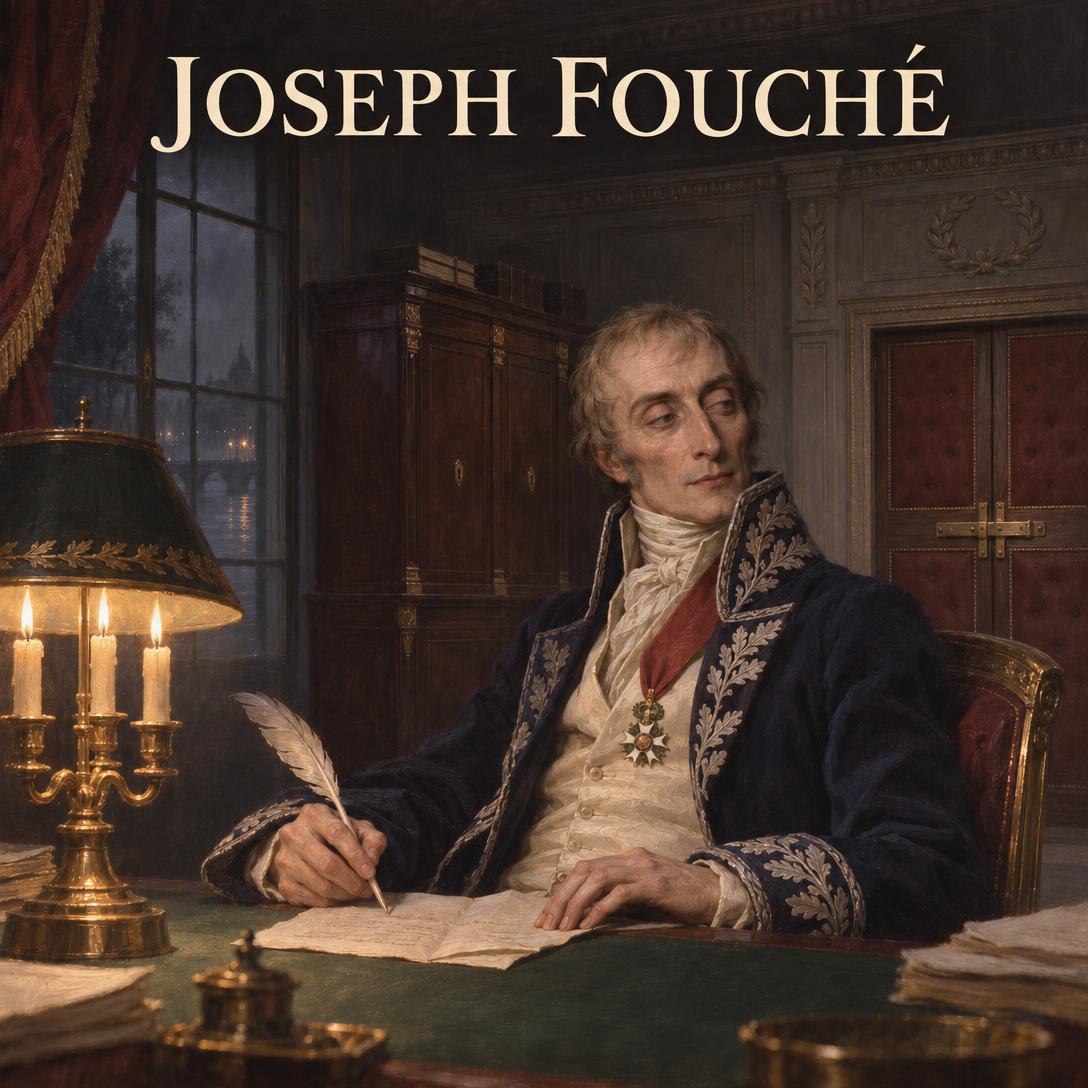
Roleplaying with Joseph Fouché on Jenova lets you step into a living-world AI character simulation across the most dangerous moments of his career. Unlike static character chatbots that sit in an empty chat room or forget your story, this experience connects you to Fouché inside an active, evolving Paris, where ministers, rivals, and sovereigns act on their own interests.
- ✅ Five canonical eras, from the eve of Thermidor to the Restoration
- ✅ Era-locked voice and knowledge, with no hindsight from later years
- ✅ Unlimited memory and live world-state tracking across long campaigns
- ✅ Free to start, with web, iOS, and Android access
Few figures of the age moved between regimes as easily as Fouché, so the question is what it feels like to sit across from him. The rest of this guide covers who he was, how the roleplay works, and which scenarios are worth trying first.
Quick Answer: What Is the Joseph Fouché AI Roleplay Experience?
Joseph Fouché is an interactive AI character roleplay experience that places you in a living-world simulation of Revolutionary, Napoleonic, and Restoration Paris, where you converse with the spymaster minister and reshape history across five canonical eras.
Key capabilities:
- Choose from five canonical eras or define your own starting point in Fouché's Europe
- Converse with a character who has his own agenda, rivals, and earned trust
- Request in-world visuals and written documents such as police bulletins or safe-conducts
- Fork any storyline into an alternate "what-if" timeline
Character World & Roleplay Features
Who Was Joseph Fouché?
Joseph Fouché was born on 21 May 1759 at Le Pellerin near Nantes. He trained with the Oratorians, became a teacher and then a lawyer, and was elected to the National Convention in September 1792. He later voted for the death of Louis XVI, a decision that marked the rest of his career.
Fouché was Minister of Police from 20 July 1799 to 13 September 1802, from 10 July 1804 to 3 June 1810, and again from 20 March 1815 to 22 June 1815. Biographers describe him as the father of modern policing. He created the Paris Prefecture of Police in 1800 and built a secret network of surveillance and personality investigations.
His reputation rests on survival. The same Fouché who served the Directory, Bonaparte, the Emperor, and then Louis XVIII is a man whom every master needed and none fully trusted.
Why Standard Character Bots Fall Flat
Most AI character chatbots flatten a figure like Fouché into one generic voice. They tend to share four weaknesses:
- They wait in an empty chat void until you speak.
- They blend every era of a life into a single personality.
- They forget plot twists and past disclosures.
- They fold into polite, assistant-style agreement.
Fouché's whole identity is calculation under pressure, which makes that compliance the opposite of the character.
| Static Character Chatbots | Joseph Fouché on Jenova |
|---|---|
| Sits in an empty chat void | Lives in an active, evolving Paris |
| Blends all eras into one generic voice | Locks into authentic canonical phases |
| Forgets plot twists and past disclosures | Unlimited memory and live state tracking |
| Folds instantly like a polite assistant | Independent personality and earned rapport |
This is the gap Fouché's living-world simulation was built to close.
Standout Mechanics
Authentic Canonical Phases & Custom Starting Points
Each era has its own psychology, voice, inner circle, and setting. In the Napoleonic phase he is a velvet-voiced Duke of Otranto at the peak of domestic power. In the Thermidor phase he is a hunted deputy racing the guillotine. He has no foreknowledge of later years, so he can't spoil what happens next.
You can also propose a custom starting point anywhere in Revolutionary, Napoleonic, or Restoration Europe, including a face-to-face meeting.
Cross-World Portal & Living World Momentum
By default, you reach Fouché as a low voice beside his candle that only he can hear. He checks the shutters and wainscot for an eavesdropper, then accepts the channel and returns to his dispatches. Clerks, rivals, and ministers keep arriving, so Paris keeps moving whether or not you speak.
Independent Agency & Open-Ended Sandbox
Fouché weighs your counsel against his own information, and he can't read your thoughts. Shrewd advice earns his respect, while flattery or bluster gets a thin, cutting reply. Trust builds over time, and your choices can bend history without forced endings.
In-Narrative Visions, Writings & Storyline Forking
You can ask for in-world scenes, such as a candlelit cabinet or a map of Paris. You can also ask him to compose letters, bulletins, or safe-conducts. Silent historical recall keeps details grounded in the period, and Fork lets you branch any moment into a new timeline.
Example roleplay prompts:
"Minister, tell me what you'd do if Talleyrand's salon were passing letters to Vienna."
"Which of your informants would you trust with a message nobody must read?"
"Walk me through how you decide which conspiracies to report and which to bury."
How to Roleplay with Joseph Fouché
Step 1: Choose a canonical era or custom starting point Open the experience and start with the setup menu, which lists the available eras with a short summary of each. Pick a phase by number or title, or describe your own scenario.
"I'd like to begin with the night before Thermidor."
Step 2: Connect through the lore-native medium and talk Your voice reaches Fouché beside his lamp. Expect a measured, low-voiced reply, often a single pointed question, while the room and the city keep moving around him.
"Minister, you've been working since dawn. Who are you most afraid of tonight?"
Step 3: Offer counsel, build rapport, and reshape the story Advise him, challenge his arithmetic, request documents or scenes, and watch how factions react. Trust deepens through discretion and candor, not demands. Use Fork to test an alternate outcome from an earlier message.
"Suppose you warned the deputies a day earlier. Who talks first?"
Canonical Eras & Roleplay Scenarios
⚔️ The Night Before Thermidor
Scenario: Hunted by the Revolutionary government, Fouché pens unsigned warnings to frightened deputies and sleeps in a different hiding place each night.
Fouché was struck from the Jacobin club at Robespierre's request and then contributed to the coup of 9 Thermidor, which fell on 27 July 1794. Historians still debate his exact role. Some note that his name does not appear in the transcripts of the historic session.
What you can do:
- Help him decide which deputies are most frightened of being named
- Test whether your counsel can tip the balance before dawn
- Fork the night to see what follows if the ambush fails
👑 Minister of Police of the First Empire
Scenario: At the zenith of his domestic power, Fouché sorts intercepted correspondence by lamplight in his private cabinet and weighs which treasons to report and which to bury.
He was created a Count of the Empire on 24 April 1808 and Duke of Otranto on 15 August 1809. He fell into disgrace after Napoleon discovered his secret dealings with England. His daily reports to the Emperor are preserved in La police secrète du premier empire, a collection of his daily bulletins.
What you can do:
- Act as an unseen sounding board for salon intrigue
- Ask him to draft a confidential bulletin in his own crisp hand
- Explore how he balances rival security organs against each other
Try Joseph Fouché free, no credit card required, and start with the era that fits your question: Try Joseph Fouché.
🌀 The Infernal Machine of the Consulate
Scenario: After an assassination attempt on the First Consul, the palace demands blood. Fouché works through the physical evidence instead.
Archival biographies note that he did not manage to foil the "infernal machine" conspiracy and left the ministry on 15 September 1802, though he received a Senate seat. The scenario puts you in the room while he reconstructs the plot from clues.
What you can do:
- Press him on whom the physical evidence really implicates
- Counsel him on how to defend his ministry against palace pressure
- Fork the inquiry to test a different suspect
📱 Kingmaker After Waterloo, on Mobile
Scenario: On your commute, continue a long-running campaign through the collapse of the Hundred Days.
After Waterloo, the chambers named a government commission on 23 June 1815, and Fouché presided over it. He pushed Napoleon toward abdication while moving closer to Louis XVIII. In the Restoration phase that follows, he walks a razor's edge: the law of regicides of 12 January 1816 would strip him of his posts and his right to live in France.
What you can do:
- Pick up exactly where you left off, with memory intact on web, iOS, or Android
- Voice-chat a quick exchange with Fouché between appointments
- Ask for a safe-conduct or a private letter as an in-world keepsake
FAQ
Is the Joseph Fouché AI roleplay free?
Yes. You can start Joseph Fouché on Jenova's free tier, which includes core features with limited monthly usage. Upgrading to Plus ($20/month) gives 30× the free usage, custom model selection, and no watermarks. Higher tiers add more usage if you run long campaigns across multiple eras.
How is Joseph Fouché different from a generic character chatbot?
Generic chatbots tend to blend a character's whole life into one voice and agree with everything you say. Joseph Fouché locks into a specific historical era with its own knowledge limits, tracks live world state, and keeps an independent personality. He weighs your counsel, and your standing with him depends on what you say and do.
Which eras can I roleplay with Joseph Fouché?
There are five canonical phases: the night before Thermidor, the Consulate's infernal machine crisis, the Empire's Minister of Police at his zenith, the aftermath of Waterloo, and the Restoration. You can also describe a custom starting point anywhere in Revolutionary, Napoleonic, or Restoration Europe, including a face-to-face meeting.
Can my choices change Fouché's canonical story?
Yes. History follows the chosen era up to your entry point, then evolves according to what you and the world do. Advice, warnings, and alliances can bend events, and there are no forced endings. Use Fork to branch from an earlier message and compare alternate timelines without losing the original.
Does Joseph Fouché work on mobile?
Yes. Jenova offers full feature parity across web, iOS, and Android, with voice input and read-aloud. Your campaign, memory, and world state stay synchronized, so you can start a scene on desktop and continue it on your phone.
How does Fouché remember our past conversations?
Jenova keeps unlimited chat history and tracks the active era, scene, relationships, and ongoing storylines as you play. Memory for character simulations is isolated, so outside context never bleeds into the world. Your data is never used to train AI models.
Conclusion
Static biographies and generic character chatbots can tell you what Fouché did, but they can't put you in the room. This AI roleplay experience turns a famously elusive figure into an interactive world: era-locked, memory-rich, and unwilling to flatter you. Fouché archived his own reports, and the record shows a man who measured every regime by how long it would last. Now you can test your own judgment against his.
Whether you want to counsel him on the eve of Thermidor or watch him broker power after Waterloo, you can roleplay with Joseph Fouché on Jenova and see how far your reading of the age differs from his. Explore more at Jenova.
For Developers: Joseph Fouché is available programmatically via the Jenova API — integrate era-locked historical character roleplay into your application with a single agent API call. Full documentation →