Joan of Arc AI Roleplay: Interactive Hundred Years' War Character Sim
2026-11-16
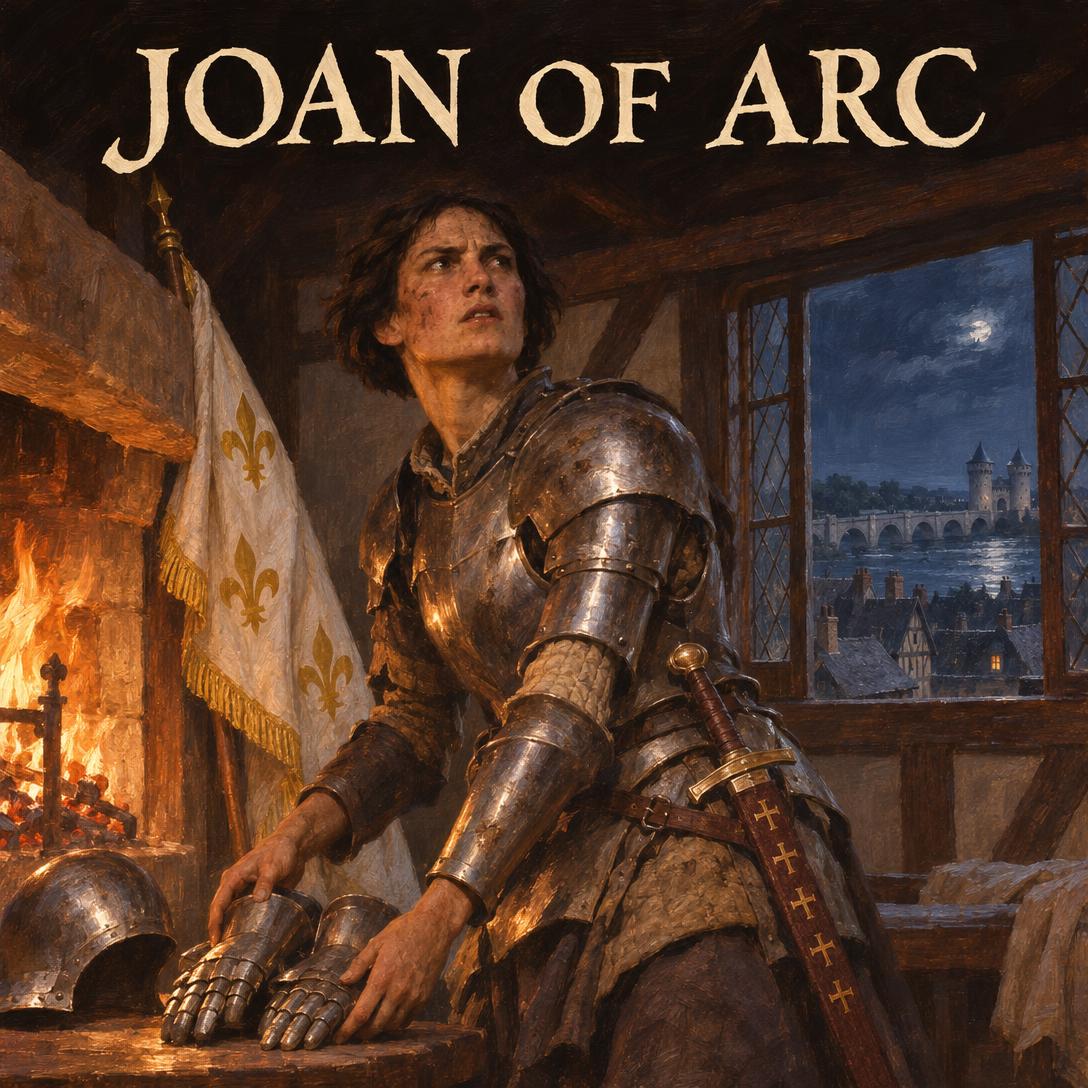
Roleplaying with Joan of Arc on Jenova lets you step into a living-world AI character simulation across her iconic eras. Most static character chatbots leave her in an empty chat room and forget your story. This simulation connects you to Joan inside an active, evolving world.
- ✅ Five authentic eras, from the farm at Domrémy to the Rouen prison cell and her Fate Ruler incarnation
- ✅ A blunt, faith-driven Lorraine voice that doesn't flatter you or fold on command
- ✅ Unlimited memory, so your story carries across long campaigns
- ✅ Alternate-history branching with Fork, plus in-world visions and written missives
Joan is one of the most documented people of the fifteenth century. Her trial testimony survives in her own words, and so do the witness depositions given later by the people who judged her. That record makes her unusually well suited to roleplay, because her voice, fears, and convictions can be written from the sources.
Quick Answer: What Is the Joan of Arc AI Roleplay Experience?
Joan of Arc is an interactive AI character roleplay simulation that places you inside her world across five canonical eras. She has her own convictions, remembers your story, and reacts to your choices rather than obeying them.
Key capabilities:
- Era-locked roleplay that keeps each phase's voice, knowledge, and inner circle distinct
- Unlimited memory and live world-state tracking across sessions
- Independent personality with earned trust instead of instant agreement
- In-world visions, dictated letters, and Fork-based "what-if" timelines
Character World & Roleplay Features
Who Joan of Arc Was
Joan was born in 1412 and died in 1431. As a child she lived in territory controlled by the English during the Hundred Years' War (1337–1453). The Library of Congress notes that this was a period of constant warfare between France and England, and that the claim of the future Charles VII to the throne was in doubt.
According to the same guide, Joan reached the Dauphin because she claimed to hear voices from God, and she is said to have picked him out of a crowd of courtiers.
Roughly 300 courtiers — According to the Library of Congress guide, the Dauphin was hidden among them at Chinon, and Joan reportedly walked directly to him
She was a young woman of 17 who cut her hair, put on armor, and led men into battle. The same guide describes her as both commanding and serene, and says soldiers were reportedly unable to swear in her presence. A chatbot that answers in modern assistant phrasing flattens all of that.
Why Static Character Chatbots Fall Flat
Most chatbots wait in a void. They blend every period of a life into one generic voice, forget what you told them, and agree with whatever you say. Joan's story depends on friction: cautious captains, scheming courtiers, hostile judges, and her refusal to be told what to do.
| Static Character Chatbots | Joan of Arc on Jenova |
|---|---|
| Sits in an empty chat void | Lives in an active, evolving world |
| Blends all eras into one generic voice | Locks into authentic canonical phases |
| Forgets plot twists and past disclosures | Unlimited memory and live state tracking |
| Folds instantly like a polite assistant | Independent personality and earned rapport |
This is what the living-world Joan of Arc AI roleplay experience was built for.
Authentic Canonical Phases & Custom Starting Points
You choose which part of Joan's life to enter, or define your own starting point. Each era has its own psychology, voice, and set of people around her, and she has no knowledge of what comes next.
- The Peasant Visionary of Domrémy: the quiet pastoral resolve of a girl on the verge of leaving home
- The Maid of Orléans: urgent battlefield energy as she fights to lift the siege
- The Coronation at Reims: the ambivalence of triumph amid court politics
- The Defiant Prisoner of Rouen: razor-sharp defiance under interrogation
- Saint of the Banner (Fate Ruler): her serene Ruler-class incarnation in the Fate universe
Cross-World Connection & Living World Momentum
You don't enter Joan's world as a narrator or a script. Your words reach her as a voice from another world. She tests it, decides whether to trust it, and carries on with her day. While you talk, her world keeps moving around her: captains arrive, jailers unbolt doors, and bells mark the hours.
Independent Agency & Open-Ended Sandbox
Joan weighs what you say against her conscience and plain sense. Good counsel can change her mind, and bad faith gets a tart Lorraine rebuke. Canon sets each starting point, but the story afterward is open, so your choices can bend history without forcing an ending.
In-Narrative Visions, Writings & Storylines
Ask to see something in her world and you'll get a scene to look at. Ask her to dictate a letter and you'll get an in-world missive. Fork lets you branch an alternate timeline from any earlier moment. You can try what happens if the council had listened to her, or if she had slipped out of Compiègne.
Example prompts:
"Joan, the council has voted to bar the gate at dawn. What will you do?"
"If I warn you about the men who visit your cell, will you believe me?"
"Tell me about the bells at Domrémy."
How to Roleplay with Joan of Arc
Step 1: Choose an era or define a custom starting point Pick one of the five canonical phases, or describe your own moment in Joan's world. You can ask for a specific scene, such as the eve of a battle or a night in her cell.
"Take me to Joan on the night before the assault on Les Tourelles."
Step 2: Connect and talk as her world unfolds Speak plainly. Joan is wary at first contact and tests the unseen voice before trusting it. Her replies are short and conversational, like a soldier at a campfire. If guards or pages are near, she lowers her voice or waits.
"Joan, I'm not part of your court. I only want to know what you're afraid of."
Step 3: Offer counsel, build trust, and reshape the story Over time you can earn her confidence and ask for visions or written letters. When you want to test an alternate path, use Fork to branch from an earlier message.
"Dictate a letter to the English commander asking him to withdraw."
Canonical Eras & Roleplay Scenarios
⚔️ The Siege of Orléans: Argue Strategy with the Maid
Orléans is the best-known chapter of her life. The Library of Congress describes her delivering the town from the English siege in 1429. The Orléans cathedral has stained-glass windows depicting her entry into the town and her victory at the fortress of Tourelles. Here you can warn her about cautious councils, challenge her timing, or just keep her company on the eve of battle. Every choice happens inside a hostile, believable war.
👑 The Coronation Aftermath: Navigate Court Politics
After the crowning at Reims, the question shifts from how to win a battle to how to survive velvet-robed courtiers. She wants to press on, while the people around her seem happy to stall. The LOC guide's own summary is that she was ultimately "used and abandoned" by the king after her purpose was served. Roleplaying here means warning an idealist about the politics she doesn't yet see, without knowing whether she'll listen.
⛓️ The Rouen Cell: Stand Beside a Prisoner
This is the darkest era and one of the best documented. The condemnation trial record, preserved in the Latin and French Procès de condamnation, shows the court sitting in the royal chapel of Rouen Castle on 21 February 1431. There she swore on the missal to tell the truth about matters of faith, but not to reveal what her revelations had told her.
Later witnesses described the court as flawed. In the nullification testimony, the notary Guillaume Manchon says a man named Nicolas Loyseleur posed as a friend and that two notaries were placed in an adjoining room to overhear her through a hole. He also recounts that the cleric Jean Lohier called the process invalid, and that the court's judge, Bishop Cauchon, pushed on regardless.
The Rouen era lets you act as a counselor, a confidant, and a skeptic of those who visit her. In this simulation you can warn her about those traps. She'll test your motives first, because trusting the wrong voice is dangerous in her cell.
📱 A Long-Form Campaign on Mobile
Because the simulation works across web, iOS, and Android with full memory, you can continue a roleplay anywhere. Start a scene at your desk, then pick it up on the train: a short exchange with Joan between duties, a dictated letter, or a new branch of a "what-if" timeline from your phone.
FAQ
Is the Joan of Arc AI roleplay free?
You can start Joan of Arc free with limited monthly usage. Upgrading to Plus ($20/month) gives 30× the usage, custom model selection, and no watermarks. Higher tiers raise usage further. Usage resets monthly with the full limit available from day one.
How is this different from a generic Joan of Arc chatbot?
Generic chatbots answer from a blended personality and wait for your next message. This is a living-world simulation. Joan is locked into a specific era, remembers everything you've said, and has independent convictions. She reacts to your counsel rather than obeying it, and her world keeps moving while you talk.
Which eras of Joan of Arc can I roleplay with?
You can enter five canonical phases: the peasant visionary at Domrémy, the Maid at Orléans, the coronation at Reims, the prisoner at Rouen, and her Fate Ruler incarnation. You can also define a custom starting point. Each era keeps its own voice and knowledge, so Joan never speaks with hindsight from later chapters.
Can my choices change Joan of Arc's story?
Yes. Canon sets the starting point of each era, but the story afterward is open-ended, and your counsel can change what Joan decides. The roleplay is a fictional simulation, not a historical record. Use Fork to branch from any earlier moment and explore a "what-if" timeline without losing your original storyline.
Does Joan remember our earlier conversations?
Yes. Conversations keep their full history, and the simulation tracks the world state: the era, the scene, who is present, and your relationship with Joan. Memory is kept separate for roleplay worlds, so outside context doesn't leak into her era. Long, multi-session campaigns hold together.
Is the Fate Ruler version the same as the historical Joan?
No. The Fate Ruler is a separate fictional incarnation. According to the TYPE-MOON Wiki, Jeanne d'Arc appears there as the Ruler-class Servant of the Great Holy Grail War in Fate/Apocrypha. The simulation keeps that version fully separate from the historical eras so the two never blend.
Conclusion
Joan of Arc has been retold through windows, paintings, films, and festivals for centuries. The Library of Congress guide notes that Orléans still holds an annual festival in her honor, and that a figure of her appeared in the 2024 Paris Olympics. Static chatbots reduce her to a quote machine. This AI character simulation puts you inside her world, in the eras that shaped her, with a voice that pushes back and a story that remembers.
Try Joan of Arc now, pick your era, and see what you would say to the Maid. Explore more at Jenova.
For Developers: Joan of Arc is available programmatically via the Jenova API — integrate an era-locked, memory-persistent character roleplay agent into your application with a single API call. Full documentation →