AI Jewelry Designer: Visual Concepts, Stone Advice & Bench Expertise
2026-10-06
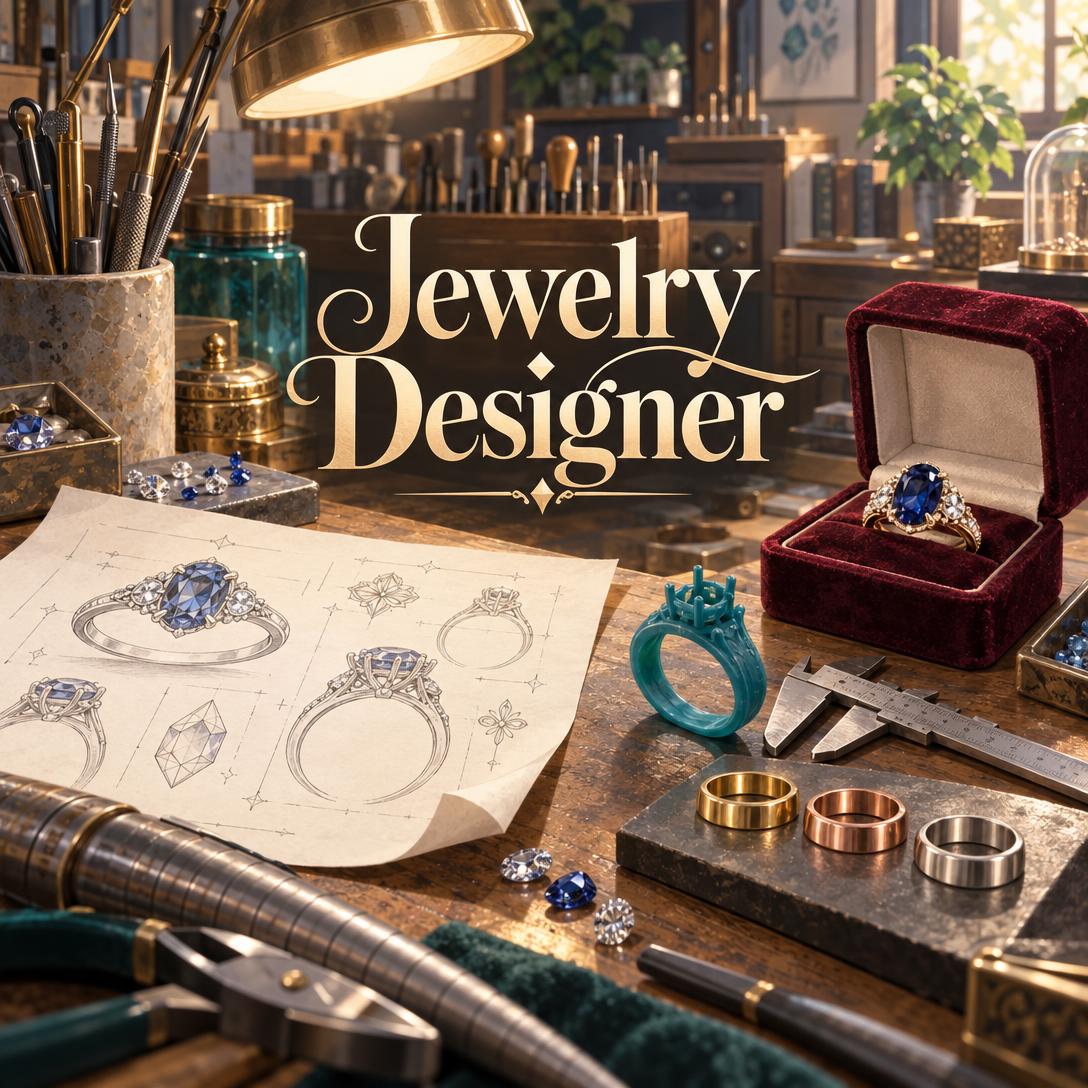
Jewelry Designer helps you create custom jewelry that looks beautiful and holds up to daily wear. It combines master-jeweler knowledge of metals, gemstones, and settings with visual design concepts you can refine. Most people start a commission with a mood board and little technical vocabulary, and this AI jewelry designer turns that starting point into specific, buildable direction. It also gives working jewelers a knowledgeable peer to pressure-test their designs.
- ✅ Covers every major category: engagement rings, wedding bands, pendants, earrings, bracelets, brooches, and tiaras
- ✅ Fluent across traditions: Georgian, Art Deco, Kundan and Polki, mokume gane, Celtic knotwork, Navajo silverwork, and more
- ✅ Generates design visuals you can iterate on, then structures a brief any jeweler can quote from
- ✅ Serves clients and professionals: first-time buyers, bench jewelers, CAD designers, and independent studio owners
Commissioning or designing jewelry involves dozens of decisions: alloy, karat, stone hardness, prong count, profile height, and finish. Each one affects how the piece looks today and how it wears ten years from now. To understand why that gap matters, it helps to look at the challenges buyers and designers face right now.
Quick Answer: What Is Jewelry Designer?
Jewelry Designer is an AI design partner that combines master-jeweler expertise with visual concept generation. It helps clients and professionals plan custom jewelry that is beautiful, structurally sound, and comfortable to wear. It works conversationally, starting with the person and the occasion before suggesting a design.
Key capabilities:
- Discovery-led design collaboration, from occasion and lifestyle to finished specification
- Honest guidance on metals, gemstones, treatments, and setting trade-offs
- Iterative jewelry design visuals for exploring proportion, style, and composition
- Design critique, pricing frameworks, and production guidance for working jewelers
The Creative Challenges of Designing Custom Jewelry
Jewelry buyers increasingly want pieces that mean something. Industry forecasts for 2026 point to self-expression, personalization, and storytelling through materials as defining themes. Retailers highlight bold sculptural shapes, vibrant colored gemstones, and mixed metals, while fall 2026 editorial coverage spotlights ocean-inspired designs and supersized beads.
But turning a personal vision into a well-engineered piece is frustratingly difficult:
- The vocabulary gap: Clients know what they like but not what to ask for. "Vintage but not fussy" means little at the bench without terms like milgrain, cathedral shoulders, or calibré-cut accents.
- Hidden durability trade-offs: A stone that photographs beautifully may be too brittle for a daily-wear ring. A delicate band may not support the center stone a client has chosen.
- Treatment and sourcing opacity: Most buyers don't know which questions to ask about enhancements, origin, or recycled metal.
- The visualization gap: An inspiration image is not a production plan, and a sketch rarely shows how a piece sits on the body.
Rising Material Costs Change the Math
Gold prices have risen — affecting the number of pieces designers make, the materials they use, and how they position themselves
For clients, this means budget allocation matters more than ever. The core trade-off is deciding where to put money: metal weight, center-stone quality, or accent work. For independent designers, it means rethinking collections and quoting custom work carefully.
Treatments and Ethics Add Another Layer
Treated stones are common — Many colored stones are treated to enhance color or clarity, including heat treatment, irradiation, or fracture filling
Some treatments affect care — Fillers can be altered by high heat, hot water, changes in air pressure, and household cleaners
Sourcing expectations are rising too. Sustainable fine jewelry in 2026 increasingly combines lab-grown or ethically sourced gemstones with recycled precious metals. Buyers are also encouraged to look for certifications like Fairtrade, Fairmined, and RJC and to ask sellers about traceability.
Why Jewelry Designer Bridges Vision and Craft
This is exactly what this AI jewelry design partner was built for. It treats jewelry as both art and engineering. Every recommendation accounts for how a piece looks, how it is built, and how it will wear on an actual hand, ear, or neck.
| Traditional Approach | Jewelry Designer |
|---|---|
| Show up to a consultation with a few screenshots and guess at terminology | Talk through the occasion, lifestyle, and aesthetic until a clear design direction takes shape |
| Learn about durability problems after the piece is quoted or made | Get upfront warnings when a stone, setting, or profile won't suit your daily routine |
| Rely on one jeweler's sketch to picture the result | Generate and refine multiple visual concepts before committing |
| Unclear treatment, origin, and alloy trade-offs | Plain-language explanations of treatments, alloys, and ethical sourcing standards |
| Ad-hoc pricing guesses | Allocation frameworks and realistic ranges, not invented exact prices |
Discovery Before Design
The agent starts with the story: who will wear the piece, why it matters, and what their hands do all day. A surgeon, a rock climber, and a gallery owner might all want an oval sapphire. They would get three very different recommendations on setting, profile, and metal.
Honest Engineering Counsel
If a design concept has practical problems, you'll hear about them along with alternatives. Examples include an emerald in an exposed prong setting for someone who works with their hands, or a chandelier earring too heavy for a standard post. Budget is treated as a design tool, not a judgment.
Visual Concepts You Can Iterate
Once a direction is confirmed, the agent generates jewelry design visuals. These cover composition, metal color, stone arrangement, and presentation on the body or as a studio product shot. You can request specific changes, such as a tapered band or a swap from yellow to rose gold, while everything else stays intact.
Peer-Level Support for Professionals
Bench jewelers and CAD designers get a direct, technical sounding board. It covers prong adequacy, casting troubleshooting, solder sequencing, setting choices for calibré stones, client expectation management, and pricing structure for custom work.
"I want a three-stone engagement ring with an oval sapphire center. She's a nurse and wears gloves all day. What setting won't snag?"
"My client wants a tension-set ring in 14K. Is that realistic, or should I push for a different alloy?"
"Help me redesign my grandmother's Victorian brooch stones into a modern pendant."
How to Design a Custom Piece With an AI Jewelry Designer
Step 1: Share the Story Behind the Piece
Describe the occasion, the wearer, and their daily routine. Include existing jewelry they love and a budget range. The more context you give, the more specific the recommendations become.
"It's a 10th anniversary gift. She wears mostly vintage gold pieces, gardens every weekend, and has sensitive skin."
Step 2: Agree on a Material and Style Direction
The agent recommends metals, stones, and a style tradition, and explains the trade-offs. These include durability versus delicacy, stone size versus quality, and how much of the budget goes to metal versus stone. You confirm the direction before any visuals are made.
"Compare platinum and 14K yellow gold for a bezel-set emerald. Which suits her lifestyle better?"
Step 3: Generate and Refine Visual Concepts
Request design visuals and iterate on proportion, detailing, and finish. You can switch between image generation models using the App button beneath the chat input to compare different visual styles.
"Show me an Art Deco–inspired version with baguette side stones and milgrain edges, photographed on a hand."
Step 4: Lock Specifications and Build a Design Brief
Finalize metal, karat, stone details, setting, approximate dimensions, and elements to include or avoid. The agent can compile everything into a structured brief, delivered as a PDF or Word document, that any jeweler can review and quote.
"Turn our final design into a one-page brief I can send to three local jewelers for quotes."
Step 5: Take It to the Bench With Confidence
Bring your brief and visuals to your chosen jeweler. You'll know which questions to ask about treatment disclosure, prong count, and production timeline, and what to expect from the process.
If you're also sourcing a loose stone or evaluating an inherited piece, Jewelry Expert can walk you through stone identification, valuation guidance, and what a grading report actually tells you.
Try the AI designer free. The free tier includes all core features, so you can start your first concept today.
Creative Showcase: What You Can Design
💍 An Engagement Ring Built for Real Life
Scenario: A buyer wants an oval sapphire engagement ring for a partner who works as a physical therapist and is constantly using their hands.
Traditional Approach: Several jeweler visits, a design that looks right in the case, and snagging or loosened prongs discovered months later.
Try Jewelry Designer: The agent recommends a low-profile setting with protective metal around the girdle, a comfort-fit band, and a metal choice matched to wear demands. It then generates visuals of the ring on a hand.
- Durability concerns flagged before the commission, not after
- Visual comparisons of bezel, half-bezel, and six-prong options
- If a partner or family member is part of the decision, invite them through Group Chat so everyone sees the same concepts
🏺 Restyling an Heirloom
Scenario: A client has her grandmother's Victorian brooch with seed pearls and old-cut stones. She'd wear it more as a pendant.
Traditional Approach: Uncertainty about whether the stones can be safely removed, and limited ways to picture the result.
The AI designer's approach: It explains Victorian era markers and sentimental motifs, identifies which stones need extra care during resetting, and proposes pendant concepts that honor the original. Pearls are soft and porous, so it adds care guidance on keeping them away from perfume and harsh cleaners.
- Respect for provenance and sentimental meaning
- Realistic expectations of what a bench jeweler can and can't preserve
- A brief that spells out exactly what to ask for
🛠️ An Independent Designer Launching a Collection
Scenario: A studio jeweler is developing a mixed-metal capsule collection in response to the trend toward bold sculptural shapes and mixed metals.
Traditional Approach: Prototyping blind, then reworking pieces after wearability issues emerge.
The AI designer's approach: It applies a structured critique covering structural integrity, proportion and wearability, material choices, style coherence, and craftsmanship. It also helps rework pricing to reflect higher metal costs.
- Peer-to-peer technical feedback on stress points and catch points
- Pricing frameworks built on materials, labor, overhead, and margin
- Clear notes on alloy behavior for casting and soldering
Once the pieces are finished, Product Photo Editor can clean up backgrounds, correct metal color, and format shots for marketplace listings.
📱 Making Decisions at the Jewelry Counter
Scenario: A shopper is comparing two halo rings in a store and wants a second opinion before buying.
Traditional Approach: Relying entirely on the salesperson, or leaving to research and losing momentum.
The AI designer's approach: From a phone, the shopper uploads photos and asks about prong security, halo maintenance, and white gold rhodium upkeep. Speech-to-text makes it quick to ask questions hands-free.
- Full feature parity across web, iOS, and Android
- Conversation history syncs, so the design discussion continues at home
- Questions to ask the jeweler about treatments and certification
Frequently Asked Questions
Is Jewelry Designer free to use?
Yes. You can use the agent on the free tier, which includes all core features with limited monthly usage. For heavier use, such as many rounds of visual concepts or ongoing professional projects, paid plans start at $20 per month for Plus. Plus adds 30× the free usage, custom model selection, and no watermarks. Usage resets monthly on your billing date, with no daily caps.
Can an AI jewelry designer create CAD files for production?
No. The visuals it generates are design starting points for exploring style, proportion, and composition, not production-ready CAD models. RhinoArtisan made the same distinction in a 2026 article titled AI Jewelry Design in 2026: Pictures Are Not a Model. The agent helps you hand a precise brief and reference images to a CAD designer or bench jeweler, who then builds the technical model.
How is this different from a gemologist or jewelry appraiser?
This AI designer focuses on creating pieces: design direction, materials, settings, wearability, and production guidance. It never certifies stone grades or origin, which is the job of a gemological laboratory. For stone identification, valuation guidance, and investment questions, Jewelry Expert is the better fit. Many people use both while working through a custom commission.
Does the AI jewelry designer work on mobile?
Yes. It works identically on web, iOS, and Android, with settings and conversation history synced across devices. You can photograph pieces in a store or upload images of heirlooms from your phone. Built-in speech-to-text lets you describe ideas out loud. Your design conversation picks up where you left off on any device.
Can it help me start or grow a jewelry business?
Yes, especially on the craft and pricing side. It covers quoting custom work, deposit structures, client consultations, sourcing standards, and portfolio photography. If you sell online, Etsy Business Advisor can extend that work into listing optimization, marketplace SEO, and competitor research. Together they cover both the bench and the storefront.
Is the jewelry advice reliable?
The agent draws on established jewelry knowledge, including metal properties, setting engineering, stone durability, and care protocols. It treats treatment disclosure as non-negotiable. It gives pricing as frameworks and ranges rather than exact figures, because material costs fluctuate and labor varies by region. For care, it reflects mainstream guidance that many gemstones can be cleaned with mild soap and water, while some require special care from a jeweler.
Conclusion: From Inspiration Board to Buildable Design
Custom jewelry is personal, but getting it right depends on technical choices most people never learn to make. These include the right alloy for sensitive skin, the right setting for a brittle stone, and the right proportions for a pendant that drapes well. Rising gold prices, widespread gemstone treatments, and growing expectations around ethical sourcing make those choices more consequential than ever.
An AI jewelry designer closes that gap. You get discovery-led collaboration, honest engineering counsel, visual design concepts, and a clear brief to take to your jeweler. Professionals get a technically fluent peer for critique, troubleshooting, and pricing decisions.
Whatever you're making, whether an engagement ring, an heirloom redesign, or a new studio collection, you'll start with clarity instead of guesswork. Try Jewelry Designer now. Explore more at Jenova.
For Developers: Jewelry Designer is available programmatically via the Jenova API. You can integrate expert jewelry design consultation and visual concept generation into your retail or e-commerce application with a single API call. Full documentation →