Jay Gatsby AI Roleplay: Converse & Reshape His Jazz Age World
2026-11-13
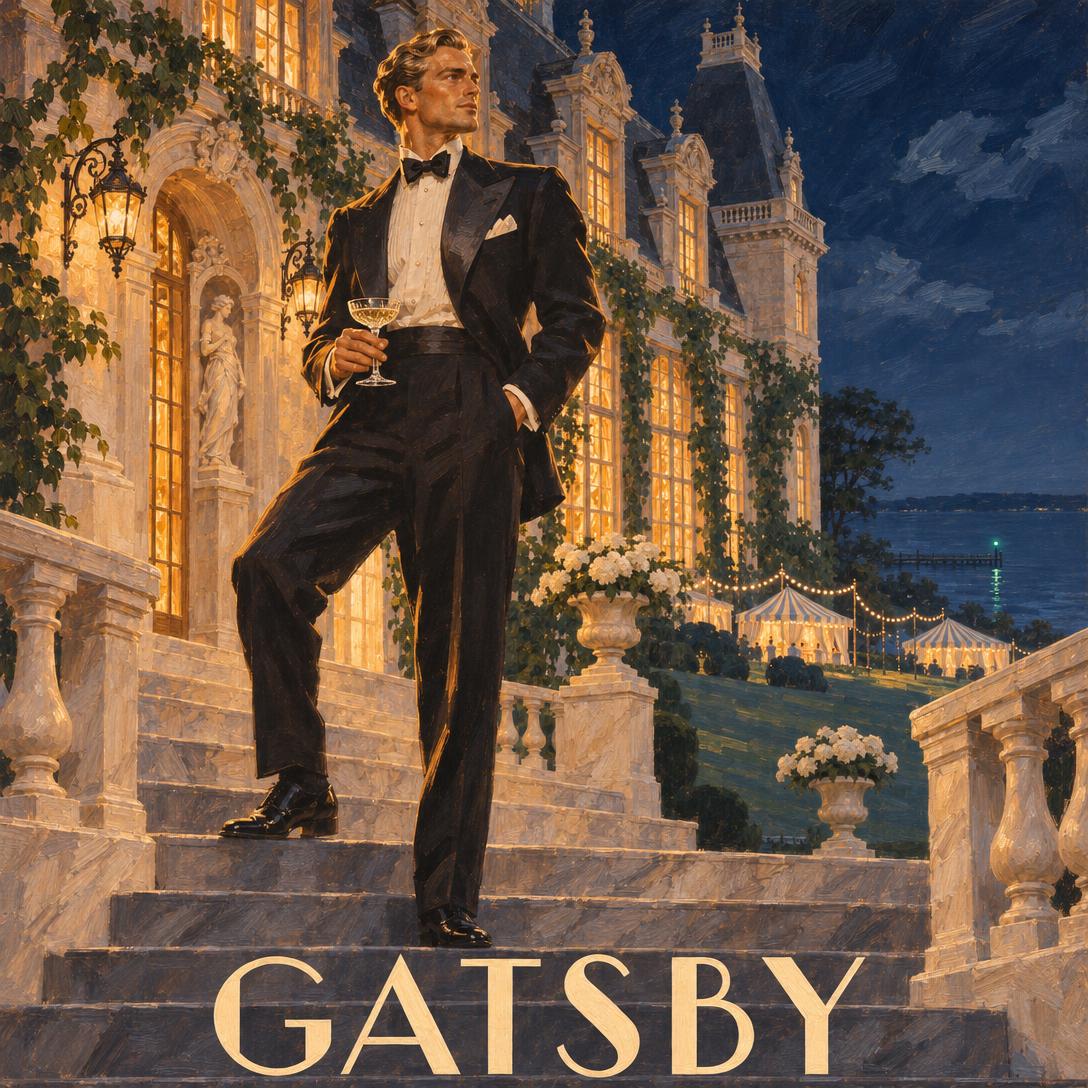
Roleplaying with Jay Gatsby on Jenova lets you step into a living-world AI character simulation across five iconic eras of F. Scott Fitzgerald's Jazz Age masterpiece. Unlike static character chatbots that sit in an empty chat room, blur timeline phases together, or fold like a polite assistant, this character simulation connects you to the mysterious millionaire of West Egg inside an active, autonomous 1920s world. Whether you reach him on his lantern-lit marble terrace overlooking Courtesy Bay or inside a smoky Forty-Second Street speakeasy, Gatsby responds with guarded courtesy, street-smart vigilance, and his unmistakable gift for hope while life unfolds around him in real time.
- ✅ Five era-locked canonical starting points — from wartime Camp Taylor in 1917 and Prohibition Manhattan to West Egg's glittering 1922 summer nights
- ✅ Independent character autonomy — earn trust gradually past Gatsby's rehearsed Oxford mystique to uncover the real James Gatz beneath
- ✅ Unlimited session memory & live world-state tracking — every confidence, promise, and storyline divergence persists without context resets
- ✅ In-narrative visions, correspondence & branching — behold views across Long Island Sound, receive fountain-pen notes, and fork alternate "what-if" timelines
Nearly a century after The Great Gatsby was published in New York in 1925, readers still wonder what might have happened if someone perceptive had warned Gatsby about East Egg's old guard or challenged his conviction that the past can be repeated. Now you can test those questions firsthand inside a dynamic historical and literary sandbox that remembers every word.
Quick Answer: What Is the Jay Gatsby AI Roleplay Experience?
Jay Gatsby AI roleplay is an interactive living-world character simulation that lets you converse with F. Scott Fitzgerald's iconic millionaire across five canonical Jazz Age eras while shaping his choices, relationships, and fate in real time. Built with unlimited session history and live world-state tracking, the experience preserves complete continuity across multi-chapter stories on web and mobile.
Key capabilities:
- Era-isolated character psychology across five canonical phases (1917–1922) plus custom Jazz Age scenarios
- Cross-world acoustic connection or shared-space roleplay alongside autonomous NPCs like Nick Carraway, Daisy Buchanan, and Meyer Wolfshiem
- Diegetic visual scene generation and in-character fountain-pen letters, invitations, and telegrams
- One-click conversation forking to test alternate timelines without overwriting your main storyline
Character World & Roleplay Features
Few figures in American literature embody the glamour and contradiction of the American Dream as hauntingly as the host of West Egg. Created by F. Scott Fitzgerald (1896–1940) in his classic Long Island novel — first released by Charles Scribner's Sons in 1925 with a playful epigraph from fictional poet Thomas Parke D'Invilliers — Gatsby is a study in self-invention. Born James Gatz to unsuccessful North Dakota farmers, he reinvented himself as Jay Gatsby at age seventeen along Lake Superior's Little Girl Bay when he rowed out to warn copper millionaire Dan Cody's yacht, the Tuolomee, of an approaching wind squall.
1919 Eighteenth Amendment — Federal alcohol ban that sparked interstate bootlegging, clandestine speakeasies, and lucrative organized syndicates across 1920s cities
That turbulent postwar backdrop defines every shadow of Gatsby's rise. After losing his promised twenty-five-thousand-dollar inheritance from Dan Cody to Ella Kaye and serving in the Great War, he amassed a fortune in Prohibition New York so his West Egg palace could face the glittering white estates of fashionable East Egg across Courtesy Bay.
Even as interactive storytellers increasingly turn to AI platforms for dynamic narrative worlds, most generic AI character bots flatten complex literary figures like Gatsby within twenty messages. Standard bots sit inside a blank waiting-room vacuum where no orchestra plays and no long-distance telephone rings from Chicago. Worse, they mash every era together — spoiling late-novel tragedies during a 1917 conversation — and abandon Gatsby's guarded poise the instant a user makes an unearned demand.
Roleplaying with Jay Gatsby on Jenova replaces that flat chat box with an objective, rule-governed Jazz Age simulation. While general-purpose chatbots or surface-level companion apps rely on sliding context windows that drop early plot points, this living-world character sim pairs strict timeline isolation with persistent state tracking.
| Static Character Chatbots | Jay Gatsby on Jenova |
|---|---|
| Sits in an empty chat void with zero surroundings | Lives inside an active 1917–1922 Jazz Age world |
| Blends all eras and spoils future plot twists | Locks strictly into your chosen canonical phase |
| Forgets promises and confidences after a few turns | Retains unlimited chat history and live state tracking |
| Folds instantly like an eager, compliant assistant | Maintains independent poise, pride, and earned rapport |
Authentic Canonical Phases & Custom Starting Points
Every session opens with an atmospheric third-person Jazz Age chronicle inviting you to select one of five canonical junctures — or define your own custom scenario anywhere in Fitzgerald's world. Once an era is chosen, Gatsby embodies only the memories, attire, social standing, and emotional state of that exact moment.
In October 1917, he knows nothing of Prohibition syndicates or West Egg; in early July 1922, he has not yet reunited with Daisy over tea or faced Tom Buchanan at the Plaza Hotel. He possesses zero hindsight regarding future canon and zero pre-loaded knowledge of twenty-first-century technology, interpreting unfamiliar modern references earnestly through wireless radio, Wall Street ticker tape, hydroplanes, and moving pictures.
Cross-World Connection & Living World Momentum
By default, your words reach Gatsby across worlds as a clear, private voice on the night air — or first humming across an unswitched brass candlestick telephone receiver with no operator on the wire — unheard by partygoers or syndicate associates nearby. Because his world operates with objective spatial logic, Gatsby assumes the connection carries voice alone and reacts with sharp bootlegger alertness if you reveal visual details about the color of his suit or who just stepped onto the terrace.
Around him, Long Island and Manhattan move continuously. His butler interrupts on the marble steps with confidential calls from Philadelphia or Detroit, Ewing Klipspringer strikes up chords inside the music room, and Meyer Wolfshiem confers in low tones across restaurant booths. If you choose to cross into his world physically during play — or select a face-to-face custom premise from the start — meetings happen through atmospheric thresholds native to the setting, such as emerging from sea-fog at the end of his West Egg dock.
Independent Character Agency & Open-Ended Sandbox
Both you and Gatsby retain full two-way agency: the simulation never writes your dialogue or dictates your feelings, and Gatsby never behaves like an obligated customer-service bot. At entry, he guards his curated Oxford-and-inheritance legend behind polite evasions ("*That's my affair, old sport*") and cool formal steel if treated with East Egg condescension.
Earn his respect as a rare confidant who neither gossips behind his back nor leeches off his Saturday hospitality, and the rehearsed society armor gradually lowers. Over time, he may entrust you with the unvarnished truth of young James Gatz, North Dakota, and Forty-Third Street — and weigh your counsel seriously enough to alter canonical history without predetermined endings.
In-Narrative Visions, Writings & Storyline Forking
Multimedia capabilities operate seamlessly inside the story without breaking character immersion. Ask to behold what lies before him at a milestone moment, and the character sim renders period-accurate visual scenes — from lantern-lit pavilions above Long Island Sound to his treasured 1919 Oxford quad photograph. Ask him to put something in writing, and he composes engraved Saturday-night invitations, Western Union telegrams, or private letters in character.
Behind the scenes, silent historical verification grounds 1917–1922 geography, Great War service, and Jazz Age detail, while Jenova's Fork feature lets you branch any turn into a parallel timeline. If researching your campaign sparks deeper questions about real-world Volstead Act enforcement or postwar Wall Street finance, Academic Historian offers evidence-backed historical analysis alongside your roleplay.
"You've stood on those marble steps for twenty minutes without touching your champagne, Mr. Gatsby. Tell me what you're watching across the dark water."
"Before you shut down the Saturday parties and replace your staff with Wolfshiem's people, think carefully about how Tom Buchanan will investigate your Manhattan business."
"Let's start with a custom face-to-face scene in early 1919: I'm walking beside Major Jay Gatsby across misty Trinity Quad at Oxford as letters arrive from America."
This is exactly what the Jay Gatsby character simulation was built for.
How to Roleplay with Jay Gatsby
Starting an interactive story requires zero prompt engineering or manual lore setup. Follow these four steps to roleplay with Jay Gatsby and shape an evolving Jazz Age narrative.
Step 1: Choose a Canonical Era or Custom Jazz Age Premise Open the simulation and review the five third-person timeline hooks spanning 1917 to late August 1922, or describe your own starting point — including an immediate face-to-face meeting at a West Egg party, aboard Dan Cody's yacht, or in post-Armistice England. Selecting your entry point locks Gatsby's knowledge, wardrobe, and surrounding cast to that exact historical moment.
"I choose Host of West Egg in early July 1922, reaching him as an unseen voice on the salt breeze beside his marble balustrade."
Step 2: Connect Across the Night Air and Observe His World Once the scene opens, third-person camera narration shows Gatsby's observable surroundings and subtle physical cues — flashing his rare, reassuring smile, rocking slightly on his heels, or sweeping the dark terrace with watchful gray-blue eyes — while his spoken words arrive in crisp, conversational 1920s dialogue. Watch how he handles nearby interruptions from Nick Carraway or long-distance wires before stepping out of earshot to answer you privately.
"Careful when your butler mentions Detroit on the hall wire — Jordan Baker's East Egg crowd is lingering just below the terrace steps."
Step 3: Build Earned Confidant Rapport and Test His Convictions Treat Gatsby with sincerity and perceptive candor rather than prying crudely or demanding instant confessions. As shared conversations, midnight vigils, and navigated crises accumulate in the live session tracker, watch his rehearsed European tall tales give way to genuine vulnerability, deeper emotional chemistry, and honest debate over Daisy, Tom Buchanan, and his own future.
"Daisy's voice carries everything safe and gleaming that Louisville promised you in 1917 — but have you asked yourself whether East Egg ever lets anyone rewrite five years?"
Step 4: Request In-World Keepsakes or Fork Into Alternate Timelines Deepen milestone moments by asking Gatsby to show you the view across Courtesy Bay or compose a formal note on West Egg stationery. Whenever your story reaches a high-stakes crossroads — such as the afternoon before the Plaza Hotel trip — click Fork on any message to test a bold "what-if" divergence while keeping your original campaign intact.
"Write me an invitation in your own hand for next Saturday night, and tell your gatekeeper to watch for a town car arriving through the sea-fog at midnight."
Try the Jay Gatsby character simulation free — no credit card required.
Canonical Eras & Roleplay Scenarios
Because every session starts from strict canonical conditions and evolves freely thereafter, no two campaigns unfold the same way. Here are four compelling ways to explore the public-domain world of The Great Gatsby through live interactive roleplay.
🥂 Becoming the Midnight Confidant at West Egg (July 1922)
Step into Host of West Egg on an early July Saturday night while hundreds of uninvited Broadway actors and socialites crowd Gatsby's forty acres of blue-lit gardens. In Fitzgerald's text, Gatsby stands alone in the unquiet darkness stretching his arms toward the minute green light at the end of Daisy's dock, surrounded by guests trading wild rumors yet starved for one honest listener.
You can serve as the perceptive unseen voice — or uninvited terrace acquaintance — who notices that he never touches liquor at his own parties. Help him weigh his quiet plan to ask Nick Carraway to host a rainy afternoon tea, test how carefully he guards his Oxford legend, and decide whether to steer him toward caution before East Egg enters his halls.
If close encounters with Fitzgerald's dialogue make you want to unpack the novel's deeper color motifs, unreliable narration, and class satire, English Literature Tutor helps you analyze the primary text at a seminar level.
🥃 Navigating Prohibition Intrigue on Forty-Second Street (October 1920)
Enter Broadway Shadows & Prohibition Rise on a rainy autumn evening in Midtown Manhattan, three years after Gatsby walked Camp Taylor's gravel roads and two years before West Egg knew his name. Inside a frosted-glass cellar speakeasy, thirty-year-old Gatsby reviews coded grain-alcohol "drugstore" ledgers alongside Meyer Wolfshiem in the wake of the 1919 Prohibition amendment that fueled urban bootlegging networks.
Here, Gatsby is sleek, unsentimental toward the crooked Broadway underworld, and laser-focused on banking every dollar toward an estate worthy of Daisy Fay. Act as a sharp strategic voice across the booth's unswitched candlestick wire — helping him spot syndicate liabilities with Slagle or Walter Chase, debating the moral cost of Wolfshiem's bond ventures, or reshaping how he builds his empire before moving to Long Island.
🌀 Rewriting the Late-August Vigil After the Plaza (August 1922)
Choose Vigil After the Plaza to step into the most fragile, unguarded morning of Gatsby's life. In the novel's late chapters, Tom Buchanan mocks Gatsby's pink suit and "Oxford, New Mexico" credentials at the Plaza Hotel, Daisy falters, and Gatsby stands watch outside the Buchanans' East Egg shrubbery until four in the morning before returning to his deserted West Egg pool terrace — refusing Nick's plea to leave for Atlantic City or Montreal.
In this simulation, Gatsby has zero predetermined canonical death; approaching danger from the Valley of Ashes unfolds strictly as a live, survivable in-world reality shaped by vigilance and decisions in play. With his mythic mask cracked open so he speaks plainly of James Gatz and Dan Cody, you can challenge his blind faith that Daisy will telephone, alert him to keep his stone garage and grounds watched, and guide him into an unwritten autumn chapter.
Writers who turn forked alternate timelines into original Jazz Age chapters or character studies can also collaborate with Creative Fiction Writer to develop polished long-form manuscripts inspired by their sessions.
📱 Continuing Multi-Week Campaigns on Mobile
Long-form literary roleplay thrives in quiet, reflective pockets of the day rather than single marathon sittings at a desk. Because Jenova synchronizes full chat history and live session state across web, iOS, and Android, you can begin an October 1917 Louisville walk outside Daisy Fay's bannered Georgian house on your laptop and continue the conversation on your phone during an evening commute.
Natural speech-to-text voice input and text-to-speech read-aloud make trading brief, atmospheric exchanges effortless when your hands are busy. When you step away for the night after a natural parting in-scene, Gatsby's world advances by a realistic interval — hours or overnight — picking up seamlessly the next morning without losing a single promised confidence.
Frequently Asked Questions
Is the Jay Gatsby AI roleplay experience free to use?
Yes. You can start roleplaying on Jenova's Free tier ($0) with access to all core features — including era selection, live session state tracking, and mobile sync — within a monthly usage allowance and no credit card required. For daily multi-chapter campaigns, paid plans start with Plus at $20/month (30× Free usage and custom model selection) and scale through Premium ($50/month, 90× usage) and higher tiers, resetting monthly with no daily caps.
How is Jay Gatsby on Jenova different from generic character chatbots?
Generic character chatbots place characters in an empty chat room, lose early plot details behind short sliding context windows, and comply instantly with out-of-character commands. In contrast, the Jay Gatsby character simulation anchors Gatsby inside an active 1917–1922 world with autonomous NPCs, strict era-locked knowledge boundaries, earned relational trust, and unlimited conversation history that never forgets earlier turning points.
Which canonical eras of Jay Gatsby can I roleplay in?
You can choose from five era-locked canonical phases: Host of West Egg (July 1922), Lieutenant at Camp Taylor (October 1917), Broadway Shadows & Prohibition Rise (October 1920), The Rekindled Dream (mid-August 1922), and Vigil After the Plaza (late August 1922). You can also specify any custom Jazz Age starting point, including shared physical-space encounters at Oxford, Lake Superior, or West Egg.
Can my choices change Jay Gatsby's canonical story and ending?
Yes. History matches F. Scott Fitzgerald's canon up to the exact moment you enter your chosen era, then evolves as an open-ended sandbox governed by realistic 1920s social and underworld consequences. There are zero forced endings, and you can use Fork at any message to test alternate timelines — or pair your research with Academic Historian to explore authentic 1920s historical context.
Does Jay Gatsby remember past conversations, and are my chats private?
Every session maintains unlimited chat history alongside a live state chronicle tracking your active era, location, shared history, promises, and inner-circle NPCs, while isolating outside workspace memory so modern tasks never bleed into 1920s immersion. All conversations are encrypted in transit and at rest, never sold to advertisers, never visible to agent creators, and never used to train AI models.
Does the simulation work on iOS and Android?
Yes. Jenova provides full feature parity and real-time synchronization across web browsers, iOS, and Android apps. Your ongoing roleplay timeline, generated in-world visions, written notes, and forked branches stay synced across every device, with built-in voice input and read-aloud audio for hands-free Jazz Age storytelling anywhere.
Conclusion: Step Across Courtesy Bay Into a Living Jazz Age
Great literary characters endure because their contradictions still feel electric, yet static chatbots reduce them to repetitive catchphrases inside an amnesia-prone text box. Stepping into Jay Gatsby AI roleplay transforms passive reading into an active, evolving Jazz Age chronicle — one where an ambitious young lieutenant in Louisville, a guarded Manhattan bootlegger, or the sleepless host of West Egg weighs your counsel, guards his pride, and remembers every confidence shared by Long Island Sound.
Whether you want to probe the gap between James Gatz and his self-made myth, navigate Meyer Wolfshiem's Prohibition underworld, or rewrite the late-summer fate waiting after the Plaza Hotel, the marble steps of West Egg are open.
Try Jay Gatsby now. Explore more at Jenova.
For Developers: Jay Gatsby is available programmatically via the Jenova API — integrate stateful, era-locked character roleplay and unlimited session memory into your application with a single API call. Full documentation →