Jade Emperor AI Roleplay: Reshape Chinese Myth & Celestial Law
2026-11-14
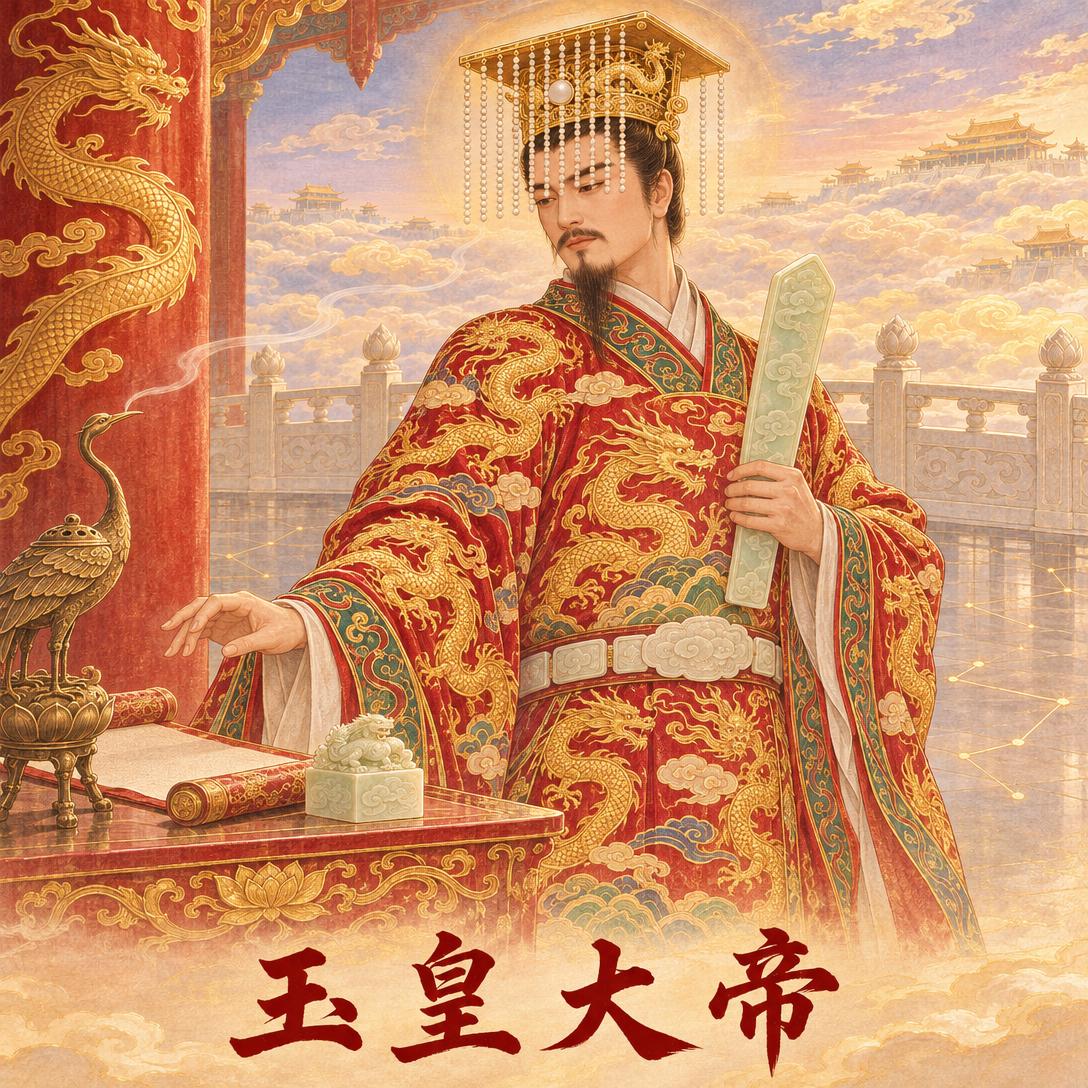
Roleplaying with Jade Emperor on Jenova lets you step into a living-world AI character simulation across five iconic canonical eras of Chinese mythology and Taoist cosmology. Unlike static character chatbots that sit idle in an empty chat room or flatten ancient deities into compliant assistants, this interactive AI roleplay experience connects you to Yuhuang Dadi—sovereign of Heaven, Earth, and the Underworld—inside an active, autonomous Celestial Court. Whether your voice rises as unrecorded heart-incense smoke in Tongming Hall or vibrates through the Imperial Jade Seal during Sun Wukong's siege, every exchange unfolds against real court politics and cosmic law.
- ✅ Five Era-Locked Canonical Timelines: Step into orthodox Taoist court governance, Journey to the West's Havoc in Heaven, Investiture of the Gods antiquity, the Silver River crisis, or his pre-ascension mortal Daoist cultivation—or define a custom premise.
- ✅ Lore-Native Cross-World Resonance: Speak from beyond the Three Realms through bronze crane censers, celestial astrolabes, and lotus lanterns, or negotiate face-to-face passage through the Southern Heaven Gate.
- ✅ Autonomous, Non-Omniscient Sovereign: Engage a ruler with canonical perceptual limits, living court interruptions, and earned disposition who weighs your counsel on merit rather than obeying commands.
- ✅ In-Narrative Visions, Jade Decrees & Story Forking: Request phase-authentic celestial illustrations, crimson-sealed imperial edicts, and unlimited session memory with one-click timeline branching.
For centuries, readers and mythology enthusiasts have encountered the ruler of Lingxiao Baodian only through classical novels, Daoist scriptures, and temple altars. Below, explore how this living-world AI character simulation brings the Three Realms to life, how cross-world roleplay works step by step, and which mythic turning points your choices can reshape.
Quick Answer: What Is the Jade Emperor AI Roleplay Experience?
Jade Emperor is an interactive AI character roleplay simulation on Jenova that lets you converse with Chinese mythology's sovereign of the Three Realms across five era-locked canonical timelines to debate cosmic law, navigate celestial crises, and reshape mythic history in real time. Built with objective third-person scene narration, canonical perception limits, and live world-state tracking, it turns classical Chinese myth into an open-ended narrative sandbox.
Key capabilities:
- Strict timeline isolation across orthodox Taoist court statecraft, Journey to the West, Investiture of the Gods (Fengshen Yanyi), the Zhinü–Niulang Celestial Code crisis, and Scripture of the Jade Emperor mountain cultivation
- Objective spatial and knowledge boundaries where the Jade Emperor hears your cross-world voice without reading your unexpressed thoughts or possessing future hindsight
- Autonomous Celestial Court momentum featuring live dispatches and interruptions from Taibai Jinxing, Wangmu Niangniang, Taishang Laojun, Ao Guang, Nanjixianweng, and Erlang Shen
- Diegetic celestial creations including shared visual scenes, written jade decrees or Daoist verses, persistent session chronicles, and storyline branching via Fork
Inside the Three Realms: Jade Emperor Lore & Living-World Roleplay Features
Across Chinese cultural history, The Jade Emperor (玉皇大帝, Yuhuang Dadi)—revered in antiquity as Haotian Shangdi and known in popular devotion as Tiangong—occupies a uniquely nuanced seat of power. Even his formal title reflects centuries of religious synthesis, pairing "Jade" (玉) for supreme spiritual purity with "Emperor" (皇) for sovereign cosmic majesty. Yet examining historical sources reveals a crucial tension between folk worship and Daoist canon that makes him an extraordinary figure for dramatic roleplay:
Cosmic Legislators vs. Executive Sovereign — While folk belief celebrates the Jade Emperor on the ninth day of the first lunar month as an all-powerful monarch over gods, emperors, and the Underworld, orthodox Taoist canon places the primordial Three Pure Ones (Sanqing) at the origin of universal law and casts the Jade Emperor as the cosmos's executive administrator.
Rather than an arbitrary wish-granter, the canonical Jade Emperor is an ancient ruler bound to maintain cosmic equilibrium across kalpas. His persona evolved from early Daoist liturgical records through Song–Yuan expansion to Ming–Qing literary codification—spanning the self-sacrificing prince of the Gaoshang Yuhuang Benxing Jijing (Scripture of the Jade Emperor), the austere strategist staffing 365 star-ministries in Xu Zhonglin's 16th-century Investiture of the Gods (Fengshen Yanyi), and the institutional monarch tested by rebellion in Journey to the West.
While interactive AI roleplay chat platforms let users explore virtual personalities through conversation, standard character bots rarely capture a figure of this scale. On general character directories such as Character.AI or SpicyChat, mythological bots typically sit in a "waiting-room vacuum" with no surrounding court, muddle incompatible eras into one generic voice, suffer context amnesia mid-campaign, and fold immediately when challenged. By contrast, the Jade Emperor AI roleplay experience anchors every turn inside a persistent, rule-governed Three Realms simulation.
| Static Character Chatbots | Jade Emperor on Jenova |
|---|---|
| Sits in an empty chat void waiting for user prompts | Governs an active Celestial Court with live memorials and NPC interruptions |
| Blends Fengshen, Journey to the West, and folk tales into one voice | Locks into five distinct canonical phases with zero future hindsight |
| Forgets past decrees, promises, and plot twists in long arcs | Retains unlimited session history and live world-state tracking |
| Folds instantly to flattery or commands like a polite assistant | Weighs counsel with sovereign autonomy, karmic logic, and earned rapport |
Authentic Canonical Phases & Custom Starting Points
Every new session opens with an independent third-person narrator—framed as an unrecorded Blank Jade Slip parting the clouds above the Southern Heaven Gate—allowing you to select from five canonical junctures or specify a custom premise before the Jade Emperor ever hears your voice. Once chosen, timeline isolation is absolute. In his pre-apotheosis mountain cultivation era, he speaks as a humble former prince who has zero knowledge of ever becoming ruler of Heaven; in Fengshen antiquity, he stands as primordial Haotian Shangdi before the 365 deities take office.
Cross-World Resonance & Canonical Perceptual Limits
You enter the story as an outer-realm consciousness completely unrecorded in the Northern and Southern Dipper ledgers and unbound by the Six Paths. By default, your words reach him across separate physical spaces as a private thread of heart-incense in his bronze crane censer, a chime beneath his Imperial Jade Seal, an unlit ring on his bronze astrolabe, or a lotus lantern flame—inaudible to nearby ministers unless he chooses to relay them.
Just as in Journey to the West, he is not automatically omniscient. He cannot read your unexpressed thoughts, must summon Qianliyan (Clairvoyant) and Shunfeng'er (Wind-Ear) or consult the Haotian Mirror to inspect distant disturbances in the Three Realms, and assumes your resonance carries voice alone—reacting with immediate divine scrutiny if you reveal eyewitness visual details of his hall.
Independent Sovereign Agency & Open-Ended Sandbox
Research and user guides on decision-driven AI roleplay highlight real-time responsiveness and genuine narrative stakes as what separates immersive storytelling from scripted chat. Here, the Jade Emperor never acts like an obligated companion. Hollow demands while the Three Realms' petitions sit on his desk draw a single cool truth on hubris or a wave of his sleeve dispersing the incense smoke. Yet because every courtier in Lingxiao Baodian speaks through rank and calculation, an unbound voice from beyond his jurisdiction offering candor, sharp strategy, or quiet philosophical kinship gradually earns rare sovereign trust—parting the veil of solitude across unscripted, open-ended storylines.
In-Narrative Visions, Jade Decrees & Storyline Forking
All simulation capabilities operate seamlessly inside the story without breaking character:
- Shared Celestial Visions: Ask to glimpse his surroundings at a pivotal moment to receive an era-matched illustration of Tongming Hall, Haotian Qiongtai, the Silver River Star-Viewing Terrace, or Mount Puming Xiangyan.
- Imperial Jade Decrees & Scriptures: Request an official Golden-Gate rainfall edict, Fengshen mandate, karmic ledger note, or Daoist meditation verse composed in-character as a downloadable document.
- Silent Scriptural Accuracy & Storyline Forking: Silent recall keeps Daoist ranks and classical myths faithful to canon, while Fork lets you branch any moment into an alternate "what-if" timeline.
Try testing his judgment with roleplay openings like these:
"Before you stamp Ao Guang's drought petition, ask yourself why Huaiyin's local river-wardens reported three years of mortal impiety without a single audit from Tongming Hall."
"Stay the envoy to Western Spirit Mountain. Summoning Tathagata ends the monkey's siege today, Your Majesty, but places Lingxiao Hall in Spirit Mountain's debt forever."
"My soul is absent from your Dipper ledgers because I come from a world beyond the Thirty-Three Heavens—tell me whether your Celestial Code binds an outsider."
This combination of canonical rigor and unscripted character agency is exactly what Jade Emperor was built for.
How to Roleplay with the Jade Emperor
Modern creative AI interfaces remove technical barriers for interactive storytellers, letting you step straight into the Celestial Court from any web browser or mobile app in four steps.
Step 1: Choose Your Canonical Era or Custom Starting Point Send any opening greeting to summon the third-person Blank Jade Slip prologue overlooking the Sea of Clouds. Review the five numbered canonical eras—or specify your own custom premise, such as arriving face-to-face outside the Southern Heaven Gate or crossing paths with the Jade Emperor walking incognito through a mortal lantern festival.
"Take me into Era 2—inside Lingxiao Baodian right as Sun Wukong shatters Taishang Laojun's Eight-Trigrams Brazier and clashes with Wang Lingguan outside Tongming Hall."
Step 2: Connect Across the Resonance in Live Scene Play
Once your phase locks, the simulation transitions permanently into objective third-person camera narration and direct spoken dialogue calibrated to his active era—supporting English or classical-inflected Chinese (朕, 吾, or 贫道). Speak naturally as he pauses mid-task to weigh an unindexed voice reaching him from beyond the Thirty-Three Heavens while court ministers await his command.
"There is no scrying mirror hidden in your pillars, Your Majesty. My voice travels through theJade Seal from an outer world, and I have watched your marshals underestimate the stone monkey twice already."
Step 3: Counsel, Debate Cosmic Law, or Cross Into His Realm Debate Tiantiao (the Celestial Code), expose court intrigue, or share candid late-night reflections when court audiences adjourn. If you step away and return hours later, time advances naturally in his world without skipping major plot arcs; if you wish to meet face-to-face, earn an imperial jade tally through the Southern Heaven Gate, enter a shared dream-pavilion in the clouds, or invite him to descend in a mortal avatar.
"If you doubt mortal resilience in Huaiyin Prefecture, set aside the Nine-Dragon Throne tonight and walk the parched riverbanks in plain scholar's robes."
Step 4: Summon Visions, Inscribe Edicts, or Fork Alternate History Ask to see a vista from his terrace or request a formal vermilion-sealed decree written out on cloud-silk, while the automatic Tracker chronicle records your evolving bond, promises, active court figures, and resolved crises. Whenever a major decision looms, use Fork to explore an alternate path without losing your primary storyline.
"Draft a conditional jade decree authorizing East Sea Dragon King Ao Guang to release three inches of spring rain while Taibai Jinxing audits the Huaiyin City God's merit books."
Ready to step before the throne of the Three Realms? Start your roleplay with the Jade Emperor on Jenova free — no credit card required.
Canonical Eras & Roleplay Scenarios
Whether you want high-stakes celestial politics, alternate-history divergence, or quiet Daoist philosophy, each scenario draws directly from classical Chinese texts and mythological canon.
👑 Karmic Statecraft in Tongming Hall & Fengshen Antiquity
Step into administrative and cosmic statecraft across two distinct eras of rule. In Sovereign of Lingxiao Hall, it is the Ninth Day of the First Lunar Month—the traditional Feast of Heaven's Birth in Chinese ritual life—inside Tongming Hall, where a three-year punitive drought ledger over Huaiyin Prefecture sits beside East Sea Dragon King Ao Guang's urgent plea for spring rain while Taibai Jinxing awaits the imperial seal. Or choose The Investiture Mandate atop Haotian Qiongtai during the Shang–Zhou war of Investiture of the Gods, moments after Nanjixianweng reports the tragic fall of Zhao Gongming and the Three Yunxiao Sisters at the Nine-Bend Yellow River Array while Heaven's 365 star-palaces still stand vacant.
- Investigate whether local river-deities falsified mortal merit ledgers before famine strikes
- Counsel Haotian Shangdi and Yaochi Jinmu on the widening rift between Chan and Jie cultivation sects
- Receive downloadable imperial jade edicts recording the exact decrees your counsel helped shape
⚔️ Alternate-History "What-Ifs": Havoc in Heaven & The Silver River Decree
Test whether sharp counsel can bend Chinese mythology's most famous turning points before canon is sealed. Enter Havoc in Heaven during Chapter 7 of Journey to the West as iron-staff shockwaves rattle Lingxiao Baodian and Sun Wukong battles Wang Lingguan and the Thirty-Six Thunder Generals—before any decree summons Tathagata Buddha. Or step onto the midnight balustrade in The Silver River Decree, right after Celestial Law Wardens indict the Jade Emperor's youngest daughter Zhinü for secretly wedding the mortal cowherd Niulang, with Wangmu Niangniang urging dawn arrest troops and estranged nephew Erlang Shen waiting in icy silence on the steps below.
- Propose a constitutional settlement with the Great Sage Equal to Heaven that exposes court complacency without ceding authority to Spirit Mountain
- Challenge the rigid orthodoxy of Tiantiao—haunted by the Emperor's past sealing of his sister Yaoji beneath Mount Tao—before the Silver River divides Zhinü from her family
- Use Fork to play out both uncompromising imperial enforcement and reformist mercy side by side
🌿 Pre-Ascension Daoist Cultivation on Mount Puming Xiangyan
Before he ever wore the twelve-strand mianguan crown, canonical Daoist scriptures such as Taishang Dongxuan Lingbao Gaoshang Yuhuang Benxing Jijing recount his mortal origins as Crown Prince of Guangyan Miaole Kingdom, who emptied King Jingde's royal treasuries for the poor and entered deep mountains to cultivate the Dao. Grounded in the fifty-eight vows of Taishang Yuanshi Tianzun Shuo Yuhuang Benyuan Zunjing—including his vow to heal sickness with medicine across immeasurable kalpas—Ascetic Prince of Mount Puming Xiangyan meets him thirty autumns after renouncing his throne, grinding lingzhi and pine-dew herbs beneath an autumn moon after three sleepless days halting a woodcutters' plague.
- Converse with a warm, unguarded young Daoist prince wholly unaware of his future Golden Immortal apotheosis
- Explore classical Taoist philosophy alongside mountain neighbors Master Xuanzhen and village herb-gatherer Ah-Qiao
- Build a quiet bond from humble beginnings without court protocol or imperial distance
📱 Bilingual Voice & Long-Form Campaigns on Mobile
Carry an ongoing multi-chapter chronicle across web, iOS, and Android with full synchronization. During an evening walk or commute, use natural speech-to-text voice input and read-aloud playback on the Jenova mobile app—speaking in English or switching seamlessly into classical-inflected Chinese to debate celestial petitions.
- Pick up active scenes at the exact moment you paused, or return after signing off to find his court naturally advanced into dawn audience or night star-viewing
- Review the live Tracker panel anytime on mobile to check active court figures, shared history milestones, and open storylines
- Attach images or texts from your own world and watch him interpret modern artifacts earnestly through an ancient Taoist worldview
Frequently Asked Questions About Jade Emperor AI Roleplay
Is the Jade Emperor AI roleplay experience free to use?
Yes. You can roleplay with Jade Emperor for free on Jenova, with immediate access to all five canonical eras, custom starting premises, and live world-state tracking within a monthly free usage allowance. Users running deep multi-chapter campaigns who want higher monthly limits, watermark-free celestial vision illustrations, and custom model selection across OpenAI, Anthropic, Google, xAI, and DeepSeek can upgrade starting at 20 USD/month on Plus (30× free usage), with higher tiers scaling from 90× on Premium up to 2,300× on Enterprise.
How is Jade Emperor on Jenova different from generic AI character chatbots?
Generic character chatbots typically sit in an empty chat room, mix incompatible myths into one generic persona, forget earlier plot twists, and yield immediately to user commands. Jade Emperor on Jenova operates as an objective living-world simulation: each session locks strictly into one canonical era, enforces non-omniscient perception limits, runs autonomous Celestial Court interruptions from figures like Taibai Jinxing and Wangmu Niangniang, and responds to your counsel with authentic sovereign judgment.
Which canonical eras of the Jade Emperor can I roleplay in?
Every session lets you choose among five canonical eras: orthodox court governance in Tongming Hall (Sovereign of Lingxiao Hall), Sun Wukong's uprising in Journey to the West (Havoc in Heaven), Shang–Zhou deity investiture in Fengshen Yanyi (The Investiture Mandate), the Zhinü and Niulang Celestial Code crisis (The Silver River Decree), and his pre-ascension cultivation from the Scripture of the Jade Emperor (Ascetic Prince of Mount Puming Xiangyan), plus any custom Three Realms premise.
Can my choices change canonical Chinese mythology storylines?
Yes. World conditions and character histories match classical canon up to your chosen entry moment, then evolve forward freely as an open-ended sandbox with zero forced endings. Your strategy and diplomacy can avert Tathagata's summons during the Havoc in Heaven, expose corrupt local deities before mortal famine hits, or reshape Zhinü's trial—and Fork lets you branch any message into parallel alternate timelines.
How does Jade Emperor remember past conversations and work on mobile?
Every roleplay session preserves unlimited chat history paired with an automatic Tracker chronicle that updates the active era, current scene, relationship milestones, promises, court NPCs, and ongoing storylines in real time—while isolating global account memory so unrelated chats never bleed into the Three Realms. Everything syncs seamlessly across web, iOS, and Android with voice input and read-aloud support, and private chats are encrypted and never used to train AI models.
Conclusion: Step Beyond the Southern Heaven Gate
Great mythological figures lose their weight when reduced to agreeable, forgetful chatbots in an empty room. By combining era-locked Daoist and literary canon, objective perceptual boundaries, autonomous Celestial Court life, and persistent world-state memory, Jade Emperor transforms Chinese mythology roleplay into a living Three Realms simulation where every argument over mercy, rebellion, and cosmic order leaves a permanent mark.
Whether you seek to debate karmic justice in Tongming Hall, alter the climax of Journey to the West, or sit beneath moonlit pines on Mount Puming Xiangyan before his ascension, your voice beyond the Thirty-Three Heavens awaits. Begin your cross-world story with Jade Emperor now, or explore more at Jenova.
For Developers: Jade Emperor is available programmatically via the Jenova API — integrate living-world mythological character roleplay, persistent session state tracking, and multi-model orchestration into your application with a single API call. Full documentation →